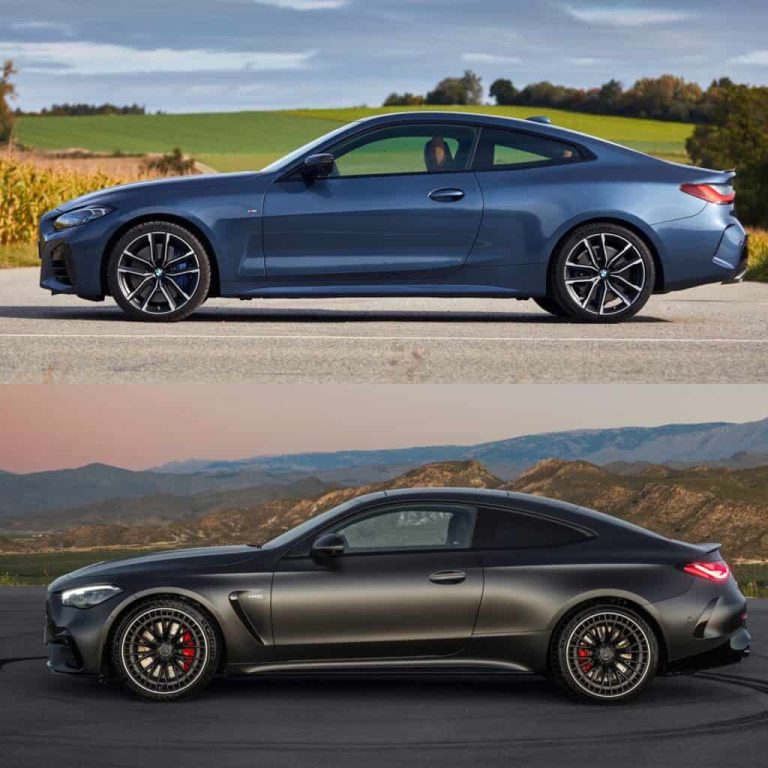
The allure of the two-door coupe remains undiminished in an automotive landscape increasingly dominated by SUVs and sedans. It’s a statement of style, performance, and personal indulgence – a vehicle designed for the driver who prioritizes engagement and aesthetics. Among the stalwarts of this segment, the BMW 4 Series has long held a prominent position, blending athletic prowess with executive luxury. As we look towards 2026, the anticipated evolution of the 4 Series promises to reignite discussions about its place in the market and, crucially, its value proposition against a formidable array of rivals.
The question isn’t just whether the 2026 BMW 4 Series will be a good coupe, but whether it will be the best coupe for the money. This isn’t a simple equation of lowest price, but a holistic assessment of performance, luxury, technology, design, driving dynamics, ownership costs, and brand prestige relative to its cost of entry and ownership. To answer this, we must delve into what the 2026 4 Series is expected to bring to the table and stack it against its closest competitors: the Audi A5/S5 Coupe, the Mercedes-Benz CLE Coupe, and the Lexus RC.
The Evolving 2026 BMW 4 Series: What to Expect
By 2026, the current G22-generation BMW 4 Series will likely have undergone a significant mid-cycle refresh (LCI – Life Cycle Impulse) or potentially even transition into an entirely new generation, depending on BMW’s product cycle strategy. Given the current generation debuted in 2020, a comprehensive LCI is the more probable scenario, building upon the existing platform while addressing feedback and integrating newer technologies.
Design & Aesthetics: The most contentious aspect of the current 4 Series has been its polarizing large kidney grille. For 2026, BMW is expected to refine this design element, perhaps subtly softening its edges or integrating it more seamlessly into a revised front fascia. Expect updated, slimmer LED headlight designs, potentially with new DRL signatures, and redesigned front and rear bumpers that contribute to a more aggressive or sophisticated stance. New wheel designs, exterior paint options, and subtle tweaks to the rear taillight graphics are also highly likely. The coupe’s inherent sleek silhouette, with its long hood and short deck, will undoubtedly remain a core attraction.
Interior & Technology: Inside, the 2026 4 Series will almost certainly benefit from BMW’s latest technological advancements. The current model already features the curved display housing a 12.3-inch digital instrument cluster and a 14.9-inch infotainment touchscreen running iDrive 8.5. By 2026, we can anticipate the arrival of iDrive 9, offering even greater customization, enhanced voice control, and deeper integration with BMW’s digital services ecosystem. Expect new material choices, revised trim options, and potentially updated seat designs for improved comfort and support. Advanced driver-assistance systems (ADAS) will see upgrades, likely including more sophisticated semi-autonomous driving capabilities, improved parking assistance, and enhanced safety features. Over-the-air (OTA) updates will continue to ensure the vehicle’s software remains current.
Powertrain & Performance: BMW’s commitment to diverse powertrains means the 2026 4 Series will likely offer a range of options. The bread-and-butter 430i, with its potent 2.0-liter turbocharged four-cylinder, will almost certainly receive mild-hybrid assistance for improved efficiency and a slight power bump, pushing output beyond the current 255 hp. The M440i, featuring the magnificent B58 3.0-liter turbocharged inline-six, will also benefit from mild-hybrid tech, potentially seeing its output climb past the current 382 hp, delivering even more intoxicating performance. BMW’s excellent ZF 8-speed automatic transmission will remain standard, renowned for its smooth shifts and quick responses. The legendary M4 will continue to sit atop the range, but its focus is less on "value" and more on unadulterated performance. All-wheel drive (xDrive) will remain an option, providing enhanced traction and all-weather capability.
Driving Dynamics: This is where BMW traditionally shines. The 2026 4 Series is expected to maintain its reputation for engaging driving dynamics, characterized by precise steering, a well-tuned chassis, and a near-perfect 50/50 weight distribution. Adaptive M suspension, M Sport brakes, and variable sport steering will likely be available options, allowing drivers to tailor the car’s responses to their preferences. The balance between everyday comfort and spirited driving will be a key factor, and BMW’s engineers are adept at striking this equilibrium.
Expected Price Range: Pricing for the 2026 4 Series will undoubtedly see an increase over current models, reflecting inflation, new technology, and enhanced features. The 430i Coupe could start in the mid-$50,000s, while the M440i xDrive Coupe could push into the mid-$70,000s before options. BMW’s extensive options list means that a well-equipped model can quickly climb significantly higher.
The Contenders Emerge: A Formidable Field
To truly assess the 4 Series’ "best for the money" claim, we must examine its rivals, each offering a distinct flavor of luxury and performance.
1. Audi A5/S5 Coupe
The Audi A5 Coupe has long been the 4 Series’ most direct German competitor, offering a compelling blend of sophisticated design, quattro all-wheel drive as standard, and a meticulously crafted interior.
- Design & Aesthetics: Audi’s design philosophy is one of understated elegance. The A5/S5 features clean lines, a wider and flatter singleframe grille, and sharp LED lighting signatures. Its aesthetic is less aggressive than the BMW, appealing to those who prefer a more refined and less ostentatious look.
- Interior & Technology: Audi’s interiors are renowned for their build quality, premium materials, and ergonomic excellence. The Virtual Cockpit digital instrument cluster and the intuitive MMI Touch Response infotainment system provide a high-tech yet user-friendly experience. While perhaps not as overtly flashy as Mercedes’ MBUX, Audi’s tech is incredibly functional and aesthetically pleasing.
- Powertrain & Performance: The A5 typically offers a 2.0-liter turbocharged four-cylinder (45 TFSI), also with mild-hybrid assistance, producing around 261 hp. The S5 ups the ante with a 3.0-liter turbocharged V6, delivering 349 hp and impressive torque. Both are paired with a smooth 8-speed automatic (or 7-speed dual-clutch for the A5) and standard quattro AWD, providing excellent all-weather grip and confident handling.
- Driving Dynamics: The A5/S5 offers a balanced and composed driving experience. It feels secure and stable, particularly with quattro, and while capable of spirited driving, it prioritizes refinement and comfort over raw, visceral feedback. Steering is precise, but often criticized for being less communicative than BMW’s.
- Value Proposition: Audi typically prices its A5/S5 competitively with the 4 Series. Standard quattro AWD is a significant value add, and while options can still escalate the price, Audi often includes more desirable features at lower trim levels. Its resale value is strong, though perhaps slightly behind BMW in some markets.
2. Mercedes-Benz CLE Coupe
The newest entrant to this segment, the Mercedes-Benz CLE Coupe, effectively replaces both the C-Class Coupe and E-Class Coupe, aiming to consolidate Mercedes’ two-door offerings into one compelling package. Expected to be in full swing by 2026, it represents the pinnacle of Mercedes’ current design and technology.
- Design & Aesthetics: The CLE Coupe embodies Mercedes’ "sensual purity" design language, featuring elegant, flowing lines, a distinctive grille, and sleek LED lighting. It projects an air of sophisticated luxury, arguably more grand tourer than outright sports coupe, and will likely be seen as the most visually luxurious of the trio.
- Interior & Technology: This is a Mercedes strong suit. The CLE’s interior is a technological marvel, heavily influenced by the C-Class sedan, featuring a prominent, free-standing digital instrument cluster and a large, portrait-oriented central MBUX infotainment touchscreen. Expect exquisite materials, meticulous craftsmanship, and ambient lighting that transforms the cabin. Its voice control system (Hey Mercedes) is among the best in the industry.
- Powertrain & Performance: The CLE is expected to offer a range of electrified powertrains, including mild-hybrid 2.0-liter four-cylinders (CLE 300) and 3.0-liter inline-sixes (CLE 450), delivering smooth, potent power. The 9-speed automatic transmission is standard, and 4Matic all-wheel drive will be available. Performance will be strong, but with a greater emphasis on smooth power delivery and refinement.
- Driving Dynamics: Mercedes prioritizes comfort and composure. The CLE Coupe will offer a plush ride, especially with optional adaptive suspension, making it an excellent long-distance cruiser. While capable of handling twisty roads, its steering and chassis tuning will lean more towards luxurious ease than raw sporting engagement.
- Value Proposition: Mercedes-Benz vehicles typically sit at the premium end of this segment. The CLE Coupe is likely to be the most expensive of the direct rivals, especially when optioned with its vast array of luxury and technology features. While it offers unparalleled luxury for the money, its "for the money" argument shifts more towards luxury per dollar than outright performance or driver engagement per dollar. Resale value is generally robust.
3. Lexus RC
The Lexus RC offers a different take on the luxury sport coupe, emphasizing distinctive styling, renowned reliability, and a character that stands apart from its German counterparts.
- Design & Aesthetics: The RC’s design is bold and aggressive, dominated by Lexus’ signature spindle grille and sharply creased bodywork. It’s a design that evokes strong opinions, but it undeniably stands out. It feels less restrained and more adventurous than its European rivals.
- Interior & Technology: Lexus interiors are known for their high-quality materials, exceptional build quality, and ergonomic comfort. While not always at the cutting edge of infotainment (its older touchpad interface has been criticized, though newer models adopt touchscreens), the RC provides a luxurious and serene cabin experience. Physical buttons are still prevalent, appealing to those who prefer tactile controls.
- Powertrain & Performance: The RC offers a diverse powertrain lineup. The RC 300 features a 2.0-liter turbo-four (241 hp) or a 3.5-liter V6 (260 hp with AWD), while the RC 350 gets a more potent version of the 3.5-liter V6 (311 hp). The true gem, however, is the RC F, which boasts a glorious, naturally aspirated 5.0-liter V8, producing 472 hp – a rarity in this turbocharged segment. This V8 offers a unique, old-school muscle car charm within a luxury package.
- Driving Dynamics: The RC offers a comfortable and composed ride, leaning more towards luxury than hardcore sportiness in its standard trims. The steering is precise, but not as communicative as BMW’s. The RC F, however, transforms into a serious performance machine, though still with a slightly softer edge than an M4.
- Value Proposition: The Lexus RC often presents a strong "for the money" argument, particularly at lower trims. It often offers a competitive feature set for a lower starting price than its German rivals. Its legendary reliability translates into lower long-term ownership costs, and while its infotainment might not be the absolute latest, its overall luxury experience and optional V8 engine (a unique selling point) offer distinct value. Resale value is typically excellent.
Head-to-Head: The "Best for the Money" Breakdown
Determining the "best for the money" is inherently subjective, but we can dissect each contender based on key criteria:
1. Performance & Driving Dynamics:
- BMW 4 Series: Likely the benchmark for driver engagement. Offers the most communicative steering, the sharpest handling, and a compelling blend of straight-line speed and cornering prowess. The inline-six engines are sublime.
- Audi A5/S5: Excellent all-weather performance with standard quattro. More composed and refined, but less visceral than the BMW. A great choice for those who want confidence and capable performance without extreme sportiness.
- Mercedes-Benz CLE: Emphasizes smooth, effortless power and a luxurious ride. More of a grand tourer, excellent for long distances, but less agile and engaging in spirited driving than the BMW or even the Audi.
- Lexus RC: Offers a comfortable ride in standard trims, with the RC F providing raw V8 power and a unique driving experience. Not as nimble as the BMW, but uniquely satisfying for those who appreciate a naturally aspirated engine.
Verdict: For pure driving thrills and engagement per dollar, the BMW 4 Series is likely to maintain its edge. The Lexus RC F offers unique V8 performance for the money, but in a less agile package.
2. Design & Interior Aesthetics:
- BMW 4 Series: Modern, sporty, and technologically advanced, though the grille remains a talking point. The interior is driver-focused and luxurious.
- Audi A5/S5: Understated elegance, high-quality materials, and a clean, minimalist design. A timeless aesthetic.
- Mercedes-Benz CLE: The epitome of modern luxury, with a striking exterior and a high-tech, opulent interior. Likely the most visually impressive and luxurious cabin.
- Lexus RC: Bold, distinctive exterior; a luxurious, well-built, and comfortable interior that leans more traditional than its German rivals.
Verdict: For sheer luxury and cutting-edge visual tech, the Mercedes-Benz CLE will likely win. For balanced, sophisticated aesthetics, the Audi A5/S5 is strong. The BMW 4 Series is sporty and modern, while the Lexus RC offers a unique, aggressive flair.
3. Technology & Features:
- BMW 4 Series: State-of-the-art iDrive system, comprehensive ADAS, strong connectivity. A very tech-forward offering.
- Audi A5/S5: Excellent Virtual Cockpit and MMI system, intuitive and functional. Slightly less flashy than Mercedes, but highly effective.
- Mercedes-Benz CLE: MBUX system with its large screens and advanced voice control is arguably the most impressive and feature-rich.
- Lexus RC: High-quality audio and a luxurious interface, but its infotainment system may lag slightly behind the Germans in terms of cutting-edge features and responsiveness.
Verdict: The Mercedes-Benz CLE and BMW 4 Series will likely lead in raw technological prowess and infotainment sophistication.
4. Value Proposition (The "Money" Aspect):
- Initial Price vs. Standard Features: The Lexus RC often offers a very compelling package for its starting price, including strong standard features. The Germans, while starting competitively, can quickly escalate in price with options.
- Options & Customization: All three German brands offer extensive options lists that allow for personalization but significantly drive up the final cost. BMW and Mercedes are particularly adept at this.
- Resale Value: BMW, Audi, and Mercedes generally hold their value well, with Lexus often leading the pack due to its reputation for reliability.
- Running Costs: Lexus traditionally boasts lower maintenance and repair costs due to its reliability. The mild-hybrid systems in the German cars will aid fuel efficiency, but complex European engineering can sometimes lead to higher service costs.
- Brand Prestige: All four brands carry significant prestige. BMW is synonymous with driving performance, Mercedes with luxury, Audi with sophisticated engineering, and Lexus with reliable luxury.
Overall Value Verdict:
- If your definition of "money" prioritizes initial cost, long-term reliability, and a unique V8 option, the Lexus RC makes a compelling case.
- If you seek the ultimate blend of luxury, cutting-edge technology, and opulent comfort for the money, the Mercedes-Benz CLE offers a strong argument, albeit at a higher price point.
- If you desire a balanced package of sophisticated design, standard AWD, and refined performance for the money, the Audi A5/S5 stands out.
- If pure driving pleasure, sharp handling, and a technologically advanced, driver-focused experience per dollar are your main criteria, the 2026 BMW 4 Series is likely to remain the frontrunner.
Conclusion: A Personal Choice
The question of whether the 2026 BMW 4 Series will be the "best coupe for the money" has no single, definitive answer. It is a highly personal decision, contingent upon individual priorities and how one defines "value."
The 2026 BMW 4 Series is poised to continue its legacy as a formidable driver’s car, offering an unparalleled blend of performance, engaging dynamics, and increasingly sophisticated technology within a luxurious package. For enthusiasts who prioritize the driving experience above all else, and who are willing to pay for BMW’s engineering prowess, it will likely remain the top choice.
However, its competitors present equally compelling arguments. The Audi A5/S5 offers a more understated, sophisticated, and all-weather capable package. The Mercedes-Benz CLE Coupe delivers an elevated sense of luxury and technological opulence. And the Lexus RC provides distinctive styling, legendary reliability, and the unique appeal of a naturally aspirated V8 in the RC F, often at a more accessible price point for its features.
Ultimately, the "best coupe for the money" isn’t about finding the cheapest option, but about finding the car that best aligns with your personal values and desires. For some, the BMW 4 Series’ blend of athleticism and luxury will be an irresistible proposition, justifying its price tag with every mile. For others, the allure of Audi’s refinement, Mercedes’ luxury, or Lexus’s reliability will offer a more compelling value equation. The 2026 luxury coupe segment promises to be as competitive and diverse as ever, offering a superb choice for every discerning driver.