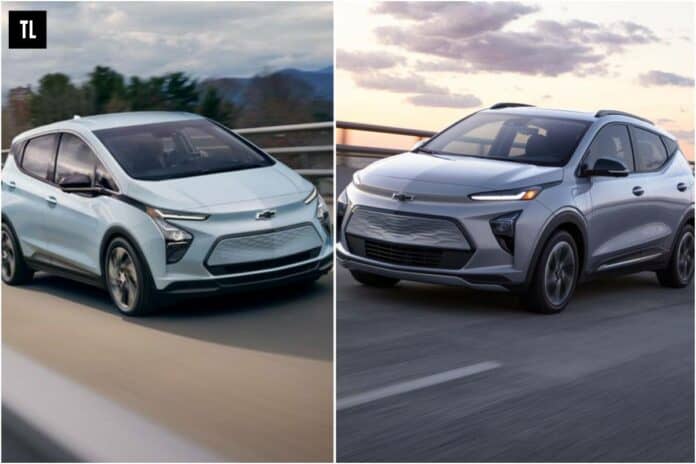
The electric vehicle landscape is evolving at a breakneck pace, with new models, advanced technologies, and increasingly competitive pricing entering the fray year after year. For many consumers, the dream of owning an EV has been tempered by concerns about upfront cost, range anxiety, and charging infrastructure. However, a glimmer of hope for the budget-conscious EV buyer emerged when General Motors announced the return of the beloved Chevrolet Bolt EUV, slated for a 2026 release, this time built on the highly versatile Ultium platform.
The original Chevrolet Bolt EUV carved out a significant niche for itself as one of the most affordable and practical electric vehicles on the market. Its blend of subcompact SUV practicality, respectable range, and attractive pricing made it a compelling choice for many first-time EV owners. But with its announced discontinuation in late 2023, followed by the promise of a revitalized 2026 model, the question looms large: can the next-generation Bolt EUV reclaim its crown as the "best electric vehicle for the money" amidst a rapidly expanding and increasingly competitive field?
This article will delve into what we can expect from the 2026 Chevrolet Bolt EUV, define what truly constitutes "best for the money" in the EV segment, and then stack it against its likely competitors to determine if it can once again deliver unparalleled value.
The Anticipated Return: What to Expect from the 2026 Chevrolet Bolt EUV
The original Bolt EUV, alongside its Bolt EV sibling, was praised for its energetic driving dynamics, surprisingly spacious interior for its footprint, and a respectable EPA-estimated range (247 miles for the EUV). Its major drawback, especially in later years, was its slower DC fast charging speeds compared to rivals and its older battery technology.
The announcement that the 2026 Bolt EUV will be built on GM’s state-of-the-art Ultium platform is a game-changer. This modular architecture is designed to accommodate a wide range of vehicles, from small cars to large trucks, offering significant advantages:
- Improved Range and Efficiency: Ultium batteries are known for their energy density and efficiency. We can expect the 2026 Bolt EUV to offer a competitive range, potentially exceeding 250-280 miles, making it even more appealing for daily commutes and longer trips.
- Faster DC Fast Charging: One of the original Bolt’s Achilles’ heels was its charging speed. Ultium-based EVs support much higher charging rates, meaning the 2026 Bolt EUV could see significant improvements, potentially reaching 150 kW or more, drastically reducing charging times on the go.
- Enhanced Performance and Driving Dynamics: The Ultium platform allows for more flexible motor configurations and better weight distribution, promising a more refined ride, improved handling, and potentially quicker acceleration.
- Modern Design and Technology: We can anticipate a completely refreshed exterior and interior design, aligning with Chevrolet’s contemporary aesthetic. Expect larger, more integrated infotainment screens, advanced driver-assistance systems (ADAS) like an updated Super Cruise (GM’s hands-free driving technology), and a generally more premium feel within the cabin.
- Competitive Pricing: Crucially, GM has committed to making Ultium technology accessible across its lineup. The very reason for bringing the Bolt back is its proven market demand for an affordable, compact EV. Therefore, the 2026 Bolt EUV is expected to maintain an aggressive starting MSRP, likely in the low-to-mid $30,000s, before any federal or local incentives.
By leveraging the Ultium platform, the 2026 Bolt EUV has the potential to address all the minor criticisms of its predecessor while retaining its core strengths of practicality and value.
Defining "Best Electric Vehicle for the Money"
The phrase "best electric vehicle for the money" is subjective, but generally, it encompasses a holistic evaluation of several key factors that contribute to both initial purchase cost and long-term ownership value. For the purpose of this comparison, we’ll focus on:
- Purchase Price (MSRP): The most obvious factor. A lower starting price immediately makes an EV more accessible.
- Federal Tax Credits and Incentives: Eligibility for the $7,500 federal tax credit (and any state/local incentives) can drastically alter the effective price of an EV, often making a significant difference in perceived value. The Bolt EUV’s U.S. manufacturing and battery sourcing will be critical here.
- Range (EPA Estimated): A good balance between range and cost is essential. Over 200 miles is generally considered sufficient for most drivers, with higher ranges adding convenience.
- Charging Speed (DC Fast Charging): Faster charging reduces travel time anxiety and enhances usability for longer journeys.
- Interior Space and Practicality: How much passenger and cargo volume does it offer? Is it suitable for daily life, including families or cargo hauling?
- Technology and Features: Infotainment system, safety features, driver-assistance tech, and creature comforts.
- Running Costs: While EVs generally have lower fuel and maintenance costs than gasoline cars, efficiency plays a role.
- Reliability and Durability: Long-term ownership confidence.
- Resale Value: How well does the vehicle hold its value over time?
The ideal "EV for the money" strikes a perfect balance across these attributes, providing maximum utility and enjoyment without breaking the bank.
The Competition: Who Will the 2026 Bolt EUV Be Up Against?
By 2026, the affordable EV market will be more crowded and sophisticated than ever before. Here’s a look at the likely primary contenders for the "best value" crown:
1. Hyundai Kona Electric
- Current Status: A perennial competitor to the original Bolt EUV, the Kona Electric offers a great balance of range (261 miles for the 2024 model), efficiency, and features. Its recent redesign has given it a sleeker, more modern look and an improved interior.
- Likely 2026 Status: Hyundai will likely continue to refine the Kona Electric, potentially offering longer range, faster charging, and even more advanced tech. Its relatively compact size and competitive pricing (starting in the low $30,000s for the 2024 model) will keep it a strong rival.
- Key Advantage: Proven efficiency, strong warranty, attractive design.
- Potential Challenge: May not qualify for the full federal tax credit due to manufacturing location (often built in South Korea), making its effective price higher for some buyers.
2. Kia Niro EV
- Current Status: The Niro EV is essentially the Kona Electric’s slightly larger, more family-friendly cousin, offering more interior space and a similar range (253 miles for the 2023 model). It also boasts a stylish design and a well-appointed cabin.
- Likely 2026 Status: Kia will continue to push the Niro EV’s practicality and design. Expect incremental improvements in range, charging, and tech. Its starting price is typically a bit higher than the Kona Electric, often in the mid-$30,000s.
- Key Advantage: Excellent practicality, refined driving experience, distinct styling.
- Potential Challenge: Similar to the Kona Electric, federal tax credit eligibility will be a major factor in its value proposition.
3. Tesla Model 3 (Rear-Wheel Drive)
- Current Status: While often considered a step up in price, the base Model 3 RWD (starting around $39,000-$40,000) offers compelling performance, excellent range (272 miles), and access to the Supercharger network.
- Likely 2026 Status: Tesla will undoubtedly continue to refine the Model 3, focusing on cost reduction, efficiency, and potentially even more aggressive pricing. Its software and Supercharger network remain major draws.
- Key Advantage: Performance, range, extensive charging network, strong brand appeal, usually qualifies for federal tax credit.
- Potential Challenge: Higher starting price than the Bolt EUV, minimalist interior design might not appeal to everyone, reliance on touchscreen for most controls.
4. Nissan Leaf
- Current Status: The pioneer of affordable EVs, the Leaf offers decent range (up to 212 miles for the Plus model) and an attractive starting price (currently in the low $28,000s for the base model). However, its aging platform, slower CHAdeMO charging standard, and lack of active thermal management for the battery are significant drawbacks.
- Likely 2026 Status: Nissan has committed to electrifying its lineup, but the future of the Leaf itself is uncertain. If a successor emerges, it would need a complete overhaul with a new platform, better battery tech, and CCS/NACS charging to remain competitive.
- Key Advantage: Very low starting price.
- Potential Challenge: Outdated technology, slow charging, smaller range compared to rivals. Unlikely to be a direct competitor unless completely reimagined.
5. Upcoming Entrants (e.g., VW ID.2all/ID.3, Stellantis Offerings)
- Current Status: Volkswagen’s ID.3 (not sold in the US) and the recently revealed ID.2all concept indicate a strong push for affordable EVs in Europe. Stellantis (Chrysler, Dodge, Jeep, Ram) is also aggressively pursuing electrification with new platforms and models on the horizon.
- Likely 2026 Status: It’s highly probable that by 2026, we’ll see more affordable, compact EV crossovers from these manufacturers entering the North American market, designed specifically to capture the budget-conscious segment. These could offer fresh designs, new tech, and aggressive pricing.
- Key Advantage: Latest technology, potentially innovative designs, new brand appeal.
- Potential Challenge: Unproven market acceptance in North America, manufacturing and tax credit eligibility TBD.
2026 Chevrolet Bolt EUV vs. Key Competitors: A Head-to-Head Analysis
Let’s imagine the 2026 Bolt EUV lands with a starting MSRP around $32,000, an EPA range of 270 miles, and DC fast charging up to 150 kW.
| Feature | 2026 Chevrolet Bolt EUV (Projected) | Hyundai Kona Electric (2024 Model) | Kia Niro EV (2023 Model) | Tesla Model 3 RWD (Current) |
|---|---|---|---|---|
| Starting MSRP | ~$32,000 | ~$32,675 | ~$39,595 | ~$39,000 |
| Federal Tax Credit | Likely Eligible (Full $7,500) | Unlikely (Built in Korea) | Unlikely (Built in Korea) | Likely Eligible (Full $7,500) |
| Effective Price | ~$24,500 | ~$32,675 | ~$39,595 | ~$31,500 |
| EPA Range | ~270 miles | 261 miles | 253 miles | 272 miles |
| DC Fast Charging | ~150 kW (Ultium) | 100 kW | 85 kW | ~250 kW (Supercharger) |
| Interior Space | Good for segment (EUV) | Compact | Good (Crossover) | Decent (Sedan) |
| Tech Features | Modern Infotainment, Super Cruise | Dual 12.3-inch screens, ADAS | Dual 10.25-inch screens, ADAS | Large central screen, Autopilot |
| Platform | Ultium | E-GMP (shared) | E-GMP (shared) | Tesla platform |
Note: Projected figures for 2026 Bolt EUV. Actual specifications and pricing may vary.
From this projected comparison, the 2026 Chevrolet Bolt EUV, if it qualifies for the full federal tax credit, emerges as an incredibly strong contender for the "best for the money" title. Its effective price would undercut even the base Kona Electric significantly, while offering competitive (or superior) range and vastly improved charging speeds thanks to the Ultium platform.
Beyond the Specs: Ownership Experience
"Best for the money" also extends to the ownership experience:
- Charging Infrastructure: While Tesla’s Supercharger network is a major advantage, GM’s adoption of the NACS (North American Charging Standard) by 2025 means future Bolt EUV owners will eventually gain access to the Supercharger network, in addition to the growing CCS network. This significantly levels the playing field for charging convenience.
- Maintenance & Reliability: EVs generally have lower maintenance costs than ICE vehicles. Chevrolet’s established dealer network offers widespread service access, a comfort for many buyers. GM’s warranty, especially on battery components, is typically competitive.
- Resale Value: The original Bolt models held their value relatively well, especially after the battery recall issues were resolved. A new Ultium-based Bolt EUV, with modern tech and competitive specs, should maintain strong resale value.
- Software Updates: While Tesla is renowned for its over-the-air (OTA) updates, GM is increasingly leveraging OTA capabilities for its Ultium vehicles, promising continuous improvements and new features.
Who is the 2026 Bolt EUV For?
The 2026 Chevrolet Bolt EUV is poised to be an ideal vehicle for:
- First-time EV buyers: Its projected affordability, familiar crossover form factor, and comprehensive features will make the transition to electric seamless and appealing.
- Budget-conscious consumers: Those looking for maximum EV bang for their buck, prioritizing effective cost of ownership and practicality.
- Urban and suburban dwellers: Its compact size makes it maneuverable in city traffic and easy to park, while its range is more than sufficient for daily commutes and weekend errands.
- Small families or individuals needing cargo space: The EUV’s crossover design offers more utility than a traditional sedan.
- Anyone seeking an environmentally conscious daily driver: Without compromising on modern conveniences or range.
The Verdict: Will the 2026 Bolt EUV Be the Best Electric Vehicle for the Money?
Based on the strategic move to the Ultium platform and the clear intent from General Motors to re-establish an affordable EV leader, the 2026 Chevrolet Bolt EUV has a very strong case to be the best electric vehicle for the money in its segment.
Its potential strengths are compelling:
- Unbeatable Effective Price: If it qualifies for the full federal tax credit, its post-incentive price could be thousands less than its closest rivals.
- Modernized Performance: Ultium brings significant upgrades in range, charging speed, and overall driving refinement.
- Practicality and Features: Maintaining the EUV’s utilitarian design while adding cutting-edge GM tech like Super Cruise.
- Established Brand and Dealer Network: Providing peace of mind for service and support.
While competitors like the Hyundai Kona Electric and Kia Niro EV offer strong alternatives with their own merits, their potential ineligibility for the federal tax credit could be their Achilles’ heel when it comes to the "for the money" argument. The Tesla Model 3 RWD will remain a strong contender, but its higher initial MSRP will still place it a step above the Bolt EUV for those on a tighter budget.
Ultimately, the success of the 2026 Chevrolet Bolt EUV will hinge on its final specifications, actual pricing, and its consistent qualification for federal incentives. However, all signs point to a triumphant return for the Bolt EUV, poised to once again disrupt the market and offer an unparalleled value proposition for the mass adoption of electric vehicles. It’s not just a comeback; it’s a strategic repositioning to dominate the affordable EV segment, proving that going electric doesn’t have to break the bank.