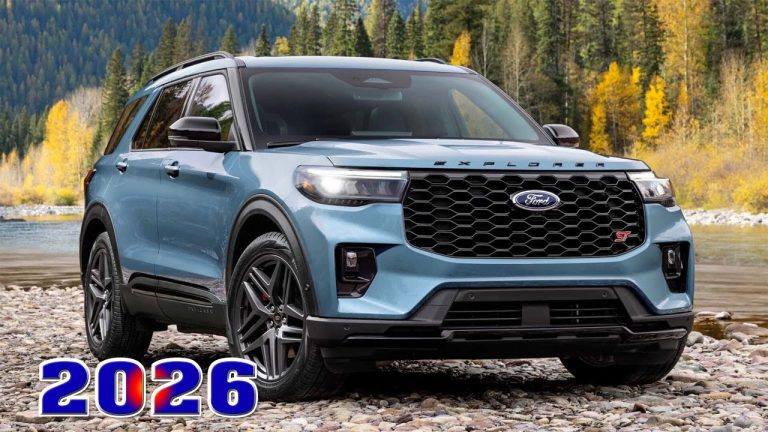
The automotive landscape is a constantly shifting battleground, and nowhere is the skirmish more intense than in the mid-size, three-row SUV segment. For decades, the Ford Explorer has been a cornerstone of this market, a family hauling icon that has evolved through countless iterations. As we cast our gaze towards the 2026 model year, the looming question for value-conscious buyers is whether the Explorer, even with anticipated updates, can still claim the coveted title of "best SUV for the money" against an increasingly formidable array of rivals.
The Explorer’s history is rich, but its future must be sharper than ever. With competitors pushing the boundaries of technology, design, efficiency, and sheer value, Ford’s stalwart needs to deliver more than just a familiar nameplate. This article will delve into what we can expect from the 2026 Ford Explorer, define what "best for the money" truly entails, and then pit it against its fiercest adversaries to determine if it still holds the financial crown.
The 2026 Ford Explorer: What to Expect from the Blue Oval’s Standard Bearer
While a ground-up redesign for 2026 is unlikely given the significant 2025 refresh, the 2026 Ford Explorer will undoubtedly carry forward the enhancements and refinements introduced recently, potentially with minor trim adjustments or tech upgrades. The current generation, riding on Ford’s rear-wheel-drive-biased CD6 platform, brought a more athletic stance and driving dynamics to the segment, setting it apart from many front-wheel-drive-based rivals.
Powertrains: The heart of the Explorer’s appeal often lies in its powertrain options. We expect the efficient yet potent 2.3-liter EcoBoost turbocharged four-cylinder engine to remain the standard, offering a commendable balance of power and fuel economy for most families. For those seeking more grunt, the 3.0-liter EcoBoost twin-turbo V6, particularly in the performance-oriented ST trim and the luxurious Platinum, delivers an exhilarating experience often unmatched in the segment.
Crucially, the Explorer Hybrid will continue to play a pivotal role in its value proposition. Combining the 3.3-liter V6 with an electric motor, this powertrain offers improved fuel efficiency without sacrificing significant capability, appealing directly to buyers concerned about rising fuel costs and environmental impact. This hybrid option is a key differentiator against many rivals who either lack a hybrid or offer one only on a smaller platform.
Design and Interior: The 2025 refresh brought a more aggressive front fascia, updated lighting signatures, and a revised interior, particularly around the infotainment system. For 2026, expect these improvements to solidify. The cabin should remain spacious, with comfortable seating for six or seven passengers, depending on the second-row configuration (captain’s chairs or bench). The centerpiece will be the large touchscreen running Ford’s SYNC 4A infotainment system, offering wireless Apple CarPlay and Android Auto, along with over-the-air update capabilities. Material quality has been an area of focus for Ford, and we anticipate a continued effort to elevate the Explorer’s cabin to feel competitive with more premium offerings.
Technology and Safety: Ford’s Co-Pilot360 suite of driver-assist features will be standard across the lineup, including pre-collision assist, lane-keeping system, and blind-spot information. Higher trims will likely offer advanced features like adaptive cruise control with stop-and-go, lane centering, and parking assist systems. The digital instrument cluster and available head-up display will contribute to a modern, tech-forward driving experience.
Explorer’s Strengths for 2026:
- Driving Dynamics: The RWD-biased platform offers a more engaging and balanced driving experience than many FWD competitors.
- Powertrain Variety: From the efficient 2.3L EcoBoost to the potent 3.0L V6 and the crucial Hybrid, there’s an option for every buyer.
- Towing Capability: Often leading the class, especially with the 3.0L V6.
- ST Performance: A genuine performance SUV option that few rivals can match.
Defining "Best for the Money": More Than Just Sticker Price
Before we dive into the competitive landscape, it’s essential to clarify what "best for the money" truly means. It’s not simply the lowest MSRP. It’s a holistic assessment that includes:
- Initial Purchase Price (MSRP): The starting point, but not the end-all.
- Features for the Price: What tech, safety, comfort, and convenience features are included at various trim levels?
- Fuel Economy: A significant ongoing cost, especially for larger family vehicles. Hybrid options are key here.
- Reliability & Durability: How likely is the vehicle to need expensive repairs?
- Total Cost of Ownership (TCO): Encompasses fuel, insurance, maintenance, repairs, and depreciation over 3-5 years.
- Resale Value: How much will the vehicle be worth when you sell or trade it in? A higher resale value reduces your actual ownership cost.
- Warranty: The peace of mind offered by the manufacturer’s coverage.
- Versatility & Capability: Does it meet a family’s varied needs – cargo, passenger space, towing, light off-roading?
A true "value champion" excels in a majority of these categories, offering a compelling package that minimizes long-term financial strain while maximizing utility and enjoyment.
The Gauntlet: Explorer’s Key Rivals for 2026
The mid-size SUV segment is overflowing with talent. Here’s how the 2026 Explorer stacks up against its most significant challengers:
1. Kia Telluride / Hyundai Palisade (The Value & Style Kings)
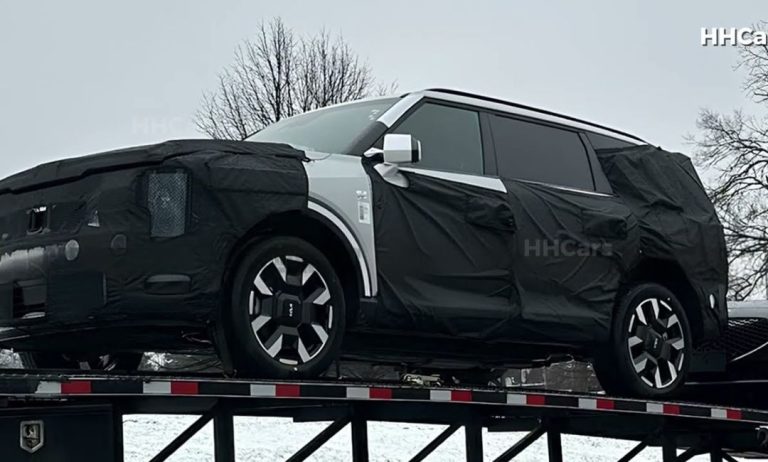
- Strengths: These Korean twins continue to set benchmarks for design, interior luxury (especially for the price), and an astonishing array of standard features. Their comprehensive warranty (5-year/60,000-mile basic, 10-year/100,000-mile powertrain) is a significant draw. They offer plush rides and spacious, well-appointed cabins.
- Weaknesses: They rely on a single naturally aspirated V6 engine, which, while adequate, lacks the punch of the Explorer’s EcoBoost options or the efficiency of its hybrid. They are FWD-biased, making them less engaging to drive than the Explorer for enthusiasts. No hybrid option is a notable omission.
- Value Take: Often perceived as the segment’s value leaders due to their incredible features-per-dollar ratio and industry-leading warranty. The Explorer might counter with better driving dynamics and hybrid efficiency, but the Telluride/Palisade’s initial bang for the buck is hard to beat.
2. Honda Pilot (The Dependable & Practical Choice)
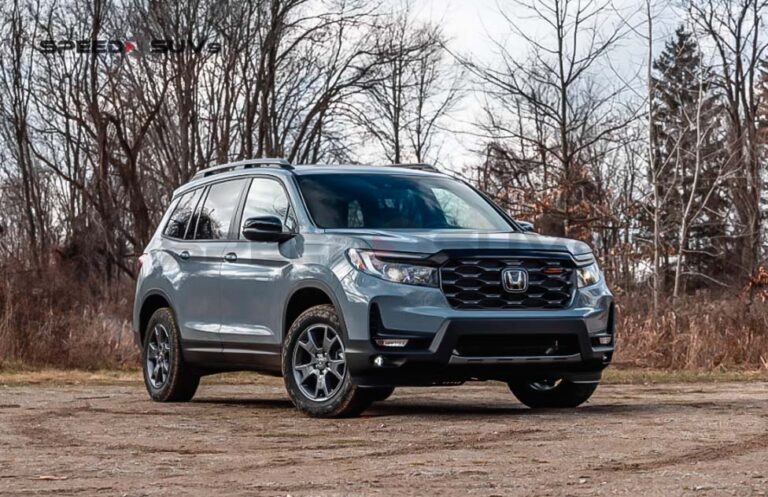
- Strengths: Honda’s reputation for reliability, strong resale value, and well-thought-out practicality shine in the Pilot. Its V6 engine is smooth and proven, and the interior is incredibly versatile, with clever storage solutions and ample passenger space, especially in the third row. Honda Sensing is a comprehensive safety suite.
- Weaknesses: The driving experience is competent but rarely exciting. The V6, while reliable, is less fuel-efficient than the Explorer’s hybrid or even the 2.3L EcoBoost. Interior design, while functional, can feel less luxurious or tech-forward than some rivals. No hybrid option.
- Value Take: For buyers prioritizing long-term reliability, low maintenance costs, and strong resale, the Pilot remains a top contender. Its initial purchase price might be slightly higher for comparable features, but its long-term TCO is excellent. The Explorer might offer more dynamism and powertrain choice.
3. Toyota Grand Highlander / Highlander (The Hybrid Efficiency & Reliability Champions)
- Strengths: The Highlander is synonymous with reliability and strong resale. Its hybrid powertrain is incredibly fuel-efficient and Toyota’s reputation for longevity is legendary. The newer Grand Highlander addresses the Highlander’s previous critiques of third-row and cargo space, offering vast interior room and a more commanding presence. The Grand Highlander also offers a "Hybrid MAX" powertrain for more power and efficiency.
- Weaknesses: The standard Highlander’s third row and cargo space are still tighter than the Explorer’s. The Grand Highlander, while spacious, can climb significantly in price, especially with the Hybrid MAX. Driving dynamics, while improved, still lean towards comfort over sportiness.
- Value Take: For sheer fuel efficiency and bulletproof reliability, especially with the hybrid powertrains, Toyota is tough to beat. The Grand Highlander makes a compelling case for families needing maximum space and efficiency. The Explorer’s non-hybrid powertrains might offer more raw power, but Toyota’s hybrids are the TCO kings for fuel.
4. Chevrolet Traverse / GMC Acadia (The Newly Redesigned American Contenders)
- Strengths: Both the Traverse and Acadia received significant redesigns for the 2024/2025 model years, bringing fresh styling, vastly improved interiors, and a new 2.5-liter turbocharged four-cylinder engine. They offer excellent passenger and cargo space, often leading the segment in these metrics. The new interiors are modern and packed with technology.
- Weaknesses: The new turbo-four is powerful but lacks a hybrid option for optimal efficiency. Long-term reliability of the new powertrain is yet to be fully established. Driving dynamics are competent but not as engaging as the Explorer.
- Value Take: With their fresh designs and cavernous interiors, the GM twins offer compelling value, especially for those prioritizing space above all else. Their feature sets are competitive, but the lack of a hybrid option means their fuel costs might be higher than the Explorer Hybrid over time.
5. Mazda CX-90 (The Premium Challenger)
- Strengths: The CX-90 offers a truly premium experience at a near-mainstream price. Its inline-six engine with mild-hybrid assistance is powerful and refined, and the interior materials and design feel a cut above. Driving dynamics are among the best in the segment, echoing its RWD-biased platform.
- Weaknesses: While competitive, it can be pricier than base models of rivals. The third row, while usable, isn’t as capacious as the Grand Highlander or Traverse. Brand recognition in the 3-row space is still growing for Mazda.
- Value Take: For buyers who want a near-luxury experience without the luxury price tag, the CX-90 offers incredible value. Its driving dynamics are on par with the Explorer, and its mild-hybrid inline-six is impressive. However, if pure utility or maximum hybrid efficiency is the goal, the Explorer might have an edge.
Deep Dive: Explorer vs. The Field in Key Categories for Value
1. Performance & Driving Dynamics:
- Explorer: With its RWD-biased platform, the Explorer offers a distinct advantage in driving feel. It feels more agile, more planted, and less prone to understeer than FWD competitors. The 3.0L EcoBoost in the ST is a performance standout, while even the 2.3L feels energetic. The Hybrid offers a smooth power delivery.
- Competitors: The Mazda CX-90 comes closest in driving dynamics due to its similar platform. The Telluride/Palisade offer comfortable rides but are less engaging. The Pilot and Highlanders are more sedate. The Traverse/Acadia are competent but not sporty.
- Value Angle: If driving enjoyment is part of your "value," the Explorer (especially ST) offers more for the money than most.
2. Interior & Technology:
- Explorer: The 2025 refresh brought an improved interior, focusing on a larger screen and better material integration. SYNC 4A is user-friendly.
- Competitors: Kia/Hyundai set the bar for features and perceived luxury. Toyota’s systems are reliable, and the Grand Highlander’s interior is vast. GM’s new interiors are impressive. Mazda offers minimalist elegance.
- Value Angle: While the Explorer is competitive, the Telluride/Palisade often offer more "wow" factor for the price. The Explorer’s tech is solid, but not groundbreaking against the best.
3. Space & Practicality:
- Explorer: Offers good passenger space in the first two rows and a usable third row, along with decent cargo capacity. Towing is a strong suit.
- Competitors: The Toyota Grand Highlander and Chevy Traverse/GMC Acadia are likely the segment leaders for sheer passenger and cargo volume, particularly in the third row. The Pilot is also very practical.
- Value Angle: If maximum space for passengers and gear is your absolute priority, the Explorer might be slightly edged out by the Grand Highlander or Traverse, which deliver more cubic feet for the dollar.
4. Safety & Driver-Assist:
- Explorer: Co-Pilot360 is comprehensive and competitive with rivals’ safety suites.
- Competitors: All major players offer robust safety packages (Honda Sensing, Toyota Safety Sense, Kia Drive Wise, etc.). Many offer advanced features like hands-free driving on specific roads (e.g., GM’s Super Cruise, though not yet on Traverse/Acadia).
- Value Angle: Most competitors are well-matched here, making it less of a differentiator for "value." The peace of mind is standard across the board.
5. The Value Equation & Ownership Costs:
- Initial Price: The Explorer typically falls in the middle of the pack, starting competitively but climbing quickly for higher trims and the ST.
- Fuel Economy: The Explorer Hybrid is its ace in the hole here, offering some of the best fuel economy in the segment, significantly lowering TCO compared to non-hybrid V6 rivals. The 2.3L EcoBoost is also quite efficient.
- Resale Value: Historically strong, but perhaps not quite at Toyota/Honda levels.
- Warranty: Standard 3-year/36,000-mile basic and 5-year/60,000-mile powertrain. This is competitive but dwarfed by Kia/Hyundai’s offering.
- Maintenance/Reliability: Ford’s reliability has improved, but some long-term data for the current generation is still maturing.
The Verdict: Is the 2026 Explorer the Value Champion?
The question of whether the 2026 Ford Explorer is the "best SUV for the money" is complex, and the answer, as is often the case, depends on individual priorities.
For buyers who prioritize:
- Driving dynamics and strong engine options (especially the ST): The Explorer remains a top pick. Few rivals can match its engaging road manners and available V6 punch.
- Hybrid efficiency without sacrificing capability: The Explorer Hybrid is a compelling proposition, offering a powerful and efficient option that many key rivals lack. This makes a strong case for long-term fuel cost savings.
- A balanced package of power, space, and modern tech: The Explorer offers a very well-rounded experience.
However, the Explorer faces fierce competition:
- For sheer features-per-dollar and an industry-leading warranty: The Kia Telluride and Hyundai Palisade are incredibly hard to beat.
- For ultimate reliability, long-term low TCO (excluding fuel for non-hybrids), and bulletproof resale: The Honda Pilot and Toyota Highlander (especially the Grand Highlander and its hybrid options) hold a distinct advantage.
- For maximum interior space at a competitive price: The newly redesigned Chevrolet Traverse and GMC Acadia are strong contenders.
- For a near-luxury experience without the premium badge: The Mazda CX-90 offers incredible refinement and driving pleasure.
Conclusion: The 2026 Ford Explorer, with its anticipated refinements and strong existing platform, will undoubtedly remain a highly competitive and desirable mid-size SUV. Its rear-wheel-drive platform, diverse powertrain options (especially the Hybrid), and robust technology suite make it a compelling package.
Is it the absolute best for the money? It depends on your definition. If your definition includes an engaging driving experience, a powerful and efficient hybrid option, and a well-rounded feature set that punches above its weight, then the Explorer is absolutely a top-tier contender and represents excellent value. However, if your primary concerns are an entry-level price packed with luxury features (Telluride/Palisade), or maximizing third-row space and ultimate long-term reliability (Grand Highlander/Pilot), then other competitors might edge it out in specific niches.
The 2026 Explorer will continue to be a fantastic choice for many families, offering a potent blend of performance, practicality, and modern amenities. It may not win every single value metric, but its overall package ensures it remains squarely in the conversation for anyone seeking a "best for the money" SUV in this hotly contested segment.