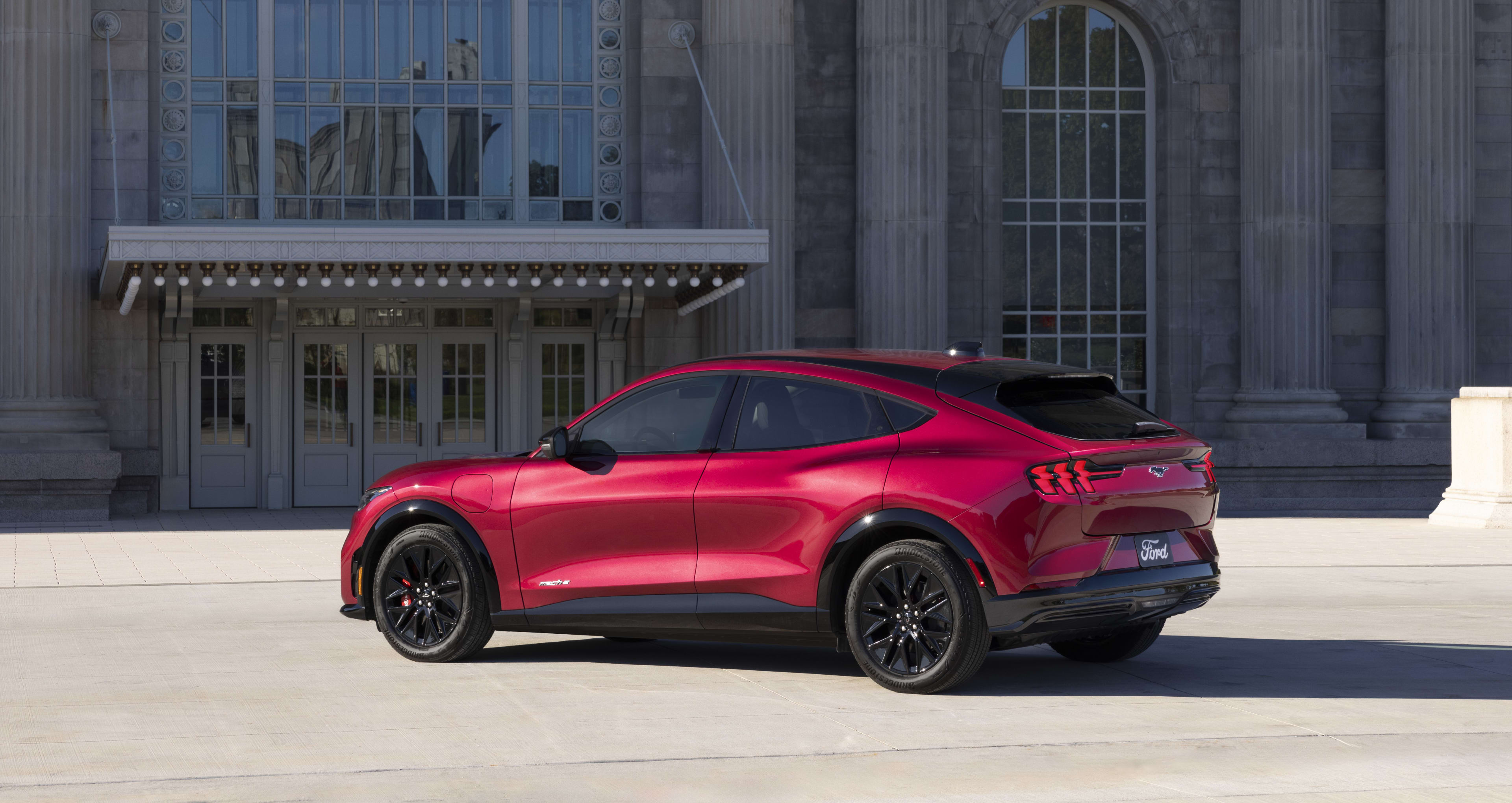
The electric vehicle (EV) market is a battlefield of innovation, range, and increasingly, value. As consumer interest shifts rapidly towards sustainable transportation, automakers are pouring resources into developing compelling EVs that not only electrify the drive but also make financial sense. Among the most prominent contenders is the Ford Mustang Mach-E, a vehicle that boldly merges iconic muscle car heritage with modern electric propulsion.
As we look ahead to the 2026 model year, the Mach-E is poised to evolve, building on its already strong foundation. But in a fiercely competitive landscape, with new and updated rivals emerging constantly, the critical question for many potential buyers remains: will the 2026 Ford Mustang Mach-E stand out as the best electric vehicle for the money?
This comprehensive article will dive deep into the anticipated features of the 2026 Mach-E, pit it against its key competitors across vital metrics, and ultimately assess its value proposition in the ever-expanding EV segment.
The 2026 Ford Mustang Mach-E: What to Expect
The Ford Mustang Mach-E burst onto the scene in 2021, instantly sparking debate and enthusiasm by borrowing the legendary Mustang nameplate for an electric SUV. It proved Ford’s commitment to electrification and offered a compelling package of performance, technology, and practicality. For the 2026 model year, while specific details are still under wraps, we can anticipate several key areas of refinement and improvement:
- Enhanced Battery Technology and Range: Ford is continuously investing in battery development. The 2026 Mach-E will likely benefit from improved battery chemistry, leading to greater energy density, potentially boosting EPA estimated range figures across all trims. We could see top-tier models exceeding 350 miles on a single charge.
- Faster Charging Capabilities: Charging speed is a critical factor for EV adoption. Ford is expected to optimize the Mach-E’s charging architecture to allow for quicker DC fast charging, potentially reducing 10-80% charge times even further.
- Software and Infotainment Upgrades: Ford’s SYNC 4A system is robust, but the tech landscape evolves rapidly. Expect more intuitive interfaces, enhanced voice commands, new connected services, and potentially advanced augmented reality features. Over-the-air (OTA) updates will continue to improve the vehicle throughout its lifespan.
- Subtle Design Refinements: While the core Mustang Mach-E aesthetic is well-received, minor exterior tweaks – perhaps updated lighting signatures, new wheel designs, or revised front and rear fascias – could refresh its look.
- Advanced Driver-Assistance Systems (ADAS): Ford’s BlueCruise hands-free driving technology is a strong point. The 2026 model is likely to feature an even more refined version, potentially expanding its operational domain or adding new functionalities like automated lane changes.
- Performance Optimizations: While already quick, minor power bumps or enhanced torque delivery could be on the cards for certain performance variants, further solidifying its "Mustang" credentials.
The Mach-E’s core strengths – its engaging driving dynamics, distinctive styling, and user-friendly technology – are expected to remain, forming a solid foundation for these future enhancements.
Defining "Best Electric Vehicle for the Money"
Before we pit the Mach-E against its rivals, it’s crucial to establish what "best electric vehicle for the money" truly means. This isn’t just about the lowest sticker price; it’s a holistic assessment that includes:
- Initial Purchase Price: The MSRP across various trims.
- Government Incentives: Eligibility for federal tax credits, state rebates, and local perks.
- Total Cost of Ownership (TCO): This encompasses electricity costs, insurance, maintenance, depreciation, and tire replacement over the vehicle’s lifespan.
- Range & Charging: How far it goes on a charge and how quickly it can replenish, minimizing range anxiety and maximizing convenience.
- Performance & Driving Experience: Acceleration, handling, ride comfort, and overall driver engagement.
- Interior Quality & Technology: Material quality, comfort, infotainment system, connectivity features, and driver-assist technologies.
- Practicality & Space: Cargo capacity, passenger room, and overall utility.
- Safety & Reliability: Crash test ratings, safety features, and predicted long-term dependability.
- Resale Value: How well the vehicle holds its value over time.
A truly "best value" EV strikes an optimal balance across these factors, catering to a wide range of consumer needs without compromising on key attributes.
Key Competitors: A Formidable Lineup
The 2026 Ford Mustang Mach-E will face a diverse and highly capable set of competitors. Let’s examine the major players and their potential strengths and weaknesses against the Mach-E.
1. Tesla Model Y
The undisputed sales leader in the segment, the Model Y is the Mach-E’s most direct and formidable rival.
- Strengths: Industry-leading range (currently), access to the robust Supercharger network, minimalist high-tech interior, blistering performance, and strong brand recognition. Tesla’s full self-driving (FSD) beta also offers a glimpse into future autonomy.
- Weaknesses: Polarizing interior design (lack of physical buttons), often inconsistent build quality, reliance on a single central screen for all functions, and a premium price point that can quickly escalate with options. The 2026 Model Y will likely have even more advanced batteries and charging.
- Mach-E vs. Model Y for Value: The Mach-E often offers a more traditional interior experience, physical buttons, and potentially a more comfortable ride. While Tesla’s range is hard to beat, the Mach-E’s performance is competitive, and its TCO could be more favorable depending on incentives and insurance costs.
2. Hyundai Ioniq 5 & Kia EV6
These E-GMP platform siblings have garnered critical acclaim for their striking designs, ultra-fast charging, and excellent value.
- Strengths: 800V architecture enabling some of the fastest charging speeds in the industry, distinctive retro-futuristic (Ioniq 5) or sporty (EV6) styling, spacious and innovative interiors, and competitive pricing.
- Weaknesses: While fast, their charging network (Electrify America) is less extensive and reliable than Tesla’s. Range figures, while good, typically lag slightly behind top-tier Tesla and potentially 2026 Mach-E variants.
- Mach-E vs. Ioniq 5/EV6 for Value: The Korean duo often provides exceptional value, especially considering their rapid charging capabilities and feature-rich interiors at a compelling price. The Mach-E counters with its Mustang heritage, potentially higher performance in GT trims, and a more conventional, yet sporty, driving feel. For those prioritizing charging speed and unique design, they are strong contenders.
3. Chevrolet Blazer EV
GM’s entry into the mid-size electric SUV segment, built on the Ultium platform, is a crucial domestic competitor.
- Strengths: Bold, sporty styling, large battery options promising competitive range, various trim levels including a performance SS model, and a growing charging network facilitated by GM’s partnerships. Ultium platform is highly flexible.
- Weaknesses: As a newer entry, long-term reliability and build quality are yet to be fully proven. Initial launch complexities might also affect consumer perception.
- Mach-E vs. Blazer EV for Value: Both are American-made electric SUVs with strong brand recognition. The Blazer EV offers a slightly more traditional SUV stance. The Mach-E leans into its sporty "Mustang" persona. Value will depend heavily on final pricing and feature sets, but the Mach-E has a head start in terms of market presence and consumer familiarity.
4. Volkswagen ID.4
VW’s global electric SUV is a practical, comfortable, and often more affordable option.
- Strengths: Spacious and comfortable interior, smooth ride quality, attractive starting price, and a growing dealer network. It emphasizes practicality and ease of use.
- Weaknesses: Performance is generally more sedate, infotainment system can be clunky, and charging speeds are not class-leading. Its design is more conservative.
- Mach-E vs. ID.4 for Value: The ID.4 often wins on sheer affordability, making it a strong "value" pick for those prioritizing comfort and space over blistering performance or cutting-edge tech. The Mach-E offers a significantly more engaging drive, premium feel, and advanced features, justifying its higher price tag for many.
5. Nissan Ariya
Nissan’s sleek and sophisticated electric crossover, the Ariya, brings Japanese design and comfort to the segment.
- Strengths: Elegant and serene interior with unique design elements, comfortable seating, and a smooth, quiet ride. ProPILOT Assist 2.0 offers advanced driver assistance.
- Weaknesses: Range and charging speeds are competitive but not segment-leading. Performance is generally adequate rather than exhilarating.
- Mach-E vs. Ariya for Value: The Ariya excels in creating a calm and refined cabin experience. The Mach-E offers more raw performance and a sportier driving character. For buyers seeking a serene and stylish cruiser, the Ariya is strong. For those wanting a more dynamic drive with a performance edge, the Mach-E likely takes the lead, possibly offering better value in that specific niche.
Head-to-Head Comparison: 2026 Mach-E’s Value Proposition
Let’s break down how the 2026 Ford Mustang Mach-E is expected to stack up in the crucial "value" categories:
A. Performance & Driving Dynamics
The Mach-E has always been praised for its engaging driving dynamics, living up to its Mustang heritage. Expect the 2026 model to maintain or even enhance this.
- Mach-E Advantage: Its sharp handling, immediate torque, and available GT trims (likely sub-4-second 0-60 mph) place it firmly among the performance leaders, rivaling Tesla Model Y Performance and Chevrolet Blazer EV SS. For those who value driving engagement as part of their "value" equation, the Mach-E is exceptionally strong.
- Competitor Edge: Tesla Model Y Performance might still hold a slight edge in raw acceleration, but the Mach-E offers a more traditional, tactile driving feel.
B. Range & Charging Infrastructure
Ford is expected to boost the Mach-E’s range, potentially bringing it closer to, or even surpassing, some Model Y variants. Faster charging is also a key anticipated improvement.
- Mach-E Strength: A projected range well over 300 miles for extended range models, combined with improved DC fast charging speeds and access to a growing network (including Tesla Superchargers via adapter), makes the Mach-E a highly practical daily driver and road-trip machine.
- Competitor Edge: Tesla’s Supercharger network remains the gold standard, though Ford’s partnerships are closing the gap. Hyundai Ioniq 5 and Kia EV6 may still offer slightly faster peak charging rates due to their 800V architecture.
C. Interior & Technology
The Mach-E’s interior blends modern tech with a familiar, driver-centric layout. The large vertical touchscreen is a focal point, complemented by a digital instrument cluster.
- Mach-E Strength: SYNC 4A is intuitive, and physical controls for climate and volume are appreciated. BlueCruise offers excellent hands-free driving capabilities. The interior quality is generally well-regarded.
- Competitor Edge: Tesla’s minimalist interior appeals to some, while the Ioniq 5/EV6 offer unique, lounge-like spaces. Nissan Ariya focuses on serene comfort. The Mach-E strikes a good balance between modern tech and traditional usability.
D. Pricing & Total Cost of Ownership (TCO)
This is where the "best for the money" question is most keenly felt.
- Mach-E Positioning: The Mach-E typically sits in the mid-to-upper range of the mainstream EV market. For 2026, Ford will likely aim for competitive pricing, especially for the base models.
- TCO Considerations:
- Purchase Price: Will be competitive with Model Y, Blazer EV, and higher trims of Ioniq 5/EV6.
- Incentives: Ford vehicles often qualify for federal tax credits, significantly reducing the effective purchase price. This is a huge factor in value.
- Maintenance: EVs generally have lower maintenance costs than ICE vehicles, and the Mach-E is no exception.
- Insurance: Can be higher for performance EVs, but the Mach-E should be in line with competitors.
- Depreciation: Early Mach-E models have shown strong resale value, a trend likely to continue.
- Competitor Edge: VW ID.4 often has a lower entry price. Hyundai/Kia can offer slightly more features at a similar price point. However, the Mach-E’s blend of performance, technology, and likely strong incentives makes it a very compelling TCO proposition.
E. Safety & Reliability
Ford has a long history of building safe vehicles, and the Mach-E has performed well in crash tests.
- Mach-E Strength: High safety ratings are expected to continue. Ford’s established dealer network and manufacturing experience contribute to perceived reliability.
- Competitor Edge: Tesla has strong safety ratings, but build quality concerns can sometimes arise. Hyundai/Kia have also proven to be highly reliable. Overall, this category is quite competitive across the board.
Is the 2026 Ford Mustang Mach-E the Best Electric Vehicle for the Money?
After examining the landscape, the answer isn’t a simple yes or no, but rather a nuanced "it depends on your priorities."
The 2026 Ford Mustang Mach-E is poised to be an exceptionally strong contender for the best electric vehicle for the money, particularly for buyers who:
- Prioritize a dynamic and engaging driving experience: The Mach-E’s performance and handling are top-tier in its segment.
- Value a blend of modern technology with traditional usability: Its interior offers advanced features without completely abandoning physical controls.
- Appreciate distinctive styling with an iconic badge: The Mustang influence is undeniable and appealing to many.
- Seek strong range and improving charging capabilities: The anticipated upgrades will make it highly practical for diverse needs.
- Can leverage government incentives: These significantly enhance its value proposition.
While competitors like the Tesla Model Y might offer slightly more range or a more established charging network (though Mach-E is gaining access), and the Hyundai Ioniq 5/Kia EV6 might boast faster peak charging, the Mach-E offers a compelling and balanced package. It doesn’t necessarily excel in just one area but provides a well-rounded, premium experience that justifies its price tag and offers excellent long-term value.
For those who want an EV that feels special, drives like a performance car, and offers advanced technology without being overly minimalistic, the 2026 Ford Mustang Mach-E will undoubtedly be one of the absolute best electric vehicles for the money in its segment. Its continuous refinement and Ford’s commitment to the EV future ensure it remains a formidable and attractive option for a wide range of buyers looking to electrify their ride.