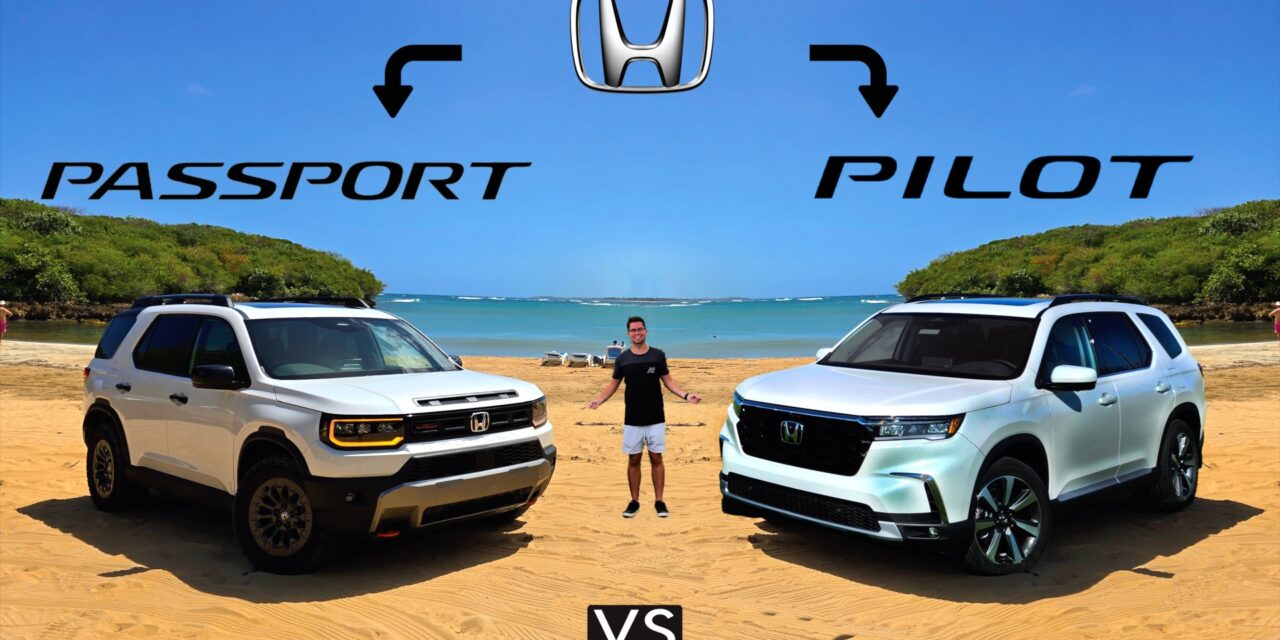
The mid-size, three-row SUV segment is a brutal battleground, a veritable automotive gladiatorial arena where contenders vie for the hearts, minds, and wallets of America’s families. It’s a segment defined by practicality, safety, versatility, and increasingly, an expectation of comfort and technology that belies their workhorse nature. For 2026, the Honda Pilot, a stalwart in this highly competitive space, continues its mission to blend family-friendly functionality with Honda’s legendary reliability. But in a market overflowing with compelling options, the question isn’t just "Is the Pilot good?" but "Is the 2026 Honda Pilot the best SUV for the money when stacked against its formidable rivals?"
Let’s buckle up and dissect the contenders, starting with the refreshed, refined, and always relevant Honda Pilot.
The 2026 Honda Pilot: A Refined Foundation
Honda introduced the fourth-generation Pilot for the 2023 model year, marking a significant evolution in design, capability, and technology. For 2026, we anticipate the Pilot to continue largely unchanged from its current iteration, perhaps with minor trim adjustments, new color options, or software updates. This means it will retain the core strengths that have made it a perennial favorite.
Under the Hood: The Pilot continues to rely on Honda’s venerable 3.5-liter naturally aspirated V6 engine, producing a healthy 285 horsepower and 262 lb-ft of torque. This engine, paired with a smooth 10-speed automatic transmission, delivers robust acceleration and confident highway cruising. While some competitors have moved to turbocharged fours or more complex hybrid systems, Honda sticks with its proven formula – a V6 known for its longevity and smooth power delivery. Fuel economy, while competitive for a V6, doesn’t quite match the hybrid options in the segment, typically hovering around 19-22 MPG combined depending on drivetrain.
The Driving Experience: Honda has tuned the Pilot for comfort and predictability, rather than outright sportiness. The ride is composed, soaking up road imperfections with a maturity that belies its family hauler status. Steering is light and precise, making the Pilot surprisingly easy to maneuver in urban environments despite its size. For those seeking a bit more adventure, the TrailSport trim, with its increased ground clearance, all-terrain tires, and robust i-VTM4 all-wheel-drive system, offers genuine off-road capability that few rivals can match without aftermarket modifications.
Interior and Technology: Inside, the Pilot prioritizes space, durability, and user-friendliness. The cabin is thoughtfully designed, with high-quality materials and excellent fit-and-finish. The standout feature is its cavernous interior, offering ample room for up to eight passengers (or seven with the available removable second-row middle seat, a truly ingenious feature for flexibility). The third row is genuinely adult-friendly for shorter trips, and cargo space is among the best in the class, particularly with the second and third rows folded flat.
Technology-wise, the Pilot boasts a modern infotainment system, typically an 9-inch touchscreen with wireless Apple CarPlay and Android Auto standard on most trims. A comprehensive suite of safety and driver-assist features, Honda Sensing, is standard across the lineup, including adaptive cruise control, lane-keeping assist, and automatic emergency braking. This commitment to safety is a huge part of its "value" proposition.
The "Honda" Factor: What truly cements the Pilot’s value proposition is the "Honda" badge itself. This translates to legendary reliability, low maintenance costs over the long term, and arguably the best resale value in the mainstream segment, often rivaling Toyota. When you consider the total cost of ownership over five or ten years, a Honda often ends up being far more economical than its initial purchase price might suggest.
The Contenders: Who Challenges the Pilot’s Value Crown?
Now, let’s pit the 2026 Pilot against its most formidable adversaries, examining where each excels and where they might fall short in the "best for the money" equation.
1. Toyota Highlander (The Established Rival)
The Highlander is the Pilot’s most direct and enduring competitor. For 2026, we expect the Highlander to continue offering its blend of reliability and practicality.
- Strengths: Like the Pilot, the Highlander boasts stellar reliability and resale value. Its standout feature is the available hybrid powertrain, which delivers exceptional fuel economy (often in the mid-30s MPG combined), making it a compelling choice for those prioritizing long-term fuel savings. The ride is exceptionally smooth and refined, and the interior is well-built.
- Weaknesses: The Highlander’s third row is notably tighter than the Pilot’s, making it less ideal for larger families or frequent adult passengers. Its styling is more conservative, and its infotainment system, while functional, isn’t as intuitive or feature-rich as some rivals. The non-hybrid turbocharged 4-cylinder engine, while efficient, lacks the V6’s smoothness and power delivery.
- Value Proposition: For sheer long-term reliability and exceptional fuel economy (with the hybrid), the Highlander is arguably the best SUV for the money. However, its cramped third row means it might not be the best fit for families needing maximum passenger space. If your priority is fuel savings and bulletproof dependability, the Highlander Hybrid is tough to beat.
2. Hyundai Palisade / Kia Telluride (The Style and Value Kings)
These Korean twins have taken the segment by storm, offering an incredible blend of style, luxury, and features at a price point that undercuts many competitors.
- Strengths: Both the Palisade and Telluride offer head-turning design, inside and out. Their interiors feel genuinely premium, often mistaken for luxury vehicles costing thousands more, with high-quality materials, advanced technology, and spacious cabins. The infotainment systems are intuitive and packed with features. Standard V6 engines provide ample power, and their warranties (10-year/100,000-mile powertrain) are industry-leading.
- Weaknesses: While the V6 is powerful, fuel economy is often a point of criticism, generally slightly worse than the Pilot’s V6 and far behind hybrid options. While their initial quality is excellent, their long-term reliability and resale value, while improving rapidly, haven’t quite reached the legendary status of Honda or Toyota (though this gap is narrowing).
- Value Proposition: If you want the most "bang for your buck" in terms of features, design, and perceived luxury, the Palisade and Telluride are phenomenal. They offer a near-luxury experience at a mainstream price, backed by an unbeatable warranty. For those who value aesthetics and premium amenities, they represent an outstanding value.
3. Mazda CX-90 (The Upscale Challenger)
The new kid on the block, the CX-90, replaces the CX-9 and aims for a more premium, driver-focused experience.
- Strengths: The CX-90 stands out with its standard inline-six turbocharged engines (including a mild-hybrid version) and available plug-in hybrid (PHEV), offering impressive power and efficiency. Its rear-wheel-drive biased platform delivers a more engaging driving experience than most competitors. The interior is truly upscale, with exquisite materials and minimalist design, feeling more like an Acura or Genesis than a mainstream Mazda.
- Weaknesses: As a newer model, its long-term reliability and resale value are yet to be fully established. The third row, while improved over the CX-9, is still tighter than the Pilot’s. Its starting price is generally higher than the Pilot, and options can quickly drive the cost up.
- Value Proposition: The CX-90 offers "premium without the premium badge" for buyers who prioritize driving dynamics, sophisticated design, and cutting-edge powertrains. If you’re willing to pay a bit more for a genuinely upscale and engaging driving experience, and aren’t solely focused on maximum third-row space, the CX-90 offers unique value.
4. Chevrolet Traverse / GMC Acadia (The Spacious Americans)
These GM siblings offer a different take on the three-row SUV, emphasizing maximum interior volume. The Traverse was significantly refreshed for 2024, so the 2026 model will be current-gen.
- Strengths: The Traverse, in particular, boasts one of the most spacious interiors in the segment, with an enormous third row and cavernous cargo capacity. They offer a strong turbocharged 2.5-liter four-cylinder engine (in the refreshed Traverse) and a comfortable ride. The new Traverse also features a more rugged design and impressive tech.
- Weaknesses: Historically, interior material quality hasn’t always matched rivals, though the refreshed Traverse aims to improve this. Fuel economy, particularly with the older V6 in the Acadia, can lag. Resale value and long-term reliability are generally good but don’t quite reach Honda/Toyota levels.
- Value Proposition: If absolute maximum interior space and cargo volume are your top priorities, the Traverse delivers unmatched practicality. For large families who need to haul a lot of gear and people, it offers excellent value.
The Verdict: Is the 2026 Honda Pilot the Best SUV for the Money?
Defining "best for the money" is inherently subjective, as it depends entirely on individual priorities. However, we can break it down based on what different buyers value:
-
For the Pragmatic Family (Reliability, Resale, Space): The 2026 Honda Pilot makes an incredibly strong case. Its combination of a genuinely spacious and versatile interior, top-tier safety, robust V6 engine, proven reliability, and class-leading resale value means it will be an excellent companion for years, costing less to own over the long haul. It’s the "Swiss Army Knife" of the segment.
-
For the Frugal & Eco-Conscious (Fuel Economy & Reliability): The Toyota Highlander Hybrid takes the crown. Its unparalleled fuel efficiency means significant savings at the pump, making its higher initial cost often worthwhile over the vehicle’s lifespan.
-
For the Style-Conscious & Feature-Hungry (Luxury for Less): The Hyundai Palisade / Kia Telluride are unbeatable. They offer an incredible amount of style, premium features, and perceived luxury for their price point, backed by an excellent warranty.
-
For the Driving Enthusiast with a Family (Premium Feel & Dynamics): The Mazda CX-90 offers a sophisticated driving experience and upscale interior that sets it apart, providing a taste of luxury without the full luxury price tag.
-
For the "More is More" Family (Max Space): The Chevrolet Traverse provides an unmatched amount of passenger and cargo volume, making it the king of practicality for sheer size.
Where does the 2026 Honda Pilot stand? It occupies the coveted middle ground, performing exceptionally well across all metrics. It’s spacious, safe, reliable, comfortable, and holds its value like few others. It might not be the absolute cheapest upfront, or the most luxurious, or the most fuel-efficient, or the most thrilling to drive, but it consistently delivers a strong, balanced package.
For the vast majority of families seeking a dependable, spacious, and worry-free three-row SUV that offers excellent long-term value, the 2026 Honda Pilot remains an exceptionally compelling choice. It’s the safe bet, the smart bet, and very often, the best bet for your hard-earned money. It’s not just good; it’s consistently great at being what a family SUV needs to be.