The automotive landscape is a constantly shifting battleground, nowhere more fiercely contested than in the compact SUV segment. These versatile machines, offering a blend of practicality, style, and efficiency, have become the default choice for millions. And at the heart of this segment, a perennial favorite has been the Mazda CX-5, a vehicle celebrated for injecting a dose of driving pleasure and premium feel into an often anodyne category.
But as we gaze into the not-so-distant future, the 2026 model year promises a significant evolution for the CX-5. With Mazda’s well-documented ambitions to move slightly upmarket, the next-generation CX-5 is poised to push boundaries, challenging not just its traditional rivals but potentially even entry-level luxury crossovers. The burning question, however, remains: when stacked against its formidable competitors, will the 2026 Mazda CX-5 truly represent the "best SUV for the money"?
Let’s buckle up and dissect this impending showdown, analyzing Mazda’s likely offensive and how it measures up against the established order of the Honda CR-V, Toyota RAV4, Hyundai Tucson, Kia Sportage, and Subaru Forester.
The Challenger: The Anticipated 2026 Mazda CX-5
While specific details for the 2026 CX-5 remain under wraps, Mazda’s recent trajectory gives us a clear roadmap. We can expect a vehicle that meticulously refines its existing strengths while addressing areas where it might have lagged.
Design & Presence: Mazda’s Kodo design language has consistently produced some of the most elegant and timeless shapes in the mainstream market. For 2026, expect an evolution, not a revolution. The CX-5 will likely feature even cleaner lines, a more assertive grille that seamlessly integrates with slimmer LED lighting signatures, and sculpted body panels that play with light and shadow. The goal will be to project an even greater sense of sophistication and dynamism, blurring the lines between mainstream and premium. Its proportions will likely retain that athletic stance, a hallmark of Mazda’s driver-focused philosophy.
Interior & Ergonomics: This is where Mazda truly shines in the current generation, and the 2026 model should elevate it further. Expect an interior crafted with even more premium materials – soft-touch surfaces will be abundant, complemented by genuine aluminum or open-pore wood accents in higher trims. The driver-centric cockpit will remain, with controls intuitively placed and a focus on minimizing distractions.
Crucially, the infotainment system is ripe for a significant upgrade. While current Mazda Connect systems are praised for their intuitive rotary controller, the screen size and graphical fidelity have started to show their age compared to competitors. The 2026 CX-5 will almost certainly feature a larger, crisper touchscreen display, wireless Apple CarPlay and Android Auto as standard, and potentially advanced telematics with over-the-air update capabilities. The digital gauge cluster, currently available on some Mazda models, will likely become standard or widespread. Expect a serene cabin environment, with further improvements to Noise, Vibration, and Harshness (NVH) levels.
Powertrain & Performance: Mazda’s commitment to the internal combustion engine, while also embracing electrification, means we can expect a diverse powertrain lineup. The venerable 2.5-liter naturally aspirated engine will likely carry over as a base option, possibly with mild-hybrid assistance for improved efficiency and refinement. The potent 2.5-liter turbocharged engine, a standout feature of the current CX-5, will undoubtedly return, offering segment-leading power.
However, the big news could be the introduction of a more significant hybrid variant, potentially a plug-in hybrid (PHEV) that offers a meaningful electric-only range. Mazda has been developing its electrification strategy, and a competitive PHEV option would be vital to challenge the RAV4 Prime and CR-V Hybrid. Rumors of Mazda’s new rear-wheel-drive platform architecture for larger vehicles raise tantalizing possibilities, but it’s more likely the CX-5 will remain on a refined version of its current front-wheel-drive biased platform, maintaining its compact footprint. Nonetheless, Mazda’s "Jinba Ittai" (horse and rider as one) philosophy ensures that precise steering, a finely tuned suspension, and engaging driving dynamics will be non-negotiable.
Technology & Safety: Mazda has been a leader in standardizing advanced safety features, and the 2026 CX-5 will build on this. Expect an even more comprehensive suite of i-Activsense safety technologies, including improved adaptive cruise control with stop-and-go functionality, enhanced lane-keeping assist, blind-spot monitoring, rear cross-traffic alert, and potentially a more advanced semi-autonomous highway driving assist system. Connectivity features, remote vehicle access via a smartphone app, and a premium audio option (Bose, naturally) will round out the tech package.
Value Proposition: The CX-5’s traditional value has come from offering a near-premium experience at a mainstream price point. For 2026, Mazda will likely aim to solidify this by packaging desirable features – such as heated seats, a power liftgate, and key safety tech – as standard or within easily accessible trim levels, making higher trims feel genuinely luxurious without a stratospheric price tag.
The Competitors: The Established Order
The 2026 Mazda CX-5 won’t be entering a vacuum. It will face a gauntlet of incredibly capable and popular rivals, each with its own compelling arguments.
1. Honda CR-V: The undisputed king of practicality and efficiency. The CR-V consistently offers segment-leading interior space, especially for rear passengers and cargo. Its hybrid powertrain is incredibly smooth and fuel-efficient, making it a compelling choice for eco-conscious buyers. Honda’s reputation for reliability and strong resale value is legendary. For 2026, expect minor refinements to its already strong package, focusing on tech updates and perhaps a slight interior refresh.
- Strengths: Unbeatable practicality, excellent fuel economy (especially hybrid), strong reliability, smooth ride.
- Weaknesses: Less engaging to drive than the CX-5, interior design can feel conservative, less premium materials.
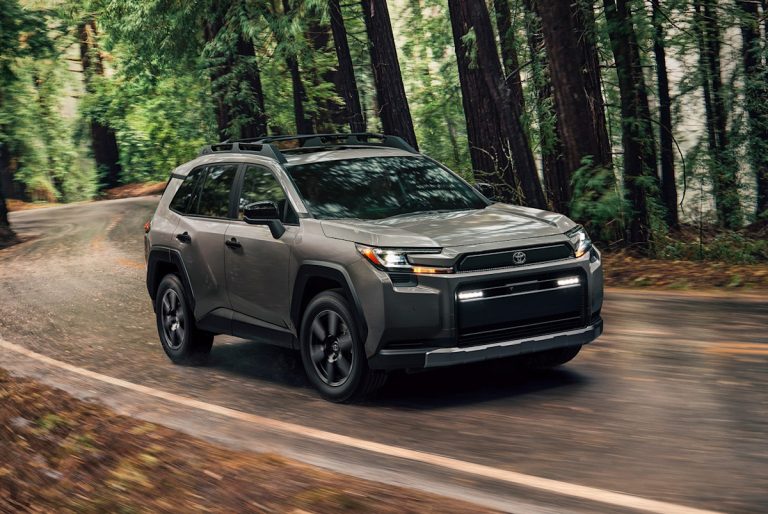
2. Toyota RAV4: A sales juggernaut, the RAV4 has cultivated a rugged, adventure-ready image that resonates with buyers. Its diverse powertrain lineup includes highly efficient hybrid and potent Prime (PHEV) options, offering both capability and impressive fuel economy. Like Honda, Toyota boasts bulletproof reliability and strong resale. The 2026 model will likely see a mid-cycle refresh or a new generation, potentially refining its interior and infotainment, which currently lag behind some rivals.
- Strengths: Broad powertrain options (including PHEV), rugged styling, renowned reliability, strong resale value, good off-road capability in certain trims.
- Weaknesses: Interior plastics can feel cheap, engine noise can be intrusive, less refined driving dynamics than CX-5.
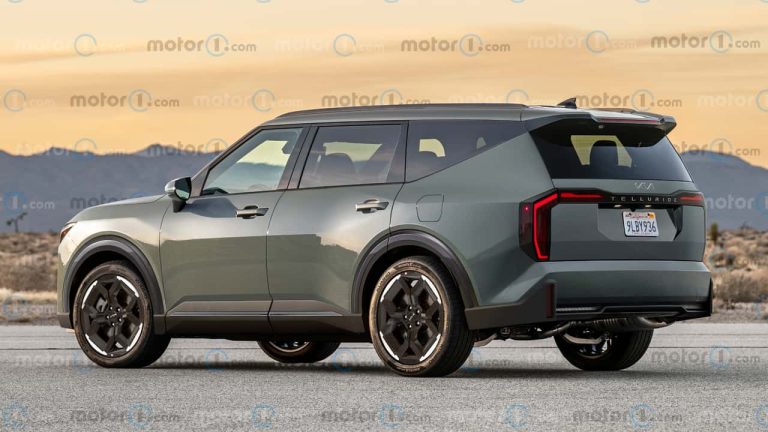
3. Hyundai Tucson / Kia Sportage: These Korean twins have taken the segment by storm with their audacious styling, feature-packed interiors, and industry-leading warranties. Both offer compelling hybrid and PHEV options, along with gasoline engines. Their interiors are modern and packed with large digital displays and advanced connectivity. By 2026, we can expect further refinement, potentially with even more advanced semi-autonomous features and updated styling.
- Strengths: Bold, distinctive styling, feature-rich interiors, competitive hybrid/PHEV options, excellent warranty, strong value proposition.
- Weaknesses: Some find the styling polarizing, button-heavy touchscreens can be distracting, less engaging driving dynamics than CX-5.
4. Subaru Forester: The Forester remains the choice for those prioritizing all-weather capability, safety, and a commanding view of the road. Standard Symmetrical All-Wheel Drive, impressive ground clearance, and excellent outward visibility make it an outdoorsy favorite. Subaru’s EyeSight safety suite is among the best. A new generation is expected soon, which will likely bring updated styling, improved interior tech, and potentially a more powerful engine option, as its current powertrain can feel underpowered.
- Strengths: Standard AWD, excellent visibility, top-tier safety (EyeSight), robust build, off-road prowess.
- Weaknesses: Less refined interior, relatively uninspired styling, engine can feel underpowered, CVT drone.
Head-to-Head: The "Best for the Money" Equation
Defining "best for the money" isn’t just about the lowest sticker price; it’s a holistic assessment of initial cost, features, quality, driving experience, fuel economy, safety, reliability, and ultimately, resale value.
-
Driving Dynamics: This is where the 2026 CX-5 is poised to retain its crown. No competitor in the mainstream segment comes close to Mazda’s blend of precise steering, balanced chassis, and communicative feel. While the CR-V is smooth and the RAV4 capable, neither offers the engagement that makes the CX-5 a joy to drive.
-
Interior Quality & Design: The CX-5 will likely continue to lead here, offering a more upscale ambiance than any of its direct rivals. The tactile quality of materials, the ergonomic layout, and the minimalist aesthetic will set it apart from the more utilitarian CR-V and RAV4, and even surpass the feature-rich but sometimes busy interiors of the Tucson and Sportage.
-
Technology & Infotainment: This has been a mixed bag for Mazda. If the 2026 CX-5 delivers on a truly modern, large, and responsive infotainment system with seamless connectivity, it will be competitive with Hyundai/Kia and surpass Toyota/Honda. However, if Mazda merely offers incremental updates, it might still lag behind the segment’s tech leaders.
-
Space & Practicality: The CR-V and RAV4 are likely to maintain their advantage in sheer cargo volume and rear-seat legroom. While the CX-5 is perfectly adequate for most families, it typically isn’t the segment leader in outright spaciousness. Buyers prioritizing maximum utility might lean towards the Hondas and Toyotas.
-
Fuel Economy: Here, the hybrid specialists – Honda CR-V Hybrid and Toyota RAV4 Hybrid/Prime – will likely remain the benchmarks. The 2026 CX-5’s mild-hybrid and potential PHEV options will close the gap significantly, but consistently beating the dedicated hybrid architectures might be a stretch for the gasoline-focused Mazda.
-
Safety: All these manufacturers offer comprehensive safety suites. Mazda’s i-Activsense is excellent, as is Subaru’s EyeSight and Honda’s Sensing. The difference will come down to nuances in implementation and the sophistication of semi-autonomous features.
-
Value & Pricing: This is the crux. Mazda’s strategy of offering a premium experience for less than a true luxury badge will continue. The 2026 CX-5 will likely be priced competitively, perhaps slightly above the base models of some rivals but below their fully loaded counterparts, while offering a richer standard feature set and a superior driving experience. The "money" aspect isn’t just about the initial purchase; it also includes ownership costs, maintenance, and crucially, resale value. While Toyota and Honda typically dominate resale, Mazda has consistently performed well, and its premium aspirations could boost this further.
The Verdict: A Nuanced Answer
So, will the 2026 Mazda CX-5 be the "best SUV for the money"? The answer, as is often the case in this segment, is: it depends on your priorities.
-
For the pragmatic buyer who prioritizes maximum space, bulletproof reliability, and class-leading fuel economy, the Honda CR-V or Toyota RAV4 will likely remain top contenders. They offer undeniable value in their utility and long-term ownership.
-
For the tech-savvy buyer who wants audacious style, a feature-packed interior, and an unbeatable warranty, the Hyundai Tucson or Kia Sportage will present an incredibly strong case for the money.
-
For the outdoors enthusiast who needs confidence in all conditions and prioritizes safety above all, the Subaru Forester will continue to be the sensible and capable choice.
-
However, for the discerning buyer who values a genuinely engaging driving experience, a meticulously crafted interior that punches above its weight, sophisticated design, and a near-premium feel without the premium price tag, the 2026 Mazda CX-5 is poised to be the undisputed champion for the money. It offers an emotional connection and a sense of refinement that its rivals simply cannot match.
The 2026 Mazda CX-5 isn’t just an appliance; it’s a statement. It’s for those who appreciate the finer things in a vehicle, who enjoy the act of driving, and who want a compact SUV that feels special every time they get behind the wheel. If Mazda can deliver on its promises of enhanced technology and competitive electrification while maintaining its core strengths, the next-gen CX-5 will undoubtedly solidify its position as one of the most compelling and indeed, for many, the best SUVs for the money in a relentlessly competitive segment. The battle is set, and the anticipation is palpable.