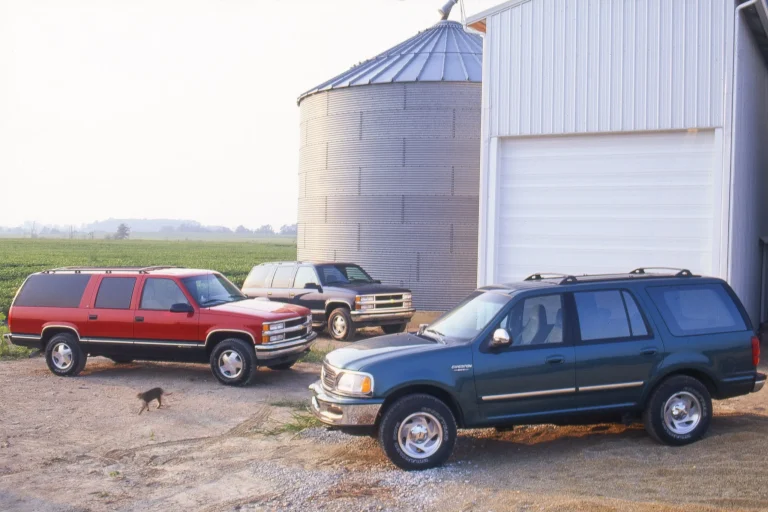
SpeedSUVs.com — At the turn of the millennium, major metropolitan areas across the United States experienced a massive shift in urban luxury transportation. Almost overnight, the classic four-door sedan limousines that had dominated upscale transport for decades began to disappear from city streets. They were rapidly replaced by full-size SUVs, which quickly became the preferred choice for high-end car services, luxury hotels, and VIP transport fleets. These large SUVs offered spacious cabins, a commanding road presence, and highly durable truck-based frames that were far better suited to navigating the deteriorating infrastructure of cities like New York, Los Angeles, and Chicago. Over time, as automakers began phasing out traditional luxury sedans, this transition solidified. Today, a quarter-century into the 21st century, Mercedes-Benz is aiming to launch another major transformation in the premium transport industry with the introduction of its all-new, all-electric VLE-Class. Aimed directly at the premium commercial car-service market and affluent personal buyers, this electric vehicle is designed to redefine high-end passenger travel.
Redefining the Luxury Transport Segment
Mercedes-Benz executives are highly confident that this passenger vehicle can establish an entirely new category in the automotive market. In fact, company representatives vehemently reject the “minivan” label for the VLE-Class. They insist that this vehicle is a distinct class of its own, far superior to any existing luxury-oriented minivans currently on the market. To emphasize this premium distinction, Mercedes-Benz refers to the high-end versions of the VLE-Class as a “Grand Limousine.” The brand’s U.S. dealer network reportedly views the word “minivan” as a negative term, preferring to position this vehicle as a top-tier luxury cruiser that transcends conventional vehicle classifications. This strategic positioning is designed to appeal to high-end fleet operators and private clients who demand the utmost in prestige and comfort.
A Ground-Up Dedicated Passenger Platform
For years, luxury fleets have utilized converted commercial vans, such as the full-size Mercedes-Benz Sprinter or the smaller Metris (known globally as the V-Class). While these vehicles have been heavily modified by aftermarket upfitters to feature high-end sound insulation, advanced touchscreens, and luxurious seating, they remain commercial work vehicles at their core. The 2028 Mercedes-Benz VLE-Class represents a complete departure from this philosophy. It has been engineered from the ground up as a dedicated passenger vehicle. The entire platform is focused on passenger comfort, refinement, and effortless operation, with zero commercial vehicle compromises. By utilizing a dedicated electric vehicle skateboard chassis, engineers were able to maximize interior volume, lower the center of gravity, and create a completely flat floor that enhances passenger mobility inside the cabin.
Interior Configurations and the “Seat Ballet”
The interior layout of the VLE-Class is highly versatile, capable of accommodating up to eight passengers when configured with rear bench seats. However, the real centerpiece of the lineup is the two-by-two-by-two configuration, which successfully replicates the ambiance of a private jet on wheels. Every seating position in this layout offers an exceptional level of comfort, featuring high-quality materials and ergonomic support. During our first drive, we noted some interesting design choices in the cabin. The driver’s seat in the premium Exclusive trim offers slightly less fore-and-aft travel and backrest adjustment compared to the base models. Mercedes-Benz engineers explained that this limitation is due to the complex hardware required for the advanced, electrically adjustable sliding rear seats—a system the company refers to as a “seat ballet.” This design choice intentionally prioritizes maximum legroom and comfort for the VIP passengers riding in the rear, ensuring they have an unparalleled travel experience.

Ingenious Practicality and Premium Access
Despite the luxury branding, the VLE-Class retains some of the most practical features of a passenger vehicle, such as dual power-sliding side doors. However, these doors are elevated with premium touches, including roll-down windows and versatile control options. Passengers can operate the doors using switches mounted on the interior B-pillars, which feature a tiny selector switch to control either side. The driver can also operate the doors from the front cabin, or they can be opened remotely via a smartphone application. This makes curbside entry and exit incredibly smooth, even in congested urban environments where space is at a premium and quick passenger transfer is essential.
The MBUX Rear Space Experience
The true highlight of the rear cabin is the massive 31.3-inch panoramic screen that folds down from the ceiling. Known as the MBUX Rear Space Experience, this theater-grade display works in harmony with the available Burmester premium audio system, featuring Dolby Atmos sound processing. The system delivers an immersive, cinema-like experience that can entertain the most demanding passengers. When activated via wireless remotes, the screen’s startup sequence can be programmed to automatically raise the window sunshades as the display deploys, creating an elegant, dramatic effect. To ensure all buyers can enjoy this feature, Mercedes-Benz makes the panoramic screen available even on the base trim level, demonstrating their commitment to delivering a high-tech cabin environment across the entire lineup.
Advanced Electric Powertrains and Charging Infrastructure
To support its luxurious cabin and heavy footprint, the VLE-Class features advanced electric drivetrains. Buyers can choose between two distinct configurations depending on their performance and traction needs. The entry-level VLE300 features a single electric motor mounted on the front axle, producing 272 horsepower. For those seeking more power and all-wheel-drive capability, the VLE400 features a dual-motor setup that delivers a combined 413 horsepower. The VLE-Class is built on an advanced 800-volt electrical architecture, featuring a nickel-manganese-cobalt (NMC) battery pack with a usable capacity of 115 kWh. When connected to a compatible 300-kW DC fast-charger, the vehicle can add up to 220 miles of driving range in just 15 minutes, ensuring minimal downtime for commercial operators and private owners alike. This rapid charging capability is crucial for high-utilization fleet environments where time is money.
Driving Dynamics and Urban Maneuverability
For our initial test drive, we got behind the wheel of a European-spec VLE400 finished in Obsidian Black and equipped with the sporty AMG Line Plus package. Rolling on 21-inch AMG twin-spoke wheels, the VLE400 set off in near-total silence. The standard air suspension provided an incredibly smooth, supple ride at low speeds, making the vehicle feel exceptionally refined when navigating slow-speed environments like hotel driveways, airport terminals, or movie studio lots. Driving through the tight, historic streets of Bilbao, Spain, the VLE-Class revealed its most impressive technological feature: a rear-wheel-steering system capable of pivoting the rear wheels up to seven degrees. This technology completely transforms the driving experience of a vehicle this size.

Comparing Turning Radii and Footprints
The European-spec model we tested measures 209.0 inches in length with a 131.6-inch wheelbase. Thanks to the active rear-wheel steering, it boasts a turning radius of just 35.7 feet. For comparison, a standard Chevrolet Suburban requires 41.5 feet of space to turn around, making the VLE-Class feel incredibly nimble by comparison. However, U.S. customers should note that North America will exclusively receive the long-wheelbase version of the VLE-Class. This model is nearly seven inches longer overall and features a 138.0-inch wheelbase, which increases the turning circle slightly to 37.5 feet. Even with this larger footprint, the VLE-Class remains highly maneuverable in tight urban spaces, allowing drivers to navigate narrow streets and tight parking garages with ease.
Advanced Safety and Autonomous Assistance Systems
Navigating congested city streets is made easier by an extensive suite of driver assistance systems. The VLE-Class is equipped with 10 external cameras, five radar sensors, and 12 ultrasonic sensors that continuously monitor the vehicle’s surroundings. These sensors work together to create a 360-degree safety shield, helping prevent collisions with pedestrians, cyclists, and other vehicles in urban environments. The automated safety systems include a highly capable park-assistance function, which successfully parked the vehicle in tight spots in about 80 percent of our test attempts. Additionally, the vehicle features an innovative “Reverse Maneuvering Function.” This system automatically memorizes the last 490 feet of forward travel. If a driver finds themselves stuck in a tight alley or dead-end street, the system can autonomously retrace its path in reverse, steering the vehicle safely out of the obstacle. While the experience can feel unusual at first, the system performed flawlessly during our testing.
Highway Performance and Cabin Serenity
Once out of the city and on the open highway, the VLE-Class offers a serene and quiet driving experience. The dual-motor VLE400 has plenty of power for merging and passing, and the cabin remains whisper-quiet, allowing for easy conversation between passengers in different rows. The seats provide excellent support for long-distance journeys, and the Burmester audio system delivers rich, immersive sound. At speeds above 40 mph, the suspension can occasionally transmit sharp pavement imperfections into the cabin, but this is a minor trade-off for the soft, low-speed ride quality that prioritizes passenger comfort in urban settings.
Real-World Range and Efficiency Challenges
In terms of driving range, Mercedes-Benz claims the VLE-Class can travel up to 650 kilometers (approximately 343 miles) on a single charge under the European WLTP testing cycle. To test the vehicle’s real-world efficiency, Mercedes-Benz challenged journalists to beat a 15.2 kWh per 100 kilometers consumption average set by their own employees on a 20-mile test loop. By utilizing maximum regenerative braking, careful throttle inputs, and turning off the climate control, we managed to achieve an impressive consumption rate of 14.8 kWh per 100 kilometers, demonstrating the efficiency of the platform. This real-world test highlights the capability of the vehicle’s regenerative braking system and aerodynamic design, which help maximize range even when carrying heavy passenger loads.

U.S. Market Launch and Future Customization
The Mercedes-Benz VLE-Class is scheduled to arrive in the United States in the second half of 2027 as a 2028 model. While Mercedes-Benz expects the commercial car-service industry to account for roughly 80 percent of sales in Europe, the company is still evaluating how the market split will look in the United States. Executives plan to monitor initial customer feedback closely after launch to tailor packages and options for American buyers. While specific trim levels and pricing for the U.S. market have not yet been finalized, Mercedes-Benz indicates that North American models will focus heavily on high-end luxury configurations. The company is open to offering highly customized Manufaktur options for buyers willing to pay a premium, and executives have not ruled out the possibility of an ultra-luxury Mercedes-Maybach version in the future to compete with the absolute pinnacle of luxury transport.