SpeedSUVs.com — The Chevrolet Camaro nameplate is preparing for a significant evolution as General Motors plans to bring back the iconic muscle car in a brand-new format. After ending production of the sixth-generation model following the 2024 model year, Chevrolet left a noticeable void in its performance lineup. This departure left the high-end Corvette as the brand’s sole sports car offering, forcing enthusiasts to face a steep starting price of over $72,000. The upcoming 2029 Chevrolet Camaro aims to bridge this gap, offering an attainable, high-performance alternative that maintains General Motors’ dedication to internal-combustion engines.
Historical Legacy and the Shift to a Sedan Layout
Since its original debut in the 1967 model year, the Chevrolet Camaro has stood as the direct and fiercest rival to the Ford Mustang. Over its multi-decade history, the nameplate has experienced periods of transition, including a notable hibernation period between 2003 and 2009. The fifth-generation model made a triumphant return in 2010, followed by a highly acclaimed sixth-generation iteration that earned numerous accolades, including multiple 10Best awards. However, sliding sales ultimately led to the model being axed in 2024.
The upcoming seventh-generation Camaro represents a bold shift in strategy. Instead of sticking strictly to the traditional two-door coupe format, reports indicate that the Camaro badge will return on a four-door sedan model. This new configuration is designed to offer far greater versatility, allowing Chevrolet to compete directly with the four-door Dodge Charger. To appeal to traditionalists, Chevrolet may also offer a two-door variant featuring a classic 2+2 seating arrangement, though the rear seats would likely remain best suited for small children or short trips. Design-wise, the vehicle is expected to adopt a sleek fastback profile with a sloping roofline and an integrated hatchback, paying homage to the styling cues of the third- and fourth-generation Camaro models.
Platform and Architectural Foundation
Underpinning the 2029 Chevrolet Camaro is an updated version of GM’s highly regarded Alpha platform, designated as the Alpha 2 architecture. This rear-wheel-drive platform has already proven its performance capabilities under the previous Camaro, as well as the Cadillac CT4 and CT5 sedans. Notably, the Alpha architecture has served as the backbone for high-performance benchmarks like the Cadillac CT4-V Blackwing and CT5-V Blackwing. By refining this existing platform rather than adopting the VSS-R platform utilized for the Chinese-market Cadillac CT6, Chevrolet ensures that the new Camaro retains its signature handling dynamics.
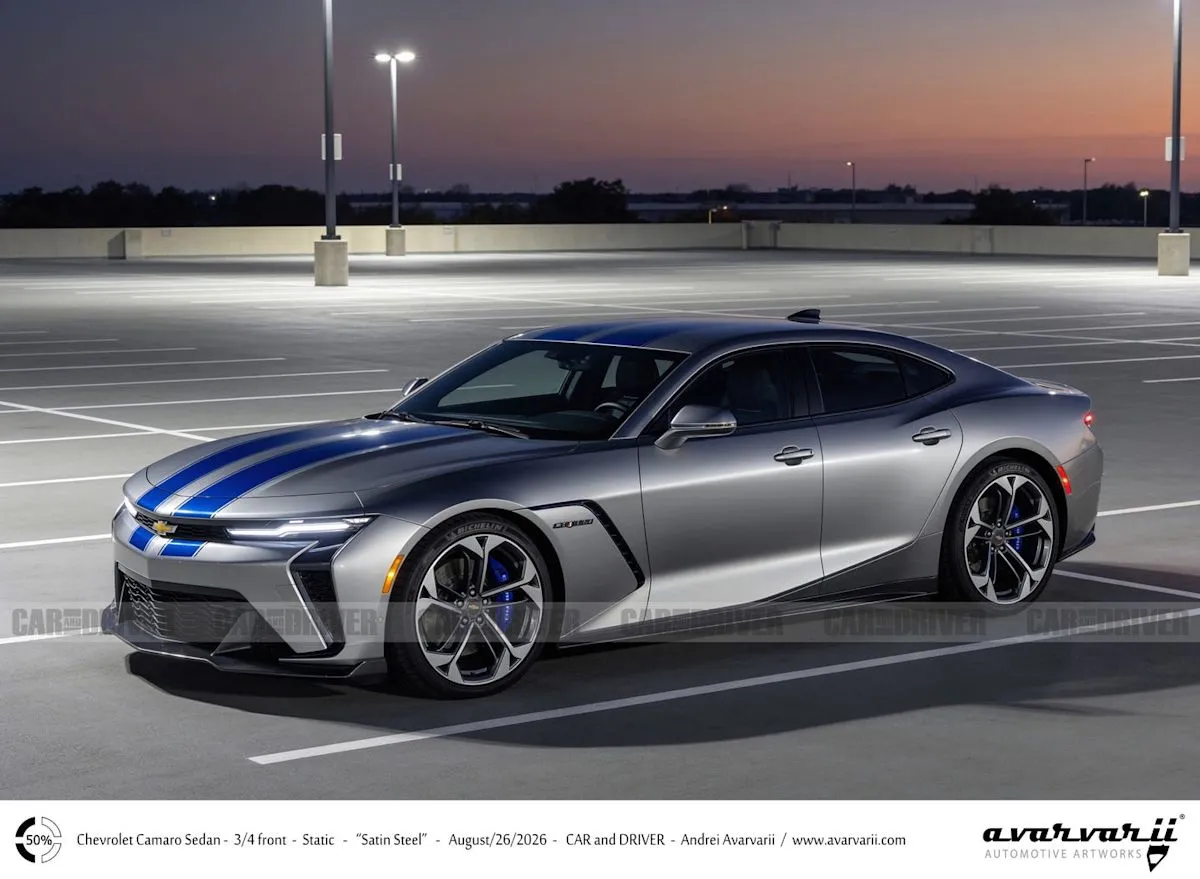
The Alpha 2 platform is inherently engineered for front-engine, rear-wheel-drive configurations, which aligns perfectly with the Camaro’s muscle car heritage. However, there is a strong possibility that Chevrolet will introduce an all-wheel-drive (AWD) option. Because AWD is already compatible with the CT4 and CT5, implementing it on the Camaro would be a logical step. An all-wheel-drive option would significantly boost the vehicle’s appeal in colder climates, offering a major sales advantage over the rear-wheel-drive-only Ford Mustang while directly challenging the all-wheel-drive capabilities of the Dodge Charger.
Powertrain Expectations: Four-Cylinder and V-8 Options
To keep entry-level pricing accessible and competitive against the four-cylinder Ford Mustang, the base 2029 Camaro is expected to feature a turbocharged inline-four engine. This entry-level powertrain will likely be a version of the 2.7-liter turbocharged four-cylinder currently utilized in the Cadillac CT4. In its current CT4-V application, this engine generates 325 horsepower and 380 pound-feet of torque, while truck applications in the Chevrolet Silverado and Colorado push its torque output up to 430 pound-feet. This robust low-end torque will ensure that even the base Camaro delivers spirited performance.
For enthusiasts demanding traditional muscle car power, Chevrolet will offer an optional high-performance V-8 engine. The primary candidate is the new LS6 6.7-liter small-block V-8, which is scheduled to debut in the 2027 Corvette Stingray and Grand Sport. In the Corvette, this engine produces an impressive 535 horsepower and 520 pound-feet of torque. Implementing this engine in the Camaro would represent a massive power upgrade over the previous generation’s LT1 V-8. Furthermore, future high-performance variants such as a ZL1 or Z/28 could potentially adopt the Corvette’s optional 5.5-liter V-8.
Transmission choices are expected to include a standard 10-speed automatic, but purists are highly hopeful that Chevrolet will also offer a six-speed manual transmission, similar to the gearboxes currently available in the Cadillac Blackwing sedans. To minimize manufacturing complexity, Chevrolet is expected to skip a middle-tier V-6 option. Additionally, a fully electric Camaro is highly unlikely at launch, especially considering the market struggles and slow sales of electric competitors like the Dodge Charger Daytona.

Pros and Cons of the 2029 Camaro Revival
Every major automotive shift comes with trade-offs. Examining the pros and cons of this upcoming model highlights what enthusiasts can look forward to and what risks General Motors must manage.
Pros
- Attainable Performance: With an estimated base price starting around $40,000, the new Camaro will offer a much more affordable entry point into Chevrolet’s performance lineup compared to the $72,000 Corvette.
- Enhanced Practicality: The transition to a four-door sedan layout and a fastback hatchback design makes the vehicle much more usable for daily driving and family transport.
- Proven Platform: Utilizing the refined Alpha 2 architecture ensures exceptional handling, rigidity, and driving dynamics, inherited from Cadillac’s acclaimed Blackwing series.
- Powerful V-8 Option: The expected inclusion of the 535-horsepower 6.7-liter LS6 V-8 guarantees that the Camaro will remain a true American muscle car at heart.
- All-Wheel-Drive Potential: A potential AWD option would expand the vehicle’s market reach into cold-weather regions and provide a competitive edge over the Ford Mustang.
Cons
- Purist Backlash: Rebranding the Camaro nameplate onto a four-door sedan could alienate traditional buyers who view the car strictly as a two-door coupe.
- Risk of No Manual Transmission: If Chevrolet decides to offer the vehicle exclusively with an automatic transmission, it could lose a significant portion of the enthusiast market.
- Design Vulnerability: Moving to a four-door fastback layout is a difficult styling challenge; a polarizing exterior design could quickly hurt sales.
- Market Pressure: Entering a shrinking sports car segment means the vehicle must execute its performance and pricing strategies perfectly to survive.
Market Competition and Arrival Outlook
The 2029 Chevrolet Camaro will face direct competition from its long-term rivals. Its primary competitor will remain the Ford Mustang, which continues to champion the traditional two-door coupe format, alongside the newly redesigned Dodge Charger. If Chevrolet decides to release a two-door version of the Camaro, it will also compete with international sports cars such as the 400-horsepower Nissan Z and the 473-horsepower BMW M2.
Production of the new Camaro is slated to take place at the Lansing Grand River Assembly plant in Michigan, where it will be built alongside its Cadillac and Buick platform-mates. Production is expected to commence in late 2027. While initial projections targeted a 2028 model year release, current industry rumors suggest the vehicle may not officially arrive in dealerships until the 2029 model year. Pricing is estimated to start around $40,000 for the turbocharged four-cylinder base model, while the V-8 powered versions are expected to command a starting price of over $50,000.
Conclusion
The return of the Chevrolet Camaro as a four-door sedan represents a bold, practical, and highly strategic pivot for General Motors. By combining the everyday utility of a sedan with the high-octane performance of a Corvette-derived V-8 engine, Chevrolet is attempting to broaden the vehicle’s appeal without losing its muscle car soul. While purists may hesitate at the four-door configuration, the promise of an affordable, rear-wheel-drive performance machine built on the exceptional Alpha 2 platform makes the 2029 Camaro a vehicle well worth waiting for.