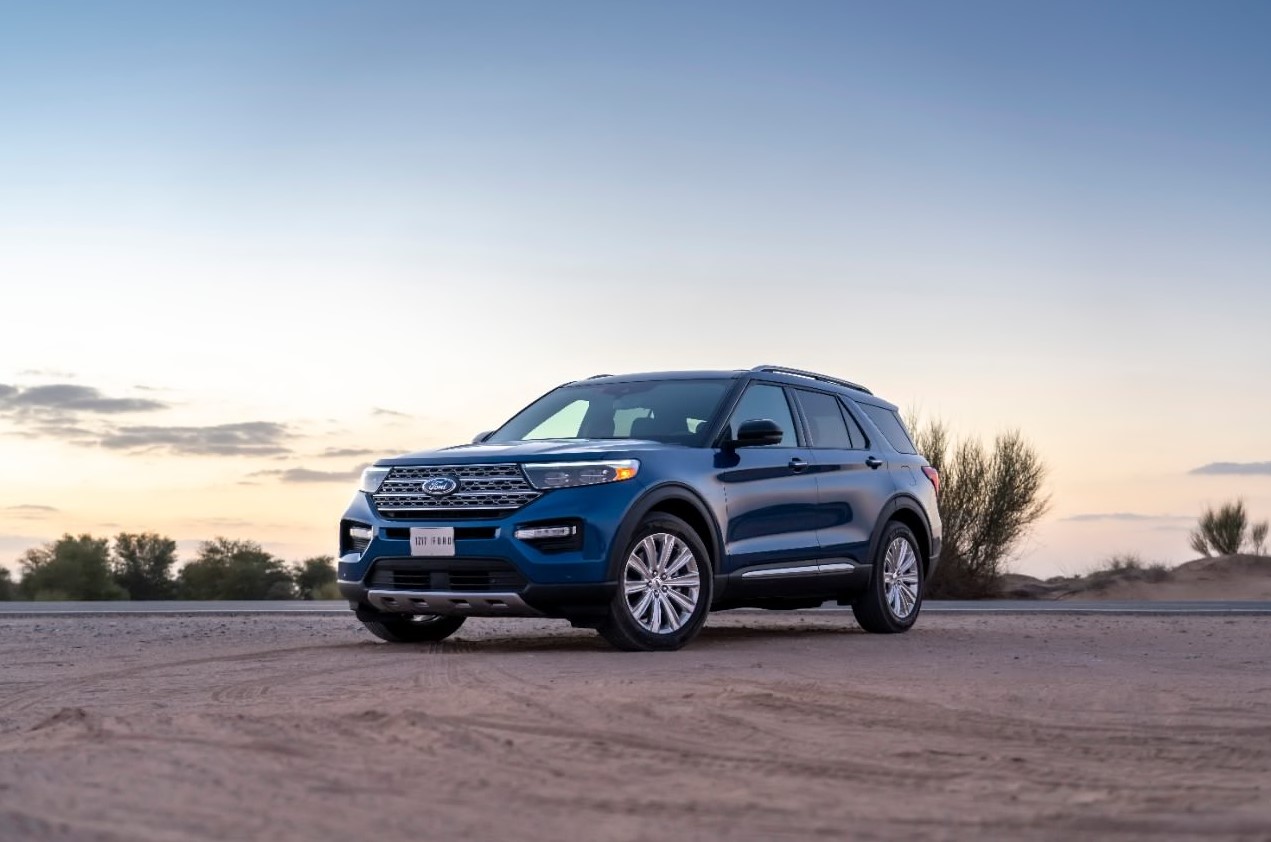
Few names resonate with American families and adventurers quite like the Ford Explorer. Since its pioneering debut in the early 1990s, it has defined the family SUV segment, evolving through generations to meet changing demands while retaining its core identity of versatility, capability, and value. For 2026, the Explorer isn’t just treading water; it’s building on its recent 2025 refresh, solidifying its position as a compelling choice in a fiercely competitive market, refining its offerings, and subtly hinting at a more electrified future.
As we look ahead to the 2026 model year, Ford is poised to further polish the Explorer’s already impressive package. Expect a vehicle that continues to blend rugged charm with sophisticated technology, offering a spacious sanctuary for seven passengers and the robust performance required for both daily commutes and epic road trips. This isn’t a ground-up revolution, but rather a strategic evolution, meticulously tuned to ensure the Explorer remains a formidable contender against a growing legion of rivals.
Exterior Design: Sharpened Lines, Unmistakable Presence
The 2026 Ford Explorer carries forward the refreshed aesthetic introduced in 2025, a design language that successfully modernized its appearance without alienating its loyal fanbase. The overall stance remains commanding, projecting an aura of capability and confidence. For 2026, we anticipate minor but impactful refinements.
The front fascia continues to be dominated by a larger, more assertive grille, its design varying subtly across trim levels. The entry-level XLT might feature a satin silver finish, while the ST-Line and ST variants will likely boast a black mesh grille, emphasizing their sportier aspirations. The luxurious Platinum trim, on the other hand, could receive unique chrome accents or a distinctive pattern to underscore its premium positioning. The signature C-clamp LED daytime running lights, integrated seamlessly with the headlamp clusters, are expected to remain a prominent design cue, offering excellent visibility and a modern visual signature.
Along the flanks, the Explorer maintains its clean, muscular profile. Subtle character lines add depth and dynamism, breaking up the sheet metal without resorting to excessive ornamentation. Wheel designs for 2026 are likely to see new options, ranging from practical 18-inch alloys on base models to striking 21-inch polished or black-painted wheels on higher trims, each carefully chosen to complement the vehicle’s aesthetic. The rear design remains cohesive, with updated LED taillights that stretch horizontally, visually widening the vehicle and providing a distinctive nighttime signature. The Explorer badging, prominently displayed, serves as a proud declaration of its heritage.
Aerodynamics will undoubtedly continue to play a role, with subtle tweaks to elements like the rear spoiler and underbody paneling contributing to improved fuel efficiency and reduced wind noise – a testament to Ford’s continuous engineering efforts. The overall impression is one of purposeful elegance, a vehicle that looks equally at home pulling a boat to the lake or navigating the urban jungle.
Interior & Comfort: A Sanctuary of Space and Sophistication
Step inside the 2026 Explorer, and you’re greeted by an interior that prioritizes comfort, connectivity, and versatility. Building upon the 2025 overhaul, which introduced a substantially revised dashboard and upgraded materials, the 2026 model will likely refine these elements further, offering an even more premium and intuitive experience.
The centerpiece of the cabin is the expansive 13.2-inch touchscreen infotainment display, seamlessly integrated into the dashboard. Its portrait orientation (or perhaps a landscape option depending on Ford’s continued evolution) provides ample real estate for navigation, media, and vehicle settings. Below it, redesigned physical controls for climate and audio functions provide a welcome tactile experience, ensuring essential adjustments can be made without diverting attention from the road. The digital gauge cluster, expected to be standard on most trims, offers customizable displays, putting vital driving information right in the driver’s line of sight.
Material quality continues its upward trend. Soft-touch surfaces are liberally applied across the dashboard and door panels, with higher trims featuring genuine leather upholstery, open-pore wood accents, or brushed aluminum trim, elevating the cabin’s ambiance. Seating comfort is paramount in a three-row SUV, and the Explorer delivers. The front seats are supportive and well-bolstered, with heating, ventilation, and massage functions available on higher trims for ultimate long-distance comfort.
The second row offers ample legroom and headroom, with either a bench seat for three or optional captain’s chairs for two, providing a more executive-like experience with easier access to the third row. Speaking of the third row, while still best suited for children or smaller adults on longer journeys, it benefits from improved access thanks to the second-row’s easy-fold mechanism. USB-C ports, climate vents, and cupholders are thoughtfully placed throughout the cabin, ensuring all passengers remain comfortable and connected.
Cargo versatility remains a core strength. With all seats in place, the Explorer offers a respectable amount of space for groceries or school bags. Fold down the third row, and a cavernous cargo area emerges, perfect for luggage or larger items. Drop both the second and third rows, and the Explorer transforms into a veritable hauler, boasting one of the largest cargo capacities in its class. The power liftgate, with available hands-free operation, makes loading and unloading a breeze. Noise isolation is also expected to be a strong point, with acoustic laminated glass and enhanced insulation creating a serene cabin environment, even at highway speeds.
Technology & Infotainment: Seamless Connectivity and Intuitive Control
The 2026 Explorer will continue to leverage Ford’s cutting-edge technology to enhance the driving and passenger experience. The SYNC 4A infotainment system, running on the large central display, is expected to be even more refined. Its intuitive interface, rapid response times, and over-the-air update capabilities ensure it remains current and capable.
Wireless Apple CarPlay and Android Auto are standard, allowing seamless smartphone integration without the clutter of cables. FordPass Connect with 4G LTE Wi-Fi hotspot capability keeps everyone connected on the go, supporting multiple devices. The available Bang & Olufsen sound system transforms the cabin into a concert hall, delivering crisp highs and deep bass.
Beyond entertainment, the Explorer’s technological prowess extends to convenience. Available features like a wireless charging pad, multiple USB ports (both A and C), and even a 120V AC outlet ensure all your devices stay powered. The optional head-up display projects critical information onto the windshield, allowing the driver to keep their eyes on the road. Ford’s digital key technology, allowing your smartphone to act as a key, is also a strong possibility for the 2026 model, adding a layer of modern convenience.
Performance & Powertrains: Power, Efficiency, and a Glimpse of the Future
Under the hood, the 2026 Ford Explorer is expected to carry over its well-regarded powertrain options, known for their balance of power and efficiency, all paired with a smooth-shifting 10-speed automatic transmission.
- 2.3-liter EcoBoost I-4: This turbocharged four-cylinder engine, producing around 300 horsepower and 310 lb-ft of torque, serves as the capable standard engine. It provides ample power for daily driving, highway merging, and light towing, delivering respectable fuel economy for its class.
- 3.0-liter EcoBoost V6: Available in the ST, ST-Line, and Platinum trims, this twin-turbocharged V6 is the performance king. In the ST, it unleashes a potent 400 horsepower and 415 lb-ft of torque, transforming the family SUV into a surprisingly agile and exhilarating machine. Even in the Platinum, it offers robust power for effortless cruising and confident passing.
Rear-wheel drive remains standard, emphasizing the Explorer’s capable platform, while Ford’s intelligent all-wheel-drive system is available across the lineup. This system can send power to all four wheels as needed, enhancing traction and stability in various road conditions, and is particularly beneficial for those living in regions with inclement weather or who frequently venture off paved roads. The available Terrain Management System further optimizes driving dynamics for different surfaces like snow, sand, and trail.
Towing capacity continues to be a strong suit, with properly equipped Explorers capable of pulling up to 5,600 pounds, making it suitable for towing small boats, campers, or utility trailers.
A Look Ahead: Electrification Whispers
While the current powertrains are excellent, the 2026 model year is a prime opportunity for Ford to further emphasize its commitment to electrification. While a full battery-electric Explorer might still be a few years away (potentially arriving as a separate model or a complete redesign later in the decade), a more advanced hybrid variant is a strong possibility. The current Explorer Hybrid is commendable, but an updated, perhaps more powerful and efficient, plug-in hybrid (PHEV) option could join the lineup for 2026. This would offer a significant all-electric range for daily commutes, combined with the flexibility of a gasoline engine for longer journeys, appealing to a broader range of environmentally conscious buyers without range anxiety. Ford’s strategy often involves offering diverse powertrain choices, and the 2026 Explorer could be a testament to this, bridging the gap towards a more electrified future.
Safety & Driver-Assist Features: Confidence on Every Journey
Ford has consistently prioritized safety, and the 2026 Explorer will be no exception. The comprehensive Ford Co-Pilot360 suite of driver-assist technologies is expected to be standard across the lineup, providing a robust layer of protection and convenience. This includes:
- Pre-Collision Assist with Automatic Emergency Braking: Detects potential collisions with vehicles or pedestrians and can apply the brakes if the driver doesn’t react in time.
- Lane-Keeping System: Helps keep the vehicle centered in its lane and alerts the driver if it detects unintentional lane departure.
- Blind Spot Information System (BLIS) with Cross-Traffic Alert: Warns the driver of vehicles in their blind spots and alerts them to approaching traffic when backing out of a parking space.
- Automatic High-Beam Headlamps: Automatically switches between high and low beams depending on traffic conditions.
- Rearview Camera: Essential for safe backing maneuvers.
Beyond the standard features, higher trims and optional packages will offer even more advanced systems. These could include:
- Adaptive Cruise Control with Stop-and-Go and Lane Centering: Maintains a set distance from the vehicle ahead, even in stop-and-go traffic, and actively helps keep the vehicle centered in its lane.
- Evasive Steering Assist: Provides additional steering support to help drivers avoid potential collisions.
- Reverse Brake Assist: Can automatically apply the brakes if an obstacle is detected while backing up.
- Active Park Assist 2.0: Takes over steering, shifting, braking, and acceleration to automatically park the vehicle in parallel or perpendicular spots.
- Ford BlueCruise: Ford’s hands-free highway driving system is a strong candidate for an optional feature on the 2026 Explorer, offering a taste of semi-autonomous driving on designated highways, further enhancing long-distance comfort and reducing driver fatigue.
With a robust body structure and a full complement of airbags, the 2026 Explorer is anticipated to earn top safety ratings from both the NHTSA and IIHS, providing peace of mind for drivers and passengers alike.
Trim Levels & Estimated Pricing: Tailored to Every Need
The 2026 Ford Explorer will likely continue its established trim structure, offering a range of options to suit various budgets and preferences, from value-oriented family haulers to luxurious cruisers and performance-focused machines. Pricing will naturally see a slight increase over the 2025 model year due to inflation and added features, but Ford will aim to remain competitive.
- Explorer (Base Model): While a true "base" model might be less common, this would offer the essential Explorer experience.
- Estimated Starting Price: Around $42,000 – $44,000
- Explorer XLT: The volume seller, offering a significant step up in features and comfort, including larger wheels, enhanced interior materials, and more standard tech.
- Estimated Starting Price: Around $45,000 – $47,000
- Explorer ST-Line: A visually sporty trim that blends the aggressive styling of the ST with the more economical 2.3L EcoBoost engine. Features blacked-out exterior accents, unique wheels, and sport-tuned suspension.
- Estimated Starting Price: Around $48,000 – $50,000
- Explorer Limited: Focuses on luxury and convenience, adding leather upholstery, premium audio, advanced safety features, and chrome exterior accents.
- Estimated Starting Price: Around $52,000 – $54,000
- Explorer ST: The performance flagship, featuring the potent 3.0L EcoBoost V6, a sport-tuned suspension, larger brakes, and aggressive styling.
- Estimated Starting Price: Around $57,000 – $60,000
- Explorer Platinum: The pinnacle of luxury, offering the 3.0L EcoBoost V6 (tuned for refinement), unique exterior styling, premium leather, real wood trim, and virtually every available feature as standard.
- Estimated Starting Price: Around $62,000 – $65,000+
Optional packages, such as panoramic moonroofs, tow packages, and advanced technology bundles, will allow for further customization, pushing the top-tier Platinum and ST models potentially into the low $70,000 range when fully loaded.
The Competition: A Fierce Arena
The three-row mid-size SUV segment is one of the most hotly contested in the automotive industry. The 2026 Ford Explorer faces a formidable lineup of rivals, each bringing its own strengths to the table:
- Kia Telluride / Hyundai Palisade: These Korean twins set the benchmark for style, value, and feature content.
- Honda Pilot: Known for its reliability, spacious interior, and practical design.
- Toyota Grand Highlander: A newer, larger entry from Toyota, focusing on maximum interior space and hybrid efficiency.
- Chevrolet Traverse / Buick Enclave: GM’s spacious offerings, emphasizing comfort and cargo volume.
- Subaru Ascent: Appeals to those seeking standard AWD and robust safety features.
The Explorer stands out with its rear-wheel-drive biased platform (offering better driving dynamics and towing), the powerful ST performance variant, and its long-standing reputation for capability and American heritage. Its refreshed interior and advanced technology will ensure it remains highly competitive.
Conclusion: The Explorer’s Enduring Appeal
The 2026 Ford Explorer isn’t resting on its laurels. It’s a meticulously refined version of an American icon, building on a strong foundation and incorporating the latest in technology, comfort, and safety. While its core mission remains unchanged – to provide versatile, capable transport for families – its execution continues to evolve, keeping pace with an ever-demanding market.
With its sharp exterior, sophisticated and spacious interior, a potent array of powertrains (with an eye towards greater electrification), and a comprehensive suite of safety features, the 2026 Explorer promises to deliver a compelling ownership experience. Whether you’re hauling kids, towing toys, or embarking on a cross-country adventure, the Explorer is engineered to handle it with confidence and comfort. It’s a testament to Ford’s commitment to continuous improvement, ensuring that the Explorer remains not just relevant, but a true leader in its segment for years to come. For those seeking a three-row SUV that blends heritage with modernity, capability with refinement, the 2026 Ford Explorer makes an undeniable case for itself.