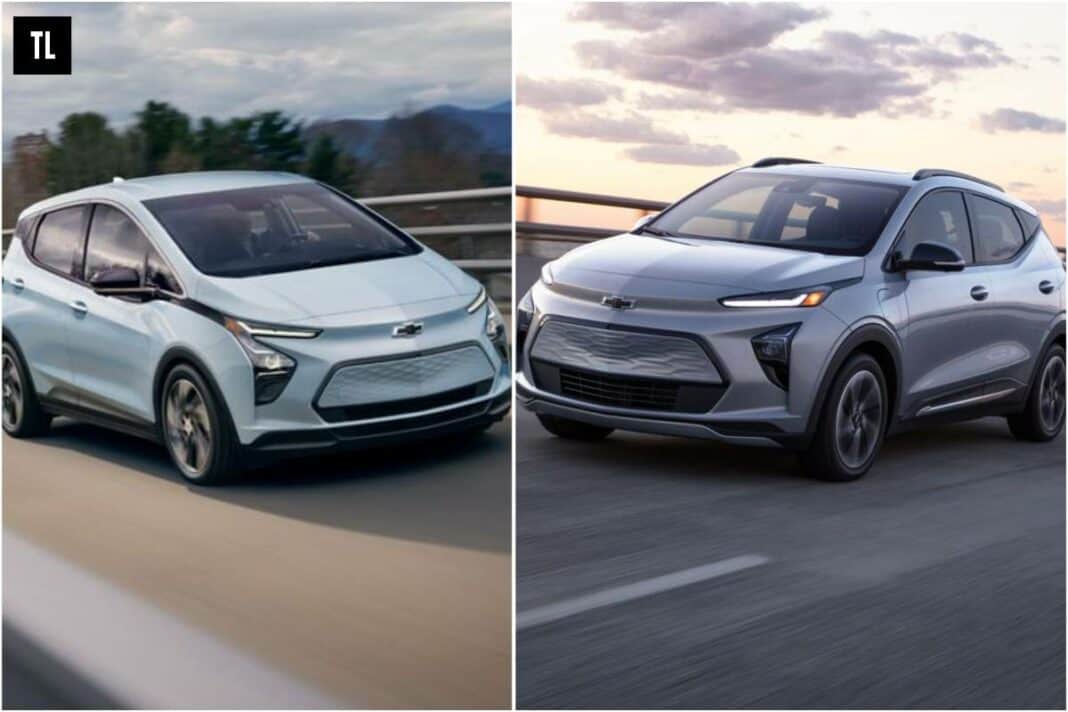
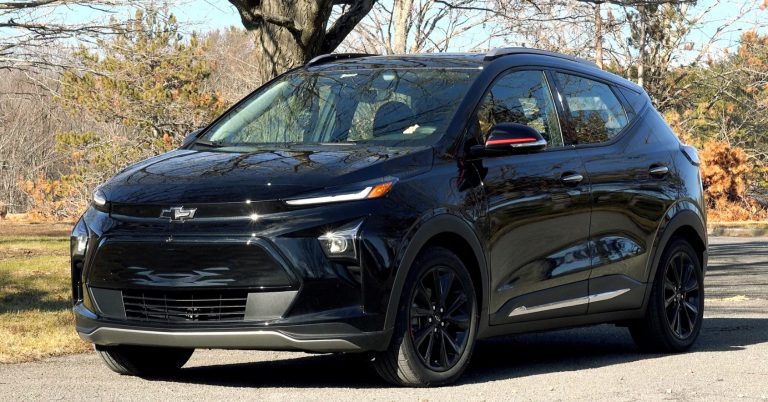
The electric vehicle (EV) revolution is accelerating at an unprecedented pace, with automakers scrambling to offer compelling options across all segments. As the market matures, the demand for affordable, practical, and capable EVs is skyrocketing. Into this fiercely competitive arena, Chevrolet is poised to reintroduce a familiar nameplate with a significant upgrade: the 2026 Chevrolet Bolt EUV.
Originally lauded for its value proposition and practicality, the first-generation Bolt EUV faced an untimely discontinuation amidst battery recall challenges. However, GM’s commitment to "an EV for everyone" means the Bolt is returning, reborn on the cutting-edge Ultium platform. This revival immediately sparks a critical question: Can the 2026 Bolt EUV reclaim its crown as the best electric vehicle for the money, or will its growing list of rivals prove too formidable?
This in-depth article will delve into what we can expect from the 2026 Chevrolet Bolt EUV, analyze its potential against a diverse range of competitors, and ultimately attempt to answer if it can indeed offer the most compelling value proposition in the burgeoning affordable EV market.
Disclaimer: As of this writing, the 2026 Chevrolet Bolt EUV’s official specifications, pricing, and features have not been released. This analysis is based on Chevrolet’s statements regarding its Ultium platform, current market trends, and an educated projection of how the Bolt EUV will be positioned.
The Return of a Legend: What to Expect from the 2026 Chevrolet Bolt EUV
The original Chevrolet Bolt EV and EUV carved out a significant niche by offering respectable range and practical usability at an accessible price point. Its discontinuation left a void, but GM quickly recognized the enduring demand for an affordable, compact electric crossover. The key to the 2026 Bolt EUV’s potential success lies in its foundation: the Ultium platform.
1. The Ultium Advantage:
GM’s Ultium battery and motor architecture is a game-changer. It’s designed for scalability, modularity, and efficiency, allowing for a wide range of vehicles with varying performance and range. For the Bolt EUV, this means:
- Improved Range: While the previous Bolt EUV topped out at 247 miles, the Ultium platform could easily push the 2026 model into the 280-300+ mile range, making it even more competitive for everyday use and longer trips.
- Faster Charging Speeds: One of the main criticisms of the previous Bolt was its relatively slow DC fast charging. Ultium-based vehicles boast significantly faster charging capabilities, potentially allowing the 2026 Bolt EUV to add 100 miles of range in under 15-20 minutes, a crucial improvement for public charging convenience.
- Enhanced Performance: Ultium motors are powerful and efficient. While the Bolt EUV isn’t intended as a performance vehicle, expect sprightly acceleration and confident highway merging.
- Better Packaging & Space: The modular nature of Ultium allows for more optimized interior space, potentially making the EUV even more practical and comfortable for passengers and cargo.
2. Projected Features and Technology:
The 2026 Bolt EUV is expected to leverage GM’s latest in-car technology, likely including:
- Advanced Infotainment: A large, responsive touchscreen with Google Built-in (Google Maps, Google Assistant, Google Play) for seamless connectivity and navigation. Wireless Apple CarPlay and Android Auto will almost certainly be standard.
- Driver-Assistance Systems: Expect a comprehensive suite of safety features, including automatic emergency braking, lane-keeping assist, adaptive cruise control, and blind-spot monitoring.
- Super Cruise Capability: This is a major potential differentiator. GM’s hands-free Super Cruise driver-assistance technology, currently available on many Ultium vehicles, could trickle down to the Bolt EUV, offering a premium driving experience unparalleled in its projected price segment.
- Refined Interior: While the original Bolt’s interior was functional, the new model should feature improved materials, better ergonomics, and a more modern design, elevating the perceived quality.
3. Anticipated Pricing:
Chevrolet has explicitly stated its intention to keep the Bolt EUV "affordable." Given the price points of other Ultium-based vehicles like the Equinox EV, we can anticipate the 2026 Bolt EUV to start in the low to mid-$30,000 range before federal tax credits and state incentives. This would position it directly against many of the competitors aiming for the "best value" crown.
The Contenders: Key Competitors in the Affordable EV Segment
The landscape of affordable EVs has evolved dramatically since the first Bolt EUV. The 2026 model will face a diverse and increasingly capable set of rivals.
1. Hyundai Kona Electric:
- Strengths: A direct and formidable competitor. The updated Kona Electric offers sharp styling, a comfortable ride, a competitive range (estimated 261 miles for the 2024 model), and a well-appointed interior with good tech. Hyundai’s warranty is also excellent.
- Weaknesses: DC fast charging speeds, while improved, still trail some newer competitors. Pricing, while reasonable, has crept up, pushing it towards the mid-$30,000s.
2. Kia Niro EV:
- Strengths: Shares much of its underpinnings with the Kona Electric, offering a similar range (253 miles for 2024), practical hatchback-SUV styling, and a user-friendly interior. Kia’s design language is often a strong selling point.
- Weaknesses: Similar charging speed limitations to the Kona Electric. Some find its styling less adventurous than the Kona. Pricing is also in the mid-to-high $30,000s.
3. Nissan Leaf:
- Strengths: Often one of the most affordable EVs on the market, especially with the base S trim. It offers a comfortable ride and proven reliability.
- Weaknesses: Significantly shorter range (212 miles for the Plus model, 149 miles for the base S), outdated charging technology (CHAdeMO connector), and a dated interior design. It’s rapidly falling behind the curve.
4. Tesla Model 3 (Base Rear-Wheel Drive):
- Strengths: The brand cachet and superior charging network (Superchargers) are huge advantages. Even the base model offers impressive performance, range (272 miles), and industry-leading technology.
- Weaknesses: Pricing starts higher (mid-$40,000s before incentives), putting it in a different league for "best for the money" unless significant incentives apply. Interior can feel minimalist to some.
5. Volvo EX30:
- Strengths: A brand-new entrant with stylish, minimalist Scandinavian design, impressive performance (especially the dual-motor version), and a strong emphasis on sustainability. Its projected starting price in the mid-$30,000s makes it a serious contender for value.
- Weaknesses: Range is respectable but not class-leading (estimated 275 miles). Interior relies heavily on a central screen, which might not appeal to everyone. Unknown real-world charging performance.
6. Fiat 500e:
- Strengths: Unmatched retro-chic styling, incredibly compact and agile for city driving, and a relatively low starting price.
- Weaknesses: Limited range (estimated 149-162 miles), making it primarily a city car. Interior space is tight, and it’s a niche product.
7. Upcoming Rivals (Briefly): The market is dynamic. Keep an eye out for potential future entries from Honda, Subaru, and even other GM brands that could impact this segment.
Head-to-Head: 2026 Bolt EUV vs. The Competition (Hypothetical Analysis)
Let’s break down how the 2026 Bolt EUV is expected to stack up against these rivals on key metrics:
1. Price: The Defining Factor for "Best for the Money"
- 2026 Bolt EUV: Expected to target the low to mid-$30,000 range. If it can undercut the updated Kona/Niro and the Volvo EX30, it will be a strong contender. Its eligibility for federal tax credits will be crucial.
- Competitors: Nissan Leaf holds the "cheapest" title but with compromises. Kona Electric and Niro EV are in the mid-$30s. Volvo EX30 targets similar pricing. Tesla Model 3 is a step up in price.
- Verdict: If GM nails the pricing, the Bolt EUV could offer the most features and range per dollar.
2. Range: Going the Distance
- 2026 Bolt EUV: With Ultium, 280-300+ miles is a realistic expectation. This would place it firmly at the top of its segment.
- Competitors: Kona Electric (261 miles) and Niro EV (253 miles) are strong. Tesla Model 3 (272 miles) is excellent. Volvo EX30 (275 miles) is competitive. Nissan Leaf lags significantly.
- Verdict: The Ultium platform should give the Bolt EUV a leading edge or at least put it on par with the best in this class.
3. Charging Speed: Time is Money
- 2026 Bolt EUV: This is where the Ultium platform makes a dramatic difference. Expect significantly faster DC fast charging, potentially adding 100 miles in 10-15 minutes, rivaling or even surpassing the Kona/Niro and EX30.
- Competitors: Kona/Niro have improved but aren’t class leaders. Nissan Leaf is poor. Tesla Model 3’s Supercharger network is still the gold standard for convenience and speed, though the Bolt EUV on Ultium should offer competitive speeds on other public networks.
- Verdict: A major strength for the new Bolt EUV, addressing a key weakness of its predecessor.
4. Performance: Spirited Enough?
- 2026 Bolt EUV: Ultium motors are known for their instant torque and smooth power delivery. Expect acceleration that feels quicker than its horsepower numbers suggest, easily sufficient for daily driving.
- Competitors: Kona Electric and Niro EV are peppy. Tesla Model 3 is notably quicker. Volvo EX30 offers impressive acceleration, especially the dual-motor variant.
- Verdict: The Bolt EUV will likely be more than capable for most drivers, offering a fun and engaging ride.
5. Interior, Technology & Practicality:
- 2026 Bolt EUV: The EUV form factor already offers good passenger and cargo space for a compact crossover. Combined with expected Ultium packaging benefits, an upgraded interior, and potentially Super Cruise, it could offer a highly compelling package.
- Competitors: Kona/Niro offer good tech and practicality. Tesla Model 3 is tech-forward but has a minimalist interior and slightly less utility than an EUV. Volvo EX30 is stylish but relies heavily on the central screen. Nissan Leaf is dated.
- Verdict: Super Cruise, if included, would be a huge differentiator. The EUV form factor ensures good practicality, and an upgraded interior could make it feel more premium than its price.
6. Cost of Ownership & Incentives:
- 2026 Bolt EUV: EVs generally have lower maintenance costs. Combined with potential federal tax credits (assuming it meets domestic manufacturing and battery component requirements) and state incentives, the total cost of ownership could be very attractive.
- Competitors: Most EVs benefit from lower running costs. Eligibility for incentives varies by model and manufacturing origin. Tesla’s Supercharger costs can add up, but its residual values are strong.
- Verdict: A strong contender, especially if it qualifies for the full federal tax credit.
The "Best EV for the Money?" Verdict
The question of the "best EV for the money" is inherently subjective, depending on individual priorities for range, features, performance, and brand loyalty. However, based on our projections, the 2026 Chevrolet Bolt EUV has a very strong case to be a top contender, if not the outright winner, in its segment.
Why the 2026 Bolt EUV could be the champion:
- Ultium Advantage: The foundation of faster charging, longer range, and potential for advanced tech like Super Cruise transforms the Bolt EUV from a value play with compromises to a truly competitive and modern EV.
- Targeted Pricing: If GM can deliver on its promise of affordability, positioning the Bolt EUV significantly below the base Tesla Model 3 and competitive with or even undercutting the Kona Electric, Niro EV, and Volvo EX30, it will be an undeniable value leader.
- Practicality: The EUV form factor offers the versatility and space that many consumers desire in a compact crossover.
- American-Made (Likely): This could be a significant factor for buyers seeking to support domestic manufacturing and potentially qualifying for federal tax credits.
Who is the 2026 Bolt EUV for?
It’s for the budget-conscious buyer who doesn’t want to compromise on modern EV capabilities. It’s for families looking for a practical daily driver with enough range for weekend trips. It’s for those who appreciate advanced technology like Super Cruise but aren’t ready for a premium price tag.
Final Thoughts:
The return of the Chevrolet Bolt EUV, reimagined on the Ultium platform, is one of the most anticipated developments in the affordable EV space. While official details are yet to emerge, the promise of enhanced range, significantly faster charging, an upgraded interior, and potentially Super Cruise at an accessible price point makes it a formidable challenger. If Chevrolet hits its marks, the 2026 Bolt EUV won’t just be a comeback story; it could very well redefine what it means to be the best electric vehicle for the money. The competition is fierce, but the new Bolt EUV appears poised to reclaim its throne. We eagerly await its official unveiling to confirm if these high expectations will be met.