The Honda Pilot has long been the silent sentinel of suburban driveways, the reliable workhorse of family road trips, and the pragmatic choice for those who value space, safety, and unwavering dependability above all else. While competitors often grab headlines with audacious styling or segment-first gadgetry, the Pilot has consistently delivered a package of profound competence, earning its loyalty through sheer utility and thoughtful engineering.
Now, as the current generation, introduced just for 2023, approaches its mid-cycle refresh, Honda is poised to elevate its flagship SUV without reinventing the wheel. The 2026 Honda Pilot isn’t about revolutionary changes; it’s about meticulous refinement, strategic enhancements, and a renewed focus on what truly matters to the modern family. Expect a sharper aesthetic, a more sophisticated cabin, and crucially, a potential powertrain expansion that could solidify its position in an increasingly competitive segment.
We’ve delved deep into industry whispers, patent filings, and Honda’s recent product trends to bring you a comprehensive preview of the 2026 Pilot – a vehicle that promises to be more compelling, more efficient, and more connected than ever before.
Exterior Evolution: A Sharpened Silhouette
While the current Pilot adopted a more rugged and upright stance, moving away from the minivan-esque aesthetic of its predecessors, the 2026 refresh aims to hone that design language. Don’t expect a complete overhaul, but rather a series of strategic nips and tucks that lend the Pilot a more contemporary and premium presence.
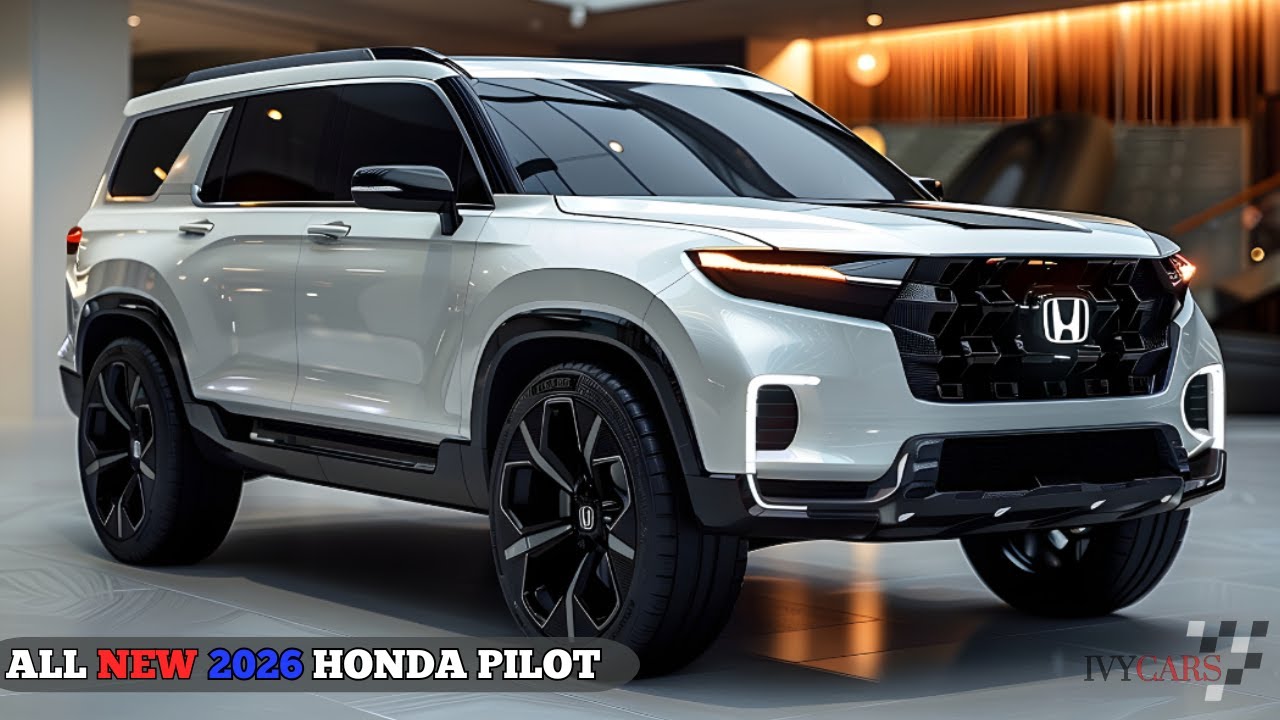
The front fascia will likely see the most significant revisions. Anticipate a redesigned grille, potentially featuring a more intricate mesh pattern or a bolder interpretation of Honda’s "H-mark" emblem, flanked by slimmer, more aggressively styled LED headlights. These headlights will almost certainly incorporate a new signature daytime running light (DRL) design, giving the Pilot a distinct visual identity both day and night. The front bumper will also be reshaped, with revised air intakes and possibly integrated fog light designs that contribute to a wider, more planted look.
Around the side, changes will be subtler. New alloy wheel designs across the trim levels are a given, ranging from practical 18-inch options on lower trims to eye-catching 20-inch or even 21-inch multi-spoke designs on the Elite and potentially a new top-tier "Black Edition" trim. Body-color cladding may be introduced on certain trims, or the existing black cladding could be refined with a more textured finish.
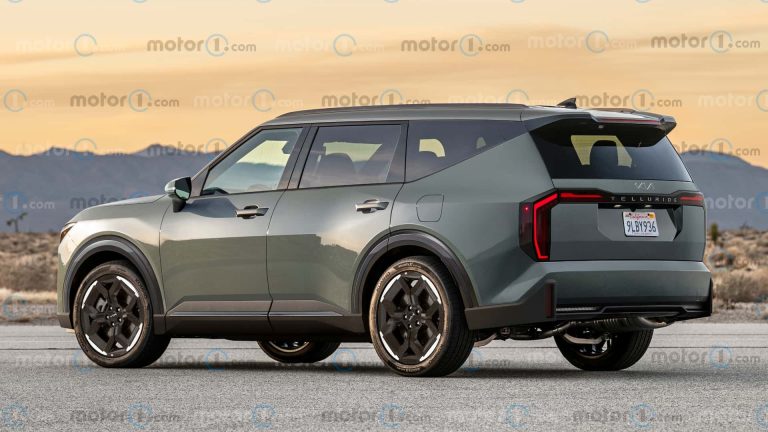
The rear will also receive attention, with updated LED taillight graphics that echo the new front lighting signature. The rear bumper might be massaged for a cleaner look, potentially integrating new exhaust finisher designs. The overall effect will be one of enhanced sophistication and a touch more aggression, ensuring the Pilot maintains its visual relevance against rivals like the Kia Telluride, Hyundai Palisade, and Toyota Grand Highlander.
The popular TrailSport variant, introduced with the current generation, will likely double down on its off-road aesthetics. Expect more prominent skid plates, unique wheel designs wrapped in all-terrain tires, and possibly revised front and rear bumpers that offer improved approach and departure angles, though these would be minor tweaks for a mid-cycle refresh. New exterior paint options, including some richer metallics and perhaps a matte finish for a specialized trim, are also a strong possibility.
Interior Refinement: A Sanctuary of Practicality and Tech
Step inside the 2026 Pilot, and you’ll immediately recognize the familiar, ergonomically sound layout that Honda is known for, but with a palpable upgrade in materials and technology. The current cabin is already highly functional, but the refresh will push it closer to premium territory, addressing some minor critiques regarding perceived material quality in certain areas.
Soft-touch materials will be more prevalent, extending further down the dash and door panels. Expect new trim accents, ranging from genuine open-pore wood on higher trims to brushed aluminum or piano black finishes that feel more substantial. The stitching on seats and dashboard elements could also be revised for a more upscale appearance.
The biggest technological leap inside will undoubtedly be the infotainment system. While the current Pilot offers a decent 9-inch touchscreen on higher trims, the 2026 model is expected to adopt a larger, more vibrant display, potentially a 10.2-inch or even 12.3-inch unit, especially on EX-L and above. This new screen will likely run an updated version of Honda’s infotainment software, possibly integrating Google built-in functionality as seen in other recent Honda products like the Accord. Wireless Apple CarPlay and Android Auto will, of course, be standard across most trims, ensuring seamless smartphone integration.
The digital gauge cluster, currently available on higher trims, might become standard across the board or at least on more mid-range variants, offering greater customization and crisper graphics. A larger, full-color head-up display (HUD) will likely be reserved for the Elite and any new top-tier trims, projecting essential driving information directly into the driver’s line of sight.
Comfort remains paramount. Honda’s "Body Stabilizing Seats" will continue to provide excellent support, and the refresh might introduce new upholstery options, including more durable synthetic leather and softer, perforated genuine leather with enhanced ventilation for front passengers and heated functionality for the second row. The clever removable second-row center seat will remain a highlight, allowing for easy conversion between 7- and 8-passenger configurations. Third-row access will continue to be among the best in the segment, thanks to wide-opening doors and a one-touch sliding second row.
Storage solutions, a Honda hallmark, will be further optimized. Expect revised center console designs with improved cubby spaces, larger door pockets, and potentially new hidden compartments. Cabin quietness, already good, could see further improvements through enhanced sound deadening materials and acoustic glass, making long journeys even more serene.
Powertrain & Performance: The Hybrid Arrives
The current Pilot is powered by a robust 3.5-liter V6 engine, producing 285 horsepower and 262 lb-ft of torque, mated to a smooth 10-speed automatic transmission. This powertrain is known for its reliability and adequate performance for a family hauler. For the 2026 refresh, this V6 will undoubtedly remain a core offering, likely with minor tweaks for efficiency or refinement.
However, the most significant powertrain news for the 2026 Pilot is the very strong likelihood of a hybrid option. With rivals like the Toyota Grand Highlander making waves with their fuel-efficient hybrid powertrains, and Honda’s own commitment to electrification, introducing a hybrid Pilot is not just probable, but strategically essential.
This new hybrid system could be an evolution of Honda’s excellent two-motor hybrid system found in the CR-V and Accord, scaled up for the Pilot’s larger dimensions and greater weight. We could see a system combining a naturally aspirated 2.0-liter Atkinson-cycle four-cylinder engine with two electric motors, delivering a combined output well over 300 horsepower and significantly improving fuel economy figures, potentially pushing into the high 20s or even low 30s MPG combined – a substantial improvement over the current V6’s mid-20s.
The hybrid system would likely be paired with an e-CVT (electronic continuously variable transmission) for seamless power delivery. This would provide not only better fuel efficiency but also instant torque from the electric motors, enhancing low-speed responsiveness and overall driving refinement. All-wheel drive (i-VTM4 with torque vectoring) would remain available across both V6 and hybrid powertrains, ensuring confident traction in various conditions.
Driving dynamics will continue to prioritize comfort and composure over outright sportiness. The steering will remain light and precise, ideal for maneuvering in parking lots and around town. The suspension will be tuned for a supple ride, soaking up road imperfections with ease, while still offering stable handling on highways. The TrailSport variant will maintain its slightly lifted suspension, more robust tires, and specific off-road drive modes for light trail duty.
Safety & Driver-Assist: Honda Sensing 360 Evolves
Honda has always prioritized safety, and the 2026 Pilot will continue this tradition with an enhanced suite of driver-assist technologies. The Honda Sensing 360 suite, already comprehensive, will receive updates to its hardware and software.
Expect improvements to existing features such as adaptive cruise control with low-speed follow, lane-keeping assist, and road departure mitigation. The blind-spot information system with cross-traffic monitor could see an expanded detection range. New or enhanced features might include:
- Improved Traffic Jam Assist: Providing more seamless steering and braking assistance in stop-and-go traffic.
- Enhanced Lane Centering: Offering more precise and natural lane keeping on highways.
- Front Cross-Traffic Monitor: Warning drivers of approaching vehicles when pulling out of blind intersections.
- Parking Sensors with Auto Braking: Assisting with tight parking maneuvers and preventing low-speed collisions.
- Driver Attention Monitor: Alerting the driver if signs of drowsiness or distraction are detected.
The Pilot’s robust ACE (Advanced Compatibility Engineering) body structure will continue to provide exceptional passive safety, aiming for top ratings from both the NHTSA and IIHS.
Trim Levels & Estimated Pricing
The 2026 Honda Pilot will likely retain its familiar trim structure, offering a ladder of features and luxuries to suit various budgets and needs. However, with the refresh, we might see a slight increase in pricing to reflect the added features and technology, especially if the hybrid powertrain is introduced.
- LX: The entry-level model, offering essential features, Honda Sensing 360, a V6 engine, and 8-passenger seating. Estimated starting price: $41,000 – $42,500
- Sport: Adds sportier exterior styling cues, larger wheels, LED fog lights, and some interior enhancements. Estimated starting price: $44,000 – $45,500
- EX-L: The volume seller, upgrading to leather upholstery, a power tailgate, sunroof, a larger infotainment screen, and potentially wireless phone charging. This trim will likely be the first to offer the hybrid powertrain as an option. Estimated starting price: $47,500 – $49,000 (V6), $49,500 – $51,000 (Hybrid)
- TrailSport: Focuses on off-road capability with a lifted suspension, all-terrain tires, skid plates, and unique interior accents. Exclusively V6. Estimated starting price: $50,500 – $52,000
- Touring: Elevates luxury with premium audio, navigation, a panoramic sunroof, heated second-row seats, and more advanced connectivity features. Hybrid option available. Estimated starting price: $52,500 – $54,000 (V6), $54,500 – $56,000 (Hybrid)
- Elite: The top-tier, featuring ventilated front seats, a head-up display, full digital gauge cluster, heated steering wheel, and potentially unique interior finishes. Hybrid option standard. Estimated starting price: $56,500 – $58,000 (V6), $58,500 – $60,000 (Hybrid)
- Black Edition (New for 2026?): Honda might introduce a new ultra-premium "Black Edition" or "Platinum" trim, building on the Elite with exclusive blacked-out exterior accents, unique interior color schemes, and perhaps even more luxurious materials. This would be a direct competitor to top-tier trims from rivals. Estimated starting price: $60,000 – $62,000 (Hybrid only)
The Competition
The 2026 Honda Pilot enters a battlefield teeming with formidable rivals. Its closest competitors include:
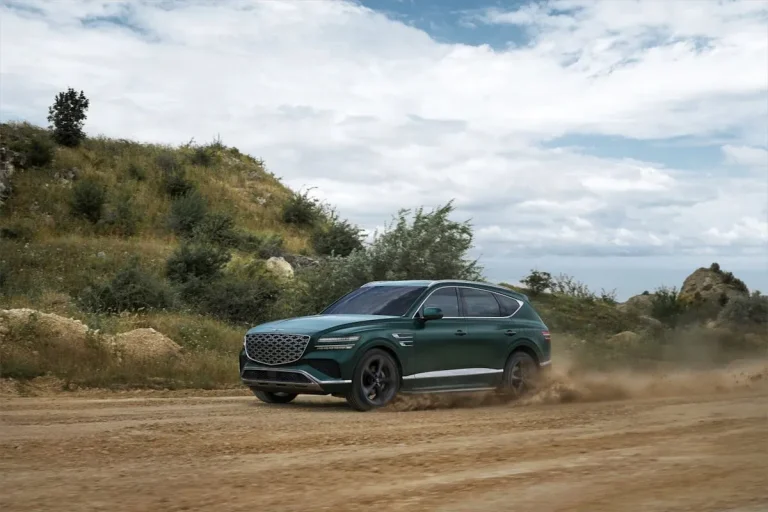
- Kia Telluride/Hyundai Palisade: Known for their stylish design, premium interiors, and strong value proposition.
- Toyota Grand Highlander: A new entrant, offering impressive space and a strong focus on hybrid efficiency.
- Chevrolet Traverse: Recently redesigned, boasting massive interior space and a new turbocharged engine.
- Mazda CX-90: A premium-oriented offering with engaging driving dynamics and available inline-six mild-hybrid powertrains.
- Ford Explorer: A long-standing rival, offering a range of powertrains including a potent ST variant.
The Pilot’s strength will lie in its balanced approach: reliable performance, exceptional practicality, a strong safety record, and now, with the refresh, a more modern interior and the crucial addition of a hybrid option. It may not be the flashiest, but it consistently delivers on the promises that matter most to families.
Conclusion: The Smart Money’s Choice, Refined
The 2026 Honda Pilot mid-cycle refresh isn’t about chasing fleeting trends; it’s about solidifying its position as the quintessential family SUV. By sharpening its exterior, enriching its interior with better materials and cutting-edge tech, and potentially introducing a fuel-efficient hybrid powertrain, Honda is ensuring the Pilot remains not just relevant, but highly desirable.
It will continue to be the vehicle for those who prioritize practicality, safety, and reliability above all else. It’s the SUV that effortlessly swallows luggage for a week-long vacation, comfortably transports a soccer team, and confidently navigates daily commutes with a quiet competence. The 2026 Pilot promises to be a more polished, more efficient, and more connected version of the unsung hero we’ve come to depend on. For families seeking a no-nonsense, highly capable three-row SUV that balances all the right attributes, the refined 2026 Honda Pilot will undoubtedly remain the smart money’s choice.