The automotive landscape is in a perpetual state of evolution, and few manufacturers embody this dynamism quite like BMW. With each new generation, the Bavarian marque strives to redefine luxury, performance, and technological integration. As the current G22/G23/G26 generation of the 4 Series approaches its mid-life cycle update (LCI) in 2024, enthusiasts and prospective buyers are already casting their gaze further into the future, anticipating the arrival of the next-generation 2026 BMW 4 Series.
While official details remain shrouded in BMW’s customary veil of secrecy, a combination of industry trends, spy shots, and educated speculation allows us to paint a compelling picture of what to expect from this pivotal model. The 2026 4 Series is poised to be more than just an incremental update; it’s expected to be a significant leap forward, potentially ushering in new design philosophies, advanced powertrains, and a thoroughly re-imagined digital experience. For those considering making this sophisticated coupe, convertible, or Gran Coupe their next vehicle, understanding its projected release and navigating the buying process will be crucial.
The Anticipation Builds: What to Expect from the Next-Gen 4 Series
The BMW 4 Series, launched as a distinct model line in 2013, carved its niche as the sportier, more emotionally charged sibling to the venerable 3 Series sedan. It represents BMW’s commitment to classic driving pleasure wrapped in a svelte, athletic package. The current generation, introduced in 2020, sparked considerable debate with its bold kidney grille design, yet it undeniably delivered on performance and luxury. The 2026 model, therefore, carries the weight of evolving this legacy while addressing market demands for greater electrification, connectivity, and sustainable luxury.
Expect the next-generation 4 Series to build upon BMW’s CLAR (Cluster Architecture) platform, albeit with significant enhancements, or potentially even incorporate elements from the upcoming "Neue Klasse" electric vehicle platform, especially for its more electrified variants. This underlying flexibility is key to BMW’s strategy of offering diverse powertrains on a common architecture. The overarching theme will likely be one of refined athleticism, enhanced digital integration, and a continued focus on driver engagement – the hallmarks of the BMW brand.
Projected Release Date: Decoding BMW’s Product Cycle
Pinpointing an exact release date for a model still a few years out is challenging, but BMW’s predictable product cycle provides strong indicators. Typically, BMW refreshes a model with an LCI (Life Cycle Impulse) around its fourth year, followed by a full redesign (new generation) approximately three years later, making for a roughly seven-year product cycle.
- Current Generation (G22/G23/G26): Launched globally in late 2020 / early 2021.
- LCI (Facelift): Expected for the 2024 model year.
Following this pattern, a full redesign for the 4 Series would most logically arrive around the 2027 or 2028 model year. However, the request specifically asks about the "2026 BMW 4 Series." This could imply a few scenarios:
- Accelerated Development: BMW might be fast-tracking the next generation, perhaps due to competitive pressures or a desire to align with new technological rollouts (like an advanced version of iDrive or new electrification components). In this scenario, we could see an official reveal in late 2025, with production beginning and market launch in mid-to-late 2026.
- Early Model Year Introduction: The 2026 model year might be the initial year for the next-generation, meaning it would be introduced in late 2025.
- Significant LCI with Next-Gen Previews: While less likely for a "2026" model to be merely an LCI, it’s possible the 2024 LCI is so substantial it bridges the gap, or that BMW begins teasing the full next-gen throughout 2025 for a 2026 debut.
Our Best Estimate: Based on the prompt, the most probable scenario is that the next-generation BMW 4 Series will be officially unveiled in late 2025, with production commencing and initial deliveries to key markets (North America, Europe) beginning in the latter half of 2026. Expect a slow rollout, with coupe variants arriving first, followed by convertibles and the Gran Coupe. Spy shots and cryptic teasers from BMW will likely start appearing with increasing frequency throughout 2024 and 2025, offering tantalizing glimpses of the new design and technology.
Design Evolution: A Refined Statement
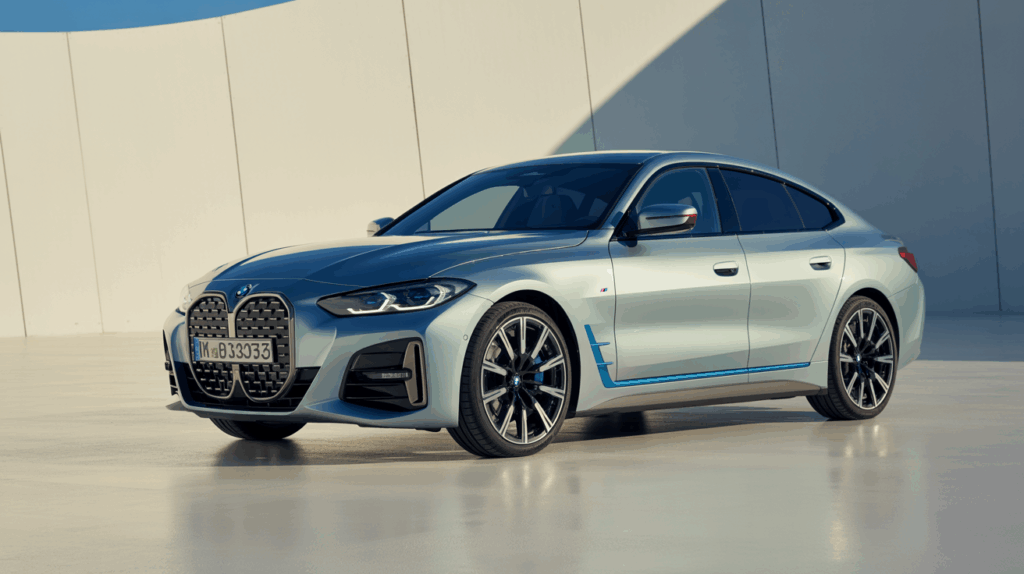
The exterior design of the 2026 4 Series is arguably its most anticipated element, particularly concerning the polarizing kidney grille. While it’s unlikely BMW will completely abandon its bold grille strategy, expect a more integrated and harmonized interpretation. Rumors suggest a potential softening of the vertical emphasis, or perhaps a more elegant frame that better blends with the overall front fascia.
-
Exterior:
- Front End: Redesigned headlights, possibly slimmer and more angular, featuring advanced LED or laser lighting technology. The kidney grille will evolve, likely becoming more sophisticated and potentially incorporating illuminated elements or active aerodynamics.
- Profile: Expect classic BMW coupe proportions – a long hood, short overhangs, and a gracefully sloping roofline (for the coupe and Gran Coupe). The Hofmeister kink will remain a signature element. Flush door handles, a trend seen in newer BMWs, could enhance aerodynamics and aesthetics.
- Rear End: Redesigned taillights, likely slimmer and featuring advanced 3D LED graphics, wrapping around the car’s shoulders. A more sculpted rear bumper and integrated exhaust finishers will complete the sporty look.
- Aerodynamics: Expect a strong focus on aero efficiency, contributing to both performance and range (for electrified variants).
-
Interior:
- Driver-Centric Cockpit: The hallmark of BMW interiors will continue, but with an even greater emphasis on digital integration. The current iDrive 8/8.5 curved display (combining the instrument cluster and infotainment screen) will likely evolve into iDrive 9 or an even more advanced system, offering enhanced graphics, faster processing, and greater customization.
- Materials & Quality: Expect a blend of sustainable materials, premium leathers, and high-quality trim options (wood, aluminum, carbon fiber). BMW is likely to offer vegan leather alternatives as standard or optional.
- Ergonomics: Physical buttons for essential functions (climate control, volume) may be further integrated into the touchscreen, though BMW typically retains some haptic feedback for critical controls.
- Ambient Lighting: More sophisticated and customizable ambient lighting systems will create a personalized cabin atmosphere.
- Space & Practicality: While primarily a driver’s car, the 4 Series will aim to offer improved rear-seat comfort and trunk space, especially in the Gran Coupe variant, enhancing its everyday usability.
Powertrain Prognosis: Power, Efficiency, and Electrification
The 2026 4 Series will likely offer a diverse range of powertrains, catering to various preferences for performance and efficiency, with a clear trend towards electrification.
-
Mild-Hybrid Internal Combustion Engines (MHEV):
- 430i (or similar): Expected to feature an updated B48 2.0-liter turbocharged four-cylinder engine, likely paired with a 48-volt mild-hybrid system. This setup boosts efficiency, smooths out start-stop operation, and provides a small power assist. Output could be around 260-270 horsepower, delivering strong performance and respectable fuel economy.
- M440i (or similar): The popular M Performance variant will almost certainly retain the B58 3.0-liter turbocharged inline-six, also integrated with a 48-volt mild-hybrid system. Power could see a slight bump over the current 382 hp, potentially reaching over 400 hp, ensuring exhilarating acceleration and the iconic BMW inline-six soundtrack. Both rear-wheel drive (sDrive) and all-wheel drive (xDrive) configurations will likely be offered.
-
Plug-in Hybrid (PHEV):
- BMW is increasingly expanding its PHEV offerings, and a 4 Series PHEV variant is highly probable. This could combine the 2.0-liter four-cylinder engine with a more powerful electric motor and a larger battery pack, offering a significant electric-only range (e.g., 30-50 miles) and impressive combined system output. This option would appeal to buyers seeking a balance of performance, efficiency, and lower emissions for daily commuting.
-
Full Electric (i4 Integration):
- The current i4 is essentially an electric 4 Series Gran Coupe. For the next generation, BMW faces a strategic decision. If the 2026 4 Series remains largely on an evolved CLAR platform, the i4 will likely continue as a distinct, yet closely related, electric offering. However, if the 2026 4 Series begins to incorporate elements of the "Neue Klasse" platform, we might see a more seamless integration, where the 4 Series platform is fundamentally designed to support both ICE, PHEV, and BEV powertrains from the ground up, potentially blurring the lines between the i4 and the standard 4 Series even further. For the 2026 model year, it’s more probable that the i4 will continue its evolution alongside, rather than fully merging into, the internal combustion 4 Series line.
-
M4 (High Performance):
- The next M4 will follow shortly after the standard 4 Series, likely retaining a highly tuned S58 3.0-liter twin-turbo inline-six engine. Expect power figures to climb beyond the current 503 hp in Competition models, potentially incorporating mild-hybrid technology for even greater efficiency and torque delivery. Both manual (a rare treat) and automatic transmissions, along with RWD and xDrive options, are anticipated to continue.
Technology & Connectivity: The Digital Cockpit of Tomorrow
The 2026 4 Series will be a showcase for BMW’s latest in-car technology, focusing on intuitive user experience and seamless connectivity.
- iDrive System (iDrive 9+): The curved display will likely house the next iteration of BMW’s iDrive operating system. Expect enhanced augmented reality navigation, predictive features, and deeper integration with cloud services. Over-the-air (OTA) updates will ensure the car’s software remains current.
- Driver Assistance Systems (ADAS): BMW’s Driving Assistance Professional Package will likely be standard or optional, offering Level 2 semi-autonomous driving capabilities (adaptive cruise control with stop-and-go, lane keeping assist, automated lane changes). The hardware will be in place for potential Level 3 capabilities (hands-off, eyes-off in certain conditions) as regulations and technology mature. Automated parking and reversing assist will also be more advanced.
- Connectivity: 5G connectivity will enable faster data transfer for streaming, online services, and cloud-based applications. BMW Digital Key Plus will allow owners to use their smartphone as a car key, with enhanced security and sharing capabilities.
- Audio & Infotainment: Premium audio systems from Harman Kardon or Bowers & Wilkins will offer an immersive sound experience. Wireless Apple CarPlay and Android Auto will be standard, along with multiple USB-C charging ports and wireless charging pads.
- Sustainability Features: Expect greater use of recycled materials in the cabin, potentially a carbon footprint tracker, and energy-efficient climate control systems.
The Buying Guide: Navigating Your Purchase of the 2026 BMW 4 Series
Acquiring a luxury performance vehicle like the 2026 BMW 4 Series is a significant investment. A thoughtful approach to the buying process can ensure you get the right car for your needs and budget.
1. Identify Your Needs and Preferences:
- Body Style:
- Coupe: The purest expression of the 4 Series, offering the most sporting dynamics and classic two-door appeal. Best for individuals or couples.
- Convertible: Adds the thrill of open-air driving, albeit with a slight weight penalty and reduced trunk space. Ideal for sun-seekers.
- Gran Coupe: A four-door coupe with a liftback trunk, offering significantly more practicality for families or those needing easier rear-seat access, without sacrificing much of the sleek styling.
- Performance vs. Efficiency: Do you prioritize raw power (M440i, M4) or a balance of performance and fuel economy (430i, potential PHEV)?
- Driving Dynamics: Do you prefer the traditional rear-wheel-drive feel (sDrive) or the added traction and all-weather capability of all-wheel drive (xDrive)?
- Budget: Be realistic about your purchase price, ongoing ownership costs, and insurance.
2. Choose Your Trim Level & Powertrain:
- 430i (sDrive/xDrive): The entry point, offering strong performance for daily driving and highway cruising. Excellent balance of power and efficiency.
- M440i (sDrive/xDrive): The "sweet spot" for many, delivering M-level performance and sound without the full M4 price tag. A true grand tourer.
- PHEV Variant (if offered): Ideal for those with shorter commutes and charging access, offering electric-only driving and strong combined power.
- M4 (sDrive/xDrive): For the uncompromising enthusiast seeking ultimate track-ready performance and aggressive styling.
3. Essential Options and Packages:
BMW is renowned for its extensive options list. Carefully consider what truly enhances your experience:
- Premium Package: Often includes heated seats, heated steering wheel, lumbar support, and sometimes a head-up display. A common and worthwhile upgrade.
- Executive Package: Adds features like gesture control, power tailgate (Gran Coupe), parking assistant professional, and advanced ambient lighting.
- M Sport Package: Enhances the exterior with more aggressive bumpers, unique wheels, and interior M Sport trim. Often includes M Sport suspension and brakes.
- Driving Assistance Professional Package: A must-have for safety-conscious buyers, providing adaptive cruise control, lane-keeping assist, blind-spot monitoring, and cross-traffic alert.
- Harman Kardon/Bowers & Wilkins Sound System: For audiophiles, a significant upgrade over the standard system.
- Adaptive M Suspension: Allows for dynamic adjustment of suspension stiffness, enhancing both comfort and sportiness.
- Individual Options: BMW offers an "Individual" program for bespoke paint colors, interior leathers, and trims for those seeking ultimate personalization.
4. Pricing Expectations:
The 2026 BMW 4 Series will naturally see an increase over current model pricing, factoring in inflation and new technology.
- Current 4 Series (2024 Model Year) Base MSRP:
- 430i Coupe: ~$50,000
- M440i Coupe: ~$62,000
- 430i Convertible: ~$58,000
- M440i Convertible: ~$70,000
- 430i Gran Coupe: ~$49,000
- M440i Gran Coupe: ~$62,000
- Projected 2026 Pricing: Expect a base MSRP increase of 5-8% for each trim level.
- 430i (entry): Starting around $53,000 – $55,000
- M440i: Starting around $65,000 – $68,000
- M4: Likely starting around $80,000 – $83,000
- Fully loaded models, especially M Performance and M variants with extensive options, could easily push prices well into the $70,000-$90,000 range, with the M4 Competition exceeding $100,000.
5. When to Buy: Early Adopter vs. Waiting Game:
- Pre-order / Early Adopter (Late 2025 / Early 2026):
- Pros: Be among the first to own the new generation; full customization options; often receives priority in production slots.
- Cons: No real-world reviews or long-term reliability data; potential for initial software glitches or minor production adjustments; unlikely to get significant discounts.
- Wait for Reviews & First-Year Kinks (Late 2026 / Early 2027):
- Pros: Benefit from comprehensive reviews, owner feedback, and potential minor updates or bug fixes. Dealerships might offer modest incentives as the model matures.
- Cons: Longer wait time; specific configurations might have longer lead times.
6. Dealership Experience and Negotiation:
- Research: Understand current market conditions. For a brand-new model, initial discounts are rare.
- Test Drive: Once available, test drive multiple variants (e.g., 430i vs. M440i) to feel the difference in power and handling.
- Trade-in: Have a clear idea of your current vehicle’s value. Consider selling it privately if you want to maximize your return.
- Financing: Explore BMW Financial Services offers, but also compare with external banks or credit unions.
- Lease vs. Buy:
- Leasing: Ideal if you like to drive a new car every 2-3 years, want lower monthly payments, and prefer not to deal with depreciation or long-term maintenance.
- Buying: Best if you plan to keep the car for a long time, want to build equity, and have no mileage restrictions.
7. Ownership Considerations:
- Maintenance: BMW offers various maintenance plans (e.g., Ultimate Care) that can cover scheduled services for a certain period. Consider purchasing one to hedge against future costs.
- Insurance: Performance luxury cars tend to have higher insurance premiums. Get quotes before committing.
- Resale Value: BMWs generally hold their value well, especially well-maintained and desirable models.
Conclusion: A Future Forged in Performance and Innovation
The 2026 BMW 4 Series stands on the precipice of a new era, promising to blend BMW’s storied legacy of driving dynamics with cutting-edge technology and a refined sense of modern luxury. While specifics remain to be fully revealed, the trajectory points towards a car that will be more connected, more efficient, and potentially more visually daring than ever before.
For those with a discerning eye for design, a passion for performance, and a readiness to embrace the future of automotive technology, the next-generation 4 Series will undoubtedly present a compelling proposition. By understanding the projected timeline, anticipating the key features, and carefully navigating the buying process, prospective owners can prepare to experience the next chapter in BMW’s commitment to the "Ultimate Driving Machine." The countdown to late 2025 begins, promising a thrilling reveal for one of BMW’s most iconic and engaging model lines.