Few vehicles command the compact SUV segment with the same authority and unwavering popularity as the Toyota RAV4. For years, it has been the undisputed king, a testament to its blend of practicality, reliability, efficiency (especially its pioneering hybrid variants), and surprising versatility. But even a king must evolve. As the current fifth-generation (XA50) RAV4 approaches its twilight years, automotive enthusiasts and prospective buyers are eagerly looking towards the horizon: the highly anticipated 2026 Toyota RAV4.
This isn’t just another model year refresh; whispers from within Toyota and industry experts suggest a comprehensive overhaul, a sixth-generation model poised to redefine what a compact SUV can be. So, what can we expect from the next iteration of this segment stalwart? When will it arrive, and what should you consider when it’s time to make a purchase? Buckle up, because we’re about to delve deep into the future of the 2026 Toyota RAV4.
The Current Landscape: A Legacy of Dominance
Before we gaze into the crystal ball, it’s crucial to understand the foundation upon which the 2026 RAV4 will be built. The current RAV4, introduced for the 2019 model year, was a game-changer. It shed its somewhat staid predecessor’s skin for a more rugged, truck-like aesthetic, infused with Toyota’s TNGA-K platform that brought improved driving dynamics. Crucially, it doubled down on electrification, offering not just a highly efficient standard hybrid but also the immensely popular RAV4 Prime plug-in hybrid (PHEV), which became a benchmark for performance and electric range in its class.
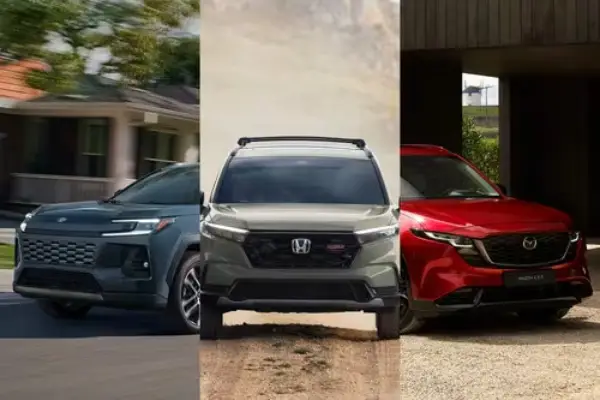
This generation has consistently topped sales charts, fending off fierce competition from the Honda CR-V, Hyundai Tucson, Kia Sportage, Mazda CX-5, and Nissan Rogue. Its success lies in understanding the core needs of a broad spectrum of buyers: families needing space, commuters seeking fuel economy, and adventurers desiring capability. But the automotive world moves fast, and competitors are catching up, often pushing boundaries in design, technology, and even electric powertrains. This necessitates a bold step forward for the RAV4, one that reinforces its leadership and sets new standards for the latter half of the decade.
Anticipating the Next Generation: A Glimpse into the 2026 RAV4
The 2026 RAV4 will almost certainly represent a full redesign, moving to the next evolution of Toyota’s modular TNGA architecture. This platform refinement will be key to unlocking improvements across the board.
1. Design Language: Sharper, More Sophisticated, Yet Rugged
Toyota’s recent design direction, exemplified by the new Prius, Crown, Tacoma, and Grand Highlander, offers strong clues. Expect the 2026 RAV4 to adopt a more sculpted, futuristic, yet still distinctly Toyota aesthetic. The current model’s angularity might be refined, perhaps borrowing cues from the bZ4X EV for a cleaner, more aerodynamic profile, while retaining the rugged stance that buyers appreciate. LED lighting will be more integrated and dramatic, with sharper lines and potentially a more sophisticated grille treatment. The "Adventure" and "TRD Off-Road" trims will likely continue to offer more aggressive styling cues and enhanced capability, ensuring the RAV4 doesn’t lose its adventurous spirit.
2. Interior Revolution: Digital, Premium, and Connected
The interior of the current RAV4, while functional, is starting to show its age against rivals with more advanced digital real estate. The 2026 model is poised for a significant upgrade. Expect a larger, free-standing infotainment touchscreen running the latest Toyota Audio Multimedia system (as seen in the Tundra, Sequoia, and Grand Highlander), offering wireless Apple CarPlay and Android Auto, robust voice commands, and over-the-air (OTA) update capabilities.
The instrument cluster will almost certainly become fully digital and customizable. Material quality is expected to take a noticeable leap forward, with more soft-touch surfaces, refined trim accents, and improved ergonomics. Toyota will likely focus on a more minimalist dashboard design, reducing physical buttons where appropriate but retaining key controls for ease of use. Increased passenger comfort, particularly in the rear, and clever storage solutions will remain priorities.
3. Powertrains: Electrification Takes Center Stage
This is where the 2026 RAV4 is expected to truly shine. Toyota’s commitment to hybrid technology is unwavering, and the next-gen RAV4 will undoubtedly solidify its position as the hybrid benchmark.
- Standard Hybrid: The cornerstone will remain Toyota’s unparalleled hybrid system, likely an evolution of the 2.5-liter Dynamic Force four-cylinder, optimized for even greater thermal efficiency and paired with a more compact, potent electric motor setup. Expect a slight bump in combined horsepower, perhaps nudging towards the 220-230 hp mark, while simultaneously improving the already impressive fuel economy figures (aiming for mid-40s MPG combined).
- RAV4 Prime (PHEV): Toyota’s stellar plug-in hybrid will undoubtedly return, and we anticipate a significant upgrade. Current Prime offers 42 miles of electric range and 302 hp; the next generation could easily push electric range past 50 miles, potentially nearing 60, making daily electric commuting a reality for even more drivers. Horsepower might also see a modest increase, solidifying its position as one of the segment’s most powerful and efficient offerings. Faster charging capabilities, both Level 1 and Level 2, are also a strong possibility.
- Base Gasoline Engine: While electrification will be the focus, a conventional gasoline-only powertrain (likely an updated 2.5L four-cylinder) might still be offered in lower trims or specific markets, though its role will likely diminish.
- Potential for a Mild-Hybrid or Even a Full EV: While a dedicated RAV4 EV is less likely given the existence of the bZ4X, a mild-hybrid system could augment the base gasoline engine for improved efficiency, and Toyota may explore a full-electric variant built on the same architecture if market demand shifts rapidly.
4. Technology & Safety: Leading the Charge
The 2026 RAV4 will feature the latest iteration of Toyota Safety Sense (TSS), likely TSS 3.0 or an even more advanced version. This will include enhanced pre-collision systems with pedestrian and cyclist detection, improved adaptive cruise control with stop-and-go functionality, lane-keeping assist, lane departure alert, and automatic high beams. Expect features like Proactive Driving Assist, which helps with gentle braking and steering in curves, and potentially more advanced semi-autonomous driving capabilities, moving closer to Level 2+ autonomy. Parking assist systems and a 360-degree camera will also be refined.
The All-Important 2026 Toyota RAV4 Release Date
Predicting exact release dates for future models is always speculative, but based on Toyota’s typical product cycles, we can make an educated guess. The current RAV4 debuted for the 2019 model year, making 2025 its seventh model year. Toyota generally aims for a full redesign every six to seven years for its high-volume models.
Therefore, the 2026 Toyota RAV4 is highly anticipated to debut in late 2025, with vehicles arriving at dealerships and sales commencing in early to mid-2026. This timing allows for a full marketing push, initial production ramp-up, and ensures the new model is ready to tackle the competition head-on for the 2026 model year. Keep an eye out for spy photos and official teasers to emerge throughout 2024 and 2025.
Your Ultimate 2026 Toyota RAV4 Buying Guide
Once the 2026 RAV4 officially breaks cover, making an informed purchase decision will be key. Here’s a comprehensive guide to help you navigate the process:
1. Anticipated Pricing & Trims:
Expect a slight bump in pricing across the board, reflecting the new technology, improved materials, and advanced powertrains. The current RAV4 starts around $28,000 for the base LE gasoline model, with hybrids beginning closer to $31,000 and the Prime starting around $43,000. For the 2026 model, anticipate:
- LE (Base): Likely to start around $30,000 – $32,000 (gas) / $33,000 – $35,000 (hybrid). Offers essential features, safety tech, and improved infotainment.
- XLE & XLE Premium: These mid-range trims will likely be the sweet spot for many buyers, adding features like a power driver’s seat, larger wheels, dual-zone climate control, and upgraded interior materials. Expect prices in the mid-$30,000s to low-$40,000s.
- Limited: The top-tier luxury trim will offer premium leatherette or leather upholstery, larger infotainment screen, premium audio, advanced driver-assist features, and more refined exterior accents. Prices could range from mid-$40,000s to low-$50,000s.
- Adventure & TRD Off-Road: These trims cater to those seeking a more rugged aesthetic and enhanced off-road capability, with unique styling, increased ground clearance, and specific suspension tuning. Prices will likely mirror XLE Premium to Limited trims.
- RAV4 Prime: As the premium plug-in hybrid, the Prime will command the highest price, potentially starting in the mid-$40,000s and easily climbing into the low-$50,000s for higher trims. However, it may still qualify for federal and state tax credits, significantly offsetting the initial cost.
2. Powertrain Choices: Match Your Lifestyle
This is a critical decision.
- Standard Hybrid: Ideal for most buyers. It offers excellent fuel economy, strong acceleration for daily driving, and Toyota’s legendary reliability. It’s a "set it and forget it" solution to efficiency.
- RAV4 Prime (PHEV): Best for those with shorter commutes (under 50-60 miles) who have access to home charging. You can run on pure electricity for most daily driving, saving significantly on gas, and still have the gasoline engine for longer trips. It also offers the most power.
- Gasoline Engine (if offered): If your budget is extremely tight, or you simply don’t care about maximizing fuel economy and prefer a simpler mechanical setup, the base gasoline engine might be an option. However, given Toyota’s push for hybrids, it will likely be less compelling than its electrified counterparts.
3. Interior & Technology: Your Daily Command Center
Consider how you use your vehicle.
- Infotainment: Larger screens are great, but prioritize ease of use, responsiveness, and seamless smartphone integration (wireless CarPlay/Android Auto are must-haves).
- Comfort: Test the seats for long-distance comfort. Look for power adjustments, lumbar support, and heated/ventilated options in higher trims.
- Cargo Space: The RAV4 has always been practical. Ensure the new model’s cargo volume (with seats up and down) meets your needs. Look for features like a power liftgate and a low load floor.
- Connectivity: USB-C ports, wireless charging, and potentially a Wi-Fi hotspot are features to look for.
4. Safety Features: Peace of Mind is Paramount
Toyota Safety Sense will be standard, but understand its capabilities.
- Active Safety: Features like adaptive cruise control and lane-keeping assist make highway driving less fatiguing. Blind-spot monitoring and rear cross-traffic alert are essential for city driving.
- Passive Safety: Toyota’s reputation for structural integrity and airbag systems is strong. Ensure the new RAV4 continues this trend.
5. Driving Experience: Test Drive is Key
Despite all the speculation, the real test is behind the wheel.
- Ride Comfort: How well does it absorb bumps and road imperfections?
- Handling: Does it feel nimble enough for city driving, yet stable on the highway?
- Powertrain Responsiveness: Does the hybrid system transition smoothly between electric and gasoline power? Is there enough acceleration for merging and passing?
- Noise, Vibration, and Harshness (NVH): A quieter cabin is a hallmark of a refined vehicle. Pay attention to road, wind, and engine noise.
6. Reliability & Resale Value: The Toyota Advantage
Toyota’s reputation for bulletproof reliability and strong resale value is a major draw. The 2026 RAV4 will undoubtedly carry this torch. This translates to lower long-term ownership costs and a higher return on investment when it’s time to sell or trade in.
7. Competitor Analysis: Know Your Alternatives
While the RAV4 is a top contender, the segment is packed.
- Honda CR-V: A perennial rival, known for its spacious interior and refined driving experience.
- Hyundai Tucson/Kia Sportage: Offer bold design, excellent warranty, and competitive tech.
- Mazda CX-5/CX-50: Premium feel, engaging driving dynamics.
- Subaru Forester: Known for its standard AWD and rugged capability.
- Nissan Rogue: Focuses on comfort and value.
Evaluate these against the RAV4’s strengths, particularly its hybrid dominance and long-term value.
8. When to Buy & How to Prepare:
- Early Adopter vs. Waiting: If you want the absolute latest, be prepared for potential dealer markups and limited availability in the initial months. If you can wait 6-12 months after launch, you might find better deals and more available inventory.
- Pre-Orders & Deposits: Once announced, some dealers may take deposits for early allocation. Be clear about the terms (refundable?).
- Research & Configuration: Use Toyota’s online configurator (once available) to build your ideal RAV4, understanding the cost of trims and options.
- Financing: Get pre-approved for a loan from your bank or credit union before visiting the dealership to ensure you get the best rates.
- Trade-in: Research your current vehicle’s value using online tools like Kelley Blue Book or Edmunds.
Anticipated Challenges
While the 2026 RAV4 is poised for success, potential buyers should be aware of a few challenges:
- Initial Demand and Markups: High demand for a redesigned, popular model often leads to dealer markups above MSRP, especially for the Prime variant.
- Availability: Supply chain issues could still impact production, leading to longer wait times.
- Price Creep: The constant addition of new tech and features inevitably pushes prices higher.
Conclusion: The Future is Bright for the RAV4
The 2026 Toyota RAV4 is shaping up to be more than just an evolution; it’s an anticipated revolution in the compact SUV segment. With a fresh design, a significantly upgraded interior, advanced technology, and an even stronger emphasis on cutting-edge hybrid and plug-in hybrid powertrains, it aims to not just maintain its crown but to extend its lead.
For prospective buyers, the wait will undoubtedly be worth it. By understanding the expected changes, preparing for the release, and diligently following this buying guide, you’ll be well-equipped to make an informed decision and secure your spot behind the wheel of what promises to be one of the most exciting and relevant vehicles of the mid-2020s. The reign of the RAV4 is far from over; in fact, it’s just getting started.