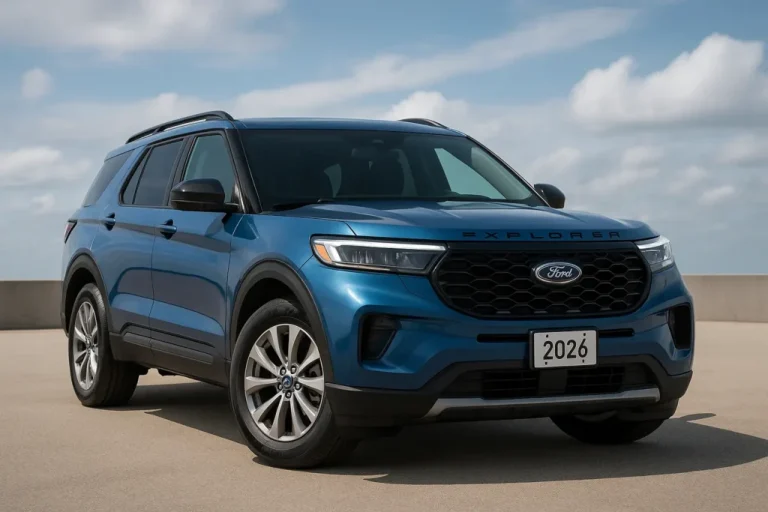
The automotive landscape is a constantly shifting battleground, and nowhere is the skirmish more intense than in the mid-size three-row SUV segment. It’s the sweet spot for families, adventurers, and anyone needing a blend of practicality, comfort, and capability without diving into full-size behemoths or luxury price tags. For decades, the Ford Explorer has been a stalwart, a benchmark, and often, a sales juggernaut. But with an all-new or heavily refreshed 2026 model looming on the horizon, the question isn’t just whether it can compete, but whether it can reclaim its crown as the best SUV for the money against a formidable array of rivals.
The stakes couldn’t be higher. Consumers today are more discerning than ever, armed with information and a seemingly endless list of compelling options. Value isn’t just about the sticker price; it encompasses fuel economy, technology, interior quality, long-term reliability, resale value, and the overall driving experience. Ford knows this, and the 2026 Explorer needs to be nothing short of a revelation to truly stand out.
The Explorer’s Legacy and the Road Ahead
The Ford Explorer’s journey has been one of reinvention. From its rugged, body-on-frame roots in the early ’90s, defining the nascent SUV craze, to its current unibody, rear-wheel-drive-biased platform (shared with the Lincoln Aviator), it has consistently adapted. The current generation, introduced in 2020, brought a more athletic stance, potent EcoBoost engines, and a host of modern technology. However, it hasn’t been without its critics. Some have pointed to a somewhat bland interior, a third row that lags behind segment leaders in spaciousness, and a perceived lack of the "wow" factor offered by some newer competitors.
For 2026, the whispers from Dearborn suggest a comprehensive redesign or at least a significant evolution. This isn’t just a mid-cycle refresh; this is Ford’s opportunity to solidify the Explorer’s position for the latter half of the decade. The focus will undoubtedly be on electrification, advanced driver-assistance systems, a vastly improved interior, and a design language that aligns with Ford’s contemporary aesthetic seen in vehicles like the Mustang Mach-E and F-150 Lightning.
What We Expect (and Demand) from the 2026 Ford Explorer:
-
Electrified Powertrains: The current hybrid option is good, but for 2026, it needs to be great. We anticipate a more efficient and powerful hybrid system, potentially with a plug-in hybrid (PHEV) variant offering a substantial electric-only range. Ford could even surprise us with a full battery-electric (BEV) Explorer, perhaps built on a dedicated EV platform or a highly modified existing one, though that might be reserved for a subsequent generation. A strong, standard EcoBoost four-cylinder will likely remain, perhaps with mild-hybrid assistance, alongside a more potent V6 EcoBoost for those craving extra grunt. Fuel economy figures need to leapfrog competitors to be a true "best for the money" contender.
-
A Transformed Interior: This is where the Explorer needs to hit a home run. The current interior, while functional, feels dated compared to the dazzling displays and premium materials of its Korean rivals. We expect a large, horizontally oriented touchscreen dominating the dashboard, running Ford’s next-generation SYNC system, likely with seamless wireless Apple CarPlay and Android Auto. More importantly, the material quality needs a significant upgrade, with soft-touch surfaces, thoughtful ambient lighting, and perhaps even sustainable material options. The third row must be more accommodating for adults, and cargo space behind it needs to be maximized. BlueCruise, Ford’s excellent hands-free driving assist system, should be available across most trims, making long journeys a breeze.
-
Refined Driving Dynamics: The current Explorer’s RWD-biased platform offers a more engaging drive than some FWD rivals. For 2026, expect Ford to build on this, refining the suspension for an even more composed and comfortable ride, while maintaining its agile handling. The steering should offer better feedback, and noise, vibration, and harshness (NVH) levels need to be meticulously controlled to create a truly serene cabin experience.
-
Bold, Modern Design: Ford has been on a roll with its recent designs. The 2026 Explorer should embody this, perhaps borrowing cues from the Mach-E’s sleekness and the rugged sophistication of the Bronco. A fresh front fascia, distinctive lighting signatures (full LED headlights will be standard, surely), and a more sculpted profile will be crucial to catching the eye in a crowded parking lot.
-
Competitive Pricing and Trims: To be the "best for the money," the Explorer needs to offer compelling value across its trim lineup. From a well-equipped base model to luxurious Platinum and sporty ST variants, each trim needs to justify its price with a strong feature set. Ford’s extensive dealer network and robust incentives will also play a role in making it an attractive purchase.
The Contenders: A Fierce Gauntlet
The 2026 Explorer won’t be entering an empty arena. It faces a diverse and highly capable field of competitors, each vying for a piece of the mid-size SUV pie.
1. Toyota Highlander:
- Strengths: Unflappable reliability, stellar resale value, excellent fuel economy with its standard hybrid option (the most popular choice). The interior is well-built and ergonomic, and Toyota’s safety suite is comprehensive.
- Weaknesses: Design can be conservative, the third row is tight for adults, and the infotainment system, while improved, still lacks the flair and responsiveness of some rivals. The driving experience is competent but rarely exciting.
- "Best for the Money" Angle: For sheer long-term ownership costs, reliability, and fuel efficiency, especially with the hybrid, the Highlander is a perennial top contender. Its value proposition is rock-solid, albeit perhaps less exciting.
2. Honda Pilot:
- Strengths: Known for its cavernous interior, exceptional passenger and cargo space, and a reputation for bulletproof reliability. The latest generation has sharpened its styling and improved its interior quality, while the strong V6 engine provides ample power.
- Weaknesses: Fuel economy, while respectable for a V6, can’t match hybrids. The design, though improved, still leans towards conservative, and it lacks the advanced tech flash of some Korean rivals.
- "Best for the Money" Angle: If maximum space, practicality, and Honda’s proven reliability are your priorities, the Pilot offers tremendous value. It’s a workhorse that will faithfully serve families for years.
3. Hyundai Palisade / Kia Telluride:
- Strengths: These Korean twins shook up the segment with their stunning designs, near-luxury interiors, and an incredible array of standard features for the price. The V6 engine is smooth, and the infotainment systems are intuitive and visually appealing. The Palisade leans more towards luxury, while the Telluride offers a slightly more rugged aesthetic.
- Weaknesses: Fuel economy is average. While reliability has been good, they don’t have the decades-long reputation of Toyota or Honda (yet). Some might find the styling a bit too flashy.
- "Best for the Money" Angle: Arguably the current champions in the "best features and design for the money" category. They offer an incredible bang for your buck, making them a serious threat to any competitor aiming for value.
4. Jeep Grand Cherokee L:
- Strengths: Offers a blend of rugged capability (especially with higher trims), a premium and luxurious interior, and unmistakable Jeep styling. The available V8 engine provides immense power, and the off-road prowess is unmatched in the segment.
- Weaknesses: Price can quickly climb, especially with options. Fuel economy is a significant drawback, particularly with the V8. The third row, while present, isn’t the most spacious.
- "Best for the Money" Angle: If you prioritize luxury, off-road capability, and a strong brand identity, and are willing to pay a premium for it, the Grand Cherokee L offers a unique value proposition. It’s less about pure cost savings and more about getting a premium experience for less than a true luxury brand.
5. Chevrolet Traverse / GMC Acadia:
- Strengths: Known for their sheer interior volume, especially cargo space. The Traverse, in particular, boasts one of the roomiest third rows in the segment. They offer a comfortable ride and competitive pricing. The upcoming new generation promises significant upgrades.
- Weaknesses: Interior quality has historically lagged behind rivals, and the driving dynamics can feel a bit numb. Fuel economy is average.
- "Best for the Money" Angle: For families who prioritize maximum passenger and cargo space above all else, the Traverse/Acadia offer excellent value, often undercutting rivals on price while delivering on practicality.
The Verdict: Can the 2026 Explorer Reign Supreme for Your Money?
Defining "best for the money" is inherently subjective, but it boils down to delivering exceptional value across key metrics. If the 2026 Ford Explorer nails its redesign, it has a genuine shot at reclaiming a significant piece of that pie.
- To beat the Highlander on value: The Explorer needs to offer superior driving dynamics, a more exciting interior, and comparable or better fuel economy from its hybrid/PHEV options, all while maintaining a competitive purchase price and strong resale.
- To outshine the Pilot on value: It must match or exceed the Pilot’s practicality and space (especially in the third row and cargo), while offering a more modern and upscale interior and more advanced technology.
- To dethrone the Palisade/Telluride on value: This is the toughest challenge. The Explorer needs to deliver an equally stunning interior and exterior design, an even richer feature set, and perhaps a more refined driving experience or superior fuel economy from its electrified options, all while maintaining a competitive price point. Ford’s robust dealer network and potential for fleet sales could also give it an edge in overall market presence.
- To compete with the Grand Cherokee L on value: The Explorer won’t necessarily match its off-road prowess or luxury badge cachet, but it can offer a compelling blend of premium features, a comfortable ride, and sophisticated technology at a more accessible price point.
- To surpass the Traverse/Acadia on value: The Explorer needs to offer a more upscale experience, superior driving dynamics, and better fuel economy without sacrificing too much on interior volume.
The 2026 Ford Explorer’s success hinges on a meticulous execution of its redesign. If Ford delivers on a truly transformed interior, class-leading electrified powertrains, advanced technology like BlueCruise, and a compelling design, all at a competitive price, it absolutely has the potential to be a top contender for the title of "Best SUV for the Money." It will be a tight race, but with its legacy and Ford’s renewed commitment to innovation, the Explorer’s future looks promising indeed. The gauntlet has been thrown, and the automotive world will be watching to see if this American icon can once again lead the charge.