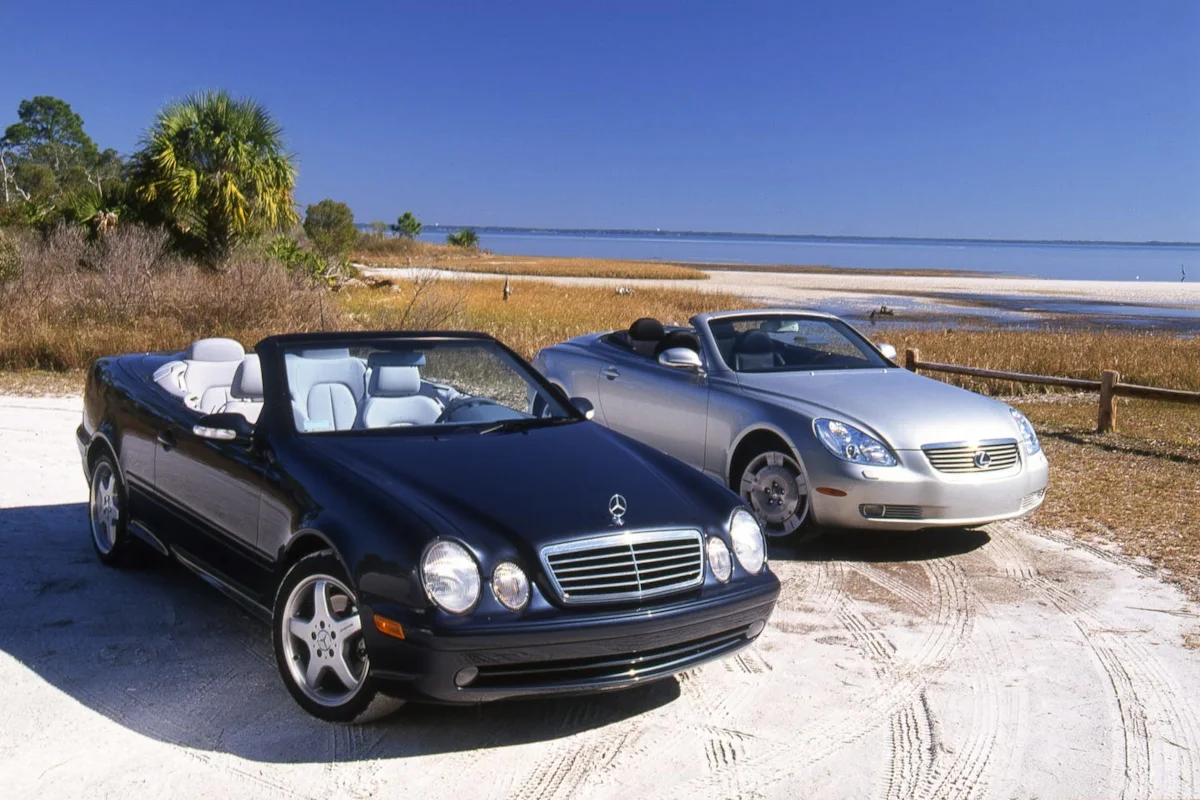
SpeedSUVs.com — In the early 2000s, the automotive market saw a fierce competition between two distinct approaches to luxury open-top driving: the 2001 Lexus SC430 and the Mercedes-Benz CLK430. Both vehicles represented the pinnacle of premium four-seat convertibles of the era, yet they offered vastly different experiences for drivers seeking both style and performance.
Design and Aesthetics
Visually, the two cars occupied different ends of the spectrum. The Mercedes-Benz CLK430 was praised for its more handsome and traditional design, which exuded a refined elegance typical of the brand. Conversely, the Lexus SC430 commanded more attention on the road, boasting a unique aesthetic that felt forward-looking for the time. Inside, the differences were just as stark; the Mercedes interior was designed with a serious, business-like focus, while the Lexus cabin featured a distinct, signature style that prioritized luxury comfort.
Performance and Utility
Under the hood, both convertibles were evenly matched, each powered by a robust 4.3-liter V-8 engine. In terms of acceleration, the vehicles provided similar performance capabilities, making them equally quick in real-world scenarios. However, the experience of ownership was heavily influenced by their practical limitations.
Pros and Cons
- Lexus SC430: Known for its exceptional comfort and cruising abilities, it gained significant attention. However, it suffered from a nearly non-existent trunk when the retractable hardtop was down, and the rear seats were notably cramped for adult passengers.
- Mercedes-Benz CLK430: Offered a more professional interior layout and slightly better trunk utility, allowing for basic cargo like a duffel bag. While it was arguably better looking, it lacked the bold, head-turning presence of its Japanese counterpart.
Conclusion
Choosing between these two convertibles depends largely on the driver’s priority. The Lexus SC430 serves as a superior dedicated cruiser for those who value comfort and unique style, while the Mercedes-Benz CLK430 appeals to those who prefer a more understated, practical approach to the luxury convertible experience. Both remain iconic representations of early 2000s automotive engineering.