SpeedSUVs.com
The Great Automotive Divide: Electrons Versus Gasoline
For over a century, the pursuit of driving pleasure has been synonymous with the internal combustion engine. The emotional connection between a driver and a machine has traditionally been forged through mechanical feedback: the distinct rumble of a well-tuned engine, ranging from a modest 1.5-liter turbocharged inline-four to a thunderous, high-displacement V8. Add to this the tactile satisfaction of clicking a short-throw shifter into place, the subtle vibration traveling through the steering column, and the atmospheric aroma of gasoline and warm rubber, and you have a sensory experience that many enthusiasts treat as a secular religion. For these purists, driving is not merely about traveling from one point to another; it is an active, participatory dialogue with a living mechanical entity.
The rapid rise of electric vehicles (EVs) has threatened to disrupt this long-standing relationship. Early electric offerings, while impressive in their efficiency, often left driving enthusiasts feeling detached. The instantaneous torque was undeniably quick, but the overall experience frequently felt sterile, lacking the soul and mechanical storytelling of traditional gas-powered sports cars. Even highly praised luxury electric sedans, which excel at isolation and comfort, have struggled to bridge the gap. For instance, cruising in an ultra-luxurious electric cruiser like the Mercedes-Benz EQS Sedan is often described as floating on a cloud inside a silent library—an incredibly comfortable and serene experience, but far from what anyone would classify as an engaging driver’s car. Other performance-oriented EVs, such as the Porsche Cayenne EV and the Dodge Charger Daytona, have made valiant efforts to speak the language of traditional enthusiasts, yet many drivers have still walked away feeling that an essential element of the driving experience was missing.
However, the automotive landscape is evolving. A new generation of electric machines is emerging, challenging the deeply held beliefs of even the most dedicated gasoline purists. By analyzing three distinct electric vehicles—a practical family crossover, a high-end luxury grand tourer, and an electric motorcycle—we can evaluate whether electric propulsion has finally matured to the point of offering genuine, uncompromised driving fun.
The Hyundai Ioniq 5 N: The Sleeper Crossover
On paper, the Hyundai Ioniq 5 N appears to be a conventional, mild-mannered family crossover. It features a sensible silhouette, a highly practical cabin with generous legroom and headroom, and enough cargo capacity to handle the routine tasks of daily life, from hauling groceries to packing golf clubs. It is the type of vehicle that easily blends into a suburban soccer game parking lot without drawing a second glance. This unassuming exterior, however, masks a machine of astonishing capability, creating a fascinating tension between everyday utility and extreme performance.
Behind the wheel, the Ioniq 5 N transforms from a quiet daily driver into an absolute powerhouse. Equipped with over 600 horsepower, the crossover can sprint from 0 to 60 mph in a mere 3 seconds. What sets this vehicle apart is not just the raw numbers, but the violent, immediate manner in which it delivers power. Launching the car from a complete stop is a physical experience; the acceleration is so abrupt and intense that it feels as though the horizon is being instantly rearranged, delivering a level of off-the-line traction that rivals or surpasses high-end sports cars and muscle cars costing multiple times its price.
Crucially, the Ioniq 5 N is not merely a straight-line drag racer. It handles corners with surprising agility and responsiveness, proving that an electric family car can be genuinely engaging on a winding road. It functions perfectly as a dual-purpose vehicle: a civilized, spacious commuter during the workweek, and a devastatingly fast performance machine on the weekend that can easily surprise traditional sports car owners. By combining genuine practicality with high-performance driving dynamics, it establishes itself as one of the most compelling sleeper cars on the market.
The Audi E-Tron GT: The Sophisticated Assassin
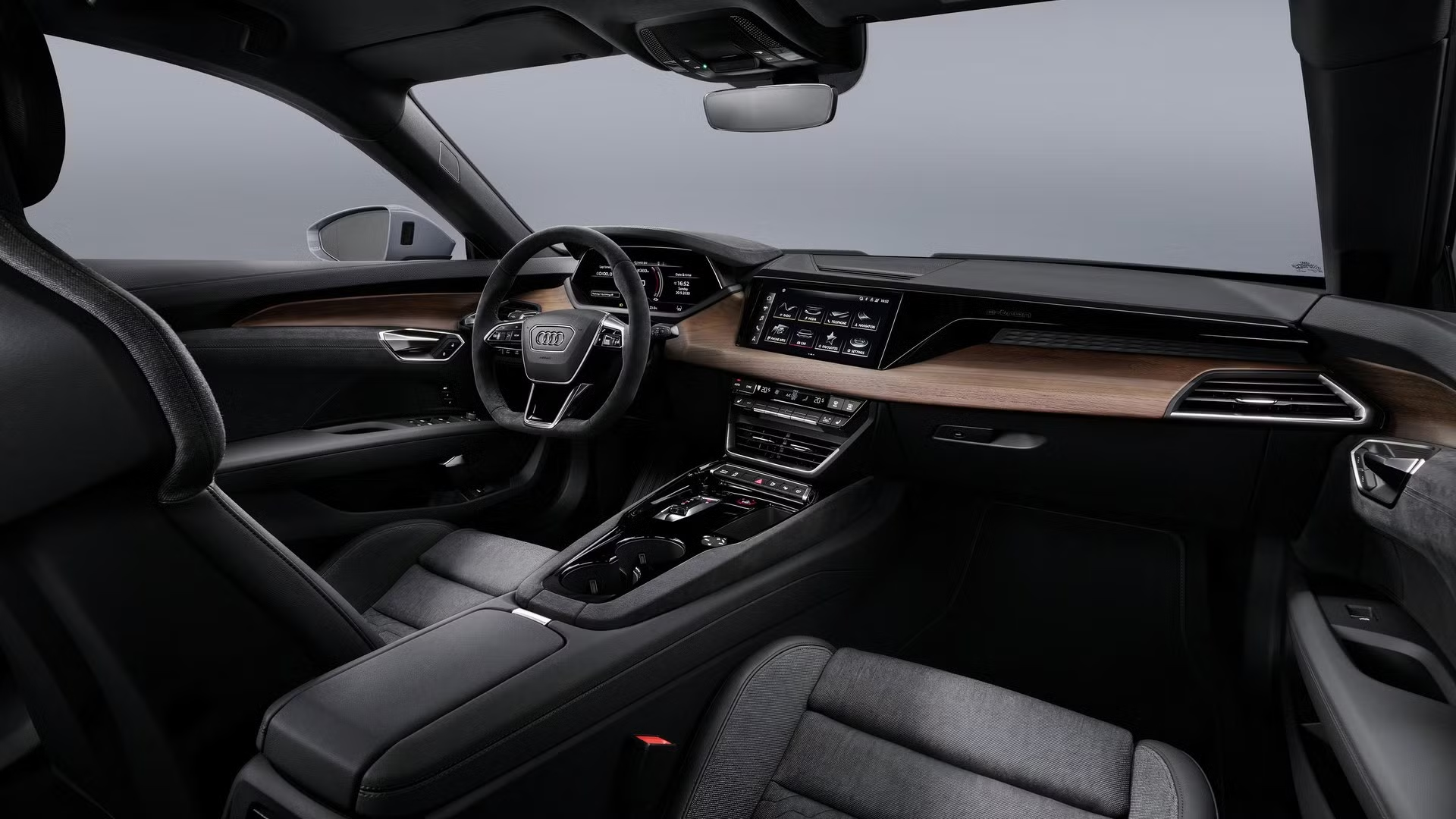
Where the Hyundai Ioniq 5 N relies on aggressive, hot-hatch-style energy, the Audi E-Tron GT approaches performance with quiet, surgical precision. From an aesthetic and functional standpoint, one might expect this large electric grand tourer to behave like a luxurious, comfortable hotel on wheels—competent and refined, yet ultimately forgettable. Instead, the vehicle delivers a driving experience that fundamentally challenges traditional assumptions about what a heavy, luxury electric car can do when pushed hard.
The performance specifications of the E-Tron GT lineup are formidable:
- S e-tron GT: Produces 670 horsepower, accelerates from 0 to 60 mph in 3.3 seconds, and has an electronically limited top speed of 152 mph.
- RS e-tron GT: Generates 818 horsepower under normal driving conditions, with up to 912 horsepower unlocked via launch mode, allowing it to rocket from 0 to 60 mph in under 2.5 seconds.
The acceleration of the E-Tron GT is characterized by its seamless, effortless nature. Unlike a gasoline engine, which builds power through a crescendo of rising revs and gear changes, the Audi delivers its performance instantly and silently. The sensation is akin to teleportation; the car simply moves from one point in space to another without the traditional mechanical buildup, yet it manages to feel incredibly exciting rather than sterile.
The most impressive aspect of the E-Tron GT, however, is its handling. Despite its substantial physical size and the inherent weight of its battery pack, the car navigates tight corners with remarkable precision, stability, and confidence. It mimics the handling characteristics of much smaller, lighter, purpose-built sports cars. Audi has managed to engineer a vehicle that is comfortable enough for long-distance road trips while remaining sharp and engaging on challenging back roads, achieving this balance without apparent compromise.
The Harley-Davidson LiveWire: Two-Wheel Electric Visceralism
The debate between electric and gasoline propulsion is not limited to four wheels; it extends to the motorcycle world, where the emotional connection to sound and vibration is perhaps even more pronounced. For decades, traditional motorcycle brands like Harley-Davidson have built their entire identity around a specific culture, defined by the distinct, rhythmic rumble of a V-twin engine. To many riders, the concept of a silent motorcycle felt almost sacrilegious—an artificial imitation of motorcycle culture that stripped away the core of the riding experience.

The Harley-Davidson LiveWire completely upends these preconceptions. On a motorcycle, there is no metal cabin, soundproofing, or heavy chassis to isolate the rider from the physical forces at play. The rider is completely exposed to the elements, making the sensation of speed far more immediate and visceral than in any car. When the LiveWire’s throttle is twisted, the instant electric torque is delivered directly to the road, resulting in a startling, immediate surge of acceleration.
The absence of an exhaust note does not diminish the excitement; instead, it shifts the focus entirely to the pure physics of motion. The feeling of accelerating from 0 to 60 mph on an open, exposed frame with instant power delivery is one of the most intense experiences available on any vehicle. The LiveWire demonstrates that electric technology can respect and even elevate the thrill of two-wheeled riding, winning over skeptics through sheer performance and dynamic engagement.
A Balanced Assessment: Pros and Cons of Performance EVs
To understand where electric vehicles stand in relation to traditional gas-powered cars, it is helpful to look at the clear advantages and disadvantages of this new performance paradigm based on real-world driving impressions.
The Advantages (Pros)
- Instantaneous Torque and Acceleration: EVs deliver their maximum torque immediately from a standstill, resulting in unmatched launching capability and effortless overtaking power.
- Dual-Personality Capability: Vehicles like the Ioniq 5 N can seamlessly transition from practical, quiet, and spacious family haulers to high-performance track weapons.
- Exceptional Handling and Stability: Despite their weight, modern performance EVs utilize low centers of gravity and advanced suspension tuning to corner with incredible precision and planted confidence.
- Visceral Exposure: In applications like the LiveWire motorcycle, the direct delivery of electric power provides an incredibly raw, unfiltered connection to speed.
The Disadvantages (Cons)
- Lack of Mechanical Storytelling: Electric motors lack the natural crescendo, gear shifts, and acoustic feedback of an internal combustion engine, which can make the acceleration feel less dramatic over time.
- Inauthentic Synthetic Features: The inclusion of artificial engine noises pumped through cabin speakers and simulated gear changes often feels embarrassing and gimmicky, detracting from the vehicle’s true character. Honest silence is generally preferred over artificial mimicry.
- Loss of Sensory Romance: For many, the absence of real engine vibration, mechanical exhaust notes, and the smell of fuel removes a key emotional component of the driving experience.
Conclusion: Finding Common Ground on the Road
Ultimately, the choice between electric and gas-powered performance comes down to what a driver values most. Gasoline engines will always hold a special place in the hearts of automotive enthusiasts. The mechanical drama, the rising exhaust note, and the tactile connection of a manual transmission offer a unique form of entertainment that cannot be directly replicated by electric motors. For those who view these specific sensory inputs as non-negotiable, traditional internal combustion engines remain irreplaceable.
At the same time, it is no longer fair to dismiss electric vehicles as mere appliances. Machines like the Hyundai Ioniq 5 N, the Audi E-Tron GT, and the Harley-Davidson LiveWire prove that EVs can be genuine, highly engaging driver’s cars. They do not need to mimic the sounds or gearboxes of gas cars to be exciting; their performance, handling, and ability to deliver pure driving joy are completely real. While they may not replace the traditional gas car in the hearts of every enthusiast, they have earned undeniable respect by proving that the future of fast, fun driving is in very capable hands.