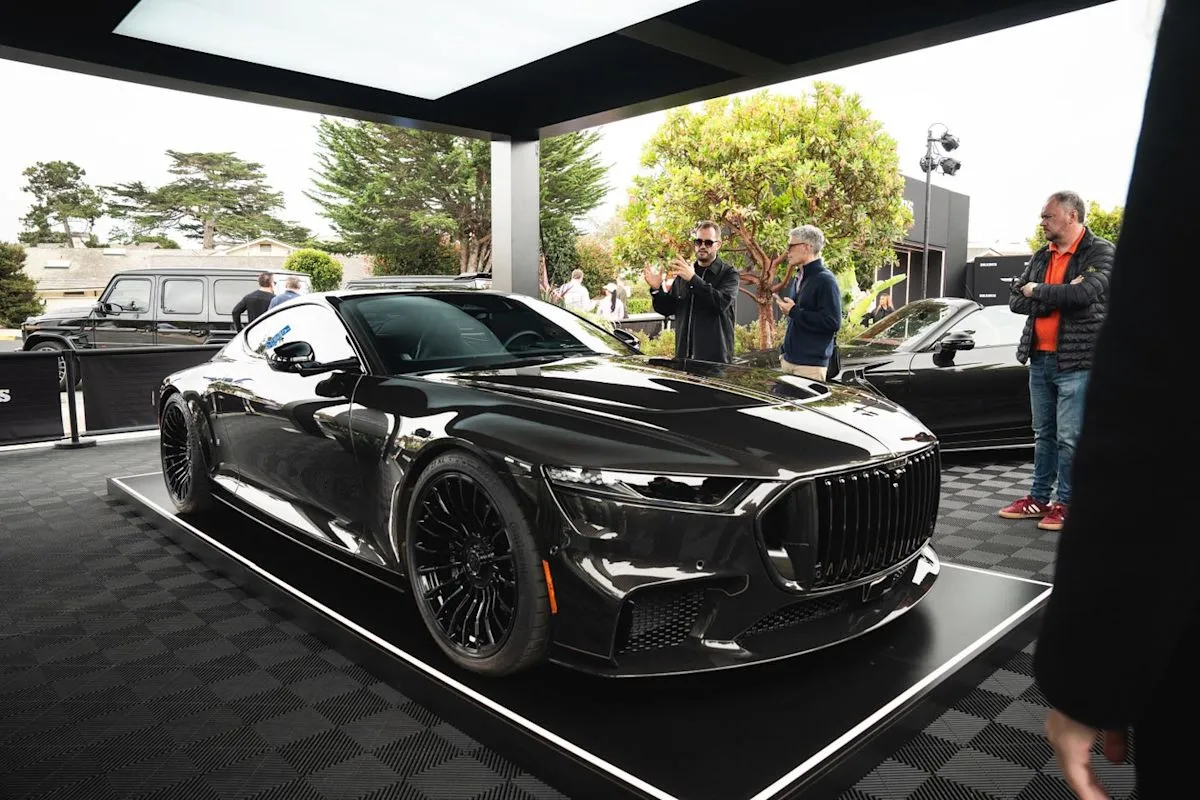
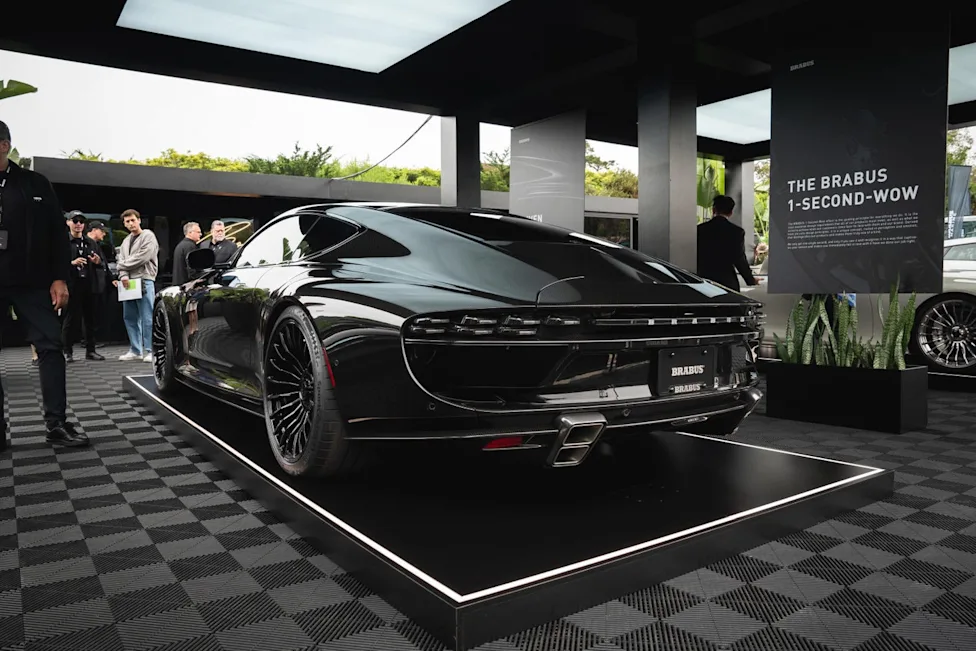
SpeedSUVs.com — The Pebble Beach Concours d’Elegance is renowned for hosting some of the most beautiful and historically significant vehicles in the world. During this prestigious weekend, a highly unique vehicle made its presence known: the Brabus Bodo Coupe. Featuring an exceptionally long hood, an intimate “selfish” cabin, and a sweeping, drop-tail rear end, this custom two-door grand tourer carries the dramatic, menacing aesthetic of a classic Streamline Moderne coupe. It looks like a vehicle that could have been commissioned by a wealthy industrialist in the era preceding World War II. However, underneath this completely bespoke, hand-formed carbon fiber bodywork lies a highly modern and exclusive mechanical foundation. This vehicle is a custom rebody, utilizing the chassis and architecture of a contemporary donor car to create something entirely unique and highly limited.
To understand the significance of the Bodo Coupe, one must understand the history of its creator. Founded in 1977, Brabus has long been celebrated—and sometimes scrutinized—for its aggressive, high-performance modifications of Mercedes-Benz vehicles. For decades, the German tuning house was almost exclusively associated with the three-pointed star. However, under the leadership of CEO Constantin Buschmann, who took over the company following the death of his father and founder Bodo Buschmann in 2018, the brand has embarked on a significant strategic shift. Since 2022, Brabus has expanded its portfolio to collaborate with other ultra-luxury and high-performance brands, including Porsche, Lamborghini, Bentley, and Land Rover. The Bodo Coupe, named in honor of the company’s founder, represents the pinnacle of this evolution as the brand’s very first scratch-built vehicle project.
The Foundation: Why the Aston Martin Vanquish?
Choosing the right donor vehicle for a project of this scale was a meticulous process for the engineering team. Brabus explored various luxury platforms before settling on the Aston Martin Vanquish. According to Constantin Buschmann, the Aston Martin provided the perfect structural canvas. It offered a long wheelbase, an aggressive stance, and the precise curvature and rake required for the structural A-pillars and windshield. Additionally, the Vanquish houses a magnificent, sonorous 5.2-liter twin-turbocharged V-12 engine, which serves as an ideal heart for a high-end grand tourer. Another practical benefit of using the Aston Martin platform was its electronic architecture. Due to Aston Martin’s technical collaborations with Mercedes-Benz, the underlying electronic systems provided a degree of familiarity to the Brabus engineers, streamlining the integration of new custom components.
The production process of the Bodo Coupe also reflects a highly modern approach to coachbuilding. In the early 20th century, prestigious manufacturers like Bugatti or Rolls-Royce would supply a bare, rolling chassis to independent coachbuilders, who would then construct custom bodywork on top. Today, modern safety regulations, crash-testing requirements, and emissions standards make that approach virtually impossible for low-volume vehicles. Consequently, Brabus purchases fully finished, complete vehicles directly from Aston Martin’s facility in Gaydon. Once the cars arrive, they are stripped down entirely. Buschmann explains that using fully approved, road-legal production cars as a starting point is the only logical method. It ensures that the underlying structure has already undergone rigorous regulatory and safety testing, allowing Brabus to focus on performance modifications and body redesigns without compromising vehicle safety standards.
A 1000-Horsepower Mechanical Masterpiece
Once the donor Vanquish is stripped, the engineering team goes to work on the drivetrain. Brabus has heavily modified the twin-turbocharged V-12 engine to unlock astonishing performance figures. The upgrades include a completely redesigned forced-induction system featuring custom turbochargers, an upgraded intercooler, and a pair of high-flow Ram-Air intakes integrated into the front design. These enhancements boost the engine’s output to an even 1,000 horsepower and a massive 885 pound-feet of torque. All of this immense power is routed through an eight-speed torque-converter automatic transmission, which sends power exclusively to the rear wheels. To help manage this power, the rear axle is equipped with a limited-slip differential.
Putting 1,000 horsepower to the ground through only two wheels is a monumental task. To address this, the vehicle features custom-engineered 22-inch wheels wrapped in ultra-wide 335-section-width Pirelli P-Zero tires at the rear. According to performance claims, this setup allows the grand tourer to accelerate from zero to 60 mph in under 3.0 seconds, on its way to a projected top speed of nearly 225 mph. These figures elevate the car into the realm of modern hypercars, despite its substantial size and luxury-oriented grand touring focus.
Driving Dynamics and Road Behavior
Experiencing the vehicle on the winding roads around the Pebble Beach resort reveals a fascinating dual personality. Due to the tight constraints of the event and the presence of priceless classic cars, pushing the vehicle to its absolute limit is impossible. It is a massive vehicle, stretching to a length that rivals a modern three-row SUV like the Kia Telluride. Navigating narrow streets in a car of this scale requires concentration. However, when given the opportunity to accelerate, the car demonstrates incredible capability. The build quality is exceptional, feeling incredibly solid and planted, much like an old-growth redwood tree. Yet, despite its extreme power, the car can also feel remarkably docile and cooperative at low to moderate speeds.
This docility raises questions about how the vehicle should be classified. While some online commentators have labeled it a “hyper GT,” Brabus avoids using this term in its marketing materials. Constantin Buschmann emphasizes that the “hyper” moniker fits the car’s extreme styling, 1,000-horsepower output, and top-tier performance. However, he notes that a true Gran Turismo must remain comfortable and serves as an exceptional cruiser. For Buschmann, the sweet spot of the car is experienced at mid-range speeds, though its high-speed capability means it can easily chase down dedicated sports cars on the German Autobahn.
A Shift in Brabus Design Philosophy
Visually, the Bodo Coupe represents a departure from the traditional Brabus aesthetic. The brand has historically been known for aggressive, highly sculpted body kits characterized by prominent spoilers, deep air scoops, and stark carbon fiber accents. In contrast, the Bodo Coupe features a remarkably clean, elegant, and restrained design. It relies on smooth surfaces and minimalist lines, drawing comparisons to avant-garde design concepts rather than aggressive street racers. Buschmann points out that this elegant approach is not entirely new, citing the Brabus 850 (based on the Mercedes-Maybach S-Class) as an example of how the brand accommodates clients who prefer understated luxury. The clean styling of the Bodo Coupe reflects the current design direction of the company and hints at where they want to take the brand in the future.
Pros and Cons of the Brabus Bodo Coupe
Pros
- Exceptional Power and Performance: With 1,000 horsepower and 885 lb-ft of torque, the vehicle offers hypercar-level acceleration and a claimed top speed of 225 mph.
- Impeccable Build Quality: The hand-formed carbon fiber bodywork and engineering integration result in a car that feels incredibly solid, stable, and planted on the road.
- Versatile Driving Character: Despite its monstrous power, the vehicle remains docile, comfortable, and highly usable as a luxury long-distance cruiser.
- Exclusivity: With only 77 coupes and 77 convertibles scheduled for production, it represents an elite tier of automotive collectibility.
Cons
- Prohibitive Pricing: Starting at $1.15 million, with highly customized paint, trim, and material options easily adding hundreds of thousands more, it is accessible to only the wealthiest collectors.
- Imposing Dimensions: Being as long as a Kia Telluride, the car’s massive footprint makes it challenging to maneuver in tight urban environments or narrow streets.
- The Customization Dilemma: Rebodying a finished, highly respected $450,000 Aston Martin Vanquish may be viewed by some purists as an unnecessary dismantling of an already exceptional piece of automotive art.
Conclusion: A Bold Leap Forward
The Brabus Bodo Coupe is a fascinating experiment in ultra-luxury coachbuilding. By blending the soul and mechanical excellence of an Aston Martin V-12 with a bespoke, hand-crafted carbon fiber body, Brabus has created a striking grand tourer that successfully balances extreme performance with refined comfort. While its massive size and million-dollar price tag limit its practicality for the average enthusiast, it serves as a powerful statement of intent for the future of the Brabus brand. For collectors seeking unmatched exclusivity, dramatic styling, and effortless high-speed cruising capability, the Bodo Coupe stands as an extraordinary, albeit highly expensive, achievement in modern automotive design.