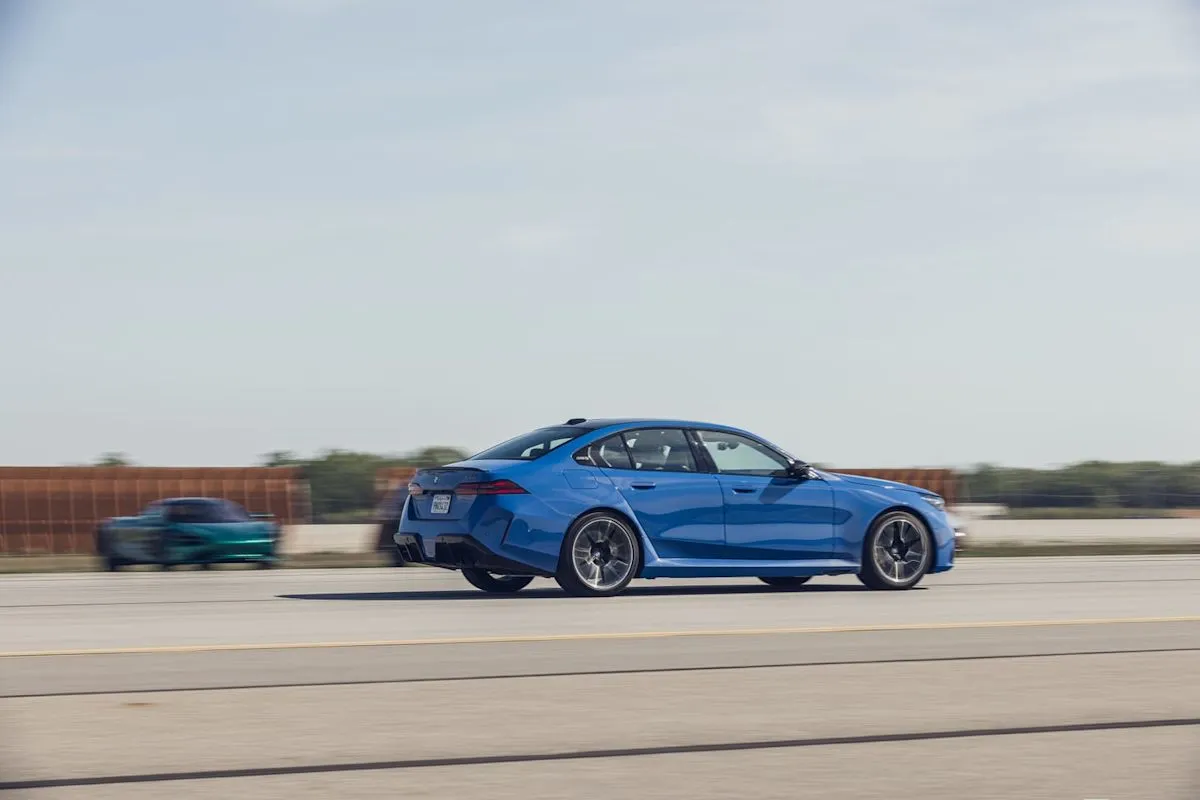
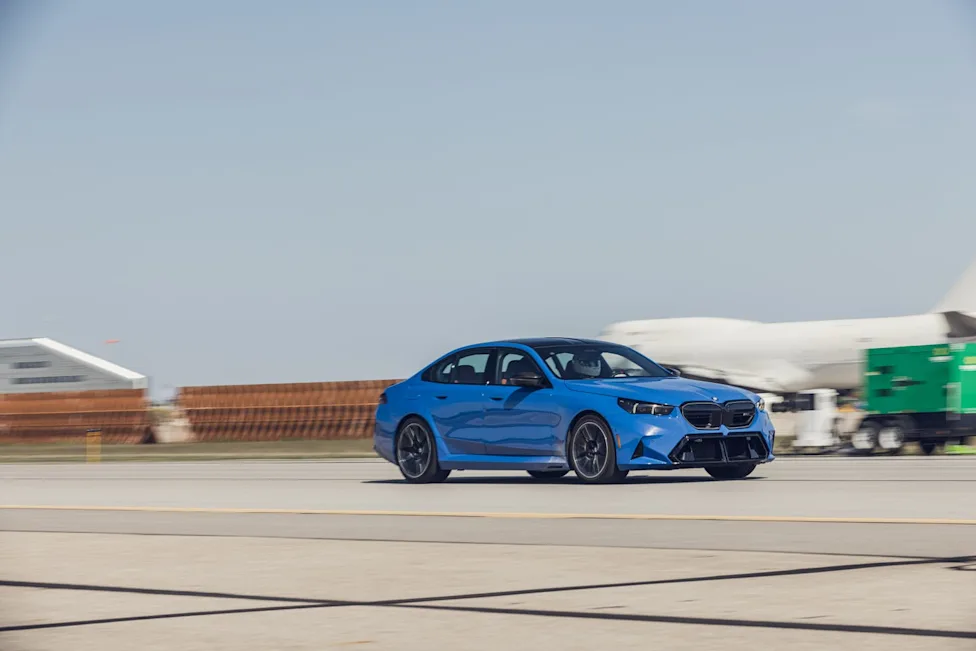
SpeedSUVs.com — The 2026 BMW M5 represents a major shift in the high-performance sedan segment, embracing a plug-in hybrid powertrain that challenges traditional expectations. Tested in the grueling 0-150-0 mph speed trial, this heavyweight contender proved that sheer power and advanced braking technology can overcome substantial mass. Clocking in at 43.6 seconds for the complete run, the new M5 demonstrates a unique balance of straight-line speed and high-speed stopping power.
Power and Specifications
At the heart of the 2026 BMW M5 is a hybrid system combining a 577-horsepower twin-turbo 4.4-liter V-8 engine with a 194-horsepower electric motor. Together, they generate a massive 717 horsepower. However, this hybrid technology comes with a significant weight penalty. The vehicle tips the scales at a hefty 5,267 pounds, resulting in a power-to-weight ratio of 7.3 pounds per horsepower. Despite this weight, the M5 relies on its four-wheel traction to deliver explosive acceleration, making it an incredibly fast machine on open pavement.
The Complexity of Launching
To extract the maximum performance from the M5, drivers must navigate a complex digital ecosystem. The setup process requires digging through multiple menus on the vehicle’s screens to locate the sportiest configurations. Achieving the optimal launch involves selecting Sport Plus for the drive logic and setting the stability control to either ESC Off or M Dynamic Mode (MDM). Once these parameters are met, holding both the brake and accelerator activates “Launch Control” in the driver’s cluster. Watching the turbo-boost gauge and releasing the brakes unleashes the full force of the hybrid powertrain, resulting in momentary tire slip before hooking up.
Braking Performance and M2 Comparison
Stopping a 5,267-pound vehicle from 150 mph requires immense braking force. The M5 utilizes massive carbon-ceramic disc brakes—measuring 16.5 inches at the front and 15.7 inches at the rear. This setup allowed the M5 to halt in just 609 feet. When compared to its smaller sibling, the BMW M2, the M5 gained roughly a second on the way up to 150 mph and managed to stop even shorter, beating the M2’s stopping distance of 634 feet by 25 feet.
Pros and Cons
Pros
- Immense Power: The hybrid setup delivers a combined 717 horsepower, offering exceptional acceleration.
- Superior Braking: Large carbon-ceramic brakes bring the heavy sedan to a halt from 150 mph in a remarkable 609 feet.
- All-Wheel Traction: The four-wheel-drive system manages the massive power output efficiently, outperforming smaller models in high-speed trials.
Cons
- High Weight: Weighing 5,267 pounds, it is significantly heavier than previous generations.
- Complex Interface: Accessing performance features like Launch Control requires navigating through multiple, complicated screen menus.
- Premium Pricing: With a base price of $132,050 and an as-tested price of $146,500, it remains an expensive investment.
Conclusion
The 2026 BMW M5 successfully redefines what a modern plug-in hybrid performance sedan can achieve. While its massive curb weight and complex digital menus may deter purists who prefer lightweight simplicity, its outstanding 0-150-0 mph test time of 43.6 seconds and world-class braking performance prove that technology can conquer physical weight. For buyers seeking an ultra-high-performance executive cruiser with hybrid efficiency, the M5 delivers an unmatched, albeit complex, driving experience.