SpeedSUVs.com
Introduction to Jim Shane’s Suburban Automotive Exploration
In the June 2003 issue of Car and Driver, postal carrier Jim Shane shared a deeply personal and highly observant memoir titled “I See Dead Cars: A Mailman’s Daily Trip Down Memory Lane.” This narrative offers a unique, ground-level perspective on the hidden automotive treasures and decaying relics that occupy suburban American driveways, side yards, and garages. Far from being a mere catalog of neglected machinery, Shane’s piece serves as a poignant reflection on nostalgia, personal history, and the enduring, often irrational bonds that form between human beings and their automobiles. By examining the vehicles he encounters on his daily mail route in Novato, California, Shane bridges the gap between the mundane realities of suburban life and the vibrant, emotional histories of the cars that once defined a generation.
The Mail Carrier as a Silent Observer of Domestic Car Culture
The daily routine of a modern mail carrier is often perceived as a simple, repetitive task, characterized by brief pleasantries with residents and the steady delivery of correspondence. However, Shane quickly dispels this idealized image, noting that the contemporary postal service is driven by the rapid movement of high-volume mail, such as catalogs and credit-card applications. This fast-paced environment requires carriers to navigate a variety of physical obstacles, from stray dogs and garden hoses to cracked sidewalks. It was this constant need for safe passage that first drew Shane’s attention to the “dead cars” obstructing his path. These vehicles, which he initially viewed as physical hindrances adding extra steps to his deliveries, gradually transformed in his mind into fascinating monuments of automotive history.
Shane observes that suburban driveways are home to an array of old, intriguing, and semiprecious cars. These are vehicles that have largely faded from the collective memory of the general public, existing primarily in specialized car shows, museums, or, in this case, as private obstacles in residential yards. Through his daily observations, Shane gains an intimate look into the lifestyles and private passions of his customers. The presence of these vehicles, whether hidden behind fences, buried under weeds, or tucked away inside cluttered garages, reveals a side of suburban homeowners that is rarely visible through their incoming mail alone. On sunny Saturdays, as residents engage in car washing, landscaping, and domestic projects, the mail carrier becomes a quiet witness to the enduring legacy of American car culture.
The Ford Thunderbird and the Evolution of Personal Identity
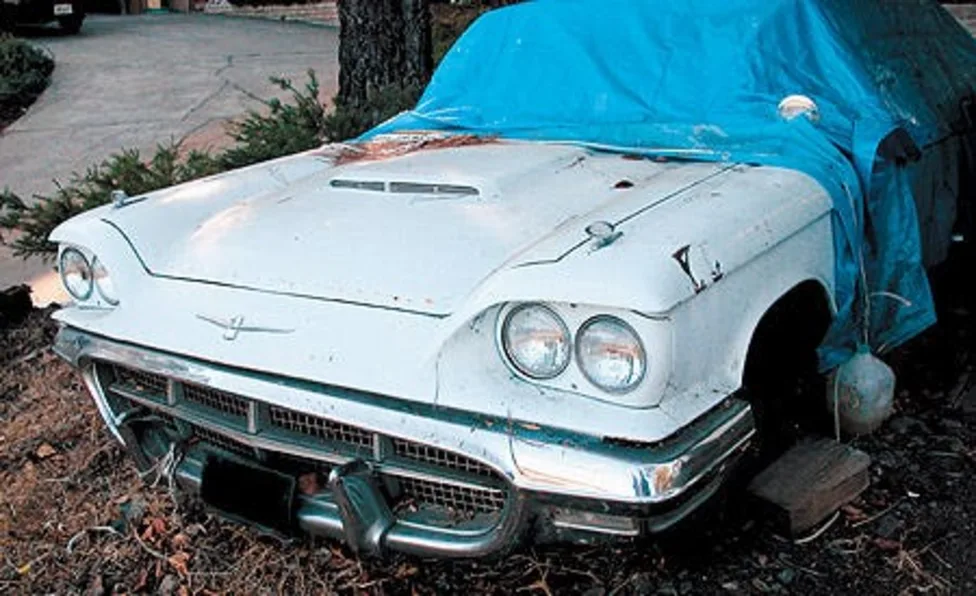
One of the central themes of Shane’s memoir is the profound connection between specific vehicles and the shifting emotional landscapes of his youth. This connection is powerfully illustrated by his encounter with a decaying Ford Thunderbird on his route in Novato. The vehicle, an early four-passenger model, was stuffed into the shrubbery on a hillside, largely obscured from public view by pine needles, leaves, dirt, and a ubiquitous blue plastic tarp anchored by weighted milk jugs. Despite its advanced state of decay and oxidized powder-blue paint, the car retained all four of its clear headlights, which Shane describes as maintaining a certain dignity amid the neglect.
This encounter triggers a vivid recollection of Shane’s adolescence during the late 1950s. Growing up in a dedicated “Ford family,” Shane explains how his personal sense of self-worth was deeply intertwined with the market success of the Ford Motor Company. During this period, American families often aligned themselves fiercely with one of the Big Three automakers. When Chevrolet introduced the Corvette to compete with small European sports cars, Ford responded with the two-seat Thunderbird. Shane recalled the immense pressure he felt to see the T-Bird outperform the Corvette. However, in 1958, Ford shifted its strategy, transforming the Thunderbird into a larger, four-passenger luxury vehicle. While this move left the teenage Shane feeling abandoned in terms of raw performance bragging rights, the car’s social value soon became apparent. Just before his senior year of high school, his parents purchased a red 1959 Thunderbird. Shane recounts a pivotal moment when his friend Mike encouraged him to open the car door in front of a local movie theater to show off the interior upholstery to a girl Shane wanted to date, demonstrating that the appeal of luxury and style could quickly eclipse the simple desire for speed.
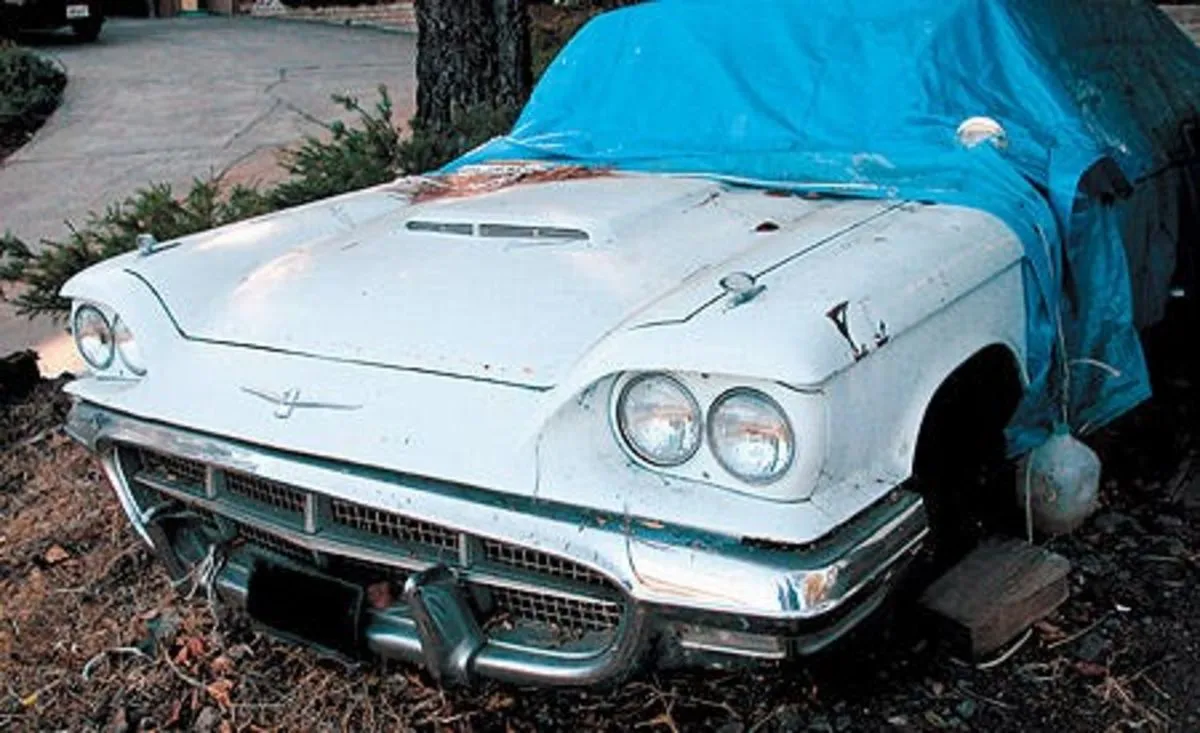
Shane’s personal history with the Thunderbird culminated in 1964 when, upon leaving the Navy, he purchased a 1960 model as his first car. This “square Bird” became the vessel for numerous cross-country adventures, road trips, and significant life events, reinforcing the idea that classic cars are often valued less for their mechanical utility and more for the memories and life stages they represent. When Shane views the decaying Thunderbird on his route, he does not see mere junk; he sees a physical anchor to the adventures and emotional turning points of his early twenties.
The Corvette Sting Ray and the Allure of the Idealized Machine
In contrast to his loyal Ford upbringing, Shane confesses to a parallel, idealized passion for the Chevrolet Corvette, specifically the Sting Ray models produced between 1963 and 1967. This cross-brand appreciation highlights a common phenomenon among automotive enthusiasts, where personal loyalty to a brand can coexist with an idealized admiration for a competitor’s iconic design. Shane describes his mental “special place” as one where he is driving a red or white Corvette Sting Ray with the top down, representing a state of absolute perfection.
Shane’s conversion to the Corvette camp occurred in 1965 during one of his cross-country journeys. While traveling through New Mexico, the transmission of his 1960 Thunderbird began to fail. He managed to drive the damaged vehicle to El Paso, Texas, where his Navy friend, nicknamed Red, owned a red 1965 Corvette with a personalized license plate. Red allowed Shane to drive the vehicle, an experience that permanently altered Shane’s perspective on automotive performance and social appeal. He noted that the Corvette attracted significant attention from onlookers, an experience starkly different from his time in the Thunderbird, which had primarily attracted the attention of law enforcement.
This vivid memory contrasts sharply with the reality of the “dead” Corvette Shane encounters on his mail route. This vehicle, which Shane identifies as a big-block 1967 model based on its distinctive stinger hood, sits in a state of severe neglect. Its tires are flat and sagging, chunks of its rotted convertible top hang from rusted crossmembers, and the open interior is filled with years of decaying leaves. Lacking any protective covering other than the canopy of the trees above, the car has remained stationary for years, slowly being reclaimed by nature. For Shane, walking past this vehicle is a difficult task, as it feels like abandoning a wounded friend, illustrating the powerful projection of human emotions onto inanimate objects.
The Triumph Spitfire: Hope, Restoration, and the Haynes Manual
While the decaying Thunderbird and Corvette evoke feelings of nostalgia and melancholy, Shane’s encounter with a Triumph Spitfire on his route offers a more optimistic perspective on suburban car hoarding. The British roadster, unwashed for years except by rain and lawn sprinklers, displayed heavily oxidized maroon paint that had faded to a light pink. Between its worn front tires, the traditional British oil leaks had long since congealed on the ground. However, a look through the driver’s-side window revealed a crucial detail: a Haynes shop manual resting on the ragged driver’s seat.
This simple discovery significantly alters Shane’s interpretation of the “dead cars” on his route. The presence of the repair manual indicates that the owner has not abandoned the vehicle; rather, they possess a plan, a vision, and an ongoing connection to the car. Shane realizes that for many owners, these vehicles represent an active, future-oriented dream. While a spouse or a passerby might see only a useless piece of decaying machinery, the owner retains a mental bond with the car, believing that they still have a future together. This observation highlights a key psychological aspect of classic car ownership: the vehicle serves as a repository for future aspirations and the promise of a restoration project that will one day bring the machine back to life.
The Practical Realities and Alternative Uses of Suburban Relics
Despite the romanticism associated with these vehicles, Shane does not ignore the more desperate and practical realities of their current existence. Throughout his route, he observes classic cars being repurposed for mundane, domestic tasks. He describes a powerful Mopar 440 Magnum that has been converted into a makeshift family recycling bin, with plastic bottles and fast-food containers filling the space where the grille and radiator once resided. Other vehicles serve as secure storage units, packed tightly with unsold yard-sale items, while some simply act as physical spacers in cluttered yards, resting directly in the dirt.</p
These observations reveal a tension between the idealized vision of restoration and the practical limitations of suburban life. The demands of family, work, and daily responsibilities often relegate these automotive projects to the background, leaving the vehicles to slowly deteriorate while serving as storage containers or lawn ornaments. Yet, even in these compromised states, the cars remain valuable to their owners, serving as physical placeholders for dreams that have been temporarily sidelined by the demands of everyday life.
The Invisible Mustang and the Legacy of “The Christian” Shelby GT350
Shane’s narrative further explores this theme through his interactions with homeowners on his route. In one instance, he delivers a Mustang enthusiast magazine to a customer standing in his driveway. Upon inquiring about the owner’s vehicle, a Forest Green 1968 Mustang GT fastback, the owner opens his garage doors to reveal… absolutely no car. Instead, the garage is filled with the typical paraphernalia of family life: a skateboard, baby strollers, a pink bicycle, furniture, lawn tools, and fertilizer. Despite the physical absence of the vehicle, the owner speaks of his “Bullitt” look-alike with genuine enthusiasm, a passion that has been passed down to his young son, who dreams of street racing the vehicle in the future. Shane declines the owner’s offer to clear out the clutter to show him the car, recognizing that the dream itself is complete and personal, requiring no physical validation from an outsider.
On another portion of his route, Shane describes a 1966 Shelby GT350 resting behind a fence in a side yard, surrounded by old fenders, bicycles, and miscellaneous parts. This particular vehicle had been converted into a drag racer years prior, competing under the name “The Christian,” with scripture references still visible on its faded fender. With the driver’s window removed, the vehicle has become a shelter for local cats, its racing days long behind it. Carroll Shelby, the legendary designer behind the Cobra and Shelby Mustangs, was a personal hero of Shane’s, making the sight of this decaying performance icon particularly poignant. Yet, like the other vehicles on his route, “The Christian” remains a monument to a specific era, preserving a unique local history within its rusting frame.
A Balanced Assessment of Suburban Car Hoarding
Based on the observations detailed in Jim Shane’s memoir, the phenomenon of keeping “dead” classic cars in suburban driveways presents a clear set of advantages and disadvantages for the owners, their families, and the community.
Pros of Sentimental Car Preservation
- Preservation of Personal History: These vehicles serve as tangible links to significant life events, youth, and personal milestones, allowing owners to maintain a physical connection to their past.
- Fostering Family Bonds: The shared dream of restoration can bring families together, as seen in the case of the father and son sharing a passion for the hidden 1968 Mustang GT.
- Suburban Hope and Aspiration: Keeping a project car, symbolized by the Haynes manual in the Triumph Spitfire, provides owners with a sense of future purpose and a creative outlet, even if the work is temporarily paused.
- Historical Preservation: These vehicles represent rare, often endangered species of automotive history that might otherwise be lost entirely to scrap yards if not kept by private enthusiasts.
Cons of Sentimental Car Preservation
- Physical Deterioration: Without proper shelter, rare and valuable vehicles like the big-block 1967 Corvette suffer severe, irreversible damage from the elements, including rusted frames and rotted interiors.
- Suburban Clutter and Obstacles: For service workers like mail carriers, these vehicles can present physical hazards and obstacles, acting as “driveway chicanes” that complicate daily routines.
- Domestic and Domestic Tension: The presence of a decaying vehicle can be a source of disagreement within households, representing a stark contrast between an owner’s dream and a spouse’s desire for a clean, functional living space.
- Loss of Utility: Many high-performance vehicles are reduced to serving as recycling bins, storage units, or structural spacers, stripping them of their original purpose and performance capabilities.
Conclusion: The Enduring Significance of Suburban Car Relics
Jim Shane’s memoir offers a balanced, deeply empathetic look at the silent sentinels of suburban driveways. While these “dead cars” may appear to be eyesores or safety hazards to the casual observer, Shane’s unique perspective as a daily mail carrier reveals that they are, in fact, repositories of human emotion, memory, and hope. Whether it is a decaying Thunderbird keeping its dignity under a blue tarp, a Corvette slowly returning to the earth, or an invisible Mustang buried beneath baby strollers, these vehicles represent the enduring dreams of their owners. Ultimately, Shane’s narrative suggests that as long as there are driveways and dreamers, these classic machines will continue to hold a special, revered place in the suburban landscape, serving as quiet monuments to where we have been and where we still hope to go.