SpeedSUVs.com — The implementation of the European Union’s General Safety Regulation phase two (GSR2) starting July 7, 2026, marks a transformative moment in automotive history. Under this directive, every newly registered passenger car and light commercial van must feature an Advanced Driver Distraction Warning (ADDW) system. This mandate introduces active cabin surveillance, utilizing inward-facing cameras to monitor the driver’s face, eyes, and head positions throughout every single journey. The regulation aims to address traffic safety concerns, but it simultaneously sparks intense debate regarding personal privacy inside private vehicles.
The technology driving these monitoring systems relies on sophisticated hardware integrated directly into the cabin environment. Typically, an active infrared (IR) camera module is positioned on the steering column or nestled within the upper dashboard cluster. This location gives the camera an unobstructed view of the driver’s face. By using active infrared illumination that remains completely invisible to the human eye, the system can operate continuously under any lighting conditions, including bright sunlight and absolute darkness.
How the System Evaluates Driver Attention
These sensors continuously track multiple biometrics, including precise eye movements, eyelid blink frequencies, and general gaze directions. The primary objective is to determine if the driver’s attention has drifted away from the roadway. If the system detects that the driver is distracted—such as looking down at a mobile device or spending too much time adjusting the central infotainment screen—it is legally programmed to initiate a sequence of warnings.
The intervention thresholds are strictly defined by vehicle speed. When traveling at speeds between 12 and 31 mph, the system allows for a maximum distraction window of 6.0 seconds before intervening. However, at higher speeds exceeding 31 mph, the tolerance window shrinks significantly to just 3.5 seconds. Once these time limits are crossed, the vehicle must trigger a series of visual, audible, or haptic alerts on the dashboard to force the driver’s attention back to the road.

While the initial phase of the GSR2 legislation only requires escalating alarms rather than physical vehicle interventions like automatic emergency braking or bringing the vehicle to a stop on the shoulder, the system’s presence is permanent. Drivers may find options within system sub-menus to mute audible alerts temporarily, but the regulation mandates that the entire driver monitoring system must fully re-arm itself every time the vehicle’s ignition is cycled.
The Pros: Enhanced Road Safety and Data Protections
To evaluate this technology objectively, it is necessary to weigh its potential advantages against its documented drawbacks. Proponents of the ADDW mandate, including European regulators, emphasize that always-on monitoring is a critical tool for eliminating traffic accidents caused by drowsiness and distracted driving. Because human error and distraction are major contributors to road accidents, having an automated system to nudge drivers back to alertness could save lives.
Furthermore, the legislation incorporates strict data privacy guardrails designed to prevent abuse. According to the official regulatory text, the ADDW system must function within a closed-loop framework. This means that all telemetry, tracking data, and biometric evaluations must be processed locally on the vehicle’s internal computer chip. The law explicitly prohibits continuous video recording, bans the use of facial recognition to identify specific drivers, and requires that all processed data be wiped immediately after real-time analysis.
The Cons: Privacy Risks and System Usability
- Frequent False Alarms: Early consumer feedback indicates that these systems can cause severe driver fatigue due to frequent false alarms. Routine and safe actions, such as checking side mirrors, adjusting a radio station, or momentarily glancing at pedestrians, can easily trigger annoying visual and audible warnings.
- Lack of Auditing and Verification: The lack of an independent, third-party auditing framework raises serious concerns about whether automakers are actually complying with the closed-loop requirements. There is already evidence of discrepancies; for instance, Volvo has admitted that its driver-monitoring setup transmits telemetry back to external cloud servers to train safety algorithms, which directly bypasses the intended regulatory firewall.
- Susceptibility to Data Harvesting: Modern vehicles are equipped with cellular modems and support over-the-air (OTA) updates. This existing hardware infrastructure means that a simple software update could theoretically convert these cabin cameras into commercial data harvesting tools. Insurance companies, fleet management corporations, and government agencies could eventually seek access to these behavioral risk profiles.
Global Implications and Future Outlook
The trend toward mandatory in-cabin monitoring is not confined to Europe. United States safety regulators, led by the National Highway Traffic Safety Administration (NHTSA), are actively studying similar mandates driven by legislative directives to combat impaired and distracted driving. Because automakers prefer to avoid engineering separate, highly complex electrical and interior architectures for different global markets, the physical hardware for these systems is being integrated into global manufacturing platforms.
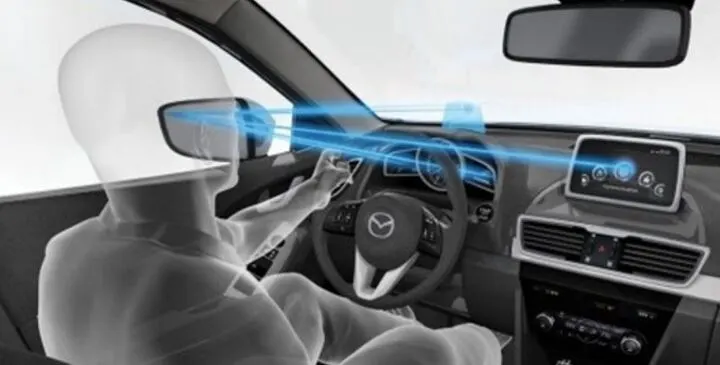
Consequently, the incremental cost of installing these infrared cameras and core algorithms in U.S. vehicles is virtually zero for manufacturers, though it provides an easy justification to raise vehicle MSRPs for consumers. This push occurs alongside the growing popularity of oversized digital dashboard displays, which naturally pull driver eyes away from the road, creating a cyclical problem where regulators mandate internal cameras to correct distractions caused by the vehicles’ own designs.
Conclusion
The mandatory implementation of Advanced Driver Distraction Warning systems represents a complex trade-off. While the technology offers a theoretical safety net to reduce accidents caused by modern dashboard distractions, it introduces persistent cabin surveillance, potential security loopholes, and annoying false alarms. Buyers must weigh the promise of automated safety against the reality of losing in-cabin privacy as these systems become a global standard.