SpeedSUVs.com — The Woodward Dream Cruise has long established itself as one of the premier public spectacles in the automotive world. Unlike traditional, highly exclusive concours events where entry is strictly regulated and hidden behind expensive tickets, this cruise offers completely free participation to anyone with a set of wheels. The low barrier of entry requires nothing more than turning onto Woodward Avenue and driving or setting up a spot along the roadside. This open-ended format naturally invites an incredibly diverse array of vehicles, ranging from pristine classics to some of the most bizarre custom builds ever conceived. The 2026 event was no exception, bringing out a fascinating mix of engineering oddities, historical movie props, and rare imports.
The Rare and Forgotten Classics
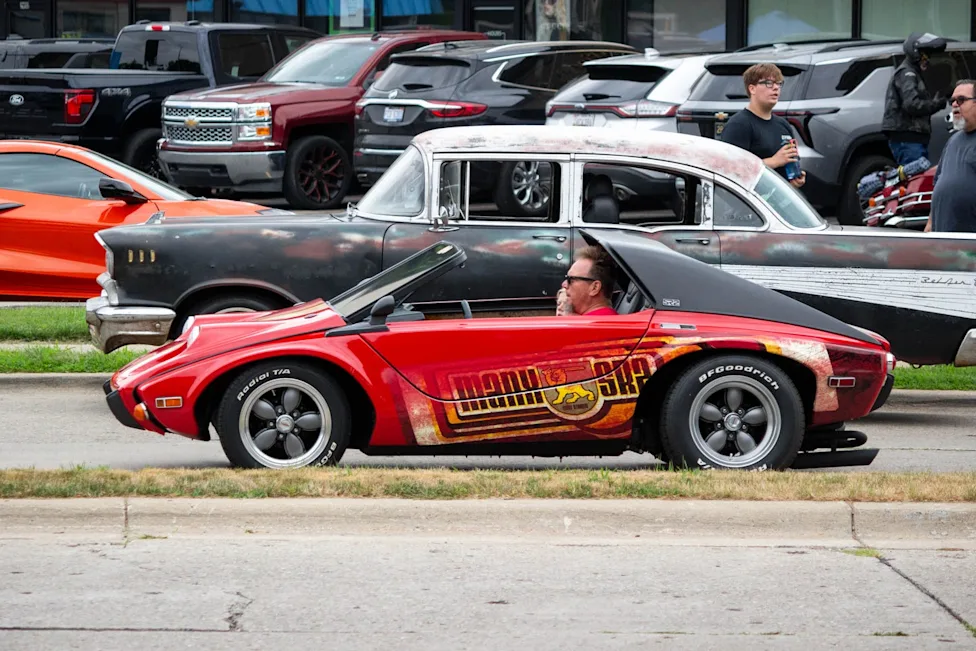
Among the sea of classic muscle cars, several rare gems stood out due to their historical obscurity. The Meyers Manx is globally recognized as the definitive fiberglass dune buggy based on the Volkswagen Beetle chassis. However, the event featured a much rarer sibling: the Manx SR2. Produced in the 1970s, the SR2 was designed as a street-focused roadster rather than an off-road buggy. It features a lower stance and a sleeker, more aerodynamic body. Seeing a single SR2 cruising down the avenue highlighted the sheer depth of automotive history present at the event, offering a stark contrast to the standard dune buggies also in attendance.
Another blast from the past was a pristine Chevrolet Lumina APV. Built from 1989 to 1996, this minivan, alongside its GM stablemates the Oldsmobile Silhouette and Pontiac Trans Sport, earned the famous ‘Dustbuster’ nickname due to its highly sloped, vacuum-cleaner-like nose. While many of these utility vehicles were driven into the ground decades ago, seeing one preserved in remarkably good condition serves as a nostalgic reminder of late-20th-century family transport design before more traditional minivans like the Venture took over.
Bizarre Custom Conversions
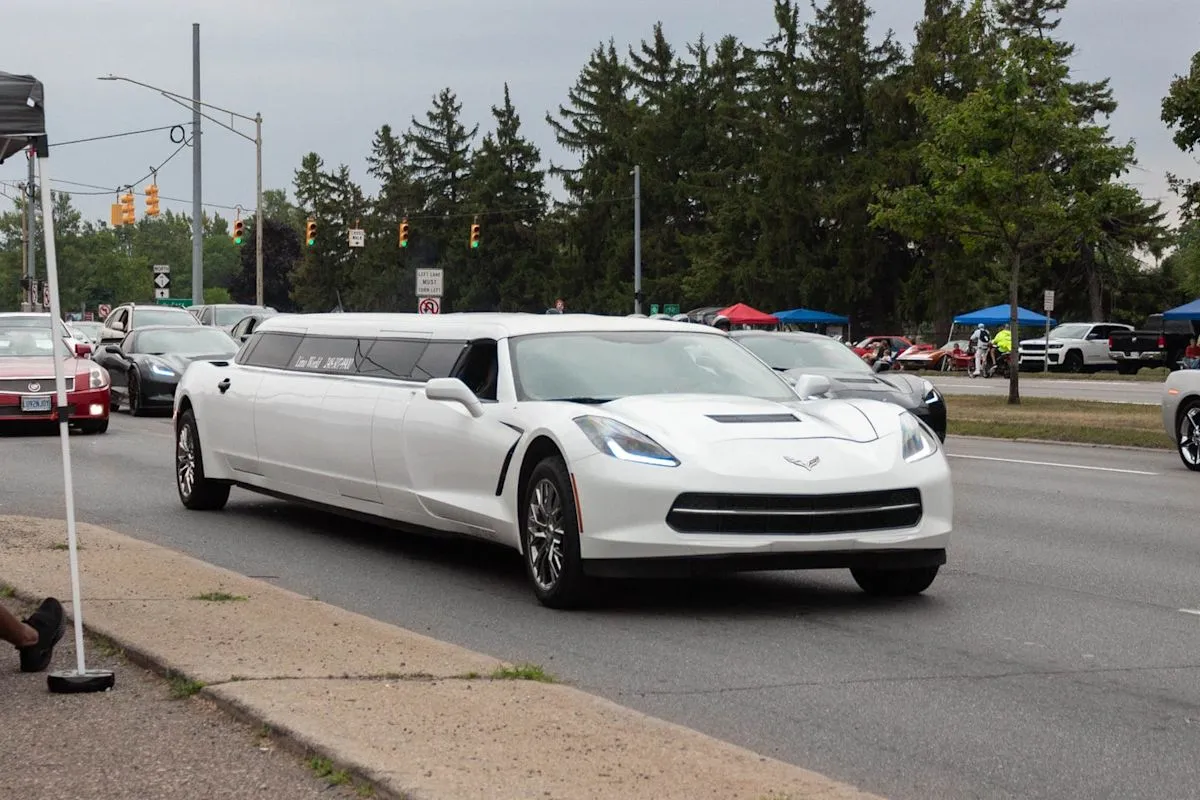
The spirit of custom car culture was fully alive with several head-turning modifications. One of the most unexpected sights was a C7 Chevrolet Corvette that had been stretched into a full-sized limousine. Combining a modern, high-performance sports car with the elongated chassis of a luxury limo creates an unusual aesthetic contrast, proving that the event welcomes any build, no matter how unconventional or polarizing the design choices may be.
On the opposite end of the styling spectrum was a GMC Yukon lowrider. While classic American sedans and wagons are the traditional choices for air suspension and slammed setups, this large SUV was dropped completely to the ground. This choice of a modern full-size utility vehicle for a lowrider build illustrates how car enthusiasts continue to push the boundaries of traditional custom subcultures.
The Legendary ‘Fraud Taurus’ Audi S6
One of the most historically significant vehicles present was a modified Audi S6 with a fascinating backstory. At first glance, the car appears to be a Ford Taurus-based Police Interceptor, complete with a blue oval badge that reads ‘Audi’ in a Ford-style script. However, this visual deception was carefully crafted for a highly specific purpose: completing the unsanctioned, cross-country speed challenge known as the Cannonball Run.
Originally conceived by legendary automotive editor Brock Yates, the run challenges drivers to travel from New York City to Redondo Beach, California, in the shortest time possible. In May 2020, a three-man team utilized this heavily modified Audi to complete the 2,813-mile journey in a record-breaking 25 hours and 39 minutes, maintaining an astonishing average speed of over 110 mph. To achieve this without drawing police attention, the car was outfitted with advanced counter-detection gear, including radar detectors, a CB radio, a thermal camera, and laser diffusers. Under the hood, the engine was heavily modified, and a massive 67-gallon auxiliary fuel tank was installed in the trunk to drastically reduce the number of refueling stops required during the high-speed run.
Foreign Market Curiosities and Future US Entrants
The cruise also served as an unexpected stage for vehicles not typically seen on North American roads. The Fiat Grizzly, a subcompact SUV representing the Italian brand’s latest global offering, made a surprise appearance. While the Grizzly itself will not be sold in the United States under the Fiat brand, it is scheduled to enter the American market within the next couple of years rebadged as the Chrysler Arrow. The Arrow is expected to look almost identical to the Grizzly, save for the brand badges, and will feature a highly competitive starting price of under $30,000, aiming to compete directly with established subcompacts like the award-winning Chevrolet Trax.
An even smaller Italian import spotted was the Fiat Tris. Designed primarily for markets in Africa and the Middle East, the Tris is a modern, three-wheeled electric delivery vehicle inspired by the classic Piaggio Ape. Powered by a tiny 12-horsepower electric motor paired with a 7-kWh battery pack, the Tris is built for urban utility and will be offered in pickup, chassis cab, and flatbed configurations. Its diminutive size makes a US release highly unlikely, making its presence on Woodward Avenue a genuine rarity.
Another small electric utility vehicle making waves was the Slate Truck. Cruising the avenue in a distinctive polka-dot wrap, this tiny EV is preparing for its official launch later this year. Boasting a highly affordable starting price of $26,400, the truck features a bare-bones interior and a practical 205-mile driving range, targeting urban buyers looking for a simple, budget-friendly electric workhorse.
Cinematic History and Artistic Creations
Movie buffs were treated to the sight of the Hannibal 8, an outrageous six-wheeled machine built specifically for the 1965 slapstick comedy film ‘The Great Race’. Driven by the movie’s main antagonist, this bizarre vehicle is one of only four examples ever constructed for the production. Currently housed at the Stahls Motors & Music Experience museum in Chesterfield, Michigan, its appearance on public streets provided a rare look at classic Hollywood prop engineering.
Artistic creativity was also represented by a wireframe Volkswagen Beetle. This unique vehicle features an open, metallic wire structure that outlines the iconic shape of the classic Beetle, turning a legendary automotive silhouette into a rolling sculpture. Additionally, a GMC Envoy XUV was spotted featuring a custom paint job paying tribute to Spirit Airlines, complete with references to the airline’s recent bankruptcy, showing that car builders often use their vehicles to express topical humor.
Review Summary: Pros and Cons of the Woodward Dream Cruise Vehicle Mix
Pros
- Incredible Variety: Offers a rare opportunity to see highly diverse vehicles, from historic Cannonball record holders to obscure European micro-EVs, all in one place.
- High Accessibility: Free entry allows amateur builders and professional collectors alike to share the same road, fostering a unique community spirit.
- Living History: Vehicles like the Hannibal 8 and preserved ‘Dustbuster’ minivans provide a tangible look at past automotive design trends and cinema history.
Cons
- Unregulated Quality: The open nature means visitors must navigate through highly chaotic traffic to spot the truly rare gems among standard daily drivers.
- Extreme Modifications: Some custom builds, like stretched sports cars or heavily slammed SUVs, prioritize novelty over actual driving dynamics or practicality.
Conclusion
The 2026 Woodward Dream Cruise demonstrated once again why it remains a cornerstone of global car culture. By removing the barriers of entry, the event allows a highly eclectic mix of automotive history, modern electric utility, and creative custom builds to coexist on a single stretch of asphalt. Whether you are drawn to the high-speed engineering of record-setting endurance cars or the simple charm of rare foreign micro-cars, the sheer variety ensures there is something to capture the imagination of every automotive enthusiast.