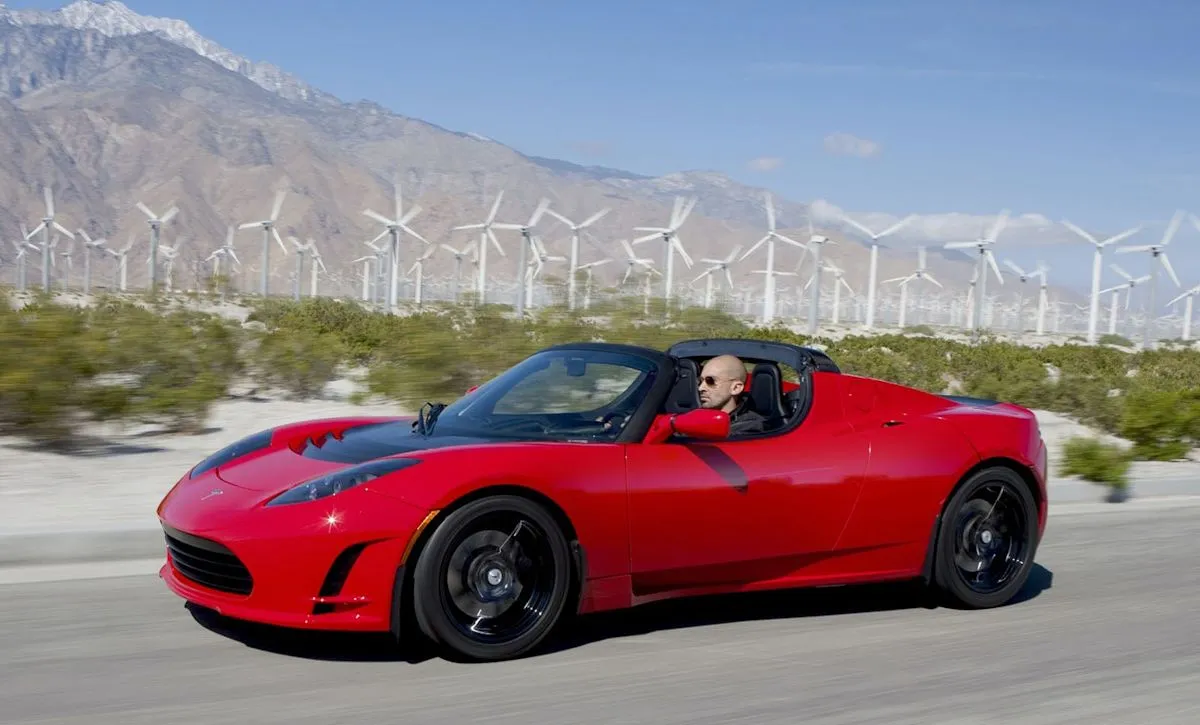
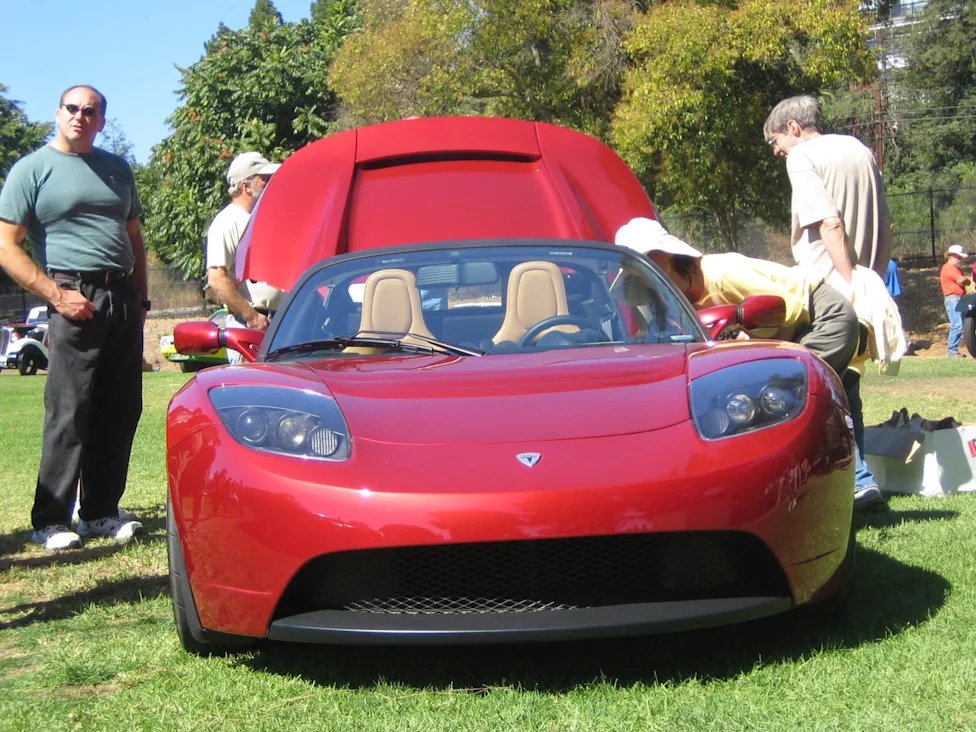
SpeedSUVs.com — In September 2006, the automotive landscape stood on the precipice of a monumental shift. At an annual gathering traditionally reserved for classic British automobiles in Palo Alto, California, a rare and unfamiliar vehicle made an unexpected appearance. It was one of only three Tesla Roadsters in existence at the time. Built upon a chassis provided by Lotus, the low-slung, maroon two-seater represented a bold experiment in high-performance electric propulsion. This retrospective review examines the performance, build characteristics, real-world dynamics, and overall legacy of that early electric sports car prototype.
Origin and Initial Reception
The decision to bring an early electric car prototype to a gathering dominated by classic MGs, Austin-Healeys, Jaguars, and Morris Minors originally seemed counterintuitive. Organizers recognized that the enthusiast community in Silicon Valley possessed both the passion for motoring and the financial means to support innovative vehicle technology. Tesla executives, including marketing chief Mike Harrigan and business development director Diarmuid O’Connell, brought the maroon prototype to El Camino Park to gauge consumer interest firsthand.
Positioned prominently near the entrance, the Roadster immediately attracted significant attention from attendees. The curiosity translated directly into sales interest, culminating in a notable moment where an attendee handed over a check for $90,000 to secure an order. This early enthusiasm underscored a growing market demand for sports cars that could offer alternative propulsion without sacrificing performance appeal.
Interior Ergonomics and Build Quality
Stepping inside the early Tesla Roadster revealed a cabin heavily influenced by its British sports car foundation. The interior design prioritized sporty engagement over luxurious isolation. Key characteristics of the interior build include:
- Seating Comfort: The racing-style bucket seats offered a snug, supportive fit suitable for spirited driving.
- Cabin Space: Despite the compact exterior dimensions, the footwell provided surprising legroom, accommodating drivers up to five feet eleven inches comfortably.
- Fit and Finish Quirks: True to its Lotus roots, the lightweight construction introduced noticeable fit-and-finish idiosyncrasies. The interior experienced creaks, rattles, and dashboard vibrations at various speeds.
When starting the vehicle, traditional mechanical sounds were noticeably absent. Turning the ignition key illuminated dashboard indicator lights and activated a small digital screen without any engine crank, signaling that the electric system was powered and ready for engagement.
Driving Dynamics and Power Delivery
On the road, the Roadster delivered a driving experience radically different from contemporary internal combustion sports cars. Operating under battery constraints—such as running on a remaining 14 percent battery charge during initial demonstration drives—the vehicle demonstrated remarkable efficiency and instant power management.
Acoustic Profile
While the powertrain operated without exhaust noise, the car was not completely silent. Drivers and passengers experienced a distinct acoustic mix:
- A high-pitched electric whine emitted from the motor and power electronics during operation.
- Tire noise and wind noise became the dominant sounds at speeds above 20 mph, particularly with the open top configured.
- External ambient sounds, such as the loud combustion roar of nearby transit buses at traffic lights, were vividly audible due to the lack of engine noise inside the cabin.
Acceleration and Braking Performance
The true centerpiece of the Tesla Roadster driving experience was its electric powertrain delivery. Upon stepping on the accelerator, the vehicle produced instantaneous, linear torque without the delays associated with gear shifting or engine revming. The vehicle demonstrated impressive physical metrics:
- Zero-to-75 MPH Acceleration: The prototype achieved 75 mph in roughly 5 seconds from a standing start.
- Torque Surge: The smooth force delivered an immediate push against the seatbacks, launching the lightweight car effortlessly toward the horizon.
- Regenerative Braking: Lifting off the accelerator pedal engaged aggressive regenerative braking, deceleration forces strong enough to pull occupants forward against their seatbelts while feeding energy back into the battery pack.
Pros and Cons Analysis
Evaluating the early Tesla Roadster requires balancing its groundbreaking technological achievements against its initial engineering and practicality limitations.
Pros
- Explosive Electric Torque: Instantaneous power delivery provided thrilling, uninterrupted acceleration.
- Comfortable Ergonomics: Well-designed racing seats and adequate legroom accommodated taller drivers effectively.
- Quiet Powertrain: Reduced mechanical noise allowed for a unique, open-air motoring perspective.
- Effective Energy Recovery: Strong regenerative braking improved kinetic energy management.
- Proof of Concept: Demonstrated that battery-electric vehicles could match or exceed gasoline car performance.
Cons
- Chassis Vibrations and Rattles: Lightweight British sports car build resulted in interior creaks and rattles.
- High Initial Price Point: Early entry cost of approximately $90,000 limited accessibility to wealthy early adopters.
- Early Battery Range Constraints: Limited charging infrastructure and charge management required careful driving planning.
- Wind and Motor Whine: High speeds highlighted wind resistance noise and electric motor whine.
Automotive Impact and Legacy
The early Tesla Roadster served as a crucial catalyst for the modern electric vehicle industry. By proving that a battery-electric vehicle could offer high performance, attractive styling, and daily usability, it shattered long-held misconceptions that electric cars were inherently slow or unpractical. The success of this early platform laid the groundwork for Tesla’s subsequent mass-market vehicles, including the Model S introduced six years later, and accelerated global electrification efforts across the automotive sector.
Conclusion
The 2006 Tesla Roadster prototype remains a historic landmark in automotive engineering. While it possessed physical drawbacks typical of hand-built, lightweight sports cars—such as interior rattles, pronounced wind noise, and high acquisition costs—its revolutionary electric drivetrain set a new standard for instant performance. Ultimately, the early Roadster proved that high-performance electric vehicles were not merely viable concept projects, but the foundation for the future of transportation.