The automotive world is constantly evolving, and few manufacturers embody this dynamic spirit quite like BMW. With an eye fixed firmly on the future, the Bavarian marque is perpetually refining its lineup, pushing boundaries in design, technology, and performance. One of the most eagerly anticipated transformations on the horizon is the next-generation BMW 4 Series, expected to debut for the 2026 model year. As the current G22/G23/G26 generation approaches its full lifecycle refresh, enthusiasts and prospective buyers are buzzing with speculation about what the future holds for BMW’s stylish and sporty compact executive.
This article delves into the speculative release date, anticipated design language, technological advancements, and powertrain innovations of the 2026 BMW 4 Series. Furthermore, it offers a comprehensive buying guide, equipping you with the insights needed to make an informed decision when this exciting new chapter in BMW’s legacy finally arrives.
The Anticipated Arrival: Decoding the 2026 BMW 4 Series Release Date
Pinpointing an exact release date for a vehicle still several years away is inherently challenging, relying heavily on industry patterns, development cycles, and insider whispers. However, based on BMW’s typical product roadmap, we can make an educated estimation for the next-generation 4 Series.
The current G22 (Coupe), G23 (Convertible), and G26 (Gran Coupe) 4 Series models were first introduced globally in 2020 and 2021. BMW traditionally operates on a seven-year product cycle for its core models, often punctuated by a mid-cycle refresh (Life Cycle Impulse or LCI) around the fourth year. The current 4 Series recently received its LCI for the 2025 model year, bringing subtle exterior tweaks, updated interior technology, and minor powertrain refinements.
Given this timeline, a full redesign – the introduction of an entirely new generation – would logically occur around 2027. This suggests that the 2026 BMW 4 Series would likely be unveiled in late 2026 as a 2027 model year vehicle. This allows for the typical ramp-up of production, initial press drives, and dealer allocations before widespread availability in early 2027. Spy shots of heavily camouflaged prototypes usually begin surfacing 18-24 months prior to a full reveal, so expect to see more concrete evidence of the next-gen 4 Series development intensify throughout 2025.
A significant wildcard in this timeline is BMW’s aggressive rollout of its "Neue Klasse" electric vehicle platform. The first Neue Klasse vehicles are slated for production in 2025, and BMW has indicated that by 2030, Neue Klasse will account for more than half of its global sales. While the initial Neue Klasse models are expected to be a sedan (likely a 3 Series equivalent) and an SUV (an X3 equivalent), it’s highly plausible that the next-generation 4 Series, particularly its electric variants (the successor to the i4), could be among the early adopters of this revolutionary architecture. This could potentially push the reveal slightly earlier for the electric models, with gasoline-powered counterparts following closely, or even being built on a highly adapted version of the current CLAR platform alongside the Neue Klasse EVs.
Design Evolution: A Glimpse into the Future
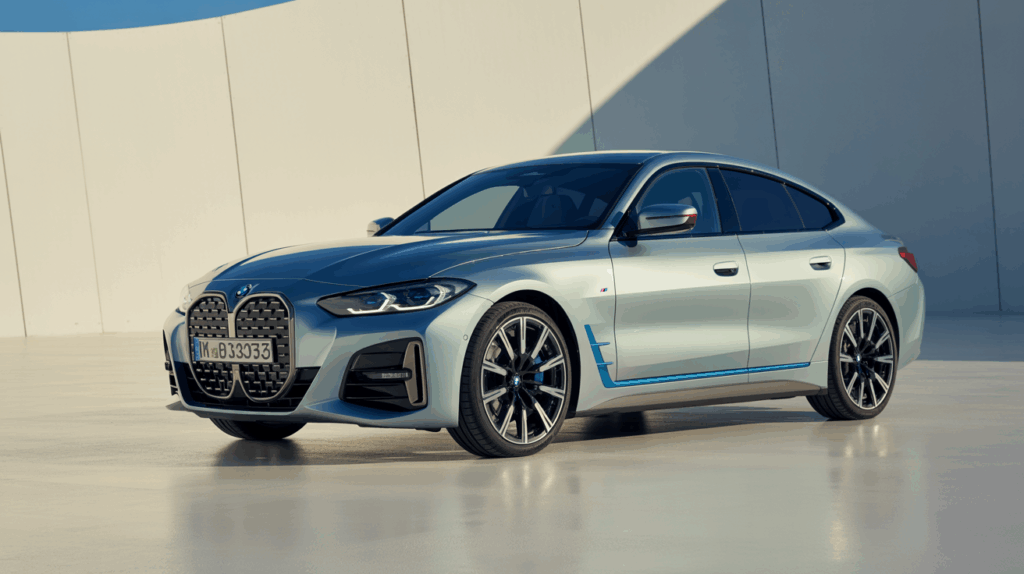
BMW design has always been a blend of tradition and innovation, often sparking debate among purists and progressives alike. The current 4 Series, with its distinctive kidney grille, certainly falls into the latter category. For the 2026 iteration, expect a continuation of this forward-thinking approach, likely influenced by BMW’s recent concept cars and the "Neue Klasse" design language.
Exterior: The large kidney grille, while controversial, is unlikely to disappear entirely. Instead, expect a more refined and integrated interpretation, potentially evolving towards the horizontally stretched, illuminated grilles seen on recent concepts like the Vision Neue Klasse. Aerodynamics will play an even more critical role, shaping a sleeker, more sculpted profile that not only enhances efficiency but also contributes to a more athletic stance. Laser or adaptive LED lighting will undoubtedly remain a hallmark, with slimmer, more intricate headlamp and taillamp designs. The overall proportions are expected to retain the 4 Series’ characteristic long hood, short overhangs, and flowing roofline, emphasizing its sporty coupe credentials. The Gran Coupe will likely adopt a more rakish fastback silhouette, while the Convertible will continue to offer the allure of open-top motoring with a sophisticated retractable hardtop or soft-top mechanism.
Interior: The cabin of the 2026 4 Series will be a significant leap forward, drawing inspiration from the minimalist yet technologically advanced interiors of the iX and the latest 5 Series. The centerpiece will undoubtedly be a larger, curved display integrating the digital instrument cluster and the infotainment touchscreen, running the latest iteration of BMW’s iDrive operating system (likely iDrive 9.0 or even 10.0). Physical buttons will be further minimized, with many functions migrating to touch controls or advanced voice commands. Expect sustainable and high-quality materials throughout, with options for recycled fabrics, vegan leather alternatives, and open-pore wood or intricate metal accents. Comfort and ergonomics will remain paramount, with sport seats designed for both spirited driving and long-distance cruising. Ambient lighting will be more customizable and dynamic, creating a personalized cabin experience.
Powertrain Innovations: Powering the Next Generation
The 2026 BMW 4 Series will embody BMW’s "Power of Choice" strategy, offering a diverse range of powertrains to cater to varying preferences and regulations, with a clear trajectory towards electrification.
- Mild-Hybrid (MHEV): Expect mild-hybrid technology to be standard across all gasoline engines. This system, typically featuring a 48-volt starter-generator, provides a small electric boost for acceleration, improves fuel efficiency, and allows for smoother start-stop functionality.
- Gasoline Engines: The venerable B48 2.0-liter turbocharged four-cylinder (found in the 430i equivalent) and the B58 3.0-liter turbocharged inline-six (in the M440i equivalent) will be significantly refined. Expect increased power output, enhanced efficiency, and reduced emissions, possibly with further optimization of BMW’s Valvetronic and Double-VANOS technologies. Performance figures will likely see a modest bump, pushing the boundaries of their respective segments.
- Plug-in Hybrid (PHEV): A more potent plug-in hybrid variant is highly probable, offering a significantly increased electric-only range and potentially faster charging capabilities. These systems will combine a gasoline engine with a more powerful electric motor and a larger battery pack, providing substantial electric performance for urban commutes and combined power for exhilarating drives.
- Electric Variants (Successor to i4): This is where the Neue Klasse platform could truly shine. The electric 4 Series (likely retaining the "i4" moniker or being fully integrated into the 4 Series lineup) will benefit from advanced battery technology, more efficient electric motors, and a dedicated EV architecture. Expect significantly longer ranges (potentially exceeding 400 miles on a single charge), ultra-fast charging capabilities, and blistering acceleration, particularly in performance-oriented "M" variants. The Neue Klasse is designed to be electric-first, promising a superior EV driving experience.
All powertrains will almost certainly be paired with an advanced version of the ZF 8-speed automatic transmission, renowned for its smoothness and responsiveness. Rear-wheel drive will remain standard for most variants, with BMW’s xDrive all-wheel-drive system available as an option or standard on higher-performance models.
Technology and Connectivity: The Digital Ecosystem
BMW has consistently been at the forefront of automotive technology, and the 2026 4 Series will be no exception.
- iDrive System: The next-generation iDrive, housed within the curved display, will offer a highly intuitive and personalized user experience. Expect advanced augmented reality navigation, deeper integration with digital services, and over-the-air (OTA) update capabilities for continuous software improvements and feature additions.
- Driver Assistance Systems (ADAS): The 4 Series will feature a comprehensive suite of advanced driver assistance systems, potentially reaching Level 2+ autonomous driving capabilities. This includes enhanced highway assist, advanced parking assistance (with remote parking options), improved adaptive cruise control, lane-keeping assist, and sophisticated collision avoidance systems.
- Connectivity: 5G connectivity will be standard, enabling faster data transfer for navigation, streaming, and remote services. Wireless Apple CarPlay and Android Auto will be seamlessly integrated, alongside BMW’s Digital Key Plus, allowing your smartphone to act as the car key.
- Sustainability Tech: Beyond powertrain efficiency, expect innovations in sustainable materials, energy-efficient climate control systems, and potentially features like vehicle-to-grid (V2G) capabilities for electric models, allowing the car to feed energy back into the grid.
The 2026 BMW 4 Series Buying Guide: Navigating Your Purchase
When the next-generation 4 Series finally arrives, making an informed buying decision will be crucial. Here’s a comprehensive guide to help you.
1. Anticipated Pricing
Given the significant technological advancements and inflationary pressures, expect a moderate price increase over the current generation.
- Base Models (e.g., 430i equivalent): Likely starting in the mid-$50,000s for the Coupe, with the Gran Coupe and Convertible commanding slight premiums.
- Performance Models (e.g., M440i equivalent): Expect prices to begin in the mid-$60,000s to low-$70,000s.
- Electric Variants (i4 successor): Prices for the electric models will likely mirror or slightly exceed their gasoline counterparts, potentially starting in the high-$50,000s to low-$60,000s for base models, climbing significantly for performance versions.
- Options and Packages: BMW is known for its extensive options list, which can easily add tens of thousands to the final price.
2. Trims and Configurations
BMW typically offers a clear hierarchy of trims and engine designations:
- Entry-Level (e.g., 430i): Powered by the turbocharged four-cylinder engine, offering a strong balance of performance and efficiency.
- Mid-Range Performance (e.g., M440i): Featuring the more powerful inline-six, xDrive all-wheel drive often standard, and M Sport styling elements.
- Electric Models (e.g., i4 eDrive40, i4 M50): Expect various power outputs and range options for the electric variants.
- Body Styles: Coupe, Convertible, and Gran Coupe will offer distinct experiences. Consider your need for practicality (Gran Coupe’s rear doors and hatchback) versus pure style (Coupe/Convertible).
- Packages: Look for popular packages such as:
- M Sport Package: Enhances aesthetics with sportier bumpers, wheels, and interior trim.
- Premium Package: Adds comfort features like heated seats, steering wheel, and potentially a head-up display.
- Driving Assistance Professional Package: Includes the full suite of advanced safety and semi-autonomous driving features.
- Executive Package: Bundles luxury items like ambient lighting, gesture control, and premium audio.
3. Choosing Your Powertrain: Gasoline vs. PHEV vs. EV
This will be one of the most significant decisions for the 2026 4 Series buyer.
- Gasoline: Ideal for traditionalists who value the immediate throttle response, the sound of an internal combustion engine, and long-distance travel without range anxiety or charging stops. Still offers strong performance and improved efficiency with mild-hybrid tech.
- PHEV: A great bridge option. Offers the ability to run on electric power for daily commutes, saving on fuel and reducing emissions, while retaining the flexibility of a gasoline engine for longer journeys. Requires home charging for maximum benefit.
- EV (i4 successor): The future of motoring. Offers silent, instant torque, lower running costs (electricity vs. gasoline), and a smoother driving experience. Best for those with consistent access to charging (home or workplace) and who are comfortable with the EV ecosystem. Range and charging speed will be top-tier for its class.
4. The Test Drive Checklist
When the time comes to get behind the wheel, focus on these key aspects:
- Driving Dynamics: Assess steering feel (precision, weight), suspension comfort (firmness, bump absorption), and body control (minimal roll in corners).
- Powertrain Response: How quickly does the engine/motor respond to throttle inputs? Is the transmission smooth and decisive?
- Braking Performance: Feel for linear, confident braking.
- Interior Ergonomics: Are controls intuitively placed? Is the seating position comfortable and supportive?
- Technology Interface: Spend time interacting with the iDrive system, navigation, and driver assistance features. Are they easy to use and understand?
- Visibility: Check sightlines, especially rearward visibility in the Coupe/Convertible.
- Cabin Noise: Listen for wind, road, and engine noise at various speeds.
- Space and Practicality: Evaluate front and rear legroom/headroom, and trunk/cargo space for your needs.
5. Financing and Ownership Costs
- Lease vs. Buy: Consider your driving habits and how long you typically keep a vehicle. Leasing often offers lower monthly payments and allows you to drive a new car every few years, but you don’t build equity. Buying provides ownership and flexibility.
- Insurance: BMWs, especially performance models, can have higher insurance premiums. Get quotes before purchasing.
- Maintenance: BMWs generally require premium fuel and specialized service. Factor in scheduled maintenance costs. Electric models typically have lower routine maintenance costs due to fewer moving parts.
- Resale Value: BMWs tend to hold their value reasonably well, especially well-maintained models with desirable options. New generation models often see a stronger initial resale value.
6. Competition
The 2026 BMW 4 Series will face formidable rivals:
- Audi A5/S5/RS5: Known for quattro all-wheel drive, refined interiors, and sophisticated styling.
- Mercedes-Benz C-Class Coupe/Convertible: Emphasizes luxury, comfort, and advanced technology.
- Genesis G70: A compelling value proposition with strong performance and luxury.
- Tesla Model 3/4 (for EV variants): Dominates the EV segment with range, performance, and charging infrastructure.
7. When to Buy
- Early Adopter: If you want the latest technology and are willing to pay a premium, consider pre-ordering or purchasing shortly after launch.
- Wait for Reviews: If you prefer to let others iron out any initial kinks and want to see real-world performance and reliability reports, wait a few months after launch.
- End of Model Year: Sometimes, dealerships offer incentives on outgoing model years as the new model arrives, but this would apply to the current generation, not the newly released 2026 model.
Conclusion
The 2026 BMW 4 Series promises to be a pivotal vehicle for the brand, embodying the next evolution of BMW’s design, engineering, and technological prowess. From its anticipated late 2026/early 2027 arrival to its potential integration with the groundbreaking Neue Klasse platform, this next generation is set to redefine what a compact luxury sports coupe, convertible, and Gran Coupe can be. With a diverse range of powertrains, a cutting-edge digital cockpit, and an even more dynamic driving experience, the 2026 4 Series is poised to capture the hearts of enthusiasts and solidify BMW’s position at the forefront of the premium automotive market. For those considering a blend of style, performance, and forward-thinking technology, the wait for the next 4 Series will undoubtedly be worth it.