Few names resonate with the American spirit of adventure, family, and capability quite like the Ford Explorer. For over three decades, it has been the quintessential SUV, a trusted companion for countless road trips, school runs, and outdoor excursions. It’s a vehicle that embodies versatility, continuously adapting to the evolving needs of its drivers while retaining its core identity as a rugged, reliable, and increasingly refined workhorse.
As the automotive landscape shifts towards electrification, advanced connectivity, and autonomous driving features, the stage is set for a dramatic re-entry of this iconic nameplate. While details remain officially under wraps, industry whispers, patent filings, and Ford’s aggressive product roadmap strongly suggest that a comprehensively redesigned, next-generation Ford Explorer is on the horizon, likely making its debut for the 2026 model year. This isn’t just an update; it’s anticipated to be a reinvention, pushing the boundaries of what a mainstream three-row SUV can be.
This article delves deep into what we can expect from the 2026 Ford Explorer – from its anticipated release date and revolutionary design to its cutting-edge technology and powertrain options. More importantly, we’ll provide an ultimate buying guide, equipping you with the knowledge and strategies to navigate the purchase process for what promises to be one of the most significant SUV launches of the decade.
The Anticipation Builds: Decoding the 2026 Ford Explorer Release Date
Automotive product cycles typically run for 5-7 years before a full redesign. The current sixth-generation Explorer debuted for the 2020 model year, making a 2026 model year overhaul perfectly aligned with Ford’s usual cadence. This would suggest a reveal sometime in late 2024 or early 2025, with production ramping up throughout 2025, leading to showroom availability in late 2025 or early 2026.
Ford is strategically refreshing its entire SUV and truck lineup, with a clear focus on electrification and advanced digital experiences. The Explorer, being a cornerstone of its utility vehicle portfolio, is a prime candidate for this comprehensive transformation. Expect a significant marketing campaign leading up to the reveal, building excitement around what Ford hopes will be a segment-redefining vehicle. Enthusiasts and prospective buyers should keep a close eye on major auto shows and Ford’s official channels in the coming months for definitive announcements.
A Vision of the Future: What to Expect from the Redesigned Explorer
The 2026 Explorer is poised to be more than just a styling refresh; it’s expected to be built on an entirely new, highly adaptable platform designed to accommodate a range of powertrains, including fully electric options.
Exterior Design: Bold, Aerodynamic, and Distinctly Modern
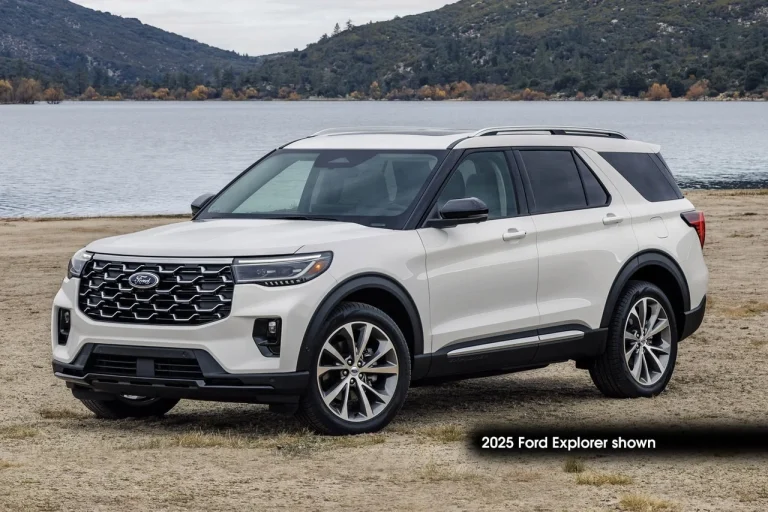
Expect the 2026 Explorer to evolve the current model’s athletic stance into something more futuristic and aerodynamic, without abandoning its rugged roots. Ford will likely infuse design cues from its newer, more aggressively styled vehicles, such as the Mustang Mach-E and the F-150 Lightning, translating them into a family-friendly SUV package.
- Front Fascia: A bolder, more commanding grille (possibly illuminated on higher trims) integrated seamlessly with slim, full-LED lighting signatures that wrap around the fenders. Expect a modern interpretation of Ford’s C-clamp headlight design.
- Profile: A cleaner, more sculpted side profile with flush door handles and aerodynamic wheels to reduce drag, enhancing both efficiency and visual appeal. The roofline might adopt a slightly faster rake towards the rear, giving it a sportier, more dynamic silhouette.
- Rear End: A sophisticated rear design featuring connected LED taillight bars, a design trend seen across many contemporary SUVs. The overall aesthetic will likely be more refined, with thoughtful integration of exhaust outlets (for ICE variants) and subtle badging.
- Proportions: While retaining its three-row functionality, the new platform might allow for slightly altered dimensions, potentially offering improved interior space and a more balanced road presence.
Interior Sanctum: Digital Transformation Meets Premium Comfort
The interior of the 2026 Explorer is where the most dramatic changes are anticipated. Ford has been at the forefront of integrating large digital displays and advanced connectivity, and the next-gen Explorer will undoubtedly showcase this prowess.
- Digital Cockpit: A sprawling, high-resolution digital canvas will likely serve as the command center. This could manifest as a single, ultra-wide display integrating both the instrument cluster and the infotainment system, or two seamlessly connected large screens.
- SYNC 5 (or next generation): Expect the latest iteration of Ford’s SYNC infotainment system, offering lightning-fast responsiveness, intuitive user interfaces, over-the-air (OTA) update capabilities, and seamless integration with Apple CarPlay and Android Auto (likely wireless). Built-in Google Maps or similar advanced navigation will be standard.
- Premium Materials: A significant upgrade in material quality across all trims is expected, with soft-touch surfaces, sophisticated textures, and ambient lighting creating a more upscale cabin environment. Higher trims will likely offer genuine wood, aluminum, or carbon fiber accents.
- Enhanced Comfort: Redesigned, more supportive seating with advanced adjustability, heating, ventilation, and even massage functions for front passengers. The second and third rows are expected to offer improved legroom and easier access, making the Explorer a truly comfortable family hauler.
- Storage & Versatility: Clever storage solutions, reconfigurable cargo spaces, and a power-folding third row will further enhance the Explorer’s renowned practicality.
Under the Hood: Powertrain Predictions and the Electrification Leap
This is where the 2026 Explorer is expected to make its most significant evolutionary jump. While internal combustion engines (ICE) will likely remain, electrification will undoubtedly play a much larger role.
- Evolved EcoBoost Engines: The current 2.3-liter turbocharged EcoBoost four-cylinder and the 3.0-liter twin-turbo EcoBoost V6 are excellent engines. Expect refined versions of these, possibly with mild-hybrid assistance, delivering improved fuel efficiency and slightly more power. The 10-speed automatic transmission will likely carry over, perhaps with further refinements.
- Advanced Hybrid/PHEV: A more robust hybrid option, potentially leveraging technology from the F-150 PowerBoost, is a strong possibility. A plug-in hybrid (PHEV) variant is almost a certainty, offering a substantial all-electric driving range (e.g., 30-50 miles) before the gasoline engine kicks in. This would appeal greatly to eco-conscious families and those with shorter commutes.
- Full Electric Explorer (or EV Variant): The new platform is almost certainly designed to accommodate a fully electric powertrain. Ford might offer a dedicated electric Explorer, or an "Explorer EV" variant, much like the F-150 Lightning exists alongside the gasoline F-150. This EV could offer multiple battery sizes and motor configurations, providing competitive range and performance. Expect it to feature fast-charging capabilities and potentially bi-directional charging (Pro Power Onboard), allowing it to power tools or even a home.
- Performance ST: The Explorer ST has been a runaway success. Expect the 2026 model to continue this tradition, likely with an even more potent version of the twin-turbo V6, possibly with hybrid augmentation for instant torque and blistering acceleration. Sport-tuned suspension, larger brakes, and aggressive styling will complete the package.
Technology and Safety: The Smart Explorer
Ford’s commitment to technology and safety will be front and center in the 2026 Explorer.
- Co-Pilot360+: The suite of advanced driver-assistance systems (ADAS) will be significantly enhanced. Expect improved adaptive cruise control with stop-and-go, lane-keeping assist, blind-spot monitoring, rear cross-traffic alert, and automatic emergency braking with pedestrian and cyclist detection. New features might include enhanced evasive steering assist and intersection assist.
- BlueCruise 1.3 (or next gen): Ford’s hands-free highway driving system, BlueCruise, is expected to be a prominent feature, especially on higher trims. With expanded road coverage and improved functionality, it will offer a truly relaxed driving experience on compatible highways.
- Connectivity: Beyond OTA updates, expect 5G capability for faster connectivity, enhanced in-car Wi-Fi hotspots, and deeper integration with smart home devices and personal digital assistants.
- Digital Key: The ability to use your smartphone as a key, along with personalized driver profiles linked to digital keys, will add convenience and security.
- Advanced Parking Assist: Fully automated parking systems that can parallel and perpendicular park the vehicle with minimal driver input.
Trim Levels and Personalization
Ford will likely continue its popular trim strategy, offering a wide range of options to suit different budgets and preferences:
- Base: Essential features, strong value.
- XLT: Adds more comfort and convenience features, popular choice.
- ST-Line: Sporty aesthetics without the full ST performance price tag.
- Limited: Focus on luxury, premium materials, and advanced technology.
- King Ranch: Western-themed luxury, unique leather, and badging.
- Platinum: Top-tier luxury, exclusive features, and the most advanced tech.
- ST: Performance-oriented, powerful engine, sport-tuned chassis, aggressive styling.
- (New) EV Trims: If a dedicated EV variant launches, it might have its own distinct trim nomenclature, similar to the F-150 Lightning (Pro, XLT, Lariat, Platinum).
Expect extensive optional packages, allowing buyers to further personalize their Explorer with features like premium audio systems (B&O Play), panoramic sunroofs, specialized towing packages, and various wheel designs.
Your Ultimate Buying Guide for the 2026 Ford Explorer
The 2026 Ford Explorer promises to be a highly desirable vehicle. Being prepared and informed will be key to a smooth and successful purchase.
1. Is the 2026 Explorer Right For You? Define Your Needs
Before diving into specifications, objectively assess your lifestyle and requirements:
- Family Size & Dynamics: Do you regularly need three rows? How often will the third row be used? Do you need easy child seat access?
- Cargo & Utility: What do you typically haul? Groceries, sports equipment, camping gear, DIY supplies? Do you need to tow? (Confirm max towing capacity when released).
- Driving Habits: Mostly city, highway commutes, or off-road adventures? This will influence powertrain choice (ICE, Hybrid, PHEV, EV).
- Budget: Be realistic about what you can comfortably afford, not just the monthly payment but also insurance, fuel/charging, and maintenance.
- Technology Desires: Are you a tech enthusiast eager for the latest ADAS and infotainment, or do you prefer a simpler setup?
- Environmental Concerns: Is fuel efficiency or zero-emission driving a top priority?
2. Understanding the Price Tag: Anticipated MSRP and Value
While official pricing is months away, we can estimate based on the current model and industry trends. The 2026 Explorer will likely see a modest increase across all trims due to inflation, new technology, and advanced features.
- Estimated Base MSRP: Expect the entry-level 2026 Explorer to start somewhere in the $38,000 – $42,000 range.
- Mid-Range Trims (XLT, Limited): These will likely fall between $45,000 – $58,000.
- High-End Trims (ST, Platinum, King Ranch): Prepare for prices ranging from $60,000 to potentially $75,000+ for fully loaded models.
- EV Variant: If a dedicated electric Explorer is offered, it will likely command a premium, starting potentially in the $50,000s and climbing well into the $70,000s or even $80,000s for higher trims and larger battery options.
- Options & Packages: These can add several thousands of dollars to the final price. Prioritize what’s truly essential for you.
Value Proposition: The Explorer’s strong resale value, extensive dealer network, and reputation for reliability contribute to its long-term value. Consider the total cost of ownership, not just the sticker price.
3. Financing & Leasing Options: Which Path is Right?
- Financing (Buying):
- Pros: You own the asset, no mileage restrictions, can customize, build equity.
- Cons: Higher monthly payments, responsible for all maintenance, depreciation risk.
- Strategy: Secure pre-approval from your bank or credit union before visiting the dealership. This gives you leverage and a benchmark interest rate. Work on improving your credit score months in advance.
- Leasing:
- Pros: Lower monthly payments, drive a new car every few years, often includes warranty coverage for the entire term, potential tax benefits for businesses.
- Cons: Mileage limits, no equity building, potential fees for excessive wear and tear, no customization.
- Strategy: Understand the residual value, money factor (interest rate for leases), and all associated fees. Be realistic about your annual mileage.
4. The Dealership Experience: Pre-Orders, Negotiations, and Test Drives
- Pre-Orders: Given the anticipated demand for a redesigned Explorer, Ford might open pre-orders well in advance of the official launch. If you have your heart set on a specific configuration or want to be among the first, a pre-order with a refundable deposit might be worthwhile.
- Research & Configuration: Use Ford’s online configurator (once available) to build your ideal Explorer. Know your desired trim, options, and colors inside and out.
- Negotiation:
- MSRP vs. Invoice: Aim to pay as close to invoice price as possible, though early models of highly anticipated vehicles may command MSRP or even slight markups initially.
- Trade-In: Research your current vehicle’s value using sites like Kelley Blue Book (KBB) or Edmunds. Negotiate the new car price separately from your trade-in value.
- Add-Ons: Be wary of unnecessary dealer add-ons (paint protection, nitrogen in tires, extended warranties from third parties). Research them thoroughly before agreeing.
- The Test Drive: This is non-negotiable. Once the 2026 Explorer is available, drive your preferred trim level on routes that mimic your daily driving.
- Assess: Ride comfort, handling, acceleration (all powertrains if possible), braking.
- Interior: Ergonomics, visibility, ease of use for infotainment, space for passengers in all rows, cargo access.
- Technology: Test ADAS features, parking assist, and the infotainment system’s responsiveness.
- Family Fit: Bring your family, including child seats, to ensure everyone fits comfortably.
5. Trade-Ins & Resale Value
The current Explorer holds its value relatively well. The redesigned 2026 model, especially with its advanced tech and potential EV options, is expected to maintain this trend.
- Maximize Trade-In Value: Detail your car, fix minor issues, have maintenance records handy. Get quotes from multiple dealerships and online buyers (Carvana, Vroom) before you visit the Ford dealer.
- Future Resale: Opting for popular colors, desirable trim levels, and well-maintained service records will help maximize your resale value down the line.
6. Maintenance and Ownership Costs
- Fuel/Charging: Factor in the cost of gasoline or electricity. If you go EV, consider the cost of installing a home charger (Level 2).
- Insurance: Newer, more technologically advanced vehicles often have higher insurance premiums. Get quotes before purchasing.
- Scheduled Maintenance: Follow Ford’s recommended service schedule to ensure longevity and warranty validity. FordPass Rewards can offer benefits for maintenance.
- Warranty: Understand the standard bumper-to-bumper and powertrain warranties. Consider if an extended warranty is right for you, comparing Ford’s options with third-party providers.
7. Competition: Why Choose the Explorer?
The three-row SUV segment is fiercely competitive. The 2026 Explorer will face rivals like the Kia Telluride, Hyundai Palisade, Toyota Grand Highlander, Honda Pilot, Jeep Grand Cherokee L, and Chevrolet Traverse.
- Explorer’s Edge: Ford’s redesign will likely emphasize its robust platform (especially if it retains its RWD bias for better driving dynamics), a broader range of powertrain options (including compelling hybrids and potentially a full EV), superior towing capabilities (for ICE variants), and its advanced BlueCruise semi-autonomous driving system. Its rugged yet refined character, combined with a strong dealer network, will continue to be a significant draw.
8. Timing Your Purchase: Patience or Early Adoption?
- Early Adopter (Launch Period): You’ll get the latest technology and design, but prices will likely be firm, and incentives will be minimal. Dealerships may have limited inventory, especially for popular trims. Pre-ordering is key here.
- Waiting a Few Months: As the initial launch excitement subsides, Ford might introduce incentives (low APR financing, lease deals, cash back) to stimulate sales. Inventory will also become more plentiful, offering more choice. However, you’ll be driving a car that’s no longer the absolute "newest."
Conclusion: The Dawn of a New Era for the Explorer
The 2026 Ford Explorer is shaping up to be a pivotal vehicle for the blue oval. It represents Ford’s vision for the future of the family SUV – a seamless blend of iconic capability, cutting-edge technology, luxurious comfort, and diverse powertrain options, including a significant leap into electrification.
For prospective buyers, the anticipation is palpable. By understanding the expected release timeline, the profound changes in design and technology, and by meticulously planning your purchase using this comprehensive guide, you’ll be well-equipped to welcome the next-generation Explorer into your driveway. The legend is poised to redefine its legacy, and the journey promises to be nothing short of exhilarating. Stay tuned, for the next frontier of adventure is almost here.