SpeedSUVs.com — The landscape of Japanese all-wheel-drive performance cars is largely dominated by legends like the Subaru WRX and the Mitsubishi Lancer Evolution. However, long before these iconic models arrived on North American shores, a plucky, rally-inspired hatchback from Hiroshima paved the way. The 1988 Mazda 323 GTX represents a fascinating chapter in automotive history, bringing turbocharged power and all-wheel-drive traction to the compact segment over a decade before its more famous rivals captured the public’s imagination.
Originally conceived to satisfy World Rally Championship (WRC) homologation requirements, the Mazda 323 GTX was hailed by contemporary automotive journalists as an “everyman’s Audi Ur-Quattro.” It packed sophisticated motorsport technology into an affordable, utilitarian hatchback body. Despite its performance potential, the model remains incredibly rare today. Mazda imported just over 1,200 units to the United States market. Because they were relatively inexpensive at the time, many of these vehicles were driven hard, modified heavily, and ultimately run into the ground, leaving very few clean, surviving examples for modern collectors.
Under the hood of this lightweight hatchback sits a turbocharged 1.6-liter four-cylinder engine, designated as the B6T. This powerplant shares much of its underlying architecture with the naturally aspirated engine found in the early Mazda MX-5 Miata. In factory specification, the turbocharged unit produces a modest 132 horsepower. While that figure may pale in comparison to modern hot hatches or a modern Subaru WRX STi, the 323 GTX focuses on power-to-weight efficiency and balance rather than raw straight-line speed. The power is delivered through a five-speed manual transmission to an all-wheel-drive system. Unlike modern torque-vectoring setups, this vintage system uses a simple, driver-activated pushbutton on the dashboard to lock the power distribution in a 50:50 front-to-rear split, ensuring maximum traction on loose surfaces.
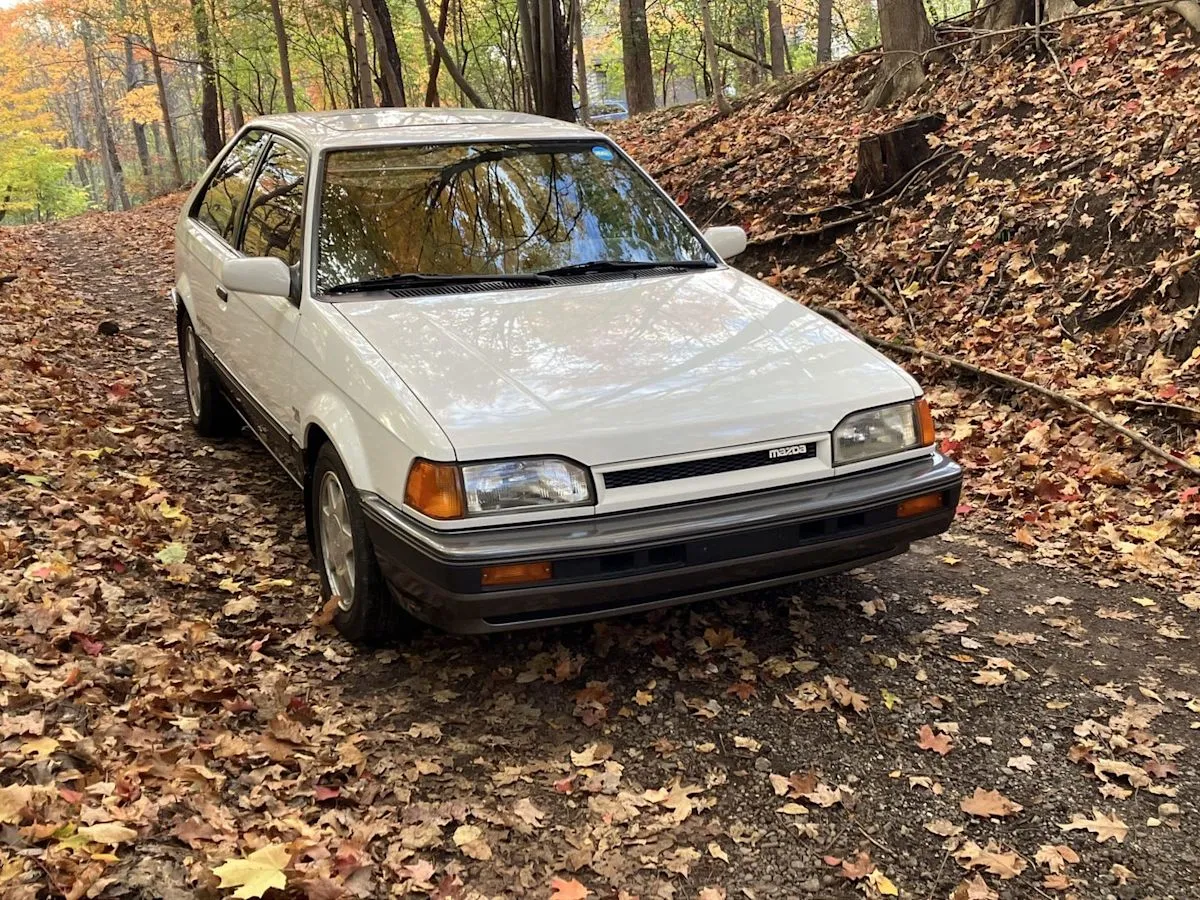
The GTX was far more than just a standard 323 commuter car with a turbocharger bolted on. To handle the rigors of gravel-road abuse and rally competition, Mazda engineers extensively modified the vehicle’s structural foundation. The track width was widened compared to the base economy model, giving the GTX a more planted stance. Additionally, the body shell was reinforced with significantly stronger side sills to increase torsional rigidity. These modifications resulted in a stiff, highly communicative chassis that transformed the sensible 323 into a nimble, confidence-inspiring handler.
When evaluating the 1988 Mazda 323 GTX as a classic enthusiast vehicle, it presents a unique set of advantages and disadvantages.
Pros of the Mazda 323 GTX
- Rarity and Heritage: With just over 1,200 units sold in the U.S., it is a highly exclusive piece of Japanese rally history.
- Balanced Dynamics: The combination of a lightweight body, stiffened chassis, and all-wheel-drive grip delivers immense fun without needing excessive horsepower.
- Miata Engine DNA: The B6T engine shares architecture with the reliable, highly supported early Miata, making certain engine components easier to understand and maintain.
Cons of the Mazda 323 GTX
- Fragile Drivetrain: The five-speed manual transmission is notorious for being fragile under heavy abuse, requiring drivers to exercise caution and avoid hard launches.
- Scarcity of Parts: Because so few were made and many were destroyed, finding GTX-specific body panels, interior trim, and drivetrain components can be extremely difficult.
- Modest Stock Power: At 132 horsepower, it will not satisfy drivers looking for modern, neck-snapping acceleration.
A remarkable example of this rare breed recently emerged on the Bring a Trailer auction platform, carrying lot number 55 from the site’s early days. This particular vehicle benefits from extensive sorting by a dedicated GTX specialist. The restoration work addressed cosmetic and mechanical issues, including a rebuilt cylinder head, fresh gaskets, belts, hoses, a custom exhaust system, and upgraded coilovers. Showing 129,000 miles on the odometer, this sorted survivor highlights both the durability of the platform when properly maintained and the effort required to keep these rare machines roadworthy today.
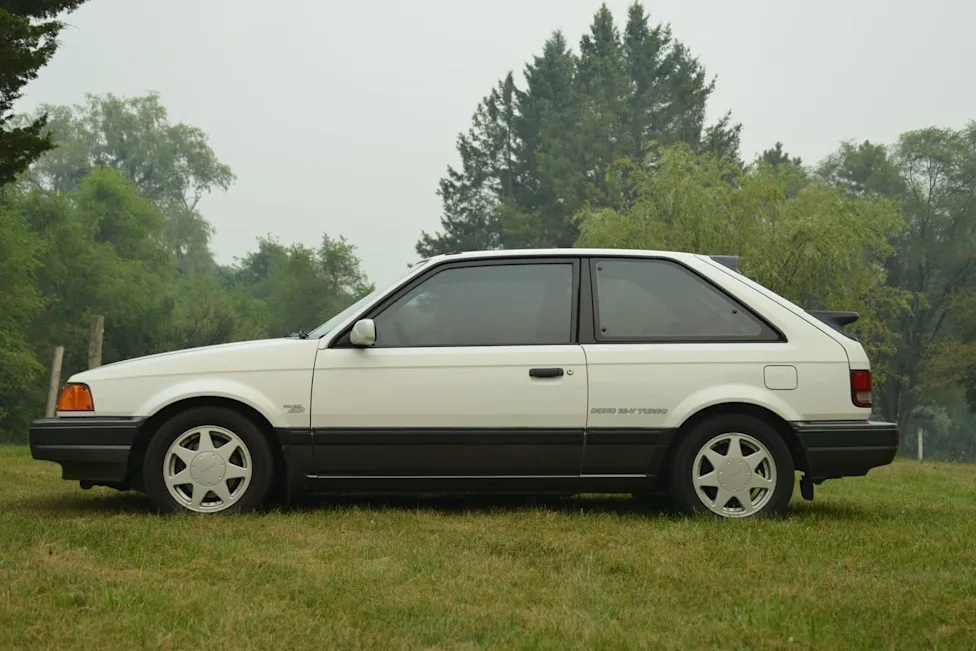
In conclusion, the 1988 Mazda 323 GTX is a pioneering classic that offers a pure, mechanical driving experience reminiscent of a vintage rally car. While its fragile transmission and hard-to-find parts require a patient and dedicated owner, its historical significance, unique AWD layout, and nimble handling make it an incredibly rewarding alternative to more common modern performance compacts. For collectors and vintage rally enthusiasts looking to stand out from the crowd, this classic Mazda remains a highly compelling choice.