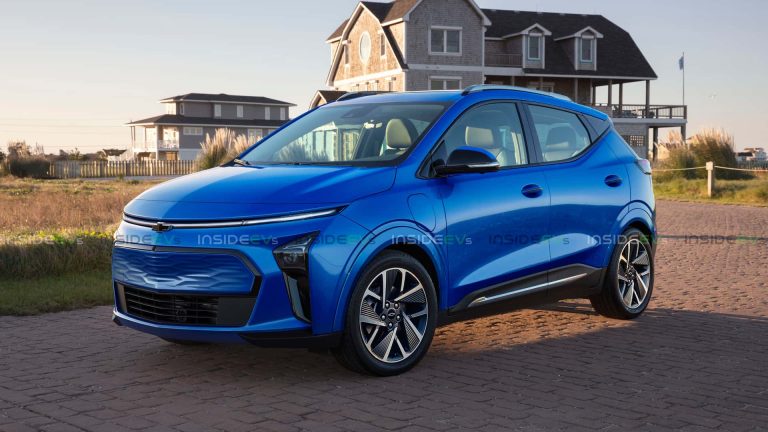
The electric vehicle (EV) market is a rapidly evolving landscape, characterized by technological advancements, increasing competition, and a growing consumer appetite for sustainable transportation. While much of the buzz often surrounds high-performance luxury EVs, the true battleground for mass adoption lies in the affordable and practical segment. Enter the anticipated return of the Chevrolet Bolt EUV for the 2026 model year, poised to shake up the market once again. After a brief hiatus, GM’s decision to resurrect the Bolt, leveraging its cutting-generation Ultium battery technology, signals a renewed commitment to offering a compelling, budget-friendly electric option.
The original Bolt EUV, praised for its spacious interior, respectable range, and attractive price point, carved out a significant niche before its discontinuation. Now, with the promise of Ultium underpinning and a refreshed design, the 2026 Chevrolet Bolt EUV is generating considerable excitement. But will it be enough to claim the title of the "Best Electric Vehicle for the Money" against a growing roster of formidable competitors? This comprehensive article delves into what the new Bolt EUV is expected to offer, compares it against its key rivals, and explores the factors that will determine its value proposition in the coming years.
The Anticipated Return: 2026 Chevrolet Bolt EUV – A New Chapter with Ultium Power
Chevrolet’s decision to bring back the Bolt, specifically under the EUV (Electric Utility Vehicle) moniker, is a strategic move to capitalize on its proven track record and address a critical demand for accessible EVs. The 2026 model is expected to be a significant departure from its predecessor, primarily due to its foundation on GM’s modular Ultium platform. This shift is a game-changer, promising improvements across nearly every metric:
- Ultium Battery Technology: The cornerstone of the new Bolt EUV. Ultium batteries are known for their flexibility, energy density, and faster charging capabilities. This translates directly into potentially longer ranges, quicker charging times, and a more robust battery architecture than the previous generation. We can expect a practical range likely exceeding 250 miles, with higher trims possibly approaching 300 miles, making range anxiety a distant memory for most commuters.
- Faster Charging: One of the main critiques of the original Bolt was its relatively slow DC fast charging rate. With Ultium, the 2026 Bolt EUV is anticipated to offer significantly improved charging speeds, potentially reaching 150 kW or more, allowing for substantial range replenishment in under 30 minutes at compatible chargers.
- Refreshed Design & Interior: While specific details are scarce, the new Bolt EUV will likely sport a modernized exterior, aligning with Chevrolet’s current design language seen in models like the Blazer EV and Equinox EV. Inside, expect upgraded materials, improved ergonomics, and a more advanced infotainment system, possibly featuring a larger touchscreen and Google built-in integration.
- Enhanced Performance & Driving Dynamics: The Ultium platform allows for more sophisticated motor configurations, potentially offering improved acceleration and a more refined driving experience.
- Advanced Safety & Driver-Assist Features: The integration of GM’s latest Super Cruise hands-free driving technology (or a scaled-down version) could be a significant differentiator, along with a full suite of standard active safety features.
- Competitive Pricing: Crucially, Chevrolet has emphasized that the new Bolt EUV will target an accessible price point, likely starting in the low to mid-$30,000s before incentives, aiming to undercut many of its Ultium-based siblings and direct competitors.
The 2026 Chevrolet Bolt EUV is not just a revival; it’s a re-imagination built on a foundation designed for the future. Its success will hinge on how effectively it balances these promised advancements with an attractive price tag.
Deep Dive: What Makes the Bolt EUV a Contender for "Best Value"?
The concept of "best value" in an EV is multi-faceted, encompassing not just the initial purchase price but also range, charging speed, interior space, technology, and long-term ownership costs. The 2026 Bolt EUV aims to excel in several of these areas:
- Aggressive Pricing Strategy: Chevrolet understands that affordability is paramount in this segment. By leveraging shared Ultium components and economies of scale, they can likely offer the Bolt EUV at a price point that makes it highly competitive, potentially qualifying for federal tax credits.
- Practical Range for Everyday Use: A projected range of 250+ miles is more than sufficient for the vast majority of drivers, covering daily commutes and weekend trips without range anxiety. The consistency and reliability of this range will be key.
- Improved Charging Ecosystem: Faster DC fast charging combined with the ubiquity of Level 2 home charging makes the Bolt EUV a convenient daily driver. GM’s ongoing efforts to expand charging infrastructure partnerships will further enhance its appeal.
- Spacious and Versatile Interior: The "EUV" designation implies a slightly larger, more SUV-like form factor than a traditional hatchback. This translates to generous passenger space, especially in the rear, and flexible cargo capacity, making it suitable for small families or those needing utility.
- Robust Technology Package: Modern EVs are expected to come loaded with tech. The 2026 Bolt EUV is expected to feature a modern infotainment system, comprehensive smartphone integration (Apple CarPlay/Android Auto), and a suite of advanced driver-assistance systems (ADAS) as standard or readily available options.
- Lower Running Costs: Like all EVs, the Bolt EUV will benefit from lower "fuel" costs (electricity vs. gasoline) and reduced maintenance requirements compared to internal combustion engine (ICE) vehicles. Its efficiency, aided by the Ultium platform, will contribute to these savings.
The Competition: A Head-to-Head Battle for Value
The 2026 Bolt EUV won’t be entering an empty arena. The affordable EV segment is becoming increasingly crowded, with established players and new entrants vying for market share. Here’s how the new Bolt EUV is likely to stack up against its primary rivals:
1. Hyundai Kona Electric
- Strengths: The Kona Electric has long been a benchmark for affordable EVs. The redesigned 2024 model boasts a sleeker, more futuristic design, a significantly improved interior with larger screens, and a competitive range (estimated 260+ miles). Its rapid charging capabilities have also seen an upgrade. Hyundai’s warranty is also industry-leading.
- Comparison to Bolt EUV: The Kona Electric offers similar range and competitive pricing. Its design might appeal to those seeking a more distinctive look. The Bolt EUV’s potential for Super Cruise and a slightly more spacious interior (given the EUV designation) could be differentiating factors. The Kona’s charging speed, while improved, might still trail a cutting-edge Ultium-based Bolt EUV.
2. Kia Niro EV
- Strengths: Sharing its platform with the Kona, the Kia Niro EV offers a more conventional, crossover-like aesthetic. It provides excellent practicality, a comfortable ride, and a respectable range (around 253 miles). Its interior is well-designed and features intuitive technology.
- Comparison to Bolt EUV: The Niro EV is a strong contender for practicality and overall value. Its slightly larger footprint than the Kona gives it an edge in interior volume, which the Bolt EUV will aim to match or surpass. Kia’s user-friendly tech and strong warranty are major draws. The Bolt EUV would need to offer a superior charging experience or a significantly lower price point to stand out against the Niro’s balanced package.
3. Nissan Leaf
- Strengths: The Nissan Leaf is a veteran in the EV space, often offering some of the lowest entry prices for a new EV. It’s known for its comfortable ride and simple operation. The Leaf Plus offers an extended range (up to 212 miles).
- Comparison to Bolt EUV: The Leaf’s primary advantage is its price, often coming in lower than competitors, especially after incentives. However, its technology, particularly its CHAdeMO charging port (which is being phased out in favor of CCS/NACS), and its less competitive range place it at a disadvantage compared to the anticipated 2026 Bolt EUV. The Leaf feels dated against modern rivals, making the Ultium-based Bolt EUV a far more technologically advanced and future-proof option.
4. Mini Cooper SE
- Strengths: For buyers prioritizing fun-to-drive dynamics and iconic styling over maximum range, the Mini Cooper SE is a compelling option. It offers nimble handling and a premium interior feel in a compact package.
- Comparison to Bolt EUV: The Mini Cooper SE is a niche competitor due to its limited range (around 114 miles) and smaller interior. While fun, it doesn’t compete directly with the Bolt EUV on practicality or value for money as a primary vehicle. The Bolt EUV will offer significantly more space, range, and advanced tech for a similar or potentially lower price.
5. Tesla Model 3 (Standard Range RWD)
- Strengths: While typically a step up in price, the base Model 3’s compelling range (272 miles), strong performance, extensive Supercharger network, and cutting-edge technology make it a constant presence in any EV value discussion.
- Comparison to Bolt EUV: The Model 3 will likely remain more expensive than the 2026 Bolt EUV. However, its brand appeal, performance, and charging infrastructure are undeniable advantages. The Bolt EUV’s challenge will be to offer a "good enough" experience at a significantly lower price point, appealing to buyers for whom the Model 3 is just out of reach. GM’s adoption of the NACS charging port will also level the playing field regarding charging access.
6. Upcoming Affordable EVs (Chevrolet Equinox EV, Hyundai Ioniq 3/Kona Electric N, etc.)
- Strengths: The market is dynamic. Chevrolet’s own Equinox EV, also on the Ultium platform, will offer a larger, more SUV-like experience for a slightly higher price. Hyundai is constantly innovating, and other manufacturers are surely planning their own affordable EV entries.
- Comparison to Bolt EUV: The Bolt EUV’s main advantage against these newcomers will be its focus on being the absolute entry point to the Ultium platform, prioritizing cost-effectiveness without sacrificing essential modern EV features. It will likely be positioned as the most affordable Ultium EV in GM’s lineup.
Beyond the Spec Sheet: Factors Influencing Your Decision
While specifications are important, the "best EV for the money" is ultimately a personal decision influenced by a broader range of factors:
- Your Driving Habits: How far do you drive daily? Do you take frequent long trips? The "perfect" range varies for everyone.
- Charging Access: Do you have reliable home charging (Level 2)? Is DC fast charging readily available on your common routes? GM’s NACS adoption will significantly improve charging convenience for the Bolt EUV.
- Government Incentives: Federal, state, and local tax credits or rebates can dramatically alter the effective purchase price, making a more expensive EV suddenly more competitive. Ensure the 2026 Bolt EUV qualifies.
- Brand Loyalty & Service Network: Some buyers prefer the established dealer network and service experience of a brand like Chevrolet, while others might favor Hyundai/Kia’s comprehensive warranty.
- Resale Value: While harder to predict for a future model, a strong initial showing and positive reception can lead to better long-term resale value.
- Personal Aesthetic & Interior Preference: Do you prefer a sleek, modern cabin or a more traditional layout? Is cargo space or rear legroom a higher priority?
- Software and Infotainment: The quality of the infotainment system, responsiveness, and availability of desired features (e.g., Google built-in, advanced navigation) can significantly impact daily enjoyment.
Conclusion: Is the 2026 Bolt EUV the King of Value?
The 2026 Chevrolet Bolt EUV is shaping up to be a formidable contender for the title of "Best Electric Vehicle for the Money." By combining the proven popularity of its predecessor with the cutting-edge capabilities of the Ultium platform, Chevrolet is poised to deliver a compelling package of range, charging speed, practicality, and technology at an accessible price point.
Its success will hinge on Chevrolet’s ability to execute on its promises: delivering a genuinely refreshed design, a significantly improved charging experience, and maintaining an aggressive pricing strategy. While formidable competitors like the Hyundai Kona Electric and Kia Niro EV offer strong value propositions, the Bolt EUV’s potential for features like Super Cruise, combined with the robustness of the Ultium platform and the widespread GM service network, could give it a decisive edge.
For consumers seeking an affordable, practical, and technologically advanced electric vehicle for their daily lives, the 2026 Chevrolet Bolt EUV will undoubtedly be a top contender. It promises to reignite the affordable EV segment, forcing competitors to innovate further and ultimately benefiting consumers who are ready to make the switch to electric. The verdict on whether it’s the absolute best will depend on individual priorities, but it’s clear the new Bolt EUV is set to be a game-changer in the pursuit of accessible electric mobility.