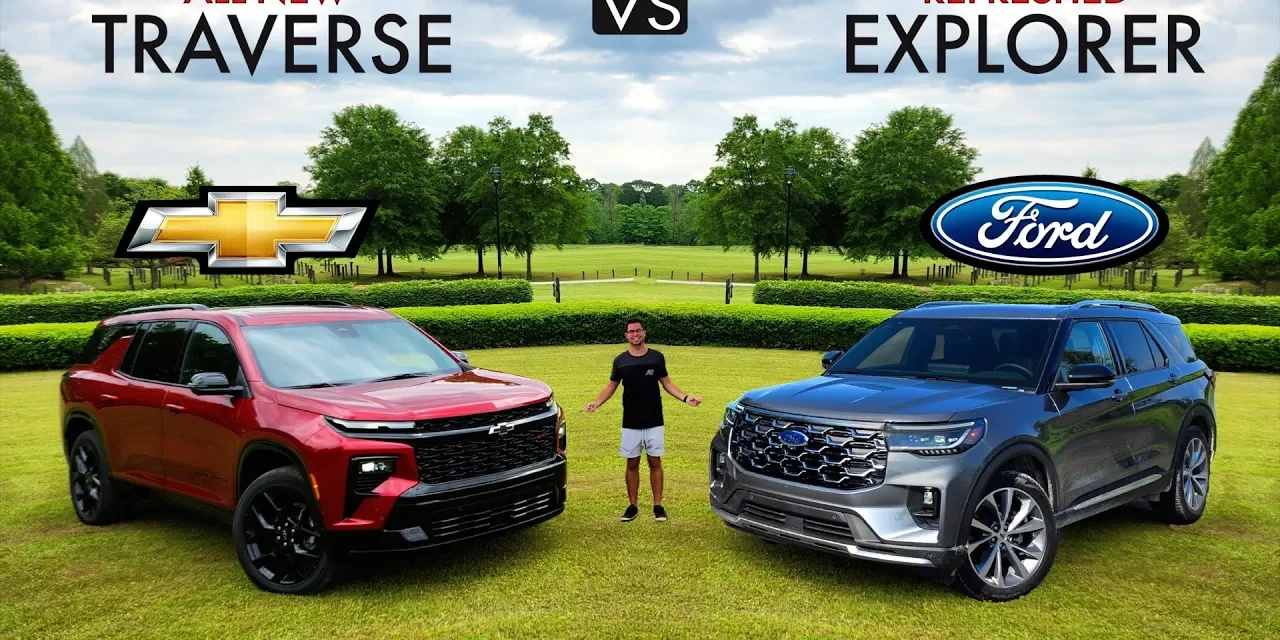
The mid-size, three-row SUV segment is arguably the most fiercely contested battleground in the automotive industry. It’s where practicality meets aspiration, where family hauler duties collide with a desire for style and technology. For many families, this vehicle is the second most significant purchase they’ll ever make, after their home. As we look towards 2026, the venerable Ford Explorer, fresh off a significant 2025 refresh, is poised to reaffirm its position. But with an increasingly sophisticated and diverse field of competitors, the question isn’t just "Is the Explorer good?" but "Is the Explorer best for the money?"
To answer that, we must dissect what "best for the money" truly means in this segment. It’s not merely the lowest sticker price. It encompasses a complex blend of initial cost, standard features, optional tech, fuel economy, long-term reliability, resale value, safety, and the intangible emotional connection a vehicle fosters. It’s about maximum utility, comfort, and peace of mind for every dollar spent.
Let’s buckle up and dive into the heart of the matter, pitting the refreshed 2026 Ford Explorer against its most formidable rivals.
The Contender: The 2026 Ford Explorer – A Refreshed Classic
The Ford Explorer has been a cornerstone of American family transport for decades. For 2025 (and carrying over into 2026 with likely minor tweaks), Ford gave it a significant shot in the arm, focusing on key areas that matter most to buyers: interior quality, technology, and design.
What the Explorer brings to the table:
- Refined Design: The exterior sees subtle but impactful changes, with revised front and rear fascias, new lighting signatures, and fresh wheel designs across the lineup. It’s a more polished, contemporary look that maintains its muscular stance.
- Elevated Interior: This is where the 2025 refresh truly shines. Ford addressed past criticisms with higher-quality materials, improved ergonomics, and a significantly upgraded infotainment system. The centerpiece is a standard 13.2-inch touchscreen running Ford’s new Google Built-in infotainment, offering seamless integration with Google Maps, Assistant, and the Play Store. A standard 12.3-inch digital gauge cluster further modernizes the cabin.
- Proven Powertrains: The Explorer retains its potent and efficient engine options. The base 2.3-liter EcoBoost four-cylinder (300 horsepower, 310 lb-ft of torque) offers a strong blend of performance and decent fuel economy. For those craving more exhilaration, the ST and Platinum models feature the 3.0-liter EcoBoost V6 (400 horsepower, 415 lb-ft of torque), transforming the family hauler into a genuine performance SUV. Both are paired with a smooth 10-speed automatic transmission.
- Rear-Wheel Drive Architecture: Unlike many front-wheel-drive-based competitors, the Explorer’s rear-wheel-drive platform provides a more balanced weight distribution, contributing to better handling dynamics and a more engaging driving experience, especially in the powerful ST variant. All-wheel drive is, of course, available.
- Practicality and Utility: With seating for up to seven, a generous cargo area, and a towing capacity of up to 5,600 pounds (with the 3.0L V6), the Explorer remains a highly practical choice for families and adventurers alike. Ford Co-Pilot360 Assist+ suite of safety features is standard, enhancing peace of mind.
Potential Downsides: While improved, the third row can still feel a bit tighter than some rivals for adult passengers, and the overall interior aesthetic, though upgraded, might not reach the "wow" factor of some Korean competitors. The base pricing, while competitive, can climb quickly with higher trims and desirable options.
The Challengers: A Diverse and Formidable Lineup
Now, let’s pit the Explorer against the best the market has to offer, analyzing their strengths and how they stack up in the "best for the money" equation.
1. The Korean Powerhouses: Kia Telluride & Hyundai Palisade
These fraternal twins have redefined expectations in the segment, offering near-luxury amenities and bold styling at mainstream prices.
- Kia Telluride: With its rugged-yet-sophisticated aesthetic, the Telluride continues to be a darling of critics and consumers alike. It boasts a spacious, comfortable, and remarkably upscale cabin, even in lower trims. The standard 3.8-liter V6 (291 hp) provides adequate power, and its driving dynamics are refined and comfortable. Kia’s industry-leading warranty (10-year/100,000-mile powertrain) is a huge value proposition.
- Hyundai Palisade: The Palisade shares much of its mechanicals with the Telluride but presents a more overtly luxurious and elegant design. Its interior often feels a step above, with available Nappa leather, intricate stitching, and advanced tech. Both offer expansive third-row space and a plethora of standard safety features.
Best for the Money if: You prioritize a premium feel, extensive standard features, bold design, and an excellent warranty without breaking the bank. Their value-to-feature ratio is tough to beat.
2. The Japanese Stalwarts: Honda Pilot & Toyota Highlander
These two have built their reputations on bulletproof reliability, strong resale values, and pragmatic excellence.
- Honda Pilot: Freshly redesigned for 2023 (and carrying over into 2026), the Pilot has embraced a more rugged, truck-like aesthetic while retaining Honda’s renowned practicality. It offers an incredibly spacious and versatile interior, particularly its third row, which is among the best in the class for adult comfort. The 3.5-liter V6 (285 hp) is smooth and proven. The Pilot excels in passenger and cargo volume, making it a true family workhorse.
- Toyota Highlander: The Highlander leans into efficiency and refinement. While its third row is smaller than most rivals, it counters with a standard hybrid powertrain option that delivers exceptional fuel economy (35 MPG combined). The standard 2.4-liter turbocharged four-cylinder (265 hp) is also efficient. Toyota’s reputation for reliability and high resale value is legendary, making it a financially sound choice in the long run.
Best for the Money if: You value long-term reliability, exceptional resale value, fuel efficiency (especially with the Highlander Hybrid), and a spacious, highly functional interior (Pilot).
3. The American Challengers: Chevrolet Traverse & Jeep Grand Cherokee L
Detroit offers compelling alternatives, each with its own distinct flavor.
- Chevrolet Traverse: The Traverse was fully redesigned for 2024 (and will be current for 2026), emerging with a more aggressive, truck-inspired look and a significantly upgraded interior. Its primary selling point remains its cavernous interior space, boasting one of the largest third rows and cargo capacities in the segment. A new 2.5-liter turbocharged four-cylinder (328 hp) provides ample power. For pure space and family utility, the Traverse is a strong contender.
- Jeep Grand Cherokee L: For those who desire a touch of luxury and genuine off-road capability in their three-row SUV, the Grand Cherokee L stands out. It offers a more premium driving experience, a beautifully crafted interior, and the iconic Jeep DNA for tackling rough terrain. Engine options include a standard 3.6-liter V6 (293 hp) and an optional 5.7-liter V8 (357 hp) for serious towing and power. It’s a pricier option but delivers a unique blend of ruggedness and refinement.
Best for the Money if: You need maximum interior space and cargo capacity (Traverse) or prioritize a premium feel, strong towing, and legitimate off-road prowess (Grand Cherokee L), and are willing to pay a bit more for it.
4. The European & Niche Players: Volkswagen Atlas & Mazda CX-90
Rounding out our list are two unique propositions.
- Volkswagen Atlas: The Atlas is renowned for its sheer volume. Its boxy design translates to an incredibly spacious and adult-friendly third row, making it a favorite for larger families. The recent refresh brought a more upscale interior and a new standard 2.0-liter turbocharged four-cylinder (269 hp) that provides better power and efficiency than its predecessor. It’s a straightforward, no-nonsense family hauler.
- Mazda CX-90: The newest entrant (debuted 2024), the CX-90 aims squarely at the premium end of the mainstream segment. It features an exquisite interior, sophisticated driving dynamics, and a range of innovative inline-six mild-hybrid powertrains (280 hp or 340 hp) that offer a compelling blend of power and efficiency. Its rear-biased platform and engaging handling make it the driver’s choice in the segment. While technically a three-row, its third row is less capacious than many rivals.
Best for the Money if: You need maximum usable space for adults in all three rows (Atlas) or prioritize a premium driving experience, sophisticated design, and innovative powertrains, even if it means a slightly smaller third row (CX-90).
Defining "Best for the Money": A Multifaceted Equation
As evident, "best for the money" is highly subjective and depends on individual priorities:
- Budget-Conscious: If the absolute lowest initial cost and strong warranty are paramount, the Korean twins often lead the pack.
- Long-Term Value: For those prioritizing resale value, proven reliability, and low ownership costs, the Toyota Highlander and Honda Pilot are hard to beat.
- Feature-Rich Value: If you want the most tech, luxury, and comfort features for your dollar, the Telluride and Palisade consistently impress.
- Space is King: Families needing the absolute maximum passenger and cargo volume will find the Chevrolet Traverse and Volkswagen Atlas incredibly compelling.
- Performance & Driving Dynamics: For the enthusiast driver who still needs three rows, the Ford Explorer ST and Mazda CX-90 offer the most engaging experiences.
- Capability & Luxury: The Jeep Grand Cherokee L provides a unique blend for those needing more than just on-road prowess.
The Verdict: Where Does the 2026 Ford Explorer Stand?
The 2026 Ford Explorer, with its impactful 2025 refresh, is undeniably a stronger contender than its predecessor. The significantly upgraded interior, standard Google Built-in tech, and continued strength of its powertrains and RWD-based architecture make it a very attractive package. It offers a compelling blend of performance, utility, and now, a much-improved user experience.
Is it the absolute best for the money? The answer, typically, is "it depends."
- For the traditional American SUV buyer who values a strong engine, solid towing, a comfortable ride, and now cutting-edge infotainment, the Explorer is an incredibly strong proposition. Its value lies in its balanced approach and the sheer breadth of its capabilities. It hits a sweet spot for many.
- However, if you prioritize near-luxury ambiance at a mainstream price, the Kia Telluride or Hyundai Palisade might still edge it out in terms of initial "wow" factor and standard features for the dollar.
- If ultimate reliability and resale value are your primary drivers, the Toyota Highlander and Honda Pilot remain formidable.
- And if maximum interior volume is non-negotiable, the Chevrolet Traverse and VW Atlas present compelling arguments.
The 2026 Ford Explorer has definitively re-entered the conversation as a top-tier choice in the mid-size three-row SUV segment. It’s competitive, modern, and capable. While no single vehicle can be "best for the money" for every single buyer, the Explorer’s comprehensive refresh ensures it delivers excellent value across its diverse trim levels, making it a compelling, well-rounded, and thoroughly modern option that deserves a place on any family’s shopping list. The battle for your driveway dollars has never been more exciting, or more challenging to navigate.