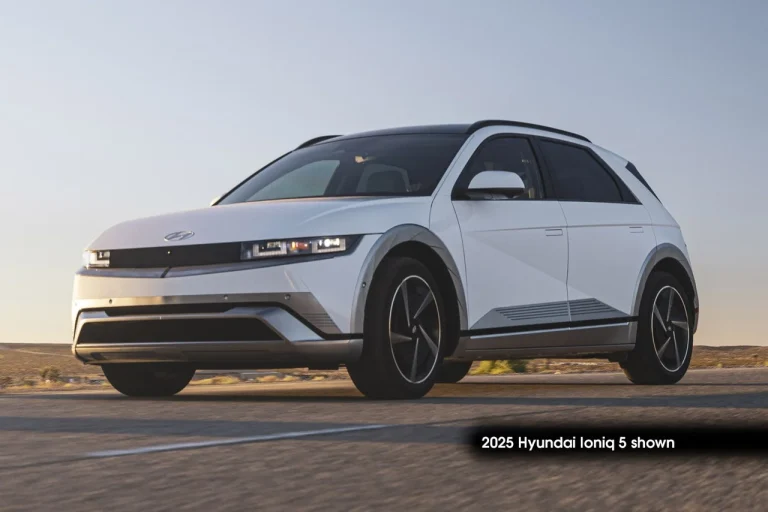
The electric vehicle (EV) market is a battlefield of innovation, range, performance, and, crucially, value. As we look towards 2026, the landscape will be even more competitive, with established players refining their offerings and new contenders emerging. Among the most anticipated vehicles is the refreshed 2026 Hyundai Ioniq 5. Building on its already stellar reputation, the Ioniq 5 is poised to continue its quest for dominance, but the question remains: will it be the best electric vehicle for your money when stacked against its formidable rivals?
This comprehensive article will delve into the anticipated features and improvements of the 2026 Hyundai Ioniq 5, pit it against its key competitors across critical metrics, and ultimately assess its potential as the ultimate value proposition in the rapidly evolving EV segment.
The 2026 Hyundai Ioniq 5: Anticipating the Evolution
Since its debut, the Hyundai Ioniq 5 has been a game-changer. Its retro-futuristic design, spacious lounge-like interior, ultra-fast 800V charging architecture, and impressive feature set have garnered widespread acclaim and numerous awards. For the 2026 model year, while specific details are yet to be officially released, we can anticipate a strategic evolution rather than a complete overhaul, building on the strengths of the current E-GMP platform.
Expected Enhancements for 2026:
- Battery Technology & Range: Hyundai will likely introduce more advanced battery chemistries, potentially increasing energy density without significantly adding weight. This could translate into a modest but meaningful bump in EPA-estimated range, possibly pushing some trims beyond the 320-mile mark. We might also see the introduction of LFP (Lithium Iron Phosphate) battery options for entry-level models, offering a more affordable price point and improved longevity at the expense of a slight range reduction, catering to a broader market.
- Charging Speed: While already a leader with its 800V system, Hyundai could further optimize charging curves, allowing for sustained high charging rates for longer durations. This means even quicker top-ups from 10-80% on compatible DC fast chargers.
- Performance Upgrades: Subtle power bumps might be introduced across the lineup, or perhaps a more potent N Line variant could bridge the gap to the full-blown Ioniq 5 N, offering enhanced acceleration and sportier tuning for those seeking a more engaging drive.
- Interior Refinements & Technology: Expect updated infotainment software with more intuitive interfaces, potentially larger screens, and deeper integration with cloud-based services. Advanced Driver-Assistance Systems (ADAS) will likely see improvements in sensor fusion, processing power, and new functionalities, making features like Highway Driving Assist (HDA) even more robust. Material choices might also see subtle upgrades for a more premium feel.
- Design Tweaks: While the iconic exterior will largely remain, minor fascia updates, new wheel designs, and revised lighting signatures could give the 2026 Ioniq 5 a fresh look, keeping it visually competitive.
- Software-Defined Vehicle (SDV) Capabilities: Hyundai is heavily investing in SDV technology. The 2026 Ioniq 5 will likely feature more robust over-the-air (OTA) update capabilities, not just for infotainment but potentially for powertrain and chassis adjustments, allowing the vehicle to evolve and improve throughout its lifespan.
These anticipated improvements position the 2026 Ioniq 5 as an even more compelling package, refining what was already a winning formula.
Defining "Best Electric Vehicle for the Money"
Before diving into comparisons, it’s crucial to define what "best electric vehicle for the money" truly means. It’s not simply the cheapest EV, nor is it the one with the longest range or quickest acceleration. Instead, it’s a holistic assessment that considers:
- Initial Purchase Price: How much does it cost to buy across various trims?
- Feature Set for the Price: What level of technology, comfort, and safety do you get at each price point?
- Running Costs: Efficiency, charging costs, maintenance, insurance.
- Range & Charging: Does it meet daily needs and offer convenient long-distance travel?
- Performance & Driving Dynamics: Is it enjoyable and capable on the road?
- Interior Quality & Space: Comfort, practicality, and material finishes.
- Technology & Safety: Infotainment, connectivity, and ADAS features.
- Reliability & Warranty: Peace of mind for long-term ownership.
- Resale Value: How well does it hold its value over time?
- Brand Reputation & Dealer Network: Support and service accessibility.
A vehicle that excels in a balanced combination of these factors, delivering high perceived value for its cost, will ultimately be crowned the "best for the money."
The Competitor Landscape for 2026
The 2026 Hyundai Ioniq 5 will face a diverse and highly capable set of rivals. Here are the key players:
- Tesla Model Y: The segment sales leader and benchmark. Known for its performance, Supercharger network, minimalist interior, and cutting-edge software. Tesla will likely have refreshed the Model Y ("Project Juniper") by 2026, offering improved efficiency, comfort, and perhaps even more radical design changes.
- Kia EV6: The Ioniq 5’s platform sibling. The EV6 offers a sportier design and driving experience, utilizing the same 800V architecture. It will also see updates by 2026, likely mirroring many of the Ioniq 5’s internal enhancements.
- Ford Mustang Mach-E: A stylish and engaging American contender. The Mach-E offers a more traditional SUV feel with sporty handling and a growing charging network (via Ford’s adoption of NACS). By 2026, expect range boosts, faster charging, and potential interior tech upgrades.
- Volkswagen ID.4: The practical and comfortable European alternative. The ID.4 focuses on spaciousness, ride comfort, and a user-friendly experience. VW will likely have addressed some of its initial software quirks and boosted range/charging speeds for its mid-cycle refresh.
- Chevrolet Equinox EV: Positioned as an affordable, mass-market EV. While perhaps not a direct performance rival to the Ioniq 5, its focus on value and practicality at a lower price point could steal market share from those considering base Ioniq 5 trims. By 2026, it will be a more established player.
- Polestar 2: A premium, design-forward choice. While technically a sedan/hatchback crossover, its price point and focus on design and driving dynamics put it in contention. Expect a refresh with improved range and efficiency by 2026.
- Other Emerging Contenders: The market is dynamic. By 2026, new players from China (e.g., BYD) or refreshed offerings from other traditional automakers could also challenge the Ioniq 5’s position.
Head-to-Head Comparison: 2026 Ioniq 5 vs. Rivals
Let’s break down how the 2026 Hyundai Ioniq 5 is expected to fare against these competitors across key metrics.
1. Pricing & Trim Levels
- 2026 Ioniq 5 (Anticipated): Expect a starting price for the base RWD model around $45,000-$47,000, climbing to over $65,000 for top-tier AWD and performance variants. Hyundai’s strategy typically involves offering a compelling suite of standard features, making even lower trims feel well-equipped.
- Tesla Model Y (Refreshed): Tesla’s pricing is volatile, but expect the Model Y to start around $48,000-$52,000 for the Long Range, with the Performance trim pushing into the mid-$60,000s. Tesla’s base models often lack some creature comforts found standard in competitors.
- Kia EV6 (Refreshed): Likely to mirror the Ioniq 5 closely, with a slight premium for its sportier positioning. Expect $46,000-$67,000.
- Ford Mustang Mach-E (Refreshed): Starting around $48,000-$50,000 for RWD, with GT trims reaching $65,000+. Ford often offers attractive financing.
- VW ID.4 (Refreshed): Likely to remain a strong value play, starting around $42,000-$45,000, topping out in the mid-$50,000s.
- Chevy Equinox EV: Expected to be the price leader, with a base model potentially starting in the low $30,000s (before incentives), though higher trims will compete with Ioniq 5’s mid-range.
- Polestar 2 (Refreshed): Positioned more premium, starting around $52,000-$55,000, going up to $65,000+.
Value Perspective: The Ioniq 5 is expected to remain highly competitive, offering a strong balance of features and quality for its price. The potential for an LFP battery option could provide an even more attractive entry point, while higher trims will continue to offer premium features at a price often undercutting similarly equipped luxury EVs.
2. Range & Battery Technology
- 2026 Ioniq 5 (Anticipated): Base models with LFP might offer 220-250 miles, while the long-range RWD is expected to achieve 310-330 miles, and AWD around 280-300 miles. Hyundai’s thermal management is excellent.
- Tesla Model Y (Refreshed): Tesla will likely push its Long Range model to 330-350 miles, with the Performance around 300-310 miles. Its efficiency is generally class-leading.
- Kia EV6 (Refreshed): Similar to Ioniq 5, with slight variations due to aerodynamics and tuning, expecting 300-325 miles for RWD.
- Ford Mustang Mach-E (Refreshed): Ford will likely aim for 320-330 miles for its RWD Extended Range, with AWD models slightly less.
- VW ID.4 (Refreshed): Expect improvements to reach 280-300 miles for the long-range RWD model.
- Chevy Equinox EV: Target ranges are 250-300 miles, with specific trims offering higher range.
- Polestar 2 (Refreshed): With efficiency improvements, expect 300-330 miles for the long-range RWD.
Value Perspective: The Ioniq 5’s anticipated range will place it firmly in the competitive sweet spot. Its 800V architecture, combined with potential battery upgrades, makes it a highly practical choice for daily driving and road trips.
3. Charging Speed & Infrastructure
- 2026 Ioniq 5 (Anticipated): Its 800V system allows for industry-leading DC fast charging (10-80% in 18 minutes on compatible 350 kW chargers). Anticipate further optimization of charging curves. Hyundai’s adoption of the NACS (North American Charging Standard) by 2025-2026 will also open up access to the vast Tesla Supercharger network.
- Tesla Model Y (Refreshed): Unparalleled Supercharger network access and consistent charging speeds (typically 250 kW peak).
- Kia EV6 (Refreshed): Identical 800V architecture to the Ioniq 5, offering the same blazing fast DC charging. Will also adopt NACS.
- Ford Mustang Mach-E (Refreshed): Currently uses CCS, with peak charging around 150 kW. Its adoption of NACS will significantly improve its charging convenience.
- VW ID.4 (Refreshed): Uses CCS, with peak charging around 170-180 kW. Will also adopt NACS.
- Chevy Equinox EV: Uses CCS, with Ultium platform capable of up to 150 kW DC fast charging. Will adopt NACS.
- Polestar 2 (Refreshed): Uses CCS, with peak charging around 205 kW. Will adopt NACS.
Value Perspective: The Ioniq 5’s charging capability is a significant value differentiator. The ability to charge incredibly quickly, coupled with future NACS access, minimizes charging anxiety and maximizes road trip efficiency, making it incredibly convenient for the money.
4. Performance & Driving Dynamics
- 2026 Ioniq 5 (Anticipated): Expect 0-60 mph times ranging from 7.0 seconds (RWD) to under 5.0 seconds (AWD). The potential for a more powerful N Line variant could push this closer to 4.0 seconds. The ride is comfortable and well-composed.
- Tesla Model Y (Refreshed): Known for its brisk acceleration (Long Range around 4.8s, Performance around 3.5s) and sporty, albeit firm, handling.
- Kia EV6 (Refreshed): Generally tuned for a sportier feel than the Ioniq 5, with similar acceleration figures.
- Ford Mustang Mach-E (Refreshed): Offers engaging handling and strong acceleration, especially in GT trims (0-60 in mid-3s).
- VW ID.4 (Refreshed): Focuses more on comfort than outright performance (0-60 in 5.5-7.5s), with a softer, more relaxed ride.
- Chevy Equinox EV: Performance will likely be adequate for daily driving, not focused on speed (0-60 in 6.0-7.0s).
- Polestar 2 (Refreshed): Offers solid performance (0-60 in 4.5-6.0s) and a taut, engaging chassis.
Value Perspective: The Ioniq 5 offers a great balance of comfort and capability. While not always the absolute quickest (Tesla often holds that crown), its performance is more than sufficient for most drivers, providing a smooth and confident experience.
5. Interior & Technology
- 2026 Ioniq 5 (Anticipated): Its "living space" interior concept will remain, offering exceptional rear legroom and a flat floor. Expect upgraded materials, enhanced infotainment with faster processors, larger screens, and more advanced ADAS features like automated lane changes and improved parking assist. V2L (Vehicle-to-Load) remains a unique and highly practical feature.
- Tesla Model Y (Refreshed): Known for its minimalist, screen-centric interior. Expect continued software refinements and potentially improved material quality or design tweaks.
- Kia EV6 (Refreshed): Shares much of the Ioniq 5’s tech but with a driver-focused cockpit and sportier aesthetic.
- Ford Mustang Mach-E (Refreshed): Features a large vertical touchscreen and a mix of modern and traditional elements. Expect software updates and potentially new digital features.
- VW ID.4 (Refreshed): Offers a spacious, practical, and well-built interior. Expect software improvements and potentially revised screen layouts.
- Chevy Equinox EV: Will feature a modern interior with large screens, focusing on user-friendliness and smart storage.
- Polestar 2 (Refreshed): Features a premium, minimalist Scandinavian design with a Google-based infotainment system that is intuitive and well-integrated.
Value Perspective: The Ioniq 5’s interior space, comfort, thoughtful design, and cutting-edge tech (especially V2L) offer tremendous value. It feels more upscale than its price suggests, bridging the gap between mainstream and luxury EVs.
6. Reliability & Warranty
- 2026 Ioniq 5 (Anticipated): Hyundai’s industry-leading warranty (5-year/60,000-mile limited, 10-year/100,000-mile powertrain/EV battery) is a massive value proposition, providing unparalleled peace of mind. Hyundai’s reliability has also been steadily improving.
- Tesla Model Y (Refreshed): Tesla’s warranty is 4-year/50,000-mile limited and 8-year/120,000-mile battery/drive unit. Tesla’s reliability has been inconsistent in past surveys, though it is improving.
- Kia EV6 (Refreshed): Identical class-leading warranty to the Ioniq 5.
- Ford Mustang Mach-E (Refreshed): 3-year/36,000-mile limited, 8-year/100,000-mile EV components.
- VW ID.4 (Refreshed): 4-year/50,000-mile limited, 8-year/100,000-mile EV components.
- Chevy Equinox EV: 3-year/36,000-mile limited, 8-year/100,000-mile EV components.
- Polestar 2 (Refreshed): 4-year/50,000-mile limited, 8-year/100,000-mile EV components.
Value Perspective: Hyundai and Kia’s warranty is a standout feature that significantly enhances the long-term value proposition of the Ioniq 5. It reduces potential ownership costs and provides confidence in the vehicle’s durability.
The Verdict: Is the 2026 Ioniq 5 the Best Value?
The 2026 Hyundai Ioniq 5 is poised to be an even more compelling electric vehicle, refining its already strong foundation. When evaluating "best for the money," it’s clear the Ioniq 5 will continue to be a top contender, offering a powerful blend of attributes that many competitors struggle to match at its price point.
Where the 2026 Ioniq 5 is expected to excel in value:
- Design & Aesthetics: Its unique, head-turning design sets it apart without requiring a luxury price tag.
- Ultra-Fast Charging: The 800V architecture, combined with future NACS access, provides unmatched charging convenience and efficiency for the money.
- Spacious & Premium Interior: The lounge-like cabin, thoughtful storage, and anticipated tech upgrades deliver a premium experience without a premium price.
- Comprehensive Feature Set: Hyundai is known for including desirable features as standard, offering more "bang for your buck" across its trims.
- Industry-Leading Warranty: The 10-year/100,000-mile battery and powertrain warranty provides peace of mind and significantly reduces long-term ownership risk.
- Balanced Performance: It’s quick enough, handles well, and offers a comfortable ride – a great all-rounder.
- V2L Capability: A highly practical feature that adds tangible value for many users.
Where competitors might offer specific advantages:
- Tesla Model Y: Still likely to hold an edge in absolute performance, raw efficiency, and the sheer size of its Supercharger network (though Ioniq 5 will gain access). Its minimalist interface appeals to some.
- Chevrolet Equinox EV: Will likely be the outright cheapest option for those prioritizing the lowest possible entry price into the EV market, though it won’t match the Ioniq 5’s features or charging speed.
- Ford Mustang Mach-E: Might appeal more to traditional car enthusiasts looking for a sportier, more "muscle car" inspired driving feel.
Conclusion:
For the vast majority of buyers seeking a practical, stylish, high-tech, and efficient electric vehicle that delivers exceptional value, the 2026 Hyundai Ioniq 5 is expected to remain a front-runner for the "best EV for the money" title. It strikes an almost perfect balance between price, features, performance, and long-term ownership confidence.
While the Tesla Model Y will continue to be a formidable rival, and new affordable EVs will emerge, the Ioniq 5’s unique blend of cutting-edge charging technology, thoughtful interior design, robust warranty, and captivating aesthetics will ensure its position as a top choice. For those who appreciate distinctive design, rapid charging, and a well-appointed cabin without breaking the bank, the 2026 Hyundai Ioniq 5 will undoubtedly represent one of the smartest electric vehicle purchases available. The future of EVs is bright, and the Ioniq 5 is poised to lead the charge in delivering exceptional value.