The electric vehicle (EV) market is a battlefield of innovation, range, and luxury, with new contenders emerging seemingly every quarter. At the forefront, Tesla has long commanded attention, and the Model X, with its distinctive Falcon Wing doors and blistering performance, has been a flagship for the brand’s ambition. As we look ahead to 2026, the question intensifies: will the Tesla Model X still be the undisputed champion, or even the best electric vehicle for your money, amidst a burgeoning field of sophisticated and compelling rivals?
This article dives deep into what we can expect from the 2026 Tesla Model X, pits it against its most formidable competitors, and meticulously analyzes whether its value proposition will hold up in an increasingly crowded and competitive landscape. We’ll explore performance, technology, design, charging infrastructure, and, crucially, the "money" aspect – from purchase price to total cost of ownership.
The Evolving Landscape of Electric Luxury SUVs
By 2026, the EV market will have matured significantly. Battery technology will likely offer greater energy density, leading to longer ranges and faster charging times. Autonomous driving features will be more sophisticated, and luxury brands will have firmly established their electric identities. Tesla, while still a dominant force, will face an onslaught of highly capable vehicles from legacy automakers and ambitious startups alike, all vying for a slice of the premium electric SUV pie.
The 2026 Tesla Model X: What to Expect
While Tesla rarely undergoes radical generational redesigns, the 2026 Model X will undoubtedly benefit from continuous improvements and technological advancements. We can anticipate:
- Enhanced Performance & Range: The "Plaid" variant will likely remain, pushing boundaries of acceleration. Expect incremental improvements in battery efficiency and capacity, potentially extending range beyond the current 330-mile mark, perhaps approaching 350-370 miles on a single charge for the Long Range variant. New cell chemistries or structural battery packs might contribute to this.
- Advanced Autopilot & Full Self-Driving (FSD): By 2026, Tesla’s FSD software is projected to be considerably more capable, potentially offering true Level 3 or even early Level 4 autonomous driving in geofenced areas. The hardware suite (cameras, sensors, computing power) will be continually updated to support this.
- Refined Interior & Infotainment: While Tesla’s minimalist interior design is iconic, expect subtle refinements in material quality, ergonomics, and perhaps even customizable ambient lighting. The large central touchscreen will continue to be the hub, likely with a faster processor, more intuitive UI updates, and enhanced entertainment options. The rear passenger screen introduced in newer models will likely be standard.
- Charging Prowess: The Supercharger network remains Tesla’s ace in the hole. By 2026, it will be even more expansive and likely feature widespread V4 Superchargers offering significantly faster charging speeds, potentially allowing for 200+ miles of range in under 10-15 minutes.
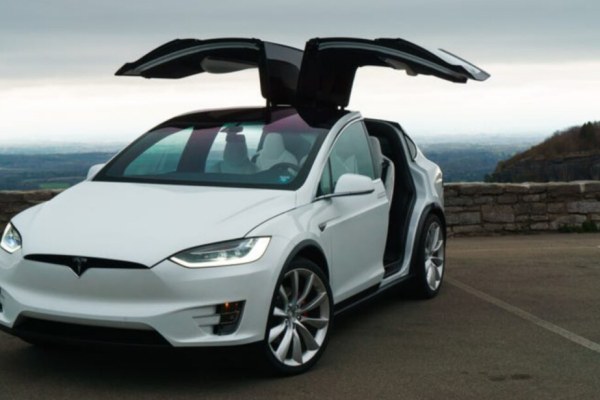
- Subtle Design Tweaks: The distinctive Falcon Wing doors will remain, a polarizing but unique feature. Exterior styling might see minor aerodynamic improvements, updated lighting signatures, and new wheel options.
- Price Point: The Model X is a premium vehicle. While exact 2026 pricing is speculative, expect it to remain in the upper luxury segment, likely starting from around $90,000 – $100,000 for the base model, with the Plaid variant easily exceeding $120,000.
The Contenders: Challenging Tesla’s Dominance
To truly assess the 2026 Model X’s value, we must compare it against its most formidable rivals. These vehicles will push the boundaries of luxury, technology, and performance.
-
Mercedes-Benz EQS SUV:
- Strengths: Unrivaled interior luxury, cutting-edge "Hyperscreen" infotainment, exceptional ride comfort, prestigious brand image, advanced safety features. Mercedes’ build quality is typically impeccable.
- Weaknesses: Generally lower range than Model X (though still very good), less aggressive performance, significantly higher starting price, relies on third-party charging networks.
- 2026 Outlook: Mercedes will likely offer even more range and improved software.
-
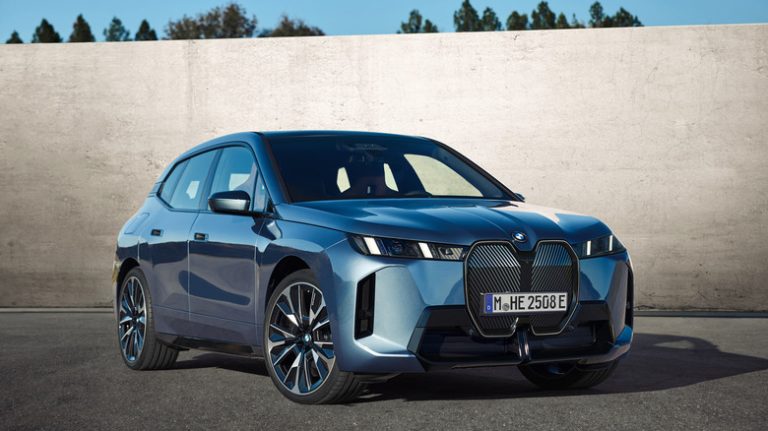
BMW iX (and potential larger electric SUV from BMW):
- Strengths: Engaging driving dynamics (a BMW hallmark), unique and modern interior design, high-quality materials, strong performance, excellent technology integration (iDrive 8/9).
- Weaknesses: Polarizing exterior design, potentially less cargo space than Model X, range might still lag slightly, relies on third-party charging.
- 2026 Outlook: BMW’s Neue Klasse platform will bring significant advancements in battery tech, range, and charging, potentially introducing an even larger, more competitive electric SUV.
-
Rivian R1S:
- Strengths: True off-road capability, rugged yet refined design, highly practical with strong towing capacity, innovative "Gear Tunnel," robust adventure-focused features, compelling performance.
- Weaknesses: Less efficient than Model X, smaller charging network (though growing rapidly), luxury feel isn’t as opulent as European rivals, newer brand still establishing service infrastructure.
- 2026 Outlook: Rivian’s charging network will be more robust, and production will be more streamlined, making it a stronger contender for those seeking adventure.
-
Lucid Gravity (expected 2025/2026 release):
- Strengths: Potentially segment-leading range (Lucid Air’s legacy), ultra-luxury interior, innovative space utilization, blistering performance, unique design.
- Weaknesses: Untested market presence for an SUV, likely extremely high price point, new brand service network.
- 2026 Outlook: If it delivers on its promises, the Gravity could be a significant disruptor, particularly in the ultra-premium segment.
-
Audi Q8 e-tron (and potential larger electric SUV from Audi):
- Strengths: Sophisticated design, high-quality interior, comfortable ride, strong build quality, reputable brand.
- Weaknesses: Performance and range historically lag Model X, infotainment can be complex, relies on third-party charging.
- 2026 Outlook: Audi will have updated its EV offerings with more competitive range and charging speeds, likely leveraging new platforms.
Head-to-Head Comparison: The "Best for the Money" Dissected
Now, let’s break down how the 2026 Model X stacks up against these formidable competitors across key categories, keeping the "best for the money" question central.
1. Performance & Range
- Tesla Model X: Still the benchmark for acceleration, especially the Plaid. Its efficiency and access to the Supercharger network make its effective range incredibly practical.
- Competitors: The Lucid Gravity aims to challenge range records. BMW and Mercedes offer strong performance, but the Model X Plaid often remains unmatched in sheer straight-line speed. Rivian offers impressive torque for off-road and towing.
- "For the Money": If raw, exhilarating performance is a top priority, the Model X Plaid might offer the best performance-per-dollar, especially considering its SUV form factor. For long-distance efficiency and range, Tesla remains highly competitive.
2. Technology & Innovation
- Tesla Model X: Leads with its integrated software experience, over-the-air updates, and aggressive pursuit of full self-driving. The minimalist interior and large screen are foundational to its tech appeal.
- Competitors: Mercedes’ Hyperscreen, BMW’s iDrive, and Lucid’s intuitive interfaces are highly sophisticated. They often offer more traditional luxury tech (e.g., massaging seats, advanced ambient lighting) as standard. Autonomous driving features are rapidly catching up, though often with different philosophical approaches (e.g., lidar-based systems).
- "For the Money": Tesla’s advantage is its software-first approach and the promise of FSD (though its price adds significantly to the vehicle’s cost). For a more polished, user-friendly, and less "beta" tech experience, or for physical luxury tech, competitors might offer better value.
3. Design & Comfort
- Tesla Model X: Distinctive Falcon Wing doors, panoramic windshield, minimalist interior. Comfort is good, but interior materials have historically been criticized compared to luxury rivals.
- Competitors: Mercedes EQS SUV offers unparalleled cabin luxury and comfort. BMW iX has a unique, contemporary design. Rivian R1S provides a rugged yet premium feel. Lucid Gravity promises incredible interior space and luxury. Many rivals offer more traditional luxury appointments and higher-grade materials.
- "For the Money": If you prioritize cutting-edge design and the unique Falcon Wing doors, the Model X offers that distinctiveness. However, for sheer interior luxury, build quality, and ergonomic comfort, competitors like the EQS SUV often deliver more "bang for your buck" at similar (or higher) price points.
4. Charging Infrastructure & Convenience
- Tesla Model X: The Supercharger network is a monumental advantage. Its reliability, speed, and seamless integration make long-distance travel significantly easier than with other EVs. By 2026, its ubiquity will be even more pronounced.
- Competitors: While networks like Electrify America, EVgo, and the growing Rivian Adventure Network are expanding, they still lack the density, reliability, and plug-and-play simplicity of Superchargers.
- "For the Money": This is where Tesla consistently offers unmatched value. The peace of mind and convenience of the Supercharger network are priceless for many EV owners, especially for road trips. While competitors are improving, Tesla’s head start here is massive.
5. Safety Features
- Tesla Model X: Consistently earns top safety ratings. Its suite of active and passive safety features, combined with a robust body structure, makes it a very safe vehicle.
- Competitors: All luxury SUVs, electric or otherwise, adhere to stringent safety standards and offer comprehensive safety suites. Many include advanced driver-assistance systems as standard or affordable options.
- "For the Money": Safety is paramount across all these premium vehicles, and none truly stand out as significantly "better value" than others in this regard.
6. Price & Value Proposition
- Tesla Model X: High initial purchase price. However, strong resale value, lower "fuel" costs (electricity vs. gasoline), and potentially lower maintenance due to fewer moving parts contribute to a competitive total cost of ownership (TCO). Government incentives (if still available) can further sweeten the deal.
- Competitors: Often have similar or even higher starting prices (e.g., EQS SUV, Lucid Gravity). Their TCO might be comparable due to electric powertrains, but resale value can vary. Brand perception and dealer experience also play a role in perceived value.
- "For the Money": This is highly subjective.
- If "money" means raw performance and a cutting-edge software experience combined with unparalleled charging convenience: The 2026 Model X could very well be the best value. Its long-term TCO, bolstered by efficiency and potential FSD capabilities, is compelling.
- If "money" means traditional luxury, build quality, and a more refined, comfortable cabin experience: Competitors like the Mercedes EQS SUV or a high-end BMW iX might offer better value, even if they cost more upfront.
- If "money" means adventure capability and practicality: The Rivian R1S offers a unique value proposition that the Model X doesn’t directly compete with.
The Verdict: Is the 2026 Tesla Model X the Best EV for Your Money?
By 2026, the Tesla Model X will remain an incredibly compelling electric SUV, especially for those who prioritize:
- Unmatched acceleration and performance.
- A cutting-edge, software-defined driving experience with the promise of advanced autonomy.
- The convenience and reliability of the Supercharger network for seamless long-distance travel.
- Strong resale value and competitive total cost of ownership.
However, "best for the money" is a personal calculation. For buyers who value:
- Exquisite interior luxury, premium materials, and superior build quality.
- A more traditional, refined driving experience with sophisticated comfort features.
- A unique design that emphasizes ruggedness and off-road capability (Rivian).
- A less polarizing brand image or a more established dealer service network.
Then, the 2026 Model X’s competitors will offer incredibly strong alternatives that could represent better value for their specific needs and preferences.
In conclusion, the 2026 Tesla Model X will continue to be a top-tier electric SUV, excelling in its core strengths. But the days of its undisputed reign as the "best electric vehicle for the money" will be over. The market will offer a rich tapestry of choices, each excelling in different facets. The "best" will no longer be a singular answer, but rather the vehicle that most perfectly aligns with an individual buyer’s priorities, lifestyle, and definition of value. The competition is not just catching up; in many areas, it’s setting new benchmarks, making the choice for the discerning EV buyer both more challenging and more exciting than ever before.