The Tesla Model 3 has redefined the electric vehicle landscape since its introduction, making performance EVs more accessible to a wider audience. As we look ahead, the prospect of a 2026 Tesla Model 3 sparks considerable interest among enthusiasts and prospective buyers alike. Will it bring groundbreaking innovations, or will it refine the already impressive package? This comprehensive guide will delve into everything you need to know about the anticipated 2026 Tesla Model 3, from its potential release date and expected features to a detailed buying guide, helping you decide if this is the electric sedan for you.
This article is for anyone considering a new electric vehicle, particularly those drawn to Tesla’s blend of technology, performance, and charging infrastructure. We’ll cover what to expect from the 2026 Model 3, offering insights into its design, technology, performance, and value proposition, ensuring you have all the information needed to make an informed decision.
Overview / Key Highlights: The Evolving Model 3
The Tesla Model 3, despite being on the market for several years, remains a benchmark in the electric sedan segment. Its recent "Highland" refresh brought significant improvements in design, range, and interior quality, setting a high bar for future iterations. For the 2026 model year, while major overhauls are less likely so soon after the "Highland" update, we can anticipate further refinements, software enhancements, and potentially minor hardware tweaks that keep the Model 3 at the forefront of the EV market.
Key highlights for a speculative 2026 Model 3 would likely include:
- Continued Refinement: Building on the "Highland" refresh, expect subtle aesthetic and aerodynamic improvements.
- Software-Driven Innovations: Tesla’s strength lies in its over-the-air (OTA) updates, meaning the 2026 Model 3 will benefit from continuous software improvements for infotainment, Autopilot, and vehicle performance.
- Battery and Powertrain Optimizations: While a revolutionary new battery pack is unlikely, incremental improvements in efficiency and possibly charging speeds could be on the horizon.
- Enhanced Connectivity and User Experience: Further integration of smart features and improved infotainment responsiveness.
Anticipated Release Date and Production Timeline
One of the most common questions is regarding the 2026 Tesla Model 3 Release Date. Unlike traditional automakers who adhere strictly to annual model year changes with distinct launch events, Tesla operates on a continuous improvement model. This means updates and refinements can be rolled out at any time throughout the year, rather than waiting for a specific "model year" changeover.
Given that the significant "Highland" refresh was introduced in late 2023 (for Europe/Asia) and early 2024 (for North America), a full redesign for 2026 is highly improbable. Tesla typically maintains a generation for 5-7 years before a major overhaul, with mid-cycle refreshes in between. The "Highland" update was that mid-cycle refresh. Therefore, the 2026 Model 3 will likely be a continuation of the "Highland" generation, featuring minor updates, new software features, and possibly new color options or trim enhancements.
Expectations for the 2026 Model 3:
- Production Start: Orders for what would be considered the "2026 Model 3" would likely open in late 2025, with deliveries commencing shortly thereafter, continuing into 2026.
- No Grand Launch Event: Don’t anticipate a major unveiling for a 2026 Model 3 specifically. Instead, look for announcements of minor updates or new features integrated into the existing production line.
- Availability: Customers can typically configure and order the latest iteration of the Model 3 directly from Tesla’s website.
It’s crucial for buyers to understand that "2026 Model 3" will signify the version of the car being produced and delivered in that calendar year, incorporating any ongoing improvements Tesla has implemented.
Exterior Design and Styling: Subtle Evolution
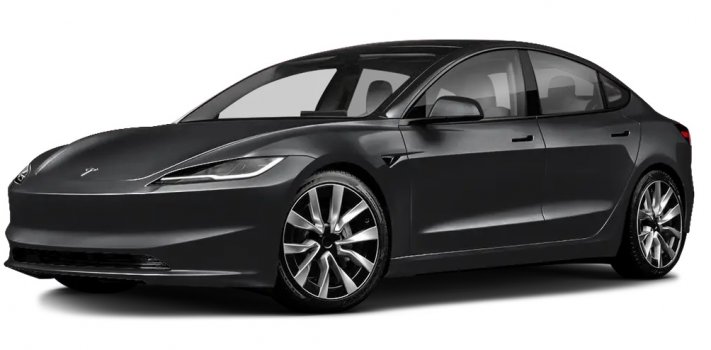
Building on the sleek and refined aesthetics introduced with the "Highland" refresh, the 2026 Tesla Model 3 is expected to maintain its minimalist yet aerodynamic design. The "Highland" brought sharper lines, revised headlights and taillights, and improved aerodynamic efficiency, resulting in a drag coefficient of just 0.219 Cd.
For 2026, don’t expect dramatic changes. Instead, look for:
- New Wheel Designs: Tesla often introduces new wheel options to refresh the look.
- Expanded Color Palette: Occasionally, new paint colors are added, or existing ones are updated.
- Minor Trim Details: Subtle changes to badging, window trim, or diffuser elements might occur.
- Aerodynamic Tweaks: Tesla is constantly striving for greater efficiency, so minor aerodynamic improvements, even if imperceptible to the eye, could be integrated.
The Model 3’s clean lines, flush door handles, and panoramic glass roof are signature elements that will undoubtedly carry over, contributing to its modern and sophisticated appeal.
Interior, Space, and Comfort: A Refined Sanctuary
The interior of the Model 3 received a significant upgrade with the "Highland" refresh, focusing on premium materials, better ergonomics, and enhanced comfort. The 2026 Model 3 will likely continue this trend.
Key interior aspects to expect:
- Premium Materials: Higher-quality fabrics, soft-touch surfaces, and improved finishes throughout the cabin, building on the "Highland" advancements.
- Refined Seating: Enhanced seat comfort, potentially with improved bolstering or ventilation options beyond the current heated and ventilated front seats.
- Quiet Cabin: The "Highland" refresh introduced acoustic glass and improved sound deadening. The 2026 model will likely maintain or further improve this, offering a serene driving experience.
- Ample Space: The Model 3 comfortably seats five, though the rear middle seat is best for shorter journeys. Trunk space is generous for a sedan, supplemented by a useful frunk (front trunk).
- Ambient Lighting: The "Highland" introduced customizable ambient lighting, which will undoubtedly carry over, enhancing the cabin’s atmosphere.
- No Stalks Design: The controversial move to integrate turn signals and gear selection onto the steering wheel (or via the touchscreen for gear selection) will almost certainly remain, requiring a brief adjustment period for new owners.
Technology and Infotainment: Cutting-Edge Connectivity
Tesla’s reputation for cutting-edge technology and a minimalist, screen-centric interior will remain a cornerstone of the 2026 Model 3. The central 15.4-inch touchscreen is the command center for almost all vehicle functions, from navigation and climate control to entertainment and driving settings.
Anticipated tech features:
- Next-Generation Infotainment: Expect faster processors and even more responsive software, with continuous over-the-air updates bringing new features and improvements.
- Enhanced Connectivity: Standard Wi-Fi and LTE connectivity, with premium connectivity offering live traffic visualization, satellite-view maps, video streaming, and caraoke.
- Gaming Capabilities: Tesla Arcade will likely continue to expand, offering a range of games that can be played on the central screen when parked.
- Rear Passenger Screen: The 8-inch rear touchscreen, introduced with "Highland," allowing rear passengers to control climate and entertainment, will be a standard feature.
- Advanced Voice Control: Continuous improvements to natural language processing for vehicle controls.
- Phone Key and App Integration: Seamless integration with your smartphone for locking/unlocking, pre-conditioning, and monitoring the vehicle.
Powertrain, Performance, and Range: Electric Excellence
The 2026 Tesla Model 3 will continue to leverage Tesla’s advanced electric powertrains, offering impressive acceleration and competitive range. The "Highland" refresh brought efficiency improvements that boosted range without necessarily increasing battery size.
Expected powertrain configurations:
- Rear-Wheel Drive (RWD): The entry-level model, likely offering competitive range (e.g., around 270-280 miles EPA estimated) and strong acceleration (0-60 mph in about 5.8-6.0 seconds).
- Long Range All-Wheel Drive (AWD): The popular choice for extended range (e.g., 330-340 miles EPA estimated) and quicker acceleration (0-60 mph in about 4.2-4.4 seconds).
- Performance All-Wheel Drive (AWD): The top-tier model, focusing on exhilarating acceleration (0-60 mph in under 3.0 seconds) and track-ready handling, with a slightly reduced range compared to the Long Range model. Tesla might introduce a specific "Ludicrous" or "Plaid" variant name for the Model 3 Performance in the future, as it has done with other models.
Charging:
- Supercharger Network: Access to Tesla’s extensive and reliable Supercharger network remains a significant advantage, offering rapid charging speeds.
- Home Charging: Compatibility with Level 2 home chargers (Wall Connector) and standard 120V outlets.
- NACS Standard: With most major automakers adopting the North American Charging Standard (NACS), the Model 3’s charging port will be increasingly versatile.
Battery technology will likely see incremental improvements in energy density and thermal management, contributing to overall efficiency and longevity.
Safety and Driver-Assistance Features: A Priority for Tesla
Safety is a paramount concern for Tesla, and the Model 3 consistently earns high safety ratings from organizations like NHTSA and IIHS. The 2026 Model 3 will continue this tradition, equipped with a comprehensive suite of active and passive safety features.
Key safety and driver-assistance features:
- Advanced Airbag System: Multiple airbags strategically placed throughout the cabin.
- Rigid Body Structure: Designed to absorb impact forces and protect occupants.
- Autopilot: Standard features include Traffic-Aware Cruise Control and Autosteer, enhancing safety and convenience on highways.
- Enhanced Autopilot (Optional): Adds features like Navigate on Autopilot, Auto Lane Change, Autopark, and Summon.
- Full Self-Driving (FSD) Capability (Optional): Tesla’s most advanced driver-assistance system, aiming for full autonomous driving, with continuous over-the-air updates improving its capabilities. This remains a beta product and requires driver supervision.
- Vision-Only System: Tesla has moved away from radar and ultrasonic sensors, relying solely on cameras for its driver-assistance systems. This approach will continue for the 2026 Model 3.
- Safety Score: Tesla’s unique system that evaluates driving behavior, potentially influencing insurance rates or access to FSD Beta.
Trims, Pricing, and Value for Money
The 2026 Tesla Model 3 will likely maintain its current trim structure: Rear-Wheel Drive, Long Range All-Wheel Drive, and Performance All-Wheel Drive. Pricing for EVs is subject to market dynamics, battery costs, and competition, but Tesla aims for competitive pricing.
Anticipated Pricing (speculative, subject to change):
- Model 3 RWD: Starting around $40,000 – $43,000
- Model 3 Long Range AWD: Starting around $47,000 – $50,000
- Model 3 Performance AWD: Starting around $55,000 – $60,000
Value for Money:
- Federal Tax Credits: The Model 3, particularly the RWD and Long Range variants, may qualify for federal EV tax credits, significantly reducing the effective purchase price. Eligibility often depends on battery sourcing and manufacturing location. You should verify current eligibility closer to your purchase date.
- Lower Running Costs: EVs generally have lower "fuel" costs (electricity vs. gasoline) and often lower maintenance costs due to fewer moving parts.
- Resale Value: Tesla vehicles typically hold their value well, a testament to their desirability and technology.
- Insurance: Insurance premiums can be higher for EVs and Tesla models due to repair costs and technology, so always get quotes before buying.
Pros and Cons
Like any vehicle, the 2026 Tesla Model 3 will have its strengths and weaknesses.
Pros:
- Excellent Performance: Quick acceleration across all trims.
- Impressive Range: Competitive electric range suitable for most drivers.
- Advanced Technology: Cutting-edge infotainment, OTA updates, and sophisticated driver-assistance systems.
- Supercharger Network: Unrivaled charging infrastructure.
- Sleek Design: Modern, minimalist aesthetic.
- Low Running Costs: Reduced fuel and maintenance expenses compared to ICE vehicles.
- Strong Resale Value: Generally holds its value well.
Cons:
- Reliance on Touchscreen: Nearly all functions are controlled via the central screen, which can be distracting for some.
- Lack of Physical Buttons/Stalks: The absence of traditional stalks for turn signals and gear selection requires adjustment.
- Ride Comfort: While improved with "Highland," some rivals offer a more plush ride.
- Panel Gaps/Build Quality (Historically): While improving, occasional inconsistencies have been noted by some owners.
- Insurance Costs: Can be higher than comparable ICE sedans.
- FSD Capability: Still in beta and requires driver supervision, not fully autonomous as the name suggests.
Rivals and Alternatives
The electric sedan market is growing, and the 2026 Tesla Model 3 faces stiff competition. If you’re considering a Model 3, you should also look at:
- Hyundai Ioniq 6: Offers distinctive styling, excellent range, fast charging, and a comfortable interior.
- Polestar 2: A stylish and well-built electric sedan with a premium feel and Google-based infotainment.
- BMW i4: Combines BMW’s driving dynamics with an electric powertrain, offering a more traditional luxury car experience.
- BYD Seal: An emerging competitor, especially in international markets, offering strong performance and value.
- Mercedes-Benz EQE Sedan: A more luxurious and expensive option, but offers a sophisticated electric driving experience.
Each of these alternatives offers a unique blend of features, design, and performance, so test driving is highly recommended.
Buying Tips and Who This Car Is Best For
If you’re eyeing the 2026 Tesla Model 3, here are some practical buying tips:
- Understand Tesla’s Update Cycle: Don’t wait for a specific "2026 Model 3" launch event. Tesla continuously updates its vehicles. If you’re ready to buy in late 2025 or 2026, you’ll simply be ordering the latest production version.
- Test Drive: The unique interior and driving experience (especially the stalk-less steering wheel) warrant a thorough test drive.
- Consider Your Charging Needs: Assess your daily commute and access to home charging. The Supercharger network is excellent, but daily home charging is the most convenient.
- Evaluate FSD Carefully: Full Self-Driving is an expensive optional extra. Understand its current capabilities and limitations before committing, as it does not make the car fully autonomous.
- Check for Incentives: Research federal, state, and local incentives for EV purchases, as these can significantly impact the total cost.
- Insurance Quotes: Get insurance quotes before purchasing, as EV premiums can vary.
- Explore Financing Options: Tesla offers its own financing, but compare rates with banks and credit unions.
Who is the 2026 Tesla Model 3 best for?
- Tech Enthusiasts: Those who appreciate cutting-edge technology, frequent software updates, and a minimalist, screen-centric interface.
- Commuters: Its excellent range and Supercharger network make it ideal for daily commuting and longer trips.
- Performance Seekers: Even the base RWD model offers brisk acceleration, while the Performance trim is truly exhilarating.
- Eco-Conscious Buyers: Individuals looking to reduce their carbon footprint without sacrificing performance or luxury.
- First-Time EV Buyers: The Supercharger network and user-friendly interface make it a relatively easy transition to EV ownership.
Final Verdict / Conclusion
The 2026 Tesla Model 3 will undoubtedly continue Tesla’s legacy of innovation and performance in the electric vehicle market. Building on the successful "Highland" refresh, it will likely offer a refined driving experience, cutting-edge technology, and impressive efficiency. While a dramatic overhaul is not expected, incremental improvements will keep the Model 3 highly competitive.
For those looking to embrace the electric future with a vehicle that combines performance, practicality, and advanced features, the 2026 Tesla Model 3 remains a compelling choice. By understanding the anticipated release date, features, and buying considerations outlined in this 2026 Tesla Model 3 Release Date and Buying Guide, you’ll be well-prepared to make an informed decision when the time comes to electrify your garage.