SpeedSUVs.com — Cleaning vehicle interiors often presents practical hurdles, particularly when maneuvering bulky equipment around tight seating and floor mats. Dragging an extension cord across a driveway or parking space adds unnecessary friction to routine maintenance. Cordless car vacuums eliminate the need for power outlets, allowing vehicle owners to quickly address crumbs, dirt, and debris underneath seats and inside cabin crevices. However, portable convenience must be paired with sufficient cleaning capability to be effective in real-world conditions.
Understanding the Convenience and Tradeoffs of Cordless Car Vacuums
Cordless vacuums offer distinct advantages inside a vehicle. Their lightweight frames and compact builds make them easy to store inside a trunk, glovebox, or center console for immediate access. Drivers can tackle quick spills immediately without setting up heavy machinery. Despite these advantages, cordless designs require practical compromises that buyers should evaluate before making a purchase decision.
The primary limit of any cordless model is runtime. Operating a vacuum on its highest suction setting drains the battery quickly, usually within a window of 8 to 16 minutes depending on the model. While reducing power extends battery life, lower suction settings frequently fail to pull ground-in dirt, sand, or heavier debris from carpeted floor mats. Furthermore, smaller portable units feature reduced debris chamber capacities, requiring more frequent emptying during thorough cabin cleanings.
How Cordless Car Vacuums Are Tested
Evaluating handheld vacuums requires assessing performance across both objective metrics and standardized floor-mat challenges. Key testing metrics include suction strength, operational noise levels, total unit weight, ease of dirt disposal, and continuous battery runtime. To measure real-world cleaning capability, vacuums are challenged on vehicle floor mats against typical household and automotive messes: fine sand, crushed cereal, and stubborn pet hair.
For battery endurance benchmarks, units are charged to full capacity and run continuously on their maximum power setting until fully depleted. Charging methods vary significantly between units; some models allow direct charging inside the vehicle, whereas others require standard 120-volt household wall outlets.
Detailed Performance Analysis of Top Cordless Models
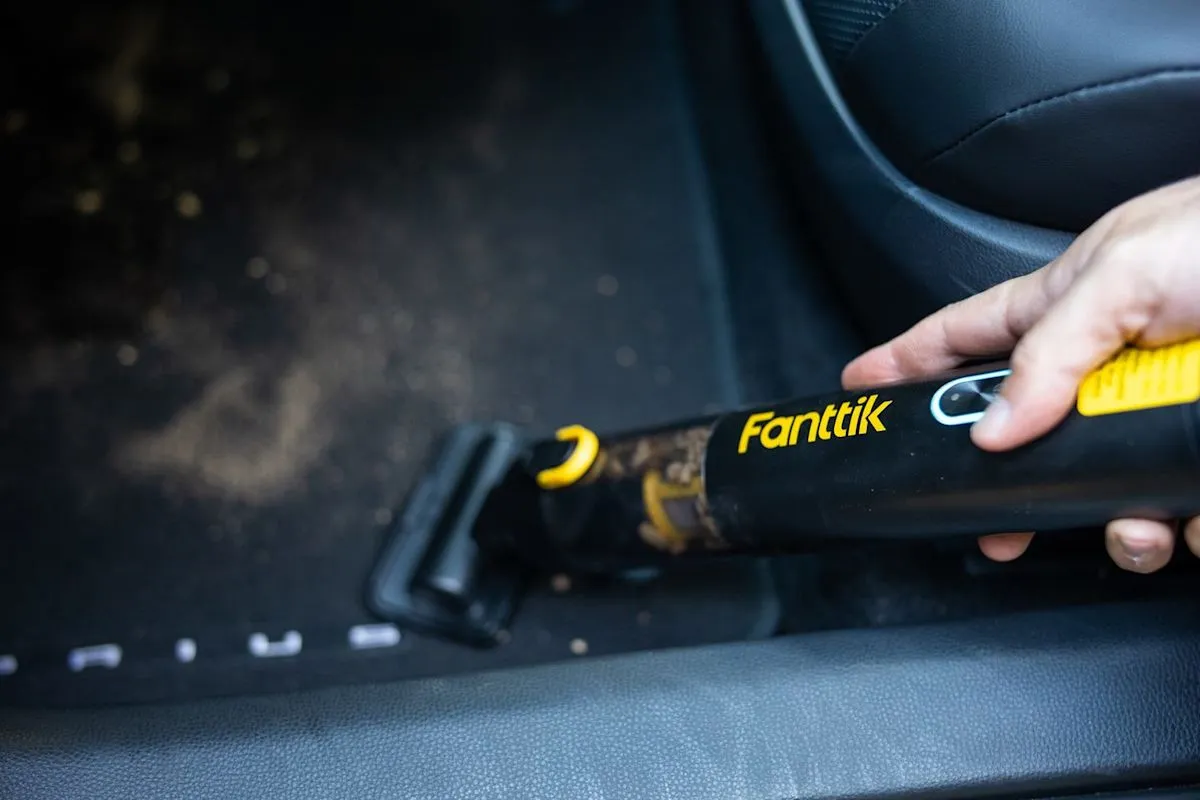
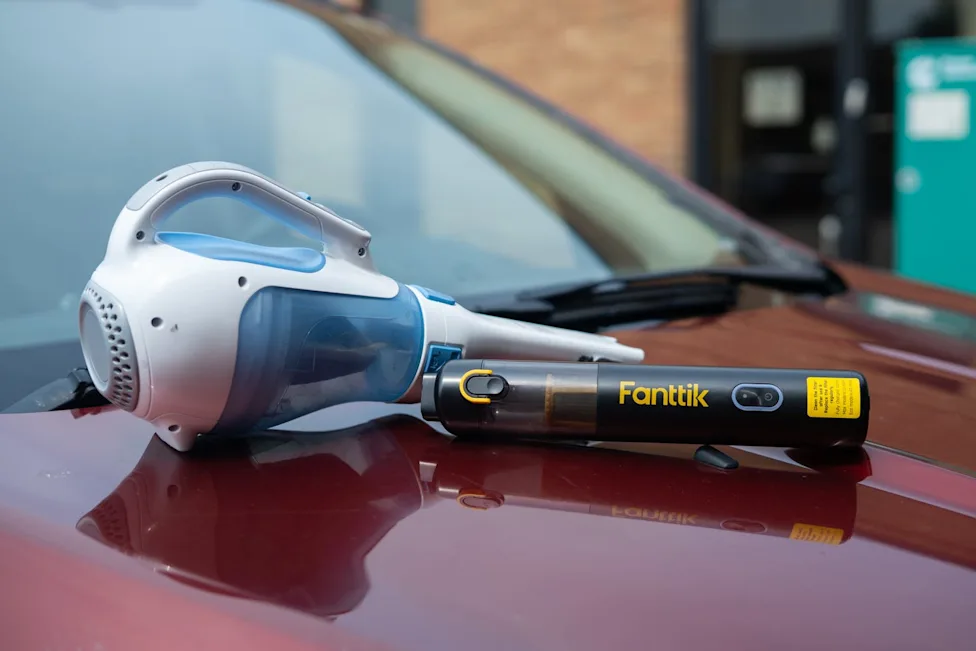
1. Fanttik Slim V10 APEX
The Fanttik Slim V10 APEX stands out as a strong overall contender due to its balance of compact design and high suction capability. Small enough to fit comfortably inside a glovebox or center console, it delivers surprising suction performance while remaining relatively quiet, even on its top power setting. In standardized tests, its battery provided approximately 14.5 minutes of continuous operation on high power.
Beyond standard vacuuming, the V10 APEX offers high versatility. Included attachments allow the device to function as an air blower, inflator, and vacuum sealer, with all accessories fitting into a dedicated storage bag. However, its small form factor leads to trade-offs: the small debris chamber requires frequent emptying, the filter is prone to clogging, and the narrow nozzle struggle with larger particle debris such as whole cereal pieces. For budget-conscious buyers, the related Fanttik V8 offers similar performance as a viable alternative.
- Pros: Incredibly versatile with multifunctional attachments, highly compact storage size, impressive suction power relative to size, relatively quiet operation.
- Cons: Small debris chamber needs frequent emptying, filter tends to clog easily, narrow intake struggles with larger debris.
2. Black+Decker Dustbuster
The Black+Decker Dustbuster serves as a reliable value option, demonstrating that budget-friendly price points can deliver strong cleaning results. Although it did not score at the top in pure suction measurement tests, its performance on real-world debris challenges was excellent. Its wide intake nozzle effortlessly collected mixed contaminants without clogging.
The unit features a generously sized collection chamber that holds substantial dirt and empties easily without trapping dust around the filter assembly. It also incorporates a rotating and locking snout to help clean difficult angles. On the downside, attachment options are limited to an integrated crevice tool and a flip-down brush, and the motor produces a noticeable, high-pitched noise during operation.
- Pros: Excellent real-world pickup across all contaminants, wide nozzle resists clogging, large debris chamber with simple dirt disposal, rotating snout for tight angles.
- Cons: No additional separate attachments included, produces a loud high-pitched noise.
3. Worx Cordless Cube
The Worx Cordless Cube features an innovative, self-contained design with an extendable hose integrated directly into its carrying handle. This layout makes it exceptionally portable and easy to carry around a vehicle interior. Cleaning suction is solid enough for general messes, though it lacks the raw pull of heavier-duty competitors.
Limitations include a high-power runtime of just over 11 minutes and an operational noise level reaching nearly 79 decibels. Additionally, the unit requires integration with the broader Worx battery system, meaning buyers must already own compatible batteries or purchase them separately. The easy-open debris door also showed a tendency to clog during testing.
- Pros: Clever self-contained design, highly portable with built-in extendable hose, reliable suction for general cleanups.
- Cons: Requires existing or separate Worx battery system, debris release door is prone to clogging, relatively loud output near 79 dB.
4. Dyson Car+Boat
For buyers prioritizing maximum suction performance, the Dyson Car+Boat delivers top-tier pulling power. Equipped with useful accessories—including a dedicated crevice tool and a motorized brush—it excels at removing deep-seated dirt and stubborn pet hair from automotive upholstery and carpet.
Its primary shortcoming is high-power endurance. Operating at maximum suction, the battery depleted in under seven minutes during testing, despite manufacturer claims of up to 40 minutes on lower power modes. It also carries a premium price point, though its combination of raw power and effortless debris disposal offers strong value for intensive spot cleaning.
- Pros: Exceptional raw suction strength, easy and clean debris disposal mechanism, high-quality accessories including a motorized brush.
- Cons: Very short battery life under maximum power settings (under 7 minutes), high purchase price.
5. Monozel Portable Car Vacuum
The Monozel Portable Car Vacuum represents a budget-focused choice that provides functional performance for light, everyday cabin cleanup. It is lightweight, easy to manage, and holds a surprisingly large volume of dirt inside its collection canister, reducing the frequency of trip interruptions to empty the bin.
The primary concession for its low price is material build quality. The vacuum body and its included attachments feel lightweight and lower-grade compared to premium units. Nonetheless, for basic upkeep on a strict budget, it fulfills primary daily needs.
- Pros: Highly affordable price point, lightweight and easy to manage, large dirt chamber capacity with simple emptying.
- Cons: Lower overall build quality on both main unit and accessories.
6. Black+Decker Pivot 20-Volt
The standout feature of the Black+Decker Pivot 20-Volt is its adjustable nozzle, which pivots up to 200 degrees. This flexibility allows users to reach awkward angles beneath seats, between cushions, and around center consoles where rigid vacuums struggle.
During floor-mat evaluations, its wide intake channel picked up debris effectively. However, the internal channel design can clog when encountering oversized debris chunks. The battery provides just over 10 minutes of operation on high, and the motor generates higher operational noise than several competing models.
- Pros: 200-degree pivoting nozzle reaches difficult vehicle angles, wide crevice opening collects typical dirt well.
- Cons: Internal intake channel can clog on large debris, short runtime around 10 minutes, fairly noisy motor.
7. Dyson V8
The Dyson V8 appeals primarily to users looking for a versatile unit capable of serving both home and vehicle duties. It operates with a pleasantly quiet motor, swaps attachments effortlessly, and features a clean dirt-ejection mechanism.
When restricted purely to automotive use, its limitations become apparent. High-power mode lasts under eight minutes, while its lower power setting lacks sufficient suction to extract fine sand and dirt embedded deep in carpeted floor mats. Given its higher cost, it is best suited as a hybrid household vacuum rather than a dedicated car tool.
- Pros: Excellent dual functionality for house and vehicle, quiet operation, simple attachment swap system.
- Cons: Under 8 minutes of battery life on maximum power, low power mode struggles with embedded sand in car carpets, expensive for strictly automotive use.
8. Shark WandVac
The Shark WandVac emphasizes sleek design and ultra-lightweight handling. It features a simple one-touch button release for dumping collected dust and performs well during light surface touch-ups on dashboards, leather seats, and console panels.
However, performance degrades quickly on heavy debris. The narrow intake opening clogs when handling items like cereal, and runtime remains limited. Testing also revealed that small dirt particles occasionally escaped from the bottom door seal after turning the motor off, making it less suitable for deep vehicle detailing.
- Pros: Modern sleek design, extremely lightweight, convenient single-button dirt emptying.
- Cons: Debris occasionally leaks from bottom door after shutoff, weak battery endurance, narrow opening clogs easily on larger particles.
Frequently Asked Questions
How long do cordless car vacuum batteries typically last?
Runtime depends heavily on the chosen power setting and motor design. In continuous high-power testing, battery duration generally ranges between 8 and 16 minutes across different models.
How are these vacuums recharged?
Recharging methods vary by manufacturer. Certain models include 12-volt car adapters for direct charging inside the vehicle, while others rely on standard 120-volt home wall chargers or dedicated battery docks.
Can cordless car vacuums effectively remove pet hair?
Yes, several models effectively lift pet hair, particularly those featuring higher suction output or specialized attachments like motorized brush heads.
Final Verdict and Recommendation
Choosing the right cordless car vacuum depends on individual cleaning habits and budget priorities. For overall performance, compactness, and accessory versatility, the Fanttik Slim V10 APEX delivers the most rounded feature set. Drivers seeking maximum cleaning performance on budget constraints will find strong real-world value in the Black+Decker Dustbuster. Meanwhile, those tackling tight spaces with challenging angles will benefit from the pivoting flexibility of the Black+Decker Pivot 20-Volt, and users needing maximum raw power for pet hair or heavy debris can look to high-suction models like the Dyson Car+Boat.