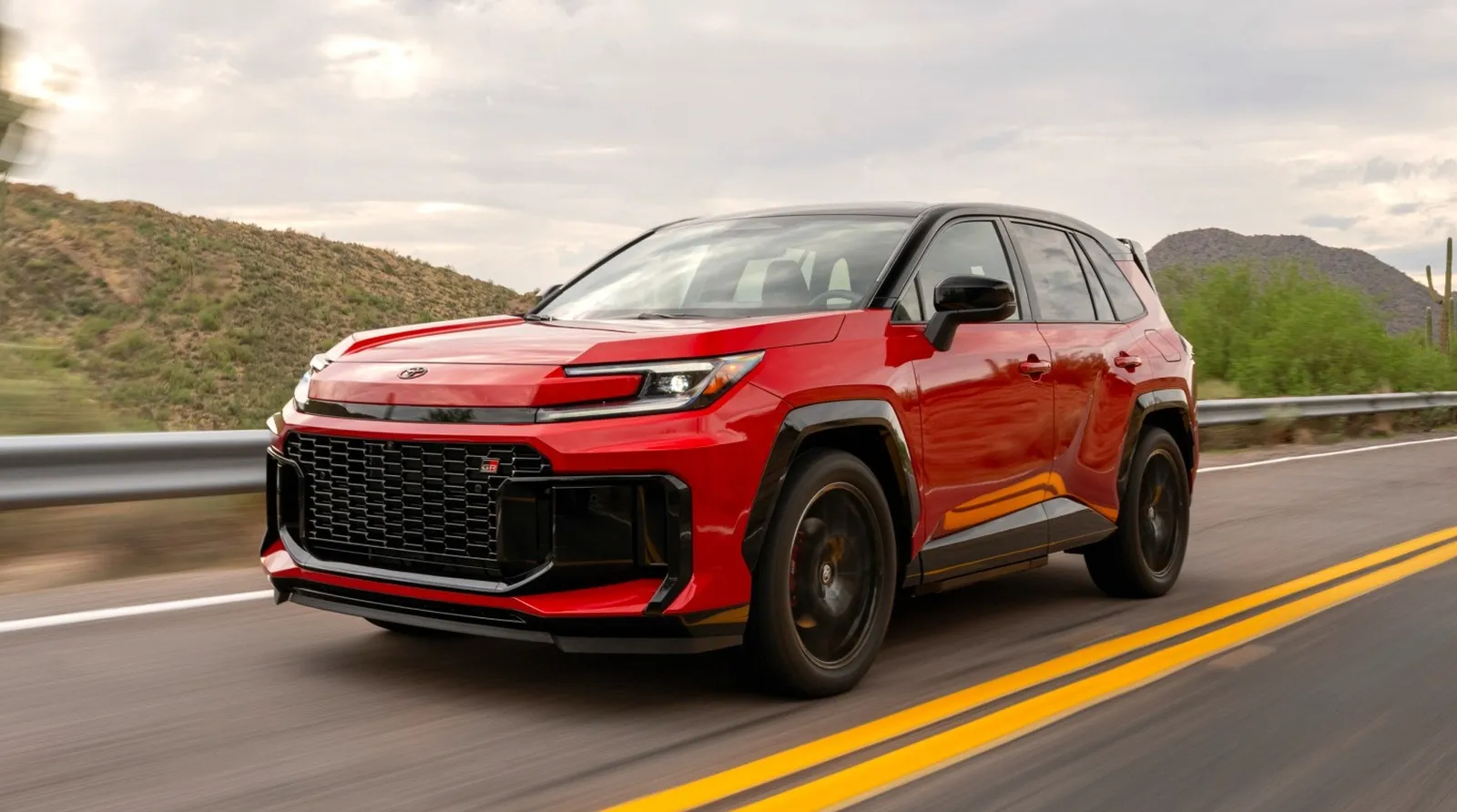
SpeedSUVs.com — Automotive engineering has advanced at an extraordinary pace over the past few decades. One of the most fascinating outcomes of this progress is that modern family vehicles, which are designed primarily for daily commutes and grocery runs, are now achieving performance figures that once belonged exclusively to dedicated sports cars and exotic supercars. A prime representation of this modern phenomenon is the 2026 Toyota RAV4 GR Sport. This plug-in hybrid crossover combines daily utility with a level of acceleration that would have been highly competitive on drag strips around the turn of the century. Priced at $49,950, this SUV challenges our traditional understanding of performance by matching or exceeding the straight-line speed of several legendary enthusiast cars.
To understand how this compact crossover achieves such remarkable speed, it is essential to look at its mechanical foundation. The 2026 Toyota RAV4 GR Sport features a sophisticated plug-in hybrid powertrain that generates a combined output of 324 horsepower. To complement this power, the GR Sport trim level introduces several handling enhancements designed to make the vehicle genuinely engaging to drive. These upgrades include a stiffer suspension setup that lowers the vehicle’s ride height by 0.6 inches, retuned dampers, recalibrated steering, and the option for sticky summer tires. In instrumented testing, this family-oriented vehicle sprinted from zero to 60 mph in a mere 5.1 seconds and completed the quarter-mile drag in 13.8 seconds at a speed of 101 mph. While it delivers modern efficiency with a rating of 86 MPGe, it does carry a significant weight penalty, weighing over 1,000 pounds more than some of the classic sports cars it competes against.
To put the performance of the 2026 Toyota RAV4 GR Sport into historical context, we can compare its acceleration figures directly against testing data for several iconic performance cars from the 1980s, 1990s, and early 2000s. These comparisons highlight how far mainstream automotive technology has come, as a hybrid family crossover can now comfortably hold its own against vehicles that were once the pinnacles of speed and engineering.
A Detailed Comparison of Acceleration and Specifications
1999 Porsche 911 Carrera Tiptronic S (996)
The first comparison brings us to the late 1990s and the 1999 Porsche 911 Carrera Tiptronic S. Belonging to the controversial 996 generation, which is famous for its runny-egg headlight design, this rear-engine sports car was powered by a flat-six engine producing 296 horsepower. When equipped with the Tiptronic automatic gearbox, the 911 required 5.6 seconds to accelerate from zero to 60 mph in historical instrumented testing. This made the automatic version 0.7 seconds slower than its manual counterpart, as early automatic transmissions were not as efficient as modern gearboxes. Consequently, the 2026 Toyota RAV4 GR Sport, with its 5.1-second sprint, is half a second quicker to 60 mph than this classic Porsche. Furthermore, the RAV4 maintains its lead through the quarter-mile, finishing in 13.8 seconds compared to the Porsche’s 14.0-second time, even though the 911 crosses the finish line at a faster speed of 103 mph.
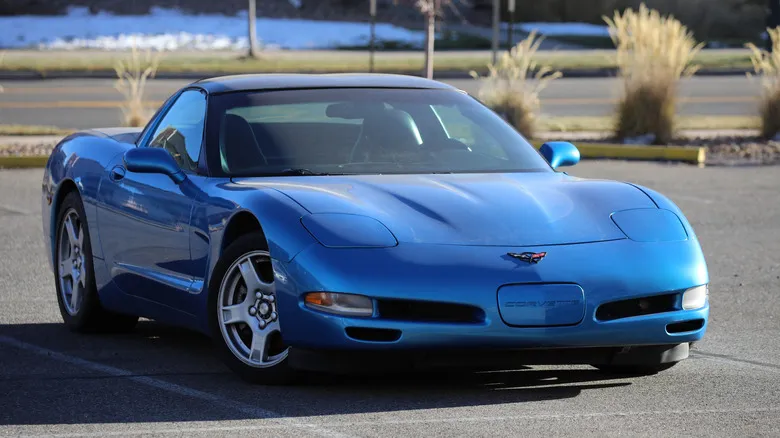
1998 Chevrolet Corvette C5
Moving to American muscle, we look at the 1998 Chevrolet Corvette C5. During its launch, the C5 Corvette represented the absolute peak of General Motors’ engineering, featuring a low-slung body and a powerful 5.7-liter LS1 V8 engine that produced 345 horsepower. Despite its sports car design and lightweight construction, the C5 Corvette recorded a zero-to-60 mph time of 5.1 seconds in historical testing. This means the 2026 Toyota RAV4 GR Sport, a heavy family crossover, matches the acceleration of the legendary V8 sports car exactly. However, the Corvette managed to reclaim a slight advantage in the quarter-mile, crossing the line in 13.6 seconds at 106 mph, just ahead of the RAV4’s 13.8-second run. From a financial perspective, a used 1998 Corvette costs an average of $24,773 today, which is half the price of a new RAV4 GR Sport and nearly three times less than a modern Corvette C8.
2002 BMW M3 Convertible (E46)
Another notable comparison is the 2002 BMW M3 Convertible, a highly revered model from the E46 generation. At the time of its release, this vehicle was celebrated as one of the quickest four-seat convertibles on the market. It relied on a naturally aspirated 3.2-liter S54 straight-six engine that developed 333 horsepower and 262 lb-ft of torque, paired with a traditional six-speed manual transmission. Despite its high-revving performance pedigree, the E46 M3 Convertible recorded a zero-to-60 mph acceleration time of 5.1 seconds, matching the RAV4 GR Sport. Because the BMW relies on natural aspiration, its peak torque is limited to 262 lb-ft. Although Toyota does not publish official peak torque figures for the RAV4 GR Sport’s complex hybrid system, it is highly likely that the electric-assisted powertrain generates significantly more torque. In the quarter-mile, the BMW M3 Convertible just barely edges out the RAV4 with a time of 13.7 seconds at 104 mph.
1983 Lamborghini Countach 5000S
Finally, we look back to the supercar era of the 1980s with the 1983 Lamborghini Countach 5000S, also known as the LP5000 S or LP500 S. This mid-engine exotic was the ultimate symbol of 1980s excess, featuring a massive 4.8-liter V12 engine that produced 348 horsepower. When new, it carried a starting price of $99,000, which equates to approximately $339,000 in today’s money. However, in terms of acceleration, the Countach 5000S required 5.4 seconds to reach 60 mph in testing, making it noticeably slower off the line than the modern RAV4 GR Sport. The Lamborghini does manage to beat the hybrid crossover in the quarter-mile, recording a time of 13.5 seconds at 107 mph, but the fact that a 324-hp hybrid SUV can beat it to 60 mph illustrates the relentless march of automotive progress.
Balanced Pros and Cons of the 2026 Toyota RAV4 GR Sport
To provide a balanced perspective on these comparisons, it is important to analyze the advantages and disadvantages of choosing a modern performance crossover like the RAV4 GR Sport over these classic sports cars. Both options appeal to very different driving priorities and financial considerations.
Advantages
- Exceptional Acceleration: A 0-60 mph time of 5.1 seconds allows the RAV4 GR Sport to match or exceed the performance of several legendary classic sports cars.
- Outstanding Fuel Efficiency: With a rating of 86 MPGe, the plug-in hybrid powertrain offers modern eco-friendly efficiency that classics cannot match.
- Upgraded Handling: The GR Sport trim includes a stiffer, 0.6-inch lower suspension, retuned steering, and dampers for a genuinely engaging drive.
- Daily Practicality: Unlike low-slung classics, it provides modern safety, spacious cargo capacity, and reliable family transport.
Disadvantages
- Significant Weight Penalty: Weighing over 1,000 pounds more than some classic sports cars, it lacks the lightweight agility of a dedicated performance chassis.
- Lack of Sensory Drama: The quiet hybrid setup cannot replicate the visceral exhaust notes and mechanical engagement of a classic V8, V12, or straight-six engine.
- Higher Initial Cost: At $49,950, it is twice as expensive as some highly capable used classics, such as the C5 Corvette.
Conclusion and Final Verdict
Ultimately, the comparison between the 2026 Toyota RAV4 GR Sport and these four classic sports cars reveals how much performance technology has evolved. If you prioritize modern safety, daily utility, and incredible hybrid efficiency without sacrificing straight-line speed, the RAV4 GR Sport is an exceptional choice. However, if you seek raw driving engagement, historical heritage, and the mechanical drama of a classic engine, a dedicated sports car remains irreplaceable, even if a modern family SUV can beat it away from the traffic lights.