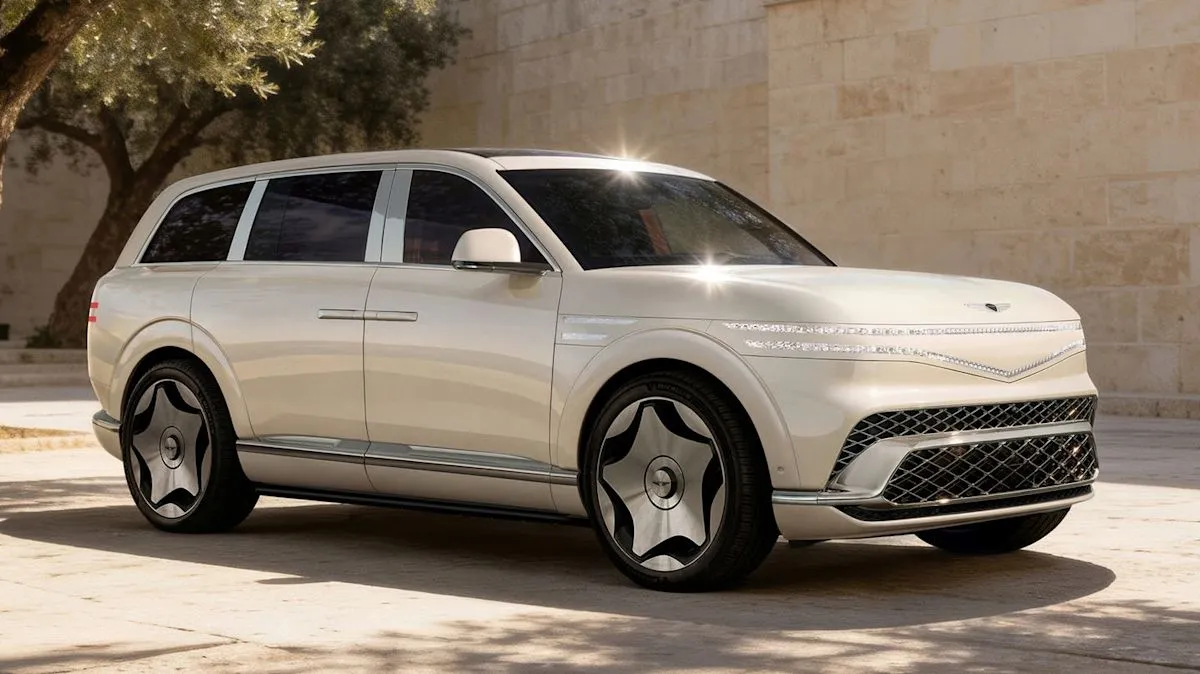
SpeedSUVs.com — The 2027 Genesis GV90 represents a bold leap forward for the South Korean luxury brand as it sets its sights on competing directly with established giants like Cadillac, Range Rover, and Rolls-Royce. Positioned as the company’s first true flagship vehicle, this all-electric SUV aims to disrupt the high-end automotive landscape by blending highly advanced electric vehicle technology with classic, old-school luxury concepts. By translating design elements typically reserved for concept cars into a production-ready reality, Genesis is attempting to bring an unprecedented level of sophistication and innovation to a wider group of discerning luxury buyers who are looking for something beyond the traditional European offerings.
Revolutionary Pillarless Coach Doors and Engineering Safety
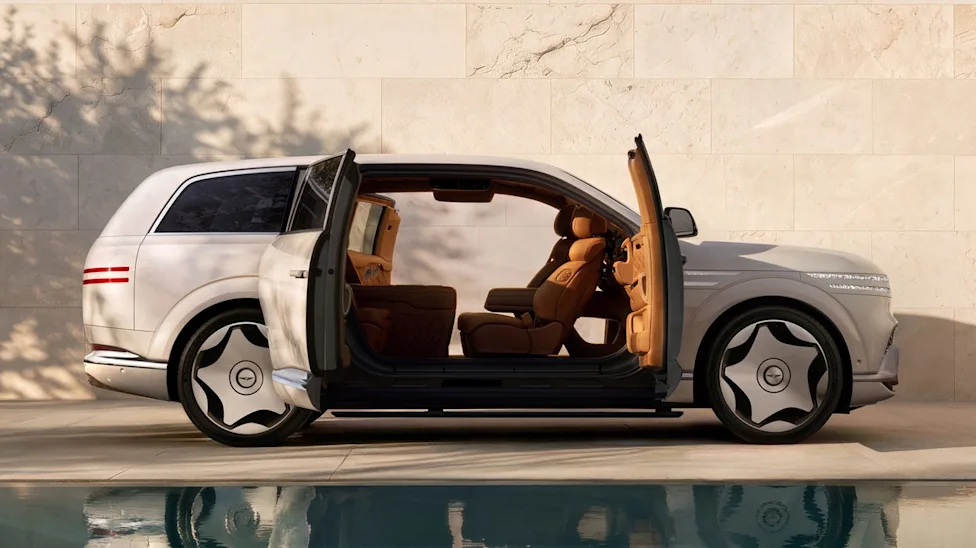
One of the most talked-about design features of the 2027 Genesis GV90 is the inclusion of pillarless coach doors on its range-topping Neolun variant. This classic styling cue, which combines standard front-opening doors with rear-hinged doors while completely eliminating the traditional B-pillar, provides an incredibly elegant, open, and inviting entryway into the cabin. While this design has been absent from mass-production passenger vehicles since the mid-1960s due to the critical role B-pillars play in maintaining structural integrity and meeting modern crash safety standards, Genesis claims to have successfully solved this complex engineering puzzle.
To achieve this without compromising safety, Genesis developed a unique “hidden B-pillar” design that is integrated directly into the doors themselves. This is complemented by robust structural reinforcements and a newly designed dual-motion door hinge system. These components work seamlessly together to deliver the aesthetic purity of classic coach doors alongside the safety capabilities required of a modern 21st-century automobile. The electric dual-motion hinges allow the rear doors to operate independently of the front doors. When activated, the hinge mechanism first pops the door outward before an electric motor rotates it open, creating a smooth and effortless entry sequence.
In terms of crash protection, Genesis has fortified the vehicle’s body with high-strength steel beams placed inside the doors where a traditional B-pillar would normally reside. Furthermore, a thick “roll cage” structure has been integrated directly into the GV90’s frame. This robust physical structure is supported by an advanced airbag system, which includes a specialized roof airbag designed to protect occupants in a rollover event. Thanks to these innovations, Genesis claims that the GV90 Neolun matches the rigorous crash safety performance of conventional luxury SUVs that retain a standard B-pillar design. Meanwhile, buyers who opt for the standard GV90 model will receive a vehicle with a traditional door layout, though both versions benefit from a body structure constructed heavily of lightweight aluminum with strong steel reinforcements surrounding the battery pack to keep curb weight under control.
Seating Configurations and the Neolun Executive Cabin
The interior of the 2027 Genesis GV90 can be customized with several distinct seating configurations, which heavily influence the overall cabin experience. The standard GV90 model is designed as a three-row SUV capable of seating up to seven passengers. For those seeking more individualized comfort, a six-seat configuration is also available, offering either second-row captain’s chairs or highly adjustable executive-style seats. This standard setup provides a practical yet highly luxurious environment suitable for families or those who require additional passenger capacity on a regular basis.
In contrast, the top-tier GV90 Neolun steps into the realm of ultra-luxury with an exclusive “executive suite” layout. This version features four individual reclining seats and can be configured with either a third row of seats or a solid partition behind the second row to create a private, limousine-like atmosphere. The partition configuration also yields a significantly enlarged trunk space for luggage. A standout feature of the Neolun’s cabin is the ability of the front seats to rotate 180 degrees, allowing them to face the rear passengers when the vehicle is parked. This creates a highly social, lounge-like environment.
To facilitate both productive work and relaxation on the go, the Neolun’s cabin is equipped with an integrated second-row console, a built-in refrigerator, and convenient pop-out tables. Furthermore, the Neolun elevates the sensory experience by incorporating a heated wood-veneer floor, a premium feature that works alongside the vehicle’s other advanced climate systems to create an incredibly warm and inviting cabin atmosphere. While the standard GV90 model does not include the heated flooring or the spinning front seats, it still maintains an exceptionally high level of luxury that closely matches its coach-door counterpart.
Exquisite Materials, Textures, and Cabin Artistry
The cabin design of both GV90 variants showcases a thoughtful blend of contemporary aesthetics and traditional craftsmanship. Rather than relying solely on typical luxury materials, Genesis designers have curated an alluring mixture of unique colors, textures, and sustainable elements. The interior color palette includes sophisticated tones such as deep forest greens and rich royal purples, which are contrasted by premium textures like genuine wool and soft cashmere. These materials are artfully paired with natural wood accents and real stone interior trims, creating a tactile and visually stunning environment.
The seats themselves are designed to resemble luxurious thrones. They feature elegant quilted and tufted leather upholstery, which hides a sophisticated array of technology beneath the surface. Each seat contains 15 individual air cells that can be adjusted to customize support or activated to provide a relaxing massage during long journeys. This attention to detail ensures that every passenger, whether riding in the front row or the executive rear suite, enjoys a highly personalized and comfortable experience.
Next-Generation Technology and Pleos Connect Software
Technology is a central pillar of the GV90 experience, introducing several features that are new to the Hyundai Motor Group. The focal point of the dashboard is a massive infotainment screen that measures 23.6 inches while the vehicle is in motion. When the car is parked, this display can physically raise and expand to a 24.6-inch screen, providing an optimal aspect ratio for watching media or interacting with system settings. This visual powerhouse is paired with a 25-speaker Bang & Olufsen audio system that supports Dolby Atmos, delivering an immersive, theater-like audio experience inside the cabin.
This advanced hardware is driven by the North American debut of Hyundai’s new Pleos Connect infotainment software. Built on the Android Automotive operating system, Pleos Connect introduces a highly customizable, software-defined user experience that takes clear inspiration from modern operating systems like Tesla’s. The system includes an integrated app store and a proprietary artificial intelligence assistant named Gleo AI. Pleos Connect also allows the driver to transform their half of the large screen into a dedicated digital dashboard, which is further supported by a massive 25.5-inch head-up display featuring advanced augmented reality navigation graphics.
Embracing a fully digital approach, the Genesis GV90 completely does away with a traditional physical start button. Much like electric vehicles from Tesla or Rivian, the vehicle is ready to drive almost instantly. As the doors close and the driver presses their foot down on the brake pedal, the motorized gear shifter and the central infotainment controllers automatically rotate into their active positions, and the vehicle turns itself on, streamlining the starting process into one fluid motion.
The eMP Platform, Powertrain, and Electric Performance
Underpinning the 2027 GV90 is a brand-new, Genesis-exclusive electric vehicle platform designated as eMP. This platform is believed to be a lengthened and widened iteration of the Hyundai Motor Group’s highly regarded modular eGMP architecture. In terms of physical footprint, the GV90 features a generous 127.8-inch wheelbase, an overall length of 208.1 inches, a width of 79.9 inches, and a height ranging from 71.5 to 71.9 inches. The height variation depends on whether the vehicle is equipped with the standard 22-inch wheels or the Neolun’s larger 24-inch alloy wheels. These dimensions place the GV90 in direct competition with large luxury vehicles like the long-wheelbase Range Rover, the Rolls-Royce Cullinan, and the upcoming Audi Q9.
Powering this massive SUV is a 123.5-kWh battery pack, representing the largest battery ever fitted to a vehicle produced by the Hyundai Motor Group. Genesis estimates that this battery will provide a driving range of over 310 miles on a single charge. When it comes to recharging, the GV90 utilizes an advanced 800-volt electrical architecture that allows the battery pack to charge from 10 to 80 percent in just 22 minutes. This rapid charging performance matches the capability of other high-end electric SUVs in the corporate family, such as the Hyundai Ioniq 9 and the Kia EV9.
To move its substantial weight with authority, the GV90 is equipped with a powerful dual-motor all-wheel-drive system. Each motor features its own electronically controlled limited-slip differential (e-LSD) to maximize traction and optimize cornering performance. The front electric motor generates 322 horsepower and 258 lb-ft of torque, while the rear motor is slightly more powerful, producing 335 horsepower and 332 lb-ft of torque. Working together, the dual-motor setup delivers a combined output of 657 horsepower and 590 lb-ft of torque.
To ensure that the driving experience matches the vehicle’s luxurious cabin, the GV90 rides on a sophisticated multichamber air suspension system. This is paired with an electronically controlled suspension system that Genesis has tuned specifically to deliver a soft, highly controlled, and pillowy ride. To improve maneuverability in tight urban spaces, the GV90 also features a four-wheel steering system. This setup allows the rear wheels to turn up to 5 degrees, which Genesis claims enables this full-size flagship SUV to match the tight turning radius of a much smaller midsize vehicle.
Balanced Review: Pros and Cons
The 2027 Genesis GV90 presents an impressive list of capabilities, but a balanced look at the vehicle reveals both notable strengths and potential drawbacks for prospective buyers to consider.
Pros
- Innovative Door Engineering: The Neolun’s pillarless coach doors bring a level of concept-car elegance to production vehicles that has not been seen in decades, all while meeting modern crash safety standards through clever structural reinforcements.
- Ultra-Premium Cabin Materials: The use of wool, cashmere, natural wood, and real stone trims creates a unique, highly tactile, and luxurious environment that stands out in a crowded market.
- Advanced Electrical Architecture: The massive 123.5-kWh battery delivers a solid 310-plus miles of range and benefits from ultra-fast 800V charging, replenishing from 10 to 80 percent in just 22 minutes.
- Sophisticated Ride and Handling: The combination of a multichamber air suspension, electronically controlled damping, and 4-wheel steering promises an exceptionally smooth ride and excellent maneuverability.
Cons
- High Expected Pricing: While official pricing has not been announced, the base model is expected to start above $100,000, with the high-end Neolun potentially reaching around $165,000, placing it out of reach for average buyers.
- Trim-Exclusive Features: Many of the GV90’s most desirable and unique features, such as the pillarless coach doors, swiveling lounge seats, and heated wood floors, are restricted to the expensive Neolun variant.
- Large Footprint: With a length of over 208 inches and a width of nearly 80 inches, this vehicle may prove challenging to park and maneuver in tight garages or narrow city streets despite the 4-wheel steering system.
Pricing, Release Date, and Verdict
Genesis has not yet released official pricing for the 2027 GV90 lineup, but automotive industry analysts suggest that the entry-level model will likely mark the first time a Genesis vehicle starts with a price tag over $100,000. For the range-topping GV90 Neolun, Genesis is expected to continue its traditional value-driven strategy by undercutting established ultra-luxury rivals. This could place the Neolun’s starting price at approximately $165,000, positioned strategically between competitors like the Cadillac Escalade IQ and the Mercedes-Maybach EQS SUV. Buyers eagerly anticipating this vehicle will not have to wait very long, as Genesis is targeting a Summer 2027 release for the 2027 model year.
In conclusion, the 2027 Genesis GV90 represents an incredibly ambitious step forward for the brand. By successfully bringing dramatic concept-car features like pillarless coach doors and rotating lounge seats into a production vehicle without compromising modern safety standards, Genesis has created a compelling flagship. For buyers who want cutting-edge electric performance, ultra-fast charging, and a cabin that rivals the craftsmanship of traditional ultra-luxury brands, the GV90—particularly in its Neolun trim—offers a compelling and highly innovative alternative to the status quo. However, those looking for these specific groundbreaking features will need to be prepared to pay a premium price when the vehicle launches in 2027.