Please note: As of late 2023/early 2024, the 2026 Toyota GR86 has not been officially announced or detailed by Toyota. The following article is a speculative review, pricing, and features analysis based on current automotive trends, Toyota’s product cycles, industry rumors, and the trajectory of the current GR86 and its Subaru BRZ twin. All information should be treated as hypothetical and subject to change.
In a world increasingly dominated by SUVs and electric vehicles, the Toyota GR86 stands as a defiant beacon, a testament to the enduring appeal of the lightweight, front-engine, rear-wheel-drive sports car. Since its reintroduction for the 2022 model year, the second-generation GR86 (and its Subaru BRZ sibling) has captured the hearts of enthusiasts by offering an unadulterated, driver-focused experience at an attainable price point. But as the automotive landscape shifts ever more rapidly, what does the future hold for this beloved analog machine?
While official details remain under wraps and the 2026 model year is still a distant horizon, the industry’s relentless pace means Toyota and Subaru are undoubtedly planning the next evolution of their joint venture. Will the 2026 GR86 represent a mild refresh, a significant overhaul, or perhaps even a radical departure to adapt to new regulations and market demands? This speculative review delves into the potential design, powertrain, features, and pricing that could define the 2026 Toyota GR86, attempting to reconcile enthusiast desires with industry realities.
The Foundation: Understanding the Current GR86’s Legacy
To project into the future, we must first appreciate the present. The current GR86, launched for 2022, built upon the success of its predecessor by addressing its primary criticism: a slight lack of power. The naturally aspirated 2.4-liter boxer-four engine, co-developed with Subaru, delivers a spirited 228 horsepower and 184 lb-ft of torque, a noticeable improvement over the previous 2.0-liter unit. This power bump, combined with a stiffer chassis, refined suspension, and still-excellent manual transmission option, cemented its reputation as one of the best driver’s cars money can buy. Its appeal lies in its balance, its communicative steering, its willingness to rotate, and its sheer mechanical purity.
The challenge for the 2026 model, then, is to enhance this formula without diluting its essence or inflating its price beyond reach.
Design Evolution: Sharpening the Blade
For a 2026 model, a complete platform redesign seems unlikely unless Toyota and Subaru accelerate their typical product cycle. More probable is a mid-cycle refresh (often referred to as a "facelift") that introduces updated styling cues, improved aerodynamics, and interior enhancements.
Exterior: We can expect an evolutionary rather than revolutionary redesign. The current GR86’s sleek, muscular lines are well-received, but a 2026 refresh would likely aim to make it appear even more aggressive and contemporary.
- Front Fascia: Expect a revised front bumper with larger, more intricate air intakes, potentially adopting styling elements seen on other GR models like the GR Corolla. Sharper LED headlight signatures, possibly with adaptive capabilities, would enhance both aesthetics and safety.
- Side Profile: Subtle tweaks to side skirts and fender vents could improve aerodynamic efficiency. New wheel designs, perhaps lighter forged options for higher trims, are a given.
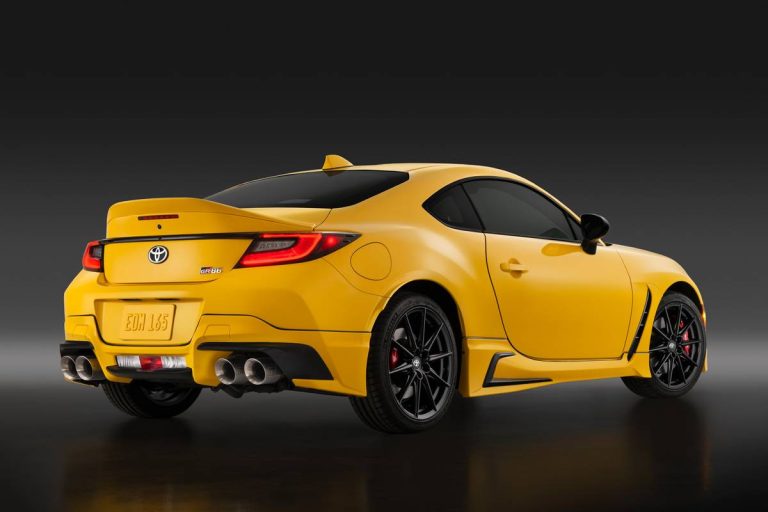
- Rear End: The rear bumper might be restyled with a more prominent diffuser and integrated exhaust tips. Updated LED taillight graphics, perhaps with a full-width light bar (a growing trend), could modernize the look. Expect a more pronounced ducktail spoiler or a larger, functional wing option for track-focused variants.
- Aerodynamics: With increasing pressure for efficiency and performance, Toyota might incorporate more active aerodynamic elements, such as grille shutters or subtle underbody aero pieces, to reduce drag and improve stability at speed.
Interior: The current GR86’s interior is functional and driver-focused but can feel a bit sparse in terms of premium materials and cutting-edge tech. The 2026 model would likely address these areas.
- Infotainment: The current 8-inch touchscreen, while functional, is due for an upgrade. A larger 10.25-inch or even 12.3-inch screen, running Toyota’s latest multimedia system (with wireless Apple CarPlay and Android Auto as standard), is highly probable. Expect improved graphics, faster processing, and over-the-air update capabilities.
- Digital Cluster: While the current digital gauge cluster is good, a more customizable and visually appealing unit with better resolution could be implemented.
- Materials & Trim: Enthusiasts would welcome higher-quality soft-touch materials on the dash and door panels, improved stitching, and potentially more Alcantara or suede accents. Refined switchgear and improved tactile feedback for physical buttons would also be a welcome change.
- Ergonomics: While already excellent, minor tweaks to seat design for better long-distance comfort and support, along with improved storage solutions, could be in the cards.
- Connectivity: Expect enhanced connectivity features, including a Wi-Fi hotspot, expanded voice command functionality, and potentially integration with smart home devices.
Powertrain Possibilities: The Heart of the Matter
This is where speculation runs wild and enthusiast dreams collide with engineering realities. The naturally aspirated boxer engine is a hallmark of the GR86/BRZ, but by 2026, the pressures of emissions regulations and the desire for more power could force a significant decision.
Scenario 1: Refined Naturally Aspirated FA24 (Most Likely for a Refresh)
The simplest and most cost-effective path for a refresh would be to refine the existing 2.4-liter FA24 boxer engine.
- Minor Power Bump: Through recalibrations, improved intake/exhaust systems, and perhaps a slight bump in compression, Toyota/Subaru could eke out an additional 5-10 horsepower, pushing it closer to 235-240 hp. Torque might also see a small increase.
- Efficiency Gains: Focus would be on optimizing fuel economy and reducing emissions to meet stricter standards. This might involve cylinder deactivation (unlikely for a boxer, but possible innovation), advanced variable valve timing, or a more efficient direct injection system.
- Transmission: The excellent 6-speed manual and 6-speed automatic transmissions would likely carry over, perhaps with minor refinements for shift feel or efficiency.
Scenario 2: Turbocharging (The Enthusiast’s Dream, But Challenging)
The clamor for a turbocharged GR86 has been persistent since its inception. While a turbo FA24 would easily push power past 300 hp, making it a true Supra rival, several factors make this challenging for a 2026 refresh:
- Subaru Partnership: Subaru’s FA24DIT (turbocharged 2.4L) is used in the WRX, but integrating it into the GR86/BRZ platform without significant re-engineering (and cost) is complex.
- Cost: Adding a turbocharger, intercooler, stronger internals, and necessary cooling would significantly increase the car’s price, potentially pushing it out of its "affordable sports car" segment.
- Toyota’s Lineup: A turbocharged GR86 could cannibalize sales from the GR Supra 2.0-liter, which Toyota might want to avoid.
- Character Shift: Turbocharging changes the engine’s character, introducing lag and altering the linear power delivery that many GR86 purists appreciate.
Scenario 3: Hybrid Assist (The Toyota Way, A Real Possibility for Future Generations)
Given Toyota’s global push for electrification, a hybrid GR86 is not out of the question, especially for a new generation, but could see early integration by 2026.
- Mild-Hybrid System: A 48V mild-hybrid system could offer torque fill at low RPMs, boost efficiency, and allow for features like enhanced start-stop and coasting. This would add complexity and weight but could provide a small power bump without drastic changes to the engine.
- Full Hybrid (Less Likely for 2026): A more substantial hybrid system, similar to those found in Lexus models, could offer significant power and efficiency gains but would add substantial weight and cost, fundamentally altering the car’s lightweight ethos.
- Benefits: Instantaneous torque, improved fuel economy, and compliance with future emissions regulations.
- Drawbacks: Added weight, complexity, and potentially a higher price point.
Conclusion for Powertrain: For a 2026 refresh, a slightly more powerful and efficient naturally aspirated FA24 remains the most probable outcome, maintaining the car’s core character and affordability. However, a mild-hybrid assist cannot be entirely ruled out, particularly if emissions targets become very aggressive.
Chassis, Dynamics, and Performance
The GR86’s chassis is already a strong point, but there’s always room for refinement.
- Stiffer Chassis: Further localized stiffening, perhaps through additional bracing or bonding techniques, could enhance responsiveness and feedback.
- Suspension Tuning: Expect revised spring rates and damper tuning to improve ride comfort without sacrificing handling prowess. Adaptive dampers, while a premium feature, could be offered on higher trims to provide a wider range of driving dynamics.
- Steering: Toyota will undoubtedly strive to maintain or even enhance the GR86’s communicative electric power steering, perhaps with a slightly quicker ratio.
- Brakes: Larger brake rotors and more powerful calipers, possibly Brembos as an option, would improve braking performance and fade resistance, especially for track use.
- Weight Management: Despite potential additions like hybrid components or more tech, Toyota will be keenly aware of the GR86’s lightweight advantage. The use of lighter materials (aluminum, high-strength steel) in non-structural areas could offset some weight gains.
Technology and Safety Features
Toyota has been aggressive in rolling out its Toyota Safety Sense (TSS) suite across its lineup. The 2026 GR86 will undoubtedly feature the latest iteration of TSS, likely TSS 3.0 or a successor.
- Advanced Driver-Assistance Systems (ADAS): This would include enhanced Pre-Collision System (PCS) with pedestrian and cyclist detection, Lane Departure Alert (LDA) with Steering Assist, Full-Speed Range Dynamic Radar Cruise Control (DRCC), Lane Tracing Assist (LTA), Road Sign Assist (RSA), and Automatic High Beams (AHB).
- Blind Spot Monitoring (BSM) and Rear Cross-Traffic Alert (RCTA): These are already available and would continue to be standard or optional.
- Parking Assist: More sophisticated parking sensors and potentially a 360-degree camera system would be a welcome addition.
- Connectivity: Remote start, vehicle status monitoring, and emergency services integration via a smartphone app would be standard.
Pricing and Trims: Maintaining Attainability
One of the GR86’s most compelling attributes is its price-to-fun ratio. Toyota will be under pressure to keep it accessible.
- Current Pricing: The 2024 GR86 starts around $29,300 for the base model and goes up to about $33,500 for the Premium.
- 2026 Speculative Pricing: Given inflation and potential feature upgrades, a price increase is inevitable. We could see the 2026 GR86 start in the $32,000 – $35,000 range for the base model, with the Premium trim potentially climbing into the $36,000 – $39,000 range.
- Trims: The current Base and Premium trims would likely continue. Toyota might introduce a new, even more track-focused "GR86 Circuit Edition" or "GR86 TRD" with unique styling, performance upgrades (e.g., Brembo brakes, lighter wheels, specific aero), and a higher price tag.
Competition in 2026
The GR86’s primary rival will undoubtedly remain the Mazda MX-5 Miata, which by 2026 might also see its own refresh or even a new generation. Other competitors could include:
- Nissan Z (Base Model): While more powerful and expensive, the base Z could be seen as a step up for some GR86 owners.
- Ford Mustang EcoBoost: Offers turbocharged performance but a heavier, less nimble package.
- Upcoming Electric Sports Cars: While not a direct comparison, the rise of affordable electric sports cars could present an alternative for some buyers, though the GR86’s analog appeal would still set it apart.
The Enduring Purity: What Must Remain
Regardless of the changes, the 2026 Toyota GR86 must retain the core tenets that define it:
- Lightweight and Balanced: These are non-negotiable for its handling prowess.
- Front-Engine, Rear-Wheel-Drive: The classic sports car layout for driver engagement.
- Manual Transmission Option: Essential for the purist experience.
- Affordability: It must remain an accessible dream for enthusiasts.
- Driver-Focused Experience: It’s about connecting with the road, not just raw speed.
Conclusion: A Future Forged in Passion
The 2026 Toyota GR86 faces a challenging but exciting future. Toyota and Subaru must navigate the demands for more power and modern features while preserving the raw, engaging character that makes the car so special. A refined naturally aspirated engine, an updated interior with better tech, and sharpened styling seem to be the most probable path for a mid-cycle refresh. While the allure of turbocharging or hybridization is strong, the commitment to its lightweight, analog spirit will likely guide its evolution.
The automotive world may be hurtling towards an electric, autonomous future, but for enthusiasts, the thought of a continually refined, affordable, and engaging GR86 offers a comforting anchor. The 2026 GR86, in whatever form it takes, will undoubtedly continue to be a champion for the pure driving experience, reminding us all that sometimes, less is truly more. We eagerly await official confirmation of what promises to be another compelling chapter in the GR86’s storied history.