SpeedSUVs.com — Tesla has expanded its electric crossover lineup by introducing a lower-cost entry-level variant of the Model Y. Originally named the Model Y Standard before simply being rebranded as the Model Y, this base vehicle carries a starting price of $41,630. This price point reflects a $5,000 reduction compared to the next trim level up, the Model Y Premium RWD, which was formerly known as the Long Range RWD. Lowering the price barrier on an already dominant volume seller requires mechanical, structural, and feature compromises, making it crucial to analyze what content has been omitted and how those changes impact daily usability.
Exterior Revisions and Styling Adjustments
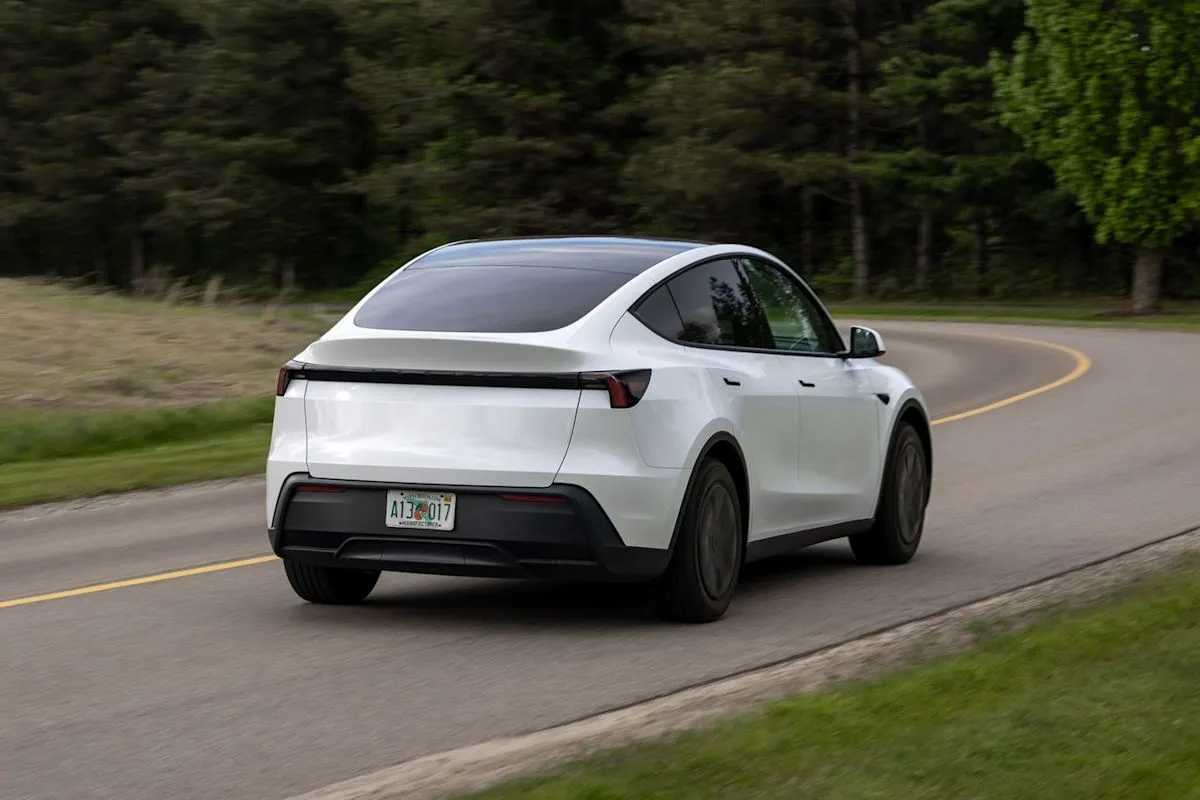
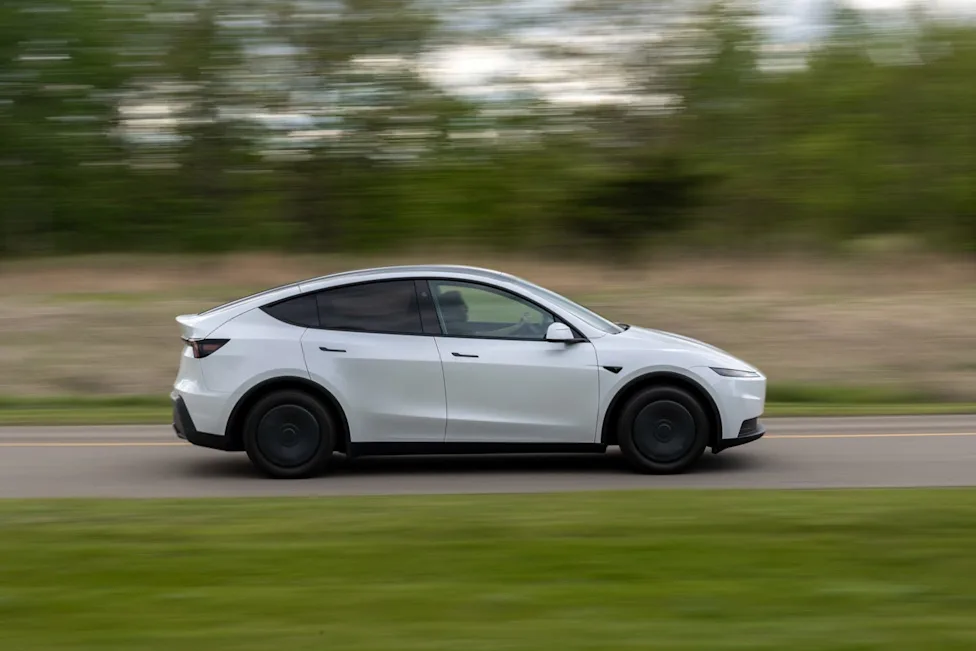
The exterior of the entry-level Model Y features several noticeable design modifications aimed at reducing manufacturing expenses. The full-width light bars that previously connected the headlights and taillights on higher trims have been completely eliminated. Instead, the front lighting configuration consolidates the daytime running lights, turn signals, low beams, and high beams into compact single-housing units. While this redesign alters the front fascia profile, the rear styling maintains a clean look without the decorative light bar.
Wheel and tire choices on the base Model Y have also been scaled down. The standard offering consists of 18-inch wheels, while 19-inch wheels remain available as an optional upgrade. In contrast, higher-tier trims typically utilize 19-inch or 20-inch wheels. Exterior color selections for the entry-level model are strictly constrained to gray, black, and white paint options, as alternative shades like blue were removed from the base palette shortly before launch.
Interior Equipment and Comfort Deductions
Stepping inside the base Model Y reveals where the majority of cost-cutting measures took place. The seating material transitions from full synthetic leather to a combination of vegan leather and woven textile inserts. Power adjustments for the front seats have been modified, with physical side-mounted switches removed entirely; seat adjustments are now managed directly through the central infotainment touchscreen display. Additionally, front-seat ventilation has been removed, and the rear seats no longer feature heating elements.
Passenger conveniences in the rear compartment have also been trimmed down. The 8.0-inch rear touchscreen unit found in higher trims is absent, meaning rear occupants must manually adjust their climate control vents. Environmental and atmospheric features have seen reductions as well; the cabin loses its medical-grade HEPA air filtration system, and ambient interior lighting is restricted exclusively to the footwells and door storage pockets rather than extending across the dashboard and door panels.
Center Console, Steering Wheel, and Cabin Layout
Despite several feature omissions, the interior incorporates notable structural redesigns that enhance daily ergonomics. The center console adopts a layout similar to the Cybertruck, offering a large open storage tray, elevated wireless smartphone charging pads, and generous under-armrest compartment space. This updated storage arrangement provides practical utility for front passengers.
The steering wheel design has also been overhauled. It retains physical control inputs, including a mechanical turn signal stalk instead of wheel-mounted touch-sensitive buttons, while introducing manual tilt and telescoping adjustments. This return to dedicated mechanical controls simplifies basic driver interactions while operating the vehicle.
Hidden Glass Roof and Acoustic Insulation
One of the most unusual engineering decisions in the entry-level Model Y involves the panoramic glass roof structure. Rather than redesigning the body stamping to manufacture a solid metal roof panel, Tesla retained the exterior glass panel but completely sealed it off from the interior using an opaque fabric headliner. From inside the cabin, the glass panel is entirely invisible.
To compensate for the altered roof assembly and changes to glass specifications—where some sound-dampening acoustic laminated glass panels were replaced with standard glass—additional noise-insulation material was packed directly beneath the sealed headliner. This combination prevents solar heat absorption through the overhead glass while insulating the cabin against road noise.
Audio and Climate System Changes
The acoustic experience inside the entry-level cabin has been modified due to changes in audio hardware. The premium 15-speaker audio layout found in higher Model Y trims is replaced by a simplified seven-speaker setup. Furthermore, the standalone subwoofer has been entirely removed from the audio architecture.
Climate control functionality remains tied into the main infotainment system, but air purification capabilities are limited compared to higher trims due to the absence of the HEPA filtration system. Occupants still retain standard multi-zone climate settings managed through the primary screen, though secondary controls for rear passengers rely on manual air direction sliders.
Battery Capacity, Charging Capabilities, and Range
The powertrain hardware on the base Model Y has undergone hardware modifications to reduce production costs. By reducing the number of individual battery cells connected in parallel within each internal module, the overall usable energy capacity drops to a net 70 kWh. This pack modification impacts both total driving range and maximum Supercharging speeds.
The EPA estimated driving range for the rear-wheel-drive base Model Y stands at 321 miles when equipped with standard 18-inch wheels, decreasing to 303 miles with optional 19-inch wheels. For comparison, the Model Y Premium RWD achieves up to 357 miles on 19-inch wheels and 344 miles on 20-inch wheels. Peak Supercharging rates for the entry-level trim decrease slightly to 225 kW, compared to the 250 kW peak charging rate supported by higher-end battery packs.
Real-World Highway Range and Efficiency
In real-world testing conditions, energy consumption can vary significantly from official EPA ratings. On a 75-mph steady-speed highway range evaluation, an all-wheel-drive base Model Y covered 240 miles on a full charge. This result fell 54 miles short of its specific EPA estimate for that powertrain configuration. Given that rear-wheel-drive variants carry higher overall EPA estimates, highway driving distance for the RWD model is expected to be moderately higher under identical testing parameters.
Acceleration Performance and Weight Specifications
Power output for the base Model Y motor setup is estimated at approximately 300 horsepower. Although this represents a slight output decrease compared to higher trims, real-world acceleration remains competitive. In instrumented testing, the rear-wheel-drive base Model Y accelerated from 0 to 60 mph in 5.9 seconds. The all-wheel-drive base variant reduced that sprint time to 4.4 seconds.
Weight reductions stemming from the smaller battery pack and trimmed interior equipment make this entry-level model the lightest variant in the Model Y lineup. The rear-wheel-drive trim registers a curb weight of 4,004 pounds, while the all-wheel-drive version weighs 4,204 pounds. In emergency braking tests from 70 mph to a complete stop, both variants brought the vehicle to a halt in approximately 175 feet. Lateral cornering grip measured on a skidpad recorded 0.86 g of road holding force while riding on standard Hankook Ion Evo all-season tires.
Suspension Tuning and Driving Impressions
While the entry-level Model Y omits the frequency-based adaptive dampers found on Premium trims, its passive suspension system is calibrated specifically for ride comfort. The tuned suspension setup absorbs pavement imperfections effectively, delivering a plush and smooth ride quality whether configured with the standard 18-inch or optional 19-inch wheels.
Despite the softer dampening profile, the vehicle retains nimble handling characteristics. The small-diameter steering wheel provides swift turn-in response off-center, and body roll remains well-controlled during cornering maneuvers. While initial accelerator pedal response exhibits a mild lag during off-the-line tip-in, power delivery picks up smoothly as vehicle speed builds.
Infotainment Integration and Assisted Driving Software
The central command hub remains centered around a 15.4-inch touchscreen running Tesla’s proprietary operating system. Although Apple CarPlay and Android Auto smartphone integration are not supported, native media applications and navigation routing handle daily tasks efficiently. The built-in navigation system effectively calculates charging stops and dynamically reroutes around heavy traffic congestion.
In terms of driver assistance hardware, Tesla retains all sensor and computing hardware necessary to support its Full Self-Driving (FSD) software suite. Buyers who choose not to subscribe to the optional $99 monthly FSD service still receive standard adaptive cruise control functionality. However, standard Autosteer lane-centering capabilities are locked behind the FSD subscription tier on this entry-level model, unlike higher trims where basic Autosteer comes pre-enabled.
Pros and Cons Analysis
Pros
- Lower entry price point starting at $41,630, offering a $5,000 savings over higher trims.
- Plush and comfortable ride quality despite lacking adaptive suspension dampers.
- Redesigned center console with functional storage and standard physical turn signal stalk.
- Lightest vehicle weight in the Model Y family, aiding handling agility.
- Capable real-world acceleration with 0-60 mph times of 5.9 seconds (RWD) and 4.4 seconds (AWD).
Cons
- Reduced EPA estimated range of 321 miles and a lower peak Supercharging rate of 225 kW.
- Interior content removals including rear screen, heated rear seats, front seat ventilation, and HEPA filter.
- Front seat controls moved entirely to the central touchscreen display.
- Panoramic glass roof hidden entirely behind an opaque cloth headliner.
- Standard Autosteer features software-locked unless subscribing to Full Self-Driving.
Conclusion
The entry-level Tesla Model Y successfully lowers the financial barrier to entry for buyers seeking a modern electric crossover. While Tesla achieved its $41,630 price target by trimming convenience features, simplifying lighting assemblies, and capping software capabilities, core essentials like ride comfort, cabin storage, intuitive infotainment, and strong acceleration remain intact. For drivers who prioritize overall efficiency and lower upfront purchase costs over luxury creature comforts, this streamlined base model presents a practical and compelling option in the mainstream EV market.