SpeedSUVs.com — A four-door electric luxury sedan, the Lucid Air Sapphire, recently shocked the automotive world by outperforming high-profile supercars in an extreme performance test. In a direct benchmark of high-speed acceleration and heavy braking, this heavy electric vehicle managed to defeat purpose-built performance machines, including the Chevrolet Corvette ZR1X and the McLaren 750S.
The Setup of the Extreme 0-200-0 MPH Challenge
High-speed vehicle testing has traditionally focused on the 0-150-0 mph benchmark, a standard run utilized for nearly three decades to measure the limits of sports cars. However, as modern automotive engineering pushes power outputs to unprecedented heights, vehicles have become too fast for traditional tests. To adapt to this evolution, a testing ground featuring a 2.2-mile taxiway runway was selected to push a group of elite vehicles to 200 mph and back to a complete stop.
Four vehicles with the theoretical power to achieve this speed participated in the test:
- Lucid Air Sapphire: An all-electric luxury sedan producing 1,234 horsepower (1,251 PS / 920 kW).
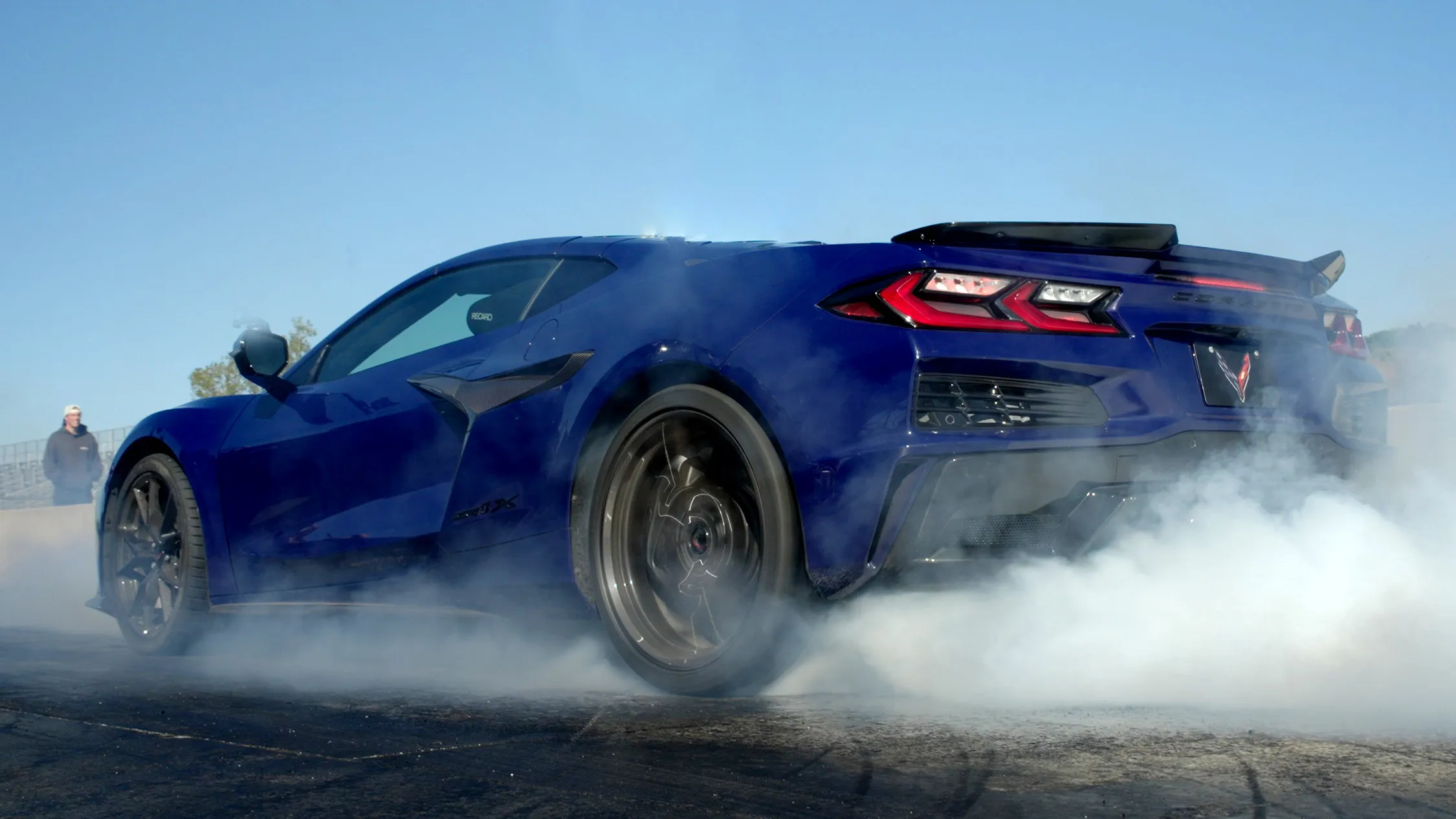
- Chevrolet Corvette ZR1X: A high-performance American sports car delivering 1,250 horsepower (1,267 PS).
- McLaren 750S: A lightweight mid-engine British supercar producing 740 horsepower (750 PS).
- Porsche 911 Turbo S: A legendary German sports car with 701 horsepower (711 PS).
The Porsche Limiter Intervention
Despite having an official top speed rating of 200 mph, the Porsche 911 Turbo S was unable to complete the test. The car reached a recorded speed of 199.3 mph before its electronic speed limiter intervened. Because it could not officially cross the 200 mph threshold on the runway, it was unable to record a final 0-200-0 mph time, leaving the competition to the remaining three contenders.
Analyzing the Performance: Acceleration vs. Braking
The Lucid Air Sapphire completed the entire 0-200-0 mph cycle in an astonishing 25.7 seconds. The secret to the electric sedan’s performance lies in its massive power output and highly aerodynamic, low-drag body design. As speeds climb toward 200 mph, aerodynamic drag becomes a massive obstacle, requiring immense energy to overcome. The Sapphire’s tri-motor setup allowed it to reach the 200 mph mark more than seven seconds before the Corvette ZR1X and over 13 seconds ahead of the McLaren 750S. Remarkably, the Lucid completed the entire run in less than a single mile.
The Chevrolet Corvette ZR1X finished the test in 31.8 seconds, which was 6.1 seconds slower than the Lucid. The McLaren 750S trailed even further behind, crossing the finish line in 37.7 seconds.
Balanced Evaluation: Strengths and Weaknesses
Analyzing the performance data reveals clear trade-offs between the heavy electric luxury sedan and the lightweight, purpose-built supercars.
Lucid Air Sapphire
- Pros: Unmatched straight-line acceleration, exceptional high-speed aerodynamic efficiency, and the ability to deliver supercar-beating performance while maintaining a spacious four-door cabin.
- Cons: Extreme vehicle weight. The heavy mass of the electric vehicle negatively impacts its stopping power, requiring nearly a quarter-mile of runway to come to a complete stop from 200 mph.
Chevrolet Corvette ZR1X & McLaren 750S
- Pros: Significantly lower mass, which translates to superior braking efficiency and much shorter stopping distances compared to the heavy EV.
- Cons: Slower acceleration at extremely high speeds. Despite their lighter weight, they could not overcome aerodynamic drag as effectively as the massive horsepower of the Lucid, losing too much ground during the acceleration phase to make up for it with superior braking.
Conclusion
This high-speed test highlights how electric vehicle technology has redefined straight-line performance. While traditional sports cars like the Corvette ZR1X and McLaren 750S still offer superior lightweight dynamics and shorter stopping distances, they could not match the raw acceleration and aerodynamic efficiency of the Lucid Air Sapphire. For drivers seeking absolute acceleration in a practical luxury package, the Lucid Air Sapphire stands as an undisputed champion. However, those who prioritize lighter weight and sharper braking dynamics will still find the traditional supercar layout highly compelling.