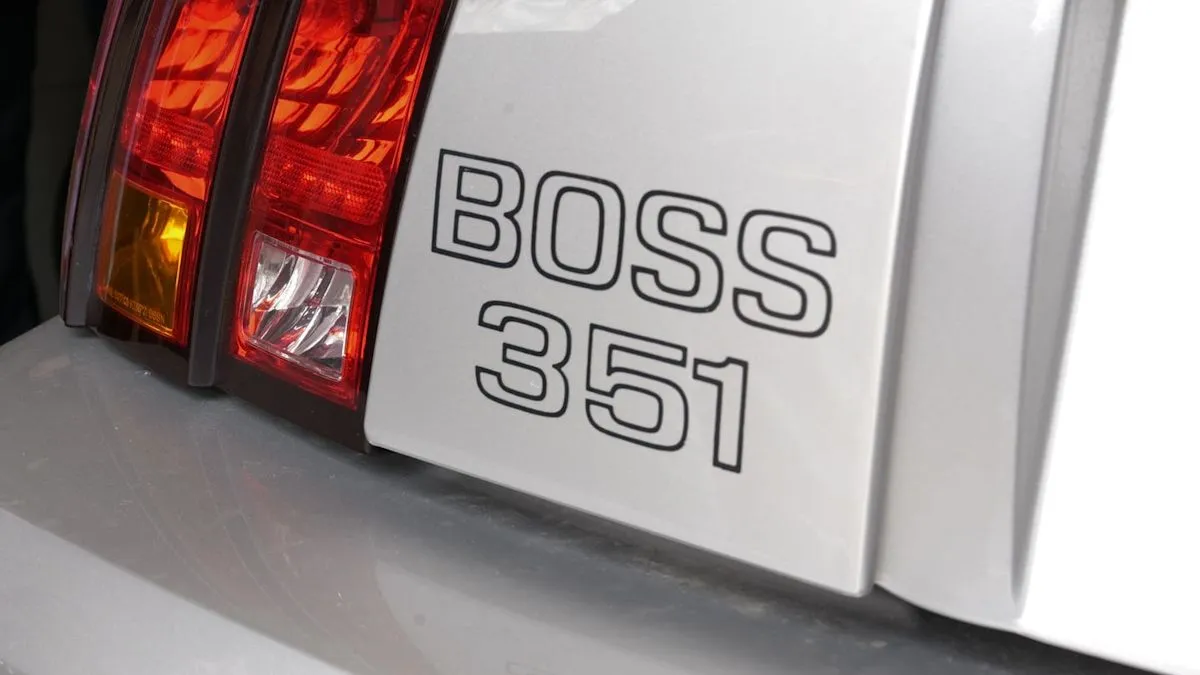
SpeedSUVs.com — The automotive world is filled with legendary tales of rogue engineering projects that bypassed corporate red tape to create something truly extraordinary. Among these clandestine creations, a silver 1999 Ford Mustang GT coupe stands out as one of the most fascinating. Built in the early 2000s by a passionate group of engineers within Ford’s Powertrain Research and Advanced Engines division, this unique vehicle was fitted with a custom V-10 engine. Operating without official management approval, the team managed to create a high-performance prototype that was later dubbed the Boss 351. Decades after its creation, this incredible machine has not only escaped the corporate crusher but has also been fully restored to showcase its remarkable performance capabilities.
The Engineering Behind the Custom V-10 Engine
What makes this V-10 Mustang particularly impressive is the unique engineering that went into its power plant. Unlike what some might assume, this engine was not sourced from Ford’s heavy-duty truck lineup. It was entirely unrelated to the cast-iron Triton V-10 engines of the era. Instead, the engineering team designed an all-aluminum 5.8-liter V-10 engine specifically for this project. They accomplished this by taking the sand-casting molds for a modular 4.6-liter dual-overhead-cam (DOHC) V-8, cutting them up, and retooling them into a 10-cylinder configuration before pouring the molten aluminum.
To complete the assembly, the team utilized high-quality components. They integrated connecting rods and pistons from Ford’s SVT Cobra parts bin. However, because of the unique V-10 layout, the engine required a custom-made billet crankshaft. One of the most significant achievements of this design was its weight efficiency. Despite having two additional cylinders, the finished all-aluminum V-10 engine actually weighed approximately 60 pounds less than the cast-iron-block Cobra V-8 of the time. Before becoming the recipient of this massive ten-cylinder transplant, the silver 1999 GT coupe had served as a fitment mule for the naturally aspirated 5.4-liter V-8 Cobra R, making its chassis the perfect candidate for this experimental build.
Chronology of Performance: Then and Now
When the Boss 351 prototype was first completed and tested back in 2004, its performance figures were highly impressive for the era. The 5.8-liter V-10 engine produced roughly 426 horsepower at 6,500 rpm. This power level allowed the nondescript silver coupe to run down the drag strip in the high-11-second range, a blistering pace for a street-legal car in the early 2000s. The build team kept the project entirely secret from Ford’s executive management, presenting it only as a finished product once it was fully functional, mirroring the famous tactics used by Lamborghini engineers during the development of the Miura prototype.
After spending years in storage and undergoing a comprehensive restoration by Ford’s Heritage Fleet in collaboration with the original build crew, the car was recently put back on the dynamometer. To ensure it was running properly, the restoration team had to install updated electronics and perform a thorough mechanical inspection. The results of the modern dyno test were astonishing. More than twenty years after its initial creation, the V-10 engine now delivers over 510 horsepower directly to the wheels. Along with this massive power output, the car produces an unmistakable exhaust note described as a unique blend of an aggressive bar brawl and the high-pitched scream of a Lexus LFA.
The Thrilling Battle for Survival Against the Crusher
The survival of the Boss 351 is a story of determination and corporate hide-and-seek. In a massive corporation like Ford, prototype vehicles that have outlived their development cycle are typically sent to the crusher to clear the financial books and avoid liability. As the oldest prototype remaining on Ford’s inventory, the V-10 Mustang eventually caught the attention of corporate accountants and the Vehicle Controls team, who marked it for destruction.
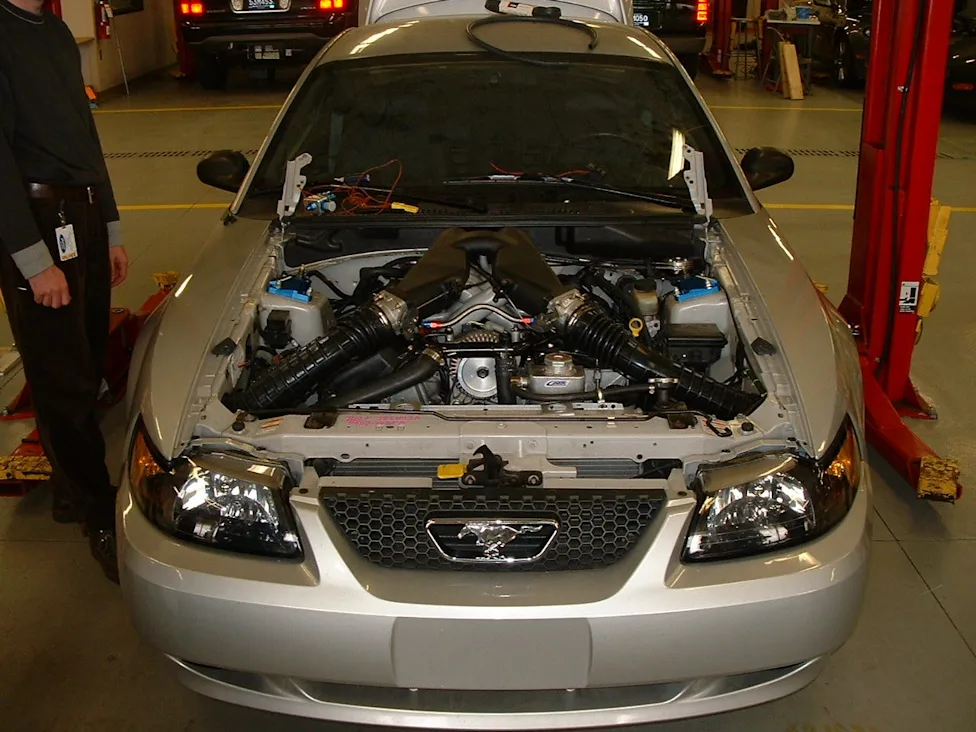
To save their creation, members of the original build team and sympathetic enthusiasts within Ford embarked on a years-long effort to hide the car. They constantly moved the silver coupe to various hidden corners of Ford’s sprawling facilities, keeping it one step ahead of the corporate officials searching for it. This tense game of cat-and-mouse finally ended when the car was brought under the protection of Ford’s Heritage Fleet. This dedicated division recognized the historical value of the one-off vehicle and permanently secured its safety, ensuring it would never be crushed.
Balanced Review: Pros and Cons of the V-10 Mustang
Evaluating this unique vehicle reveals a mixture of brilliant engineering achievements and inherent practical limitations that come with any one-off prototype.
- Pro – Incredible Sleeper Appeal: Visually, the car remains a highly understated silver SN95 Mustang GT riding on simple five-spoke alloy wheels. It blends in perfectly with ordinary traffic until the throttle is opened.
- Pro – Advanced Lightweight Engineering: Retooling modular V-8 molds to create a V-10 that weighs 60 pounds less than a standard Cobra V-8 is a masterclass in custom engine design.
- Pro – Exceptional Performance: Pushing 510 wheel horsepower and delivering sub-12-second quarter-mile times makes it far faster than any standard production Mustang from its generation.
- Con – Extreme Rarity and Maintenance Difficulties: Because it is a one-of-one prototype with custom parts like a billet crankshaft and unique electronics, sourcing replacement parts is nearly impossible.
- Con – Bureaucratic Liability: The vehicle’s unauthorized origin meant it spent decades in legal limbo, constantly threatened with destruction by corporate management.
Conclusion
The Ford Mustang Boss 351 V-10 prototype is a testament to what passionate engineers can achieve when they prioritize performance over corporate protocol. While its one-off nature and custom components make it completely impractical for regular production or easy maintenance, its survival represents a major victory for automotive enthusiasts. Thanks to the efforts of its creators and Ford’s Heritage Fleet, this 510-horsepower piece of history remains preserved as a roaring tribute to rogue engineering.