The automotive landscape is a constantly shifting tapestry of innovation, competition, and anticipation. For decades, one nameplate has stood as a bedrock of American family transportation: the Ford Explorer. From its humble origins as a rugged, body-on-frame adventurer to its current sophisticated, unibody iteration, the Explorer has consistently adapted, evolved, and redefined what a family SUV can be. As we gaze into the near future, all signs point to 2026 as a pivotal year for this icon, signaling either a substantial mid-cycle refresh that borders on a redesign or, potentially, the dawn of an entirely new generation.
For prospective buyers, the prospect of a refreshed or redesigned 2026 Ford Explorer isn’t just about a new car; it’s about navigating the future of family mobility. What will it offer? When can you get your hands on one? And perhaps most importantly, how do you make the right buying decision in a segment more competitive than ever? Buckle up, because we’re about to embark on a deep dive into the 2026 Ford Explorer, unraveling the mysteries of its release and crafting your essential buying guide.
The Explorer’s Enduring Legacy and the Weight of Expectation
To understand the buzz around the 2026 Explorer, one must appreciate its lineage. Introduced in 1990 as a 1991 model, the Explorer quickly became a cultural phenomenon, virtually inventing the modern SUV segment and becoming synonymous with suburban adventure. While its journey hasn’t been without its bumps, its ability to reinvent itself, most notably with the switch to a unibody, rear-wheel-drive based platform in 2020 (the current sixth generation), has kept it relevant and formidable.
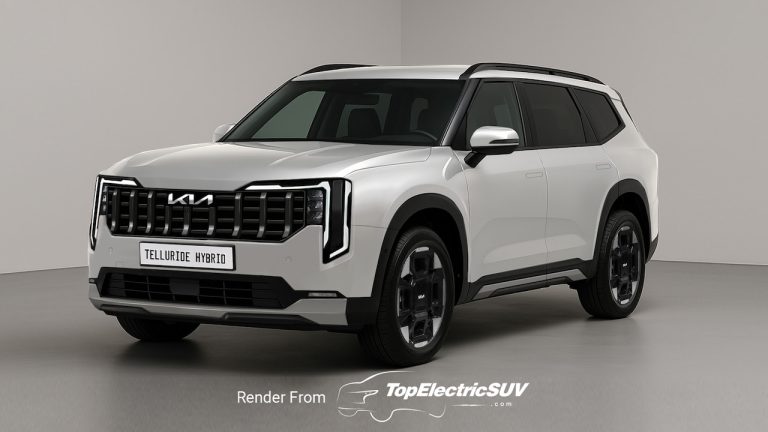
The current generation, while generally well-received for its driving dynamics, spacious interior, and array of powertrains (including a potent ST and an efficient hybrid), faces an onslaught of fierce competitors. Vehicles like the Hyundai Palisade, Kia Telluride, Toyota Grand Highlander, and Chevrolet Traverse have raised the bar significantly in terms of interior refinement, technology, and perceived value. This intense pressure means Ford can’t rest on its laurels. The 2026 Explorer isn’t just another model year; it’s Ford’s statement of intent, a declaration that it remains a dominant force in the three-row SUV arena. It needs to be more than just good; it needs to be exceptional.
When Will We See It? Decoding the 2026 Ford Explorer Release Date
Automotive product cycles are typically predictable, though recent global events have certainly introduced an element of chaos. Full redesigns usually occur every 6-7 years, with a significant mid-cycle refresh (often called an LCI – Life Cycle Impulse – by some manufacturers) happening around the 3-4 year mark.
The current sixth-generation Explorer debuted for the 2020 model year. This places a major refresh squarely in the 2023-2024 timeframe. Indeed, spy shots and internal leaks have confirmed a significant update for the 2025 model year, primarily focusing on interior tech and exterior styling tweaks. However, given Ford’s strategic moves and the rapid evolution of technology and electrification, a more comprehensive overhaul or even a full next-generation model for 2026 is highly plausible.
Here’s the likely timeline breakdown:
- Initial Unveiling/Teasers: Expect the first official glimpses, potentially camouflaged prototypes, or strategic leaks in late 2024 or early 2025. Ford is adept at building anticipation.
- Official Reveal Event: A full public unveiling, showcasing all the new features and design, would likely occur in mid-to-late 2025. This could coincide with major auto shows (like Detroit or Los Angeles) or be a standalone digital event.
- Order Books Open: Following the reveal, Ford will typically open order books for customers within a few weeks or months, likely by late 2025.
- Dealer Arrival: The first 2026 Ford Explorers would then begin arriving at dealerships in early to mid-2026, becoming widely available through the summer.
Manufacturing: The Explorer is proudly built at Ford’s Chicago Assembly Plant. This facility is well-versed in Explorer production, and any significant update or redesign would be seamlessly integrated into their operations.
What to Expect: A Glimpse into the Future Explorer
While concrete details remain under wraps, an automotive journalist’s intuition, combined with industry trends and Ford’s recent product strategy, allows for some educated speculation on what the 2026 Explorer will bring to the table.
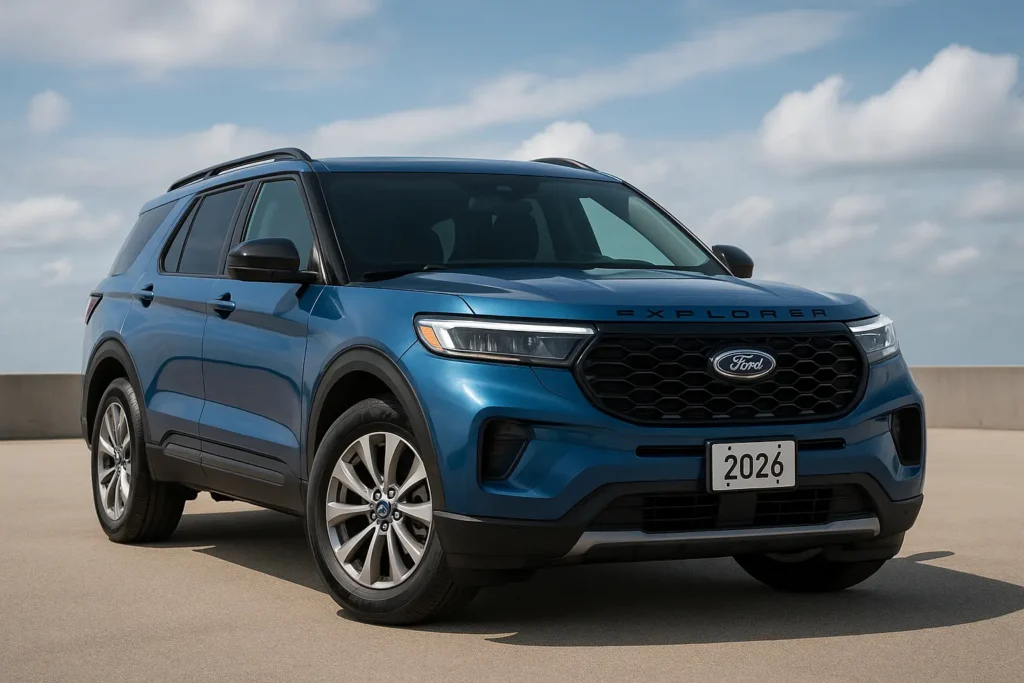
Exterior Design: Modern Ruggedness Meets Aerodynamic Sophistication
Ford has been refining its design language, blending rugged capability with contemporary aesthetics. We can anticipate the 2026 Explorer to draw inspiration from newer Ford trucks and SUVs like the F-150, Bronco Sport, and even the Expedition, but translated into a more urban, family-friendly package.
- Front Fascia: Expect a bolder, more prominent grille that might integrate seamlessly with redesigned LED headlights, potentially featuring Ford’s signature C-clamp or inverted C-shape lighting elements seen on other models. A wider, more commanding stance is likely.
- Side Profile: The Explorer’s distinct rear-wheel-drive proportions (long hood, cab-rearward design) will likely be retained, but with sharper character lines and perhaps a more tapered roofline for a sportier look. New wheel designs, possibly up to 21 or 22 inches on top trims, will enhance its presence.
- Rear End: Redesigned LED taillights, possibly connected by a full-width light bar (a popular trend), will modernize the rear. The liftgate and bumper will also see revisions for a fresher, cleaner appearance.
- Trim Differentiation: Expect continued strong visual differences between trims like the rugged Timberline, the sporty ST, and the luxurious Platinum. Each will likely receive unique grille inserts, wheel designs, and exterior accents to cater to specific buyer tastes.
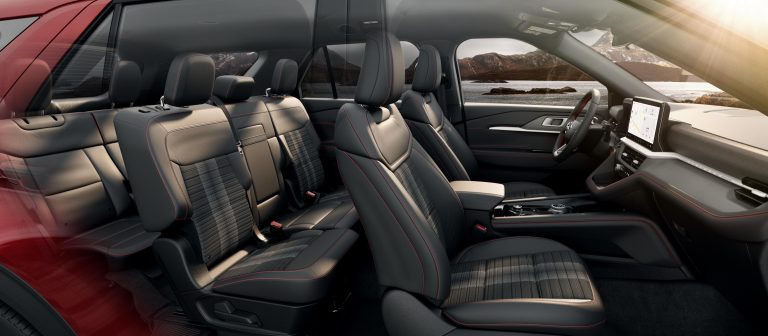
Interior & Technology: A Digital Command Center for the Family
This is where the 2026 Explorer must shine. The current interior, while functional, lags behind rivals in terms of perceived luxury and screen integration. Ford is acutely aware of this.
- Infotainment: A dramatically upgraded infotainment system is almost a certainty. We anticipate a much larger, horizontally oriented touchscreen (think Mustang Mach-E or F-150 Lightning) running the latest SYNC 4A or potentially even Google Built-in. Wireless Apple CarPlay and Android Auto will be standard, along with enhanced voice recognition.
- Digital Gauge Cluster: A fully digital instrument cluster, highly customizable, will replace the current semi-digital setup, providing a modern and sophisticated driver interface.
- Material Quality: Significant improvements in soft-touch materials, premium stitching, and refined trim pieces (wood, brushed aluminum, piano black) will elevate the cabin’s ambiance, especially in higher trims.
- Comfort & Ergonomics: Redesigned seats with better bolstering and more adjustability are likely. Enhanced storage solutions, improved USB-C charging ports throughout the cabin, and potentially a larger panoramic sunroof will add to the comfort and convenience.
- Advanced Driver-Assist Systems (ADAS): Ford Co-Pilot360 will receive significant upgrades. Expect enhanced adaptive cruise control with stop-and-go, improved lane-keeping assist, and potentially Ford’s BlueCruise hands-free driving system on select highways. Advanced parking assist features will also likely be more robust.
- Connectivity: 5G connectivity, over-the-air (OTA) update capability, and a robust Wi-Fi hotspot will keep families connected on the go.
Powertrain & Performance: Electrification Takes Center Stage
Ford’s commitment to electrification is undeniable, and the 2026 Explorer will undoubtedly reflect this. While a full battery-electric Explorer on this platform is unlikely (that would require a dedicated EV architecture), a significantly enhanced hybrid offering is a near certainty.
- Current Engines: The proven 2.3-liter EcoBoost four-cylinder (around 300 hp) and the potent 3.0-liter EcoBoost V6 (318 hp in Limited/Platinum, 400 hp in ST) are likely to continue, possibly with minor tweaks for efficiency and refinement.
- The Hybrid Evolution: The current hybrid (3.3L V6 + electric motor, 318 hp) offers decent efficiency, but it’s not a segment leader. For 2026, expect a more powerful, more efficient, and potentially more widely available Plug-in Hybrid (PHEV) option. A PHEV Explorer could offer a meaningful electric-only range (e.g., 30+ miles), making daily commutes emission-free for many. This would be a game-changer for the Explorer’s competitive standing.
- Transmission: The smooth and efficient 10-speed automatic transmission will almost certainly carry over.
- Drivetrain: The rear-wheel-drive biased platform offers excellent driving dynamics. All-wheel drive (AWD) will remain an available option across most trims, providing enhanced traction and capability.
- Driving Dynamics: Expect further refinement of the chassis and suspension tuning, aiming for an even more composed ride, sharper handling, and reduced noise, vibration, and harshness (NVH).
Trim Levels & Pricing: A More Refined Ladder
The existing trim structure (Base, XLT, ST-Line, Limited, Timberline, ST, Platinum) provides a wide range of options, and it’s likely to continue, perhaps with some nomenclature tweaks or package reconfigurations.
- Base/XLT: Will continue to offer strong value with essential features and plenty of available options.
- ST-Line/Limited: The sweet spot for many, balancing features, style, and performance.
- Timberline: The adventure-focused trim will likely receive further off-road aesthetic enhancements.
- ST: The performance variant will remain, likely with its 400hp 3.0L EcoBoost V6, but perhaps with further chassis tuning and visual aggression.
- Platinum: The top-tier luxury trim will be where the Explorer truly flexes its premium muscles, showcasing the best materials, technology, and comfort features.
Pricing: The current Explorer starts in the high-$30,000s and can reach well into the $60,000s for top trims. Given inflation, technological advancements, and the general upward trend in vehicle pricing, expect the 2026 Explorer to see a modest price increase. A starting MSRP potentially in the low-$40,000s for the base model, climbing to the high-$60,000s or even low-$70,000s for fully loaded Platinum or ST models, is a realistic projection.
Your Ultimate 2026 Ford Explorer Buying Guide: Making an Informed Decision
Anticipation is one thing; making a smart purchase is another. Here’s a comprehensive guide to help you navigate the process when the 2026 Explorer finally arrives.
Step 1: Define Your Needs & Priorities
Before you even step foot in a dealership, clarity is key.
- Family Size & Seating: How many passengers do you regularly carry? Do you need easy access to the third row? Captain’s chairs in the second row offer comfort but reduce seating capacity and flexibility.
- Cargo & Towing: How much gear do you haul? Do you plan to tow a boat, trailer, or camper? Check the maximum towing capacity for different engine options.
- Daily Commute & Fuel Economy: Is efficiency a top priority? The hybrid or potential PHEV will be your best bet. If performance is paramount, the ST’s V6 might be more appealing.
- Driving Environment: Mostly city, highway, or do you venture off-road? This will influence your choice of drivetrain (AWD) and potentially trims like the Timberline.
- Technology & Features: Are you a tech enthusiast who needs the latest infotainment, driver aids, and connectivity, or are basic features sufficient?
- Budget: Be realistic about what you can afford, not just the monthly payment but also insurance, fuel, and maintenance.
Step 2: Research Trims, Engines & Packages Thoroughly
Once the 2026 Explorer is officially revealed, dive deep into the specifications.
- Compare Trims: Understand what comes standard on each trim level and what features are exclusive to higher trims. The XLT often represents the best value, while the Limited or ST-Line might offer a sweet spot of features and affordability.
- Engine Choices: Evaluate the pros and cons of each available engine based on your priorities (power vs. efficiency).
- Optional Packages: Ford often bundles popular features into packages (e.g., Technology Package, Towing Package). Determine which ones are essential for your lifestyle.
- Safety Features: Review the complete list of standard and available Ford Co-Pilot360 features.
Step 3: Consider the Competition (Don’t Buy Blind!)
The Explorer faces formidable rivals. Don’t limit your search.
- Hyundai Palisade & Kia Telluride: Known for upscale interiors, strong value, and distinct styling.
- Toyota Grand Highlander: A new entrant with a focus on interior space, fuel efficiency (especially its hybrids), and Toyota’s renowned reliability.
- Honda Pilot: Offers a practical, family-friendly design with strong resale value.
- Chevrolet Traverse: A spacious option with good cargo capacity.
- Subaru Ascent: A good choice for those prioritizing standard AWD and strong safety ratings.
Test drive several competitors to truly appreciate the Explorer’s strengths and weaknesses relative to the market.
Step 4: Financing & Budgeting: The Numbers Game
This is where the rubber meets the road.
- Lease vs. Buy:
- Leasing: Lower monthly payments, drive a new car every few years, includes warranty coverage. Good if you don’t drive many miles and like new tech.
- Buying: Build equity, no mileage limits, full ownership. Good if you plan to keep the vehicle long-term.
- Interest Rates: Shop around for the best financing rates from banks, credit unions, and Ford Credit. Good credit scores are paramount.
- Trade-in Value: Get an accurate appraisal of your current vehicle. Websites like Kelley Blue Book (KBB) and Edmunds can provide estimates. Consider selling privately if you want to maximize your return.
- Total Cost of Ownership: Factor in insurance, fuel costs, maintenance, and potential depreciation.
Step 5: The Test Drive – Don’t Rush It!
This is your chance to experience the 2026 Explorer firsthand.
- Extended Drive: Don’t just go around the block. Drive on highways, city streets, and typical routes you’d take.
- Simulate Your Life: Bring car seats, try loading groceries, open the third row. See if it truly fits your lifestyle.
- Pay Attention To: Ride comfort, handling, acceleration, brake feel, interior noise levels, visibility, ease of use of the infotainment system, and comfort of all seating positions.
- Test ADAS: If safe to do so, test features like adaptive cruise control and lane-keeping assist.
Step 6: The Dealership Experience & Negotiation
Be prepared and confident.
- Negotiate: Don’t be afraid to negotiate on the MSRP, trade-in value, and financing rates. Have your research ready.
- Understand Add-ons: Be wary of unnecessary dealer add-ons (paint protection, extended warranties) that inflate the price. Decide what you truly need.
- Service & Warranty: Understand the standard warranty and inquire about available extended service plans. Build a relationship with the service department.
Step 7: Future-Proofing & Resale Value
While impossible to predict perfectly, consider long-term factors.
- Reliability: Ford has made strides in quality. Check early reliability reports for the 2026 model once available.
- Technology Obsolescence: While new tech is exciting, understand that it evolves quickly.
- Resale Value: Ford SUVs generally hold their value well, but specific trims, condition, and mileage will play a role.
Step 8: Pre-orders and Early Bird Advantages
If you’re eager to be among the first, keep an eye out for pre-order opportunities.
- Early Access: Ford might offer special online reservation programs. This can guarantee you an early build slot.
- Dealer Allocation: Talk to your preferred dealer about their expected allocation and how to get on a priority list.
Conclusion: A New Chapter for an American Icon
The 2026 Ford Explorer stands poised at a critical juncture. It’s an opportunity for Ford to not just update a popular nameplate but to redefine its segment once again. With a focus on cutting-edge technology, enhanced interior luxury, and a robust push towards electrification, the next Explorer promises to be a compelling package for modern families.
By understanding the anticipated release timeline, speculating on its innovative features, and arming yourself with a comprehensive buying guide, you’ll be well-prepared to navigate the exciting launch of the 2026 Ford Explorer. This isn’t just about buying an SUV; it’s about investing in your family’s next adventure, and the Explorer, in its latest iteration, looks ready to lead the way. Get ready to explore the future.