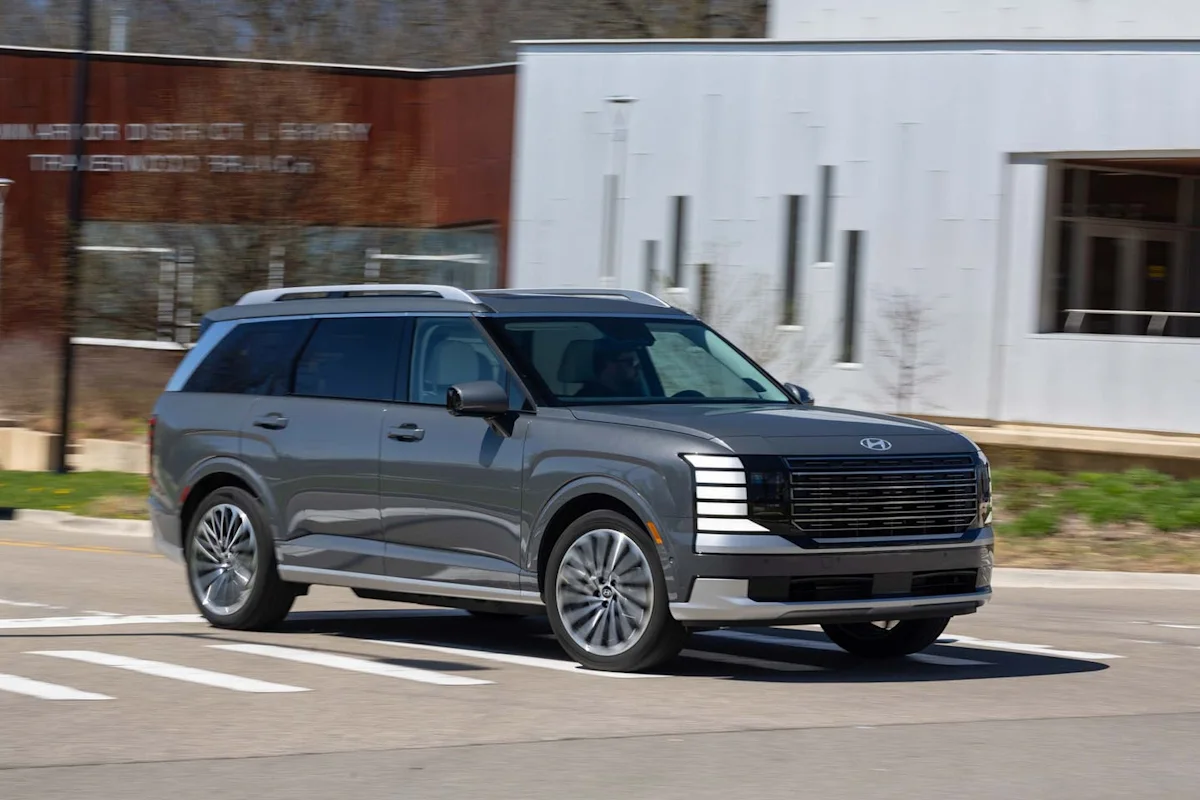
SpeedSUVs.com — Three-row hybrid SUVs are becoming increasingly competitive in today’s automotive market, and the redesigned 2026 Hyundai Palisade Hybrid stands out as a prominent contender. After capturing a 10Best award upon its initial introduction, the new hybrid variant entered a long-term evaluation fleet to undergo a rigorous 40,000-mile assessment. This test aims to determine whether the Palisade Hybrid can maintain its initial charm when subjected to daily commuting, family hauling, extended highway road trips, and real-world durability challenges.
Vehicle Overview and Pricing Breakdown
The vehicle selected for this long-term test is the top-tier 2026 Hyundai Palisade Hybrid Calligraphy model. Positioned as the most luxurious trim in the lineup, the Calligraphy brings a elevated level of standard equipment designed to compete with premium luxury nameplates.
The base price for the Calligraphy trim starts at $60,380, a sum that includes a $2,000 upcharge for the all-wheel-drive system. The only added option on the tested vehicle was a $245 set of carpeted floor mats, bringing the total bottom-line price to $60,625. For this price, buyers receive a comprehensive suite of high-end convenience, comfort, and safety features.
Engine Powertrain and Mechanical Specifications
Underneath the hood, the 2026 Palisade Hybrid features a modern hybrid powertrain designed to balance fuel economy with daily usable power. The setup consists of a turbocharged 2.5-liter inline-four engine paired with two electric motors integrated directly into a standard six-speed automatic transmission.
- Total System Output: 329 horsepower
- Total System Torque: 339 pound-feet
- Drivetrain Configuration: All-Wheel Drive (AWD)
- Transmission: 6-speed automatic
- Fuel Tank Capacity: 18.2 gallons
Track Testing and Performance Metrics
Initial track testing revealed strong performance metrics for a vehicle of this size and weight class. Despite its generous footprint, the Palisade Hybrid delivered brisk acceleration numbers and secure handling dynamics across all standard testing metrics.
The SUV accelerated from zero to 60 mph in 6.6 seconds, proving more than capable of joining fast-moving highway traffic. Passing performance was similarly prompt, requiring just 4.4 seconds to execute a 50-to-70 mph dash. In the quarter-mile sprint, the Palisade Hybrid recorded a time of 15.0 seconds at a trap speed of 94 mph.
On the skidpad, the three-row family hauler pulled 0.84 g of lateral grip, providing a level of roadholding that comfortably exceeds the typical demands of family transport. Braking performance was equally confident, with the vehicle coming to a complete stop from 70 mph in 170 feet.
Real-World Fuel Economy and Driving Range
In real-world testing across mixed driving environments, the Palisade Hybrid achieved an average fuel economy of 25 mpg. Combined with its 18.2-gallon fuel tank, the vehicle provides an observed driving range of approximately 450 miles between fill-ups. This range makes it a convenient option for long-distance highway travel, reducing the frequency of required pit stops.
Interior Luxury, Comfort, and Features
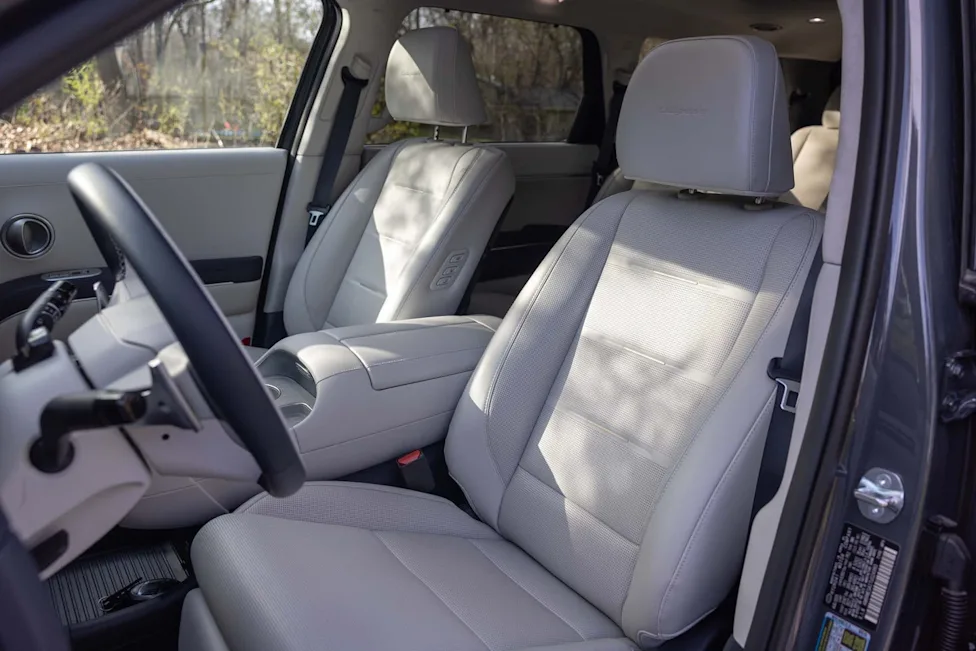
The interior execution of the 2026 Palisade Calligraphy has drawn widespread praise from testing staff, with several reviewers noting that the cabin quality rivals dedicated luxury brands. The choice of materials, assembly quality, and noise insulation create a quiet and refined environment.
Standard cabin equipment includes nappa-leather upholstery, driver-seat massage functions, a digital rearview mirror, a head-up display, rain-sensing windshield wipers, power-adjustable second-row seats, and an integrated tow hitch. Staff members highlighted several specific interior strengths:
- Upscale Ambiance: Reviewers noted that the ride is exceptionally smooth and quiet, with interior materials plush enough to feel comparable to a luxury vehicle wearing a Genesis badge.
- Driver Visibility: Thin A-pillars help eliminate large front blind spots, improving outward visibility during tight maneuvering and urban driving.
- Seating Ergonomics: Adjustable side bolsters and built-in kinetic seat features help alleviate physical fatigue during long road trips or extended periods behind the wheel.
- Infotainment Interface: The central touchscreen system offers straightforward menu structures and intuitive operation.
Onboard Integrated Dash Cam System
One notable feature standard on the 2026 Palisade Hybrid Calligraphy is its factory-installed front and rear dash cam system. The setup features continuous-loop recording alongside motion and impact detection while the vehicle is parked. All recorded footage is written directly to an internal MicroSD card.
Drivers can review up to two weeks of saved video clips directly on the main infotainment display. This feature proved its practical value during a trip through Michigan when a small bear ran across the vehicle’s path. Rapid braking by the driver reduced the vehicle’s speed enough that the SUV tagged the animal with its front corner without sustaining any body or mechanical damage, while the onboard cameras captured the entire event clearly.
Ergonomic Drawbacks and Daily Usability Criticisms
Despite its high marks for cabin comfort, the 2026 Palisade Hybrid is not without daily usability drawbacks. Multiple reviewers noted areas where functional improvements could be made:
- Increased Overall Size: Behind the wheel, the updated Palisade feels noticeably larger and less nimble than the previous generation model, making it feel somewhat bulkier during tight parking maneuvers.
- Keyless Access Limitation: The vehicle lacks touch-locking and unlocking capability on the rear door handles. Passengers or parents carrying children and groceries must unlock the front doors first or use the key fob, presenting an inconvenience for daily family duties.
Early Mechanical Issues and Dealership Service History
The initial phase of long-term testing revealed several unexpected mechanical issues and early component failures that required dealer intervention. These early hiccups contrast with the vehicle’s polished interior and smooth driving dynamics.
1. Wheel Stud and Hub Failure
During initial long-term onboarding inspection—which involves removing wheels to measure brake pad thickness—a wheel stud was found stripped and spinning freely in place. The vehicle was sent to the dealer, where technicians had to drill out the damaged wheel stud and replace the entire wheel hub. This repair caused a two-month delay before the vehicle returned to testing service.
2. Engine Overheating and Belt Failure
Within two weeks of returning from the wheel hub repair, the Palisade Hybrid experienced engine overheating while driving at highway speeds. Warning chimes and dashboard notifications signaled dangerous temperature levels. Dealer inspection revealed that the water-pump belt had shredded itself. Technicians replaced the belt and tightened all associated attachment hardware under warranty.
3. Recalls, Software Updates, and Maintenance
Throughout its first 11,265 miles, the Palisade Hybrid required several software updates and recall services:
- Active Air Flap Wiring: Front-bumper wiring connected to the active front air flaps was replaced under warranty.
- Instrument Cluster Update: Software was updated to prevent potential instrument-cluster screen failure.
- Recall 297 (Third-Row Seatbelt): Addressed a potential failure where sudden tension on the third-row seatbelt could damage or unseat the internal wiring harness. The dealer inspected the buckle and installed a wiring harness extension under warranty.
- Power Seat Safety Software (OTA Update): An over-the-air software update was issued to resolve pinch-detection issues in the power second- and third-row seats, an issue that had previously caused a brief stop-sale order on new models.
- Routine Service: At 8,400 miles, the Palisade received its scheduled service, including an oil change, tire rotation, and multipoint inspection for a total cost of $146.
Pros and Cons Summary
Below is a balanced summary of the 2026 Hyundai Palisade Hybrid Calligraphy based on long-term testing observations:
Pros
- Quiet, plush, luxury-grade interior trim and comfortable seating
- Strong engine performance with 329 hp and smooth power delivery
- Comprehensive standard technology package, including built-in front/rear dash cams
- Excellent highway visibility thanks to slim A-pillars
- Good real-world range of approximately 450 miles per tank
Cons
- Early mechanical reliability issues, including a stripped wheel stud and shredded water-pump belt
- Multiple factory recalls and software updates early in the vehicle’s lifespan
- Feels larger and less maneuverable than the outgoing model
- Rear door handles lack touch-locking and unlocking functionality
Final Verdict and Conclusion
The 2026 Hyundai Palisade Hybrid Calligraphy offers a highly refined driving experience that comfortably bridges the gap between mainstream family SUVs and premium luxury vehicles. Its smooth powertrain, quiet cabin, advanced camera features, and high level of standard equipment make it an appealing long-distance cruiser and family vehicle.
However, prospective buyers should weigh these luxury features against the early mechanical and software glitches observed during initial testing. While all repairs and recall items were resolved under warranty at no charge, early reliability bugs remain the primary caveat for an otherwise outstanding three-row hybrid SUV. For families prioritizing space, comfort, and interior sophistication, the Palisade Hybrid stands out as a compelling choice, provided early build quality issues continue to be addressed by the manufacturer.