SpeedSUVs.com — Selecting a vehicle often comes down to balancing cost, fuel efficiency, overall styling, and daily practicality, but occupant protection remains a primary consideration for many buyers. Evaluating vehicle safety can be complex, as standard laboratory crash tests do not always fully reflect outcomes on public roads. To address this, safety research platform Informed for Life published a comprehensive evaluation of the safest vehicles for 2026. Out of more than 216 models earning the Insurance Institute for Highway Safety (IIHS) Top Safety Pick+ designation, only five met the strict combination of physical crash performance, vehicle mass, and real-world fatality metrics required for the final top tier.
Understanding the Evaluation Methodology
The ranking methodology established by Informed for Life combines controlled laboratory evaluations with real-world statistical analysis to create a nuanced 100-point safety index. Laboratory crash performance accounts for 70 points of the total evaluation, while real-world driver death rate data supplied by the Highway Loss Data Institute (HLDI) contributes the remaining 30 points. HLDI metrics are adjusted for demographic factors to ensure a fairer comparison across different driver populations.
To even qualify for consideration in this selective ranking, each vehicle had to meet several rigid baseline standards:
- Earn the IIHS Top Safety Pick+ designation.
- Achieve a “Good” rating across four crucial crash categories: small overlap front, moderate overlap front, side impact, and headlight performance.
- Meet the updated 2025 IIHS testing criteria, which incorporated a dummy in the rear seat during frontal impact assessments to measure protection for back-seat passengers.
- Maintain a minimum curb weight of 4,300 pounds, as heavier vehicles generally absorb impact forces more effectively during collisions.
- Hold a manufacturer safety grade of B or higher.
Detailed Review of the Top 5 Safest Vehicles
1. Audi Q7
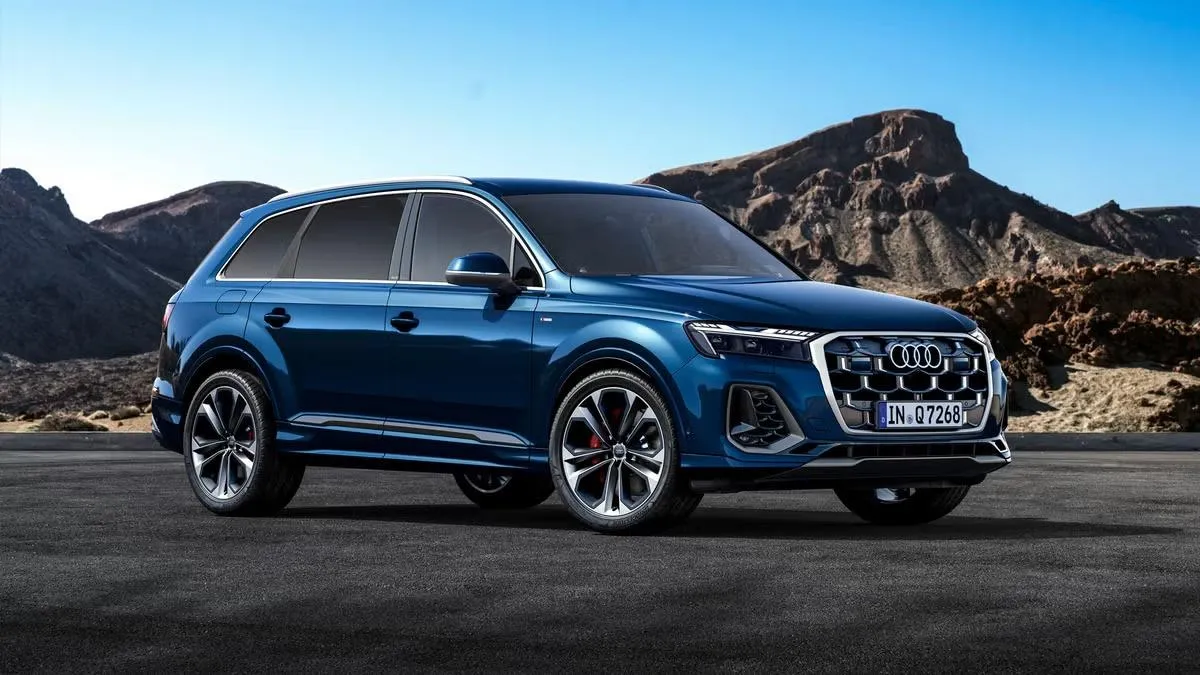
The Audi Q7 takes the top position as the overall safest vehicle in the 2026 assessment. Weighing in at 4,949 pounds, this luxury SUV offers substantial mass to withstand high-energy impacts. In crash testing, it demonstrated flawless execution across every category, earning an A+ manufacturer safety grade. Additionally, real-world data highlights that Audi boasts one of the lowest driver death rates among all brand lineups evaluated.
- Pros: Perfect crash-test results; top-tier A+ manufacturer safety grade; exceptionally low real-world driver fatality rates; robust 4,949 lb curb weight.
- Cons: Higher entry price range ($63,295–$83,790) compared to lower-ranked contenders like the Infiniti QX60.
2. Volvo XC90
A long-time leader in automotive safety design, the Volvo XC90 secures the second position. With a vehicle weight of 4,653 pounds and an A+ safety grade, the XC90 continues the brand’s heritage of high-level passenger protection. It narrowly missed claiming the top spot due to receiving an “Acceptable” score rather than a “Good” score in the IIHS’s updated frontal crash test, which evaluates rear-passenger protection.
- Pros: A+ manufacturer safety grade; strong structural integrity; proven track record of occupant protection; competitive luxury features.
- Cons: Scored “Acceptable” instead of “Good” in the revised rear-occupant frontal crash test. Price range spans $62,445 to $75,245.
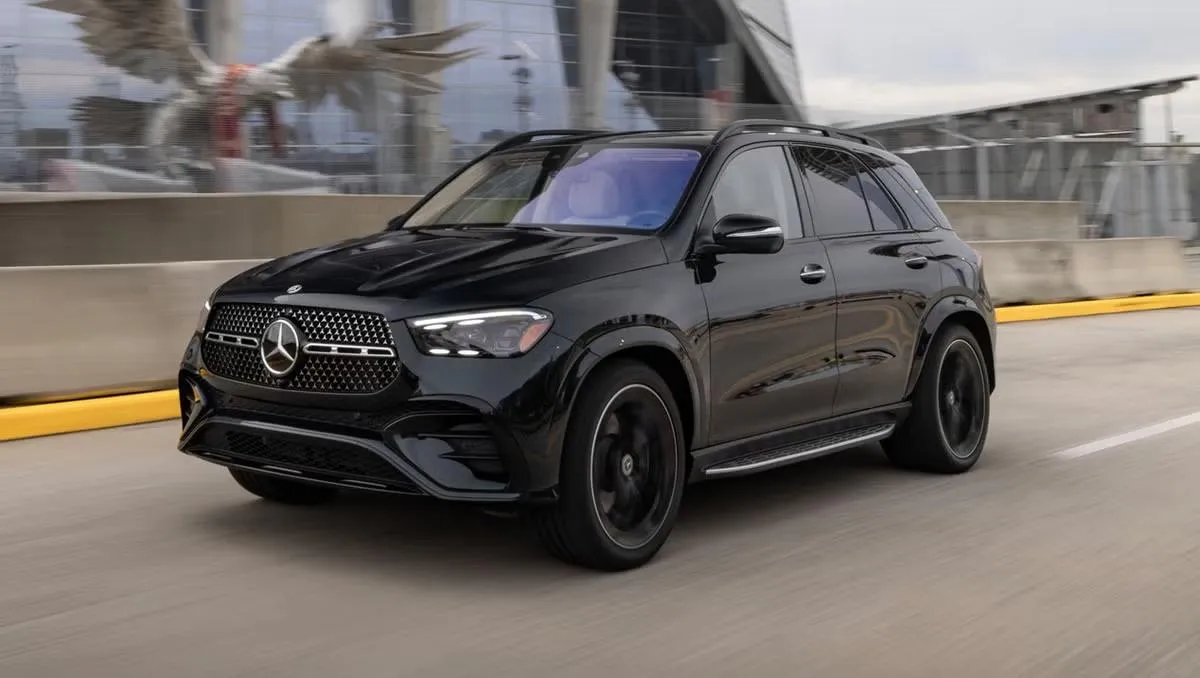
3. Mercedes-Benz GLE
The Mercedes-Benz GLE ranks third overall, supported by a heavy 4,916-pound mass and a B manufacturer safety grade. The vehicle demonstrated high structural resilience in primary crash categories. However, its overall score was slightly reduced due to testing that indicated a moderate risk of head and neck injury for rear-seat passengers during frontal impact scenarios.
- Pros: Substantial curb weight (4,916 lbs) aiding crash defense; solid baseline scores in major impact tests.
- Cons: Moderate risk of head and neck injury for rear passengers identified in testing; B safety grade; wide price range reaching up to $95,500 ($63,600–$95,500).
4. Genesis GV80
Placing fourth, the Genesis GV80 carries a curb weight of 4,815 pounds and holds a B safety grade. The luxury SUV demonstrated excellent performance in physical impact evaluations. Its main drawback in the final point tally stems from its relative youth as a brand; Genesis has limited long-term historical driver death-rate data in the HLDI database compared to established legacy automakers.
- Pros: Excellent crash performance; sturdy 4,815 lb curb weight; attractive starting price ($59,195) relative to upper luxury competitors.
- Cons: Limited historical real-world fatality data due to being a newer automotive brand; B safety grade. Price spans $59,195 to $91,545.
5. Infiniti QX60
The Infiniti QX60 completes the elite top five rankings. Tipping the scales at 4,510 pounds, it meets all mandatory crash and safety criteria while carrying a B manufacturer safety grade tied to its parent company, Nissan. As the lightest vehicle in this group, its weight was the chief factor placing it behind heavier rivals, as lighter mass offers slightly less kinetic protection in multi-vehicle collisions.
- Pros: Most affordable option among the top five ($53,085–$69,880); satisfies all core IIHS Top Safety Pick+ criteria and weight thresholds.
- Cons: Lightest weight among the top five (4,510 lbs); B manufacturer safety grade tied to parent brand Nissan.
Evaluating the Limitations of Safety Data
While these rankings synthesize laboratory evaluations and real-world statistics, safety experts note that no rating system can account for every dynamic on the road. Driver behavior, local road conditions, weather patterns, traffic density, and the exact angles of real-world collisions significantly influence accident outcomes. Crash tests rely on controlled simulations designed to assess structural design and restraint effectiveness under specific conditions, which means lab scores serve as indicators rather than absolute guarantees.
Conclusion and Buyer Recommendation
For consumers prioritizing occupant protection above all else, these five models represent the premier tier of safety engineering for 2026. Buyers seeking absolute perfection in crash-test scores and low fatality rates will find the Audi Q7 to be the standout choice, provided its price fits their budget. Those seeking value may prefer the Infiniti QX60 or Genesis GV80, which offer high safety standards at lower entry price points. Ultimately, all five vehicles offer exceptional defense, helping buyers make an informed, confident investment in vehicle safety.