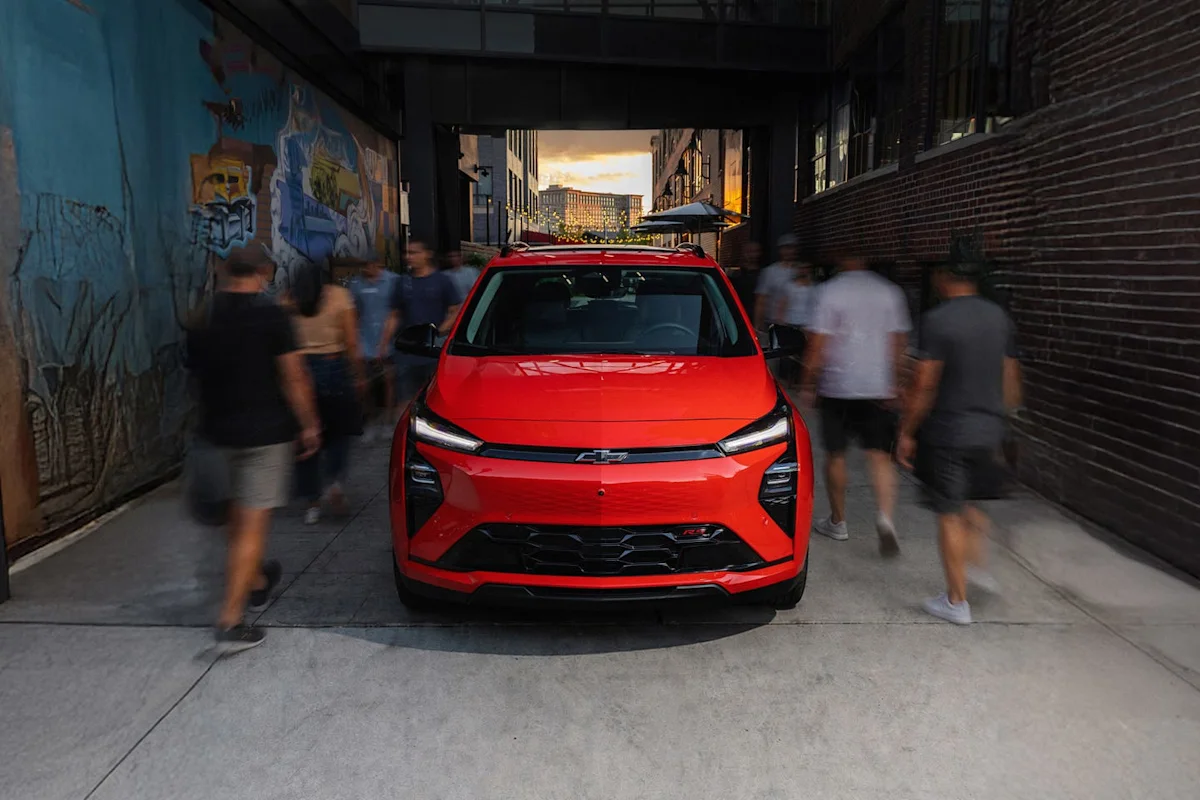
SpeedSUVs.com — Market timing often dictates whether a new vehicle achieves genuine commercial and critical success. In an era where the average purchase price of a new vehicle hovers around $50,000, finding an electric vehicle that balances modern battery technology with accessible pricing is increasingly rare. The 2027 Chevrolet Bolt addresses this market gap directly by arriving as a budget-friendly battery-electric option with a base price of $28,995. By offering practical range, significantly faster charging capabilities, and engaging road manners at a sub-$30,000 price point, this compact electric car earns its recognition as a standout choice for modern car buyers seeking value and usability.
Pricing Structure and Market Positioning
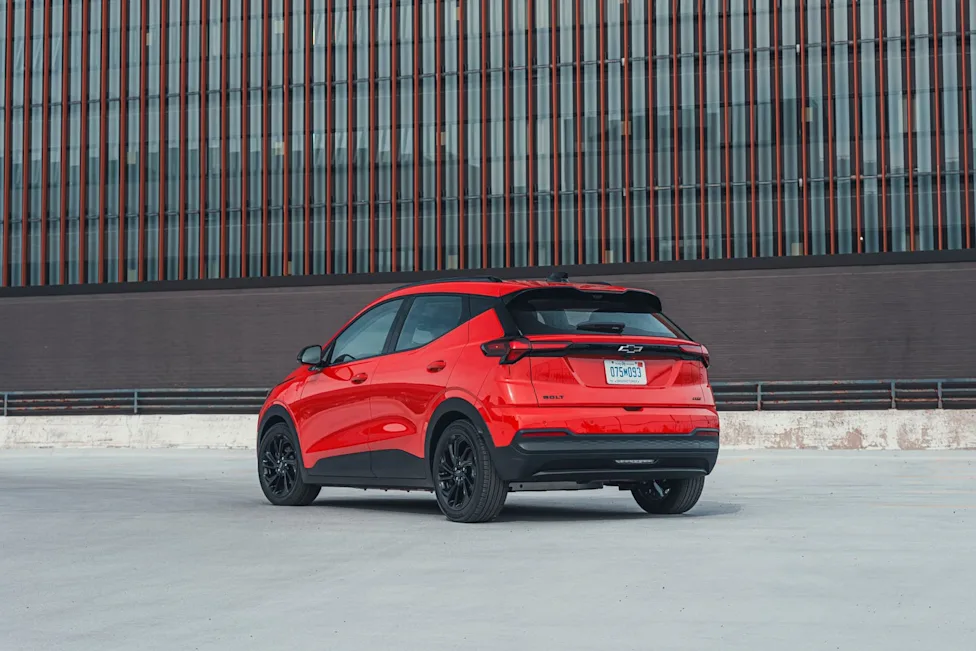
Affordability remains a central requirement for mainstream electric vehicle adoption. While the outgoing 2023 Chevrolet Bolt started at $27,495 prior to its brief production hiatus, the reborn 2027 model carries a base price of $28,995. When adjusted for inflation, the new iteration actually undercuts its predecessor by more than $1,000. This pricing achievement becomes even more distinct when compared against the former Bolt EUV model, from which the 2027 vehicle borrows its structural underpinnings and exterior body panels, despite dropping the EUV designation from its official nameplate.
By maintaining a starting price under $30,000, the vehicle presents a compelling financial proposition against the backdrop of rising automobile prices. It demonstrates that entering the battery-electric segment does not inherently require spending luxury-car money, bringing contemporary electric powertrain tech within reach of budget-conscious drivers.
Interior Packaging, Space, and Daily Usability
Despite its subcompact footprint, the 2027 Chevrolet Bolt makes efficient use of its interior space. By utilizing the 105.3-inch wheelbase inherited from the earlier EUV variant, the distance between wheel centers expands by 2.9 inches compared to the original non-EUV Bolt chassis. This physical expansion directly enhances overall ride quality while creating a surprisingly roomy passenger environment.
The cabin design prioritizes functional geometry and passenger accommodation:
- Rear Legroom: The extended wheelbase provides generous space in the back row, allowing six-foot-tall passengers to sit comfortably in the outboard positions of the rear bench, even when front bucket seats are pushed far back on their rails.
- Cabin Storage: An array of functional storage cubbies and open compartments maximizes usability throughout the dashboard and center console area.
- Ergonomic Layout: Physical controls are retained for key operational functions, preventing unnecessary digital clutter and simplifying daily driving interactions.
Battery Technology and Charging Capabilities
The defining technical distinction between the 2027 model and its predecessors lies beneath the floorboards. General Motors transitioned the vehicle to a lithium-iron phosphate (LFP) battery chemistry paired with a 65-kWh capacity pack. This chemistry change delivers a dramatic improvement in fast-charging performance, elevating peak charge acceptance to 150 kW—nearly three times faster than the peak rate supported by earlier Bolt models.
In real-world charging evaluations, replenishing the 65-kWh LFP battery from a 10 percent state of charge to 90 percent requires just 38 minutes at a compatible DC fast charger. Furthermore, driving range metrics reflect practical daily utility. In standardized 75-mph highway testing, the 2027 Bolt achieves a real-world driving range of 230 miles. This figure represents an improvement of 40 miles over the previous Bolt EUV and a 10-mile gain over the older standard Bolt, while drastically reducing the time required to add charge back into the pack.
Powertrain Specifications and Road Performance
While the electric vehicle segment frequently highlights extreme acceleration figures, the 2027 Chevrolet Bolt focuses on balanced, real-world propulsion. Power comes from a single front-mounted permanent-magnet electric motor delivering 210 horsepower and 169 pound-feet of torque. To optimize this output, the powertrain uses a short 11.59:1 final-drive ratio that provides responsive low-speed acceleration and immediate throttle response.
Performance figures highlight its practical capabilities:
- 0 to 60 MPH Acceleration: Completed in a respectable 6.7 seconds, providing plenty of power for highway merging.
- 30 to 50 MPH Passing Time: Executed in 2.5 seconds, offering lively response in city traffic and suburban arterial roads.
- 50 to 70 MPH Passing Time: Clocked at 3.6 seconds, enabling effortless overtaking maneuverability at highway speeds.
Although 169 pound-feet of torque is modest compared to dual-motor electric vehicles, the vehicle’s gearing ensures sufficient authority during daily driving scenarios without overwhelming front-wheel traction.
Chassis Tuning and Driving Dynamics
In terms of mass, lightweight electric cars remain difficult to manufacture due to battery weight. The top-spec Bolt RS trim weighs in at 3,793 pounds. However, this figure is still more than 500 pounds lighter than competing electric vehicles like the Nissan Leaf. The chassis handles this weight effectively, disguising its mass through a low center of gravity, communicative chassis tuning, and light, precise steering input.
Equipped with 215/50R-17 Michelin e-Primacy low-rolling-resistance tires, the vehicle delivered a 0.82 g road-holding figure on the skidpad. While absolute lateral grip is modest, the tires break traction in a smooth, progressive manner, allowing drivers to enjoy the car’s balanced handling dynamics at safe, approachable limits.
Technology, Ergonomics, and Infotainment Features
Inside the cabin, material choices reflect its budget-oriented price tag. There is a noticeable abundance of hard plastics across interior surfaces. However, what the cabin lacks in soft-touch materials, it compensates for with thoughtful user-interface design and high utility.
Crucially, physical buttons and rotary knobs are preserved for climate controls, gear selection, and windshield wiper operations. The climate control system now incorporates an energy-efficient heat pump, replacing the resistive heating elements used in older iterations to preserve battery range during cold weather. The touchscreen infotainment system features an intuitive menu structure and rapid response times. However, a notable drawback is General Motors’ ongoing decision to exclude smartphone mirroring via Apple CarPlay and Android Auto.
For highway travel, higher trim levels offer General Motors’ Super Cruise hands-free driving assist system. Available on models starting at $35,655, Super Cruise delivers precise highway lane-centering and speed management, standing out as one of the most capable driver-assist systems in the industry.
Regenerative Braking Adjustability
The 2027 redesign updates the regenerative braking system layout. While the previous generation’s steering-wheel-mounted regen paddle has been removed, the new system introduces broader software adjustability through three distinct one-pedal driving modes:
- Off: Mimics the natural coasting characteristics and deceleration feel of a conventional internal-combustion powertrain.
- Normal: Applies moderate regenerative braking force suitable for smooth, predictable single-pedal city driving.
- High: Provides strong deceleration force upon releasing the accelerator pedal, though some drivers may find the deceleration profile overly aggressive for smooth everyday commuting.
Pros and Cons Analysis
Evaluating the complete package reveals clear strengths alongside a few design trade-offs:
Pros:
- Highly accessible $28,995 base price that undercuts predecessors on an inflation-adjusted basis.
- Upgraded LFP battery tech enabling 150 kW fast charging (10% to 90% in 38 minutes).
- Solid real-world 75-mph highway driving range of 230 miles.
- Spacious rear legroom suitable for adult passengers due to the extended wheelbase.
- Retains physical knobs and buttons for climate controls and core functions.
- Standard energy-efficient heat pump for improved cold-weather efficiency.
- Responsive chassis dynamics and communicative steering feel.
Cons:
- Lack of Apple CarPlay and Android Auto compatibility.
- Widespread use of hard plastic materials across cabin surfaces.
- Omission of the steering-wheel-mounted regenerative braking paddle found on prior models.
- High mode on the one-pedal driving system can feel excessively grabby.
- Super Cruise feature requires stepping up to higher trims starting at $35,655.
- Modest 0.82 g skidpad grip from low-rolling-resistance tires.
Final Verdict and Recommendation
The 2027 Chevrolet Bolt delivers precisely what the modern electric vehicle market requires: a well-rounded, practical, and truly affordable electric car. By combining a budget-friendly sub-$30,000 price tag with 150 kW LFP fast charging, 230 miles of real-world highway range, and a spacious cabin, it removes the financial barrier to entry for many prospective EV buyers. While cabin materials remain basic and the absence of smartphone integration is disappointing, its strong core efficiency, physical ergonomics, and fun driving character make it one of the most compelling all-around choices for buyers making the transition to electric mobility.