SpeedSUVs.com
Overview of Municipal Transportation Perks in New York City
The practice of providing dedicated cars and full-time drivers to city leaders remains a prominent feature of municipal government in New York City. Records obtained from the Department of Citywide Administrative Services through a freedom of information request reveal that 52 appointees within Mayor Zohran Mamdani’s administration are assigned full-time chauffeured vehicles. This fleet serves a broad spectrum of high-level personnel, ranging from prominent figures such as First Deputy Mayor Dean Fuleihan, Schools Chancellor Kamar Samuels, and Police Commissioner Jessica Tisch, to less visible administrators including chief of staff Freddi Goldstein, Chief Actuary Marek Tyszkiewicz, and Housing Authority Chief Operating Officer Eva Trimble. The perk extends further across the mayoral press office—including top officials Joe Calvello and Anna Bahr—as well as five additional deputy mayors and more than two dozen agency commissioners.
This arrangement is not unique to the current administration. Previous city leaders operated under virtually identical models, granting scores of officials private chauffeured transport across the five boroughs. Beyond mayoral appointees, the practice spans political and institutional lines. Independent municipal leaders—including the five borough presidents, the City Council speaker, the city comptroller, and the public advocate—are also assigned dedicated vehicles and drivers. While municipal vehicle ownership and street space remain heavily debated issues among New Yorkers, the provision of chauffeured transport has historically functioned as an bipartisan perk embedded within the operational structure of city government.
The Practical Case for Chauffeured Transport: Security, Efficiency, and Responsiveness
Proponents and former beneficiaries of assigned city vehicles contend that chauffeured transport is far more than a luxury; many describe it as an indispensable requirement for managing the extreme demands of city leadership. The geographic expanse of New York City, combined with unpredictable schedules, often makes private vehicle transport significantly faster than public transit. Former Mayor Bill de Blasio, for example, regularly began his mornings with a 12-mile trip from Gracie Mansion to the Prospect Park YMCA in a chauffeured SUV escorted by police, completing the journey in roughly 35 minutes—a commute that would have taken nearly an hour by subway.
Former Department of Transportation Commissioner Polly Trottenberg used her time in the passenger seat of her city-issued vehicle to decompress from work-related stress, occasionally sharing sing-alongs to Frank Sinatra with her assigned driver. Other officials converted their vehicles into mobile workplaces and temporary quarters. Mayor Eric Adams utilized the back seat of his black Chevrolet Suburban as a functional mobile closet, keeping rows of suits, collared shirts, and ties hanging on a rear rack as he traveled between flag raisings, public press briefings, court hearings, and evening dinners at Zero Bond. Similarly, Adolfo Carrión Jr., while serving as deputy mayor in the Adams administration, frequently took the ferry from his home on City Island to Wall Street, meeting his driver at the terminal to complete the final leg of his trip into City Hall.
Enhanced Security Considerations
For a specific subset of leadership—including the mayor, the City Council speaker, the comptroller, and the police commissioner—chauffeured transport is deeply tied to security protocols. These key leaders are accompanied by active police details and personal aides within the vehicle. Security professionals emphasize that managing safety for high-profile figures inside public subway cars introduces substantial risk and operational stress. Former City Council spokesperson Mandela Jones noted that traveling on public transit with former Speaker Adrienne Adams, who commuted from Southeast Queens, created significant tension for her security team, whose primary objective is to minimize physical risk in uncontrolled public spaces.
Mobile Productivity and Constant Connectivity
Another central argument in favor of assigned vehicles is the ability to maintain continuous workflow during transit. City administrators frequently use travel time to conduct confidential calls, review executive documentation, respond to urgent emails, and review press releases. Department of Buildings Commissioner Ahmed Tigani installed a custom drop-down desk in the rear seat of his assigned vehicle to create a functional workspace while traveling between sites, describing the minor modification as an inexpensive way to complete complex tasks while on the road.
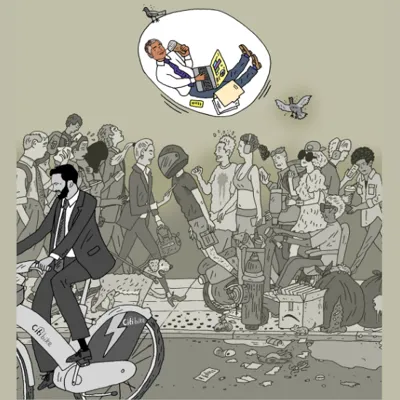
Furthermore, immediate access to a dedicated vehicle ensures rapid response capability during citywide emergencies. Fabien Levy, who served as press secretary and later deputy mayor for communications in the Adams administration, initially questioned the necessity of an assigned car. However, an emergency incident early in 2022 reshaped his perspective. After being dropped off at home late at night, Levy received an urgent notification regarding an officer-involved shooting. Having dispatched his driver for the evening, Levy took a taxi to the crime scene, only to be delayed at the police perimeter due to verification issues. Levy also highlighted the operational limitations of public transit during emergencies, pointing out that underground subway lines lack reliable cellular coverage, rendering officials unable to send messages or answer critical calls during transit.
The Counterarguments: Public Isolation, Transit Disconnect, and Evasion
Despite the operational justifications put forward by officials, the widespread use of chauffeured vehicles draws persistent criticism from civic advocates and transit commuters. Opponents argue that riding in climate-controlled, tinted vehicles isolates public officials from the everyday realities experienced by millions of New Yorkers who rely on subways and buses. Grace Rauh, Executive Director of Citizens Union, recalled an early experience interviewing a deputy mayor, noting the stark contrast between an executive being whisked away in a private vehicle while journalists and staff walked to the nearest subway station.
This dynamic creates what critics describe as an administrative “bubble.” Mayor Zohran Mamdani himself acknowledged this risk during a media interview with WBUR, noting that relying exclusively on a secured motorcade creates a narrow perception of municipal challenges. During his campaign, Mamdani frequently utilized public transport, Citi Bikes, and foot travel—a habit he has attempted to maintain in office, even as security concerns and schedule demands make chauffeured transport a daily reality. Observers note that when leaders travel exclusively in private cars, they risk losing direct contact with the public conditions, transit delays, and neighborhood issues they are tasked with addressing.
Evasion of Press and Public Accountability
Critics also point out that private chauffeured vehicles can serve as a physical shield against public scrutiny and journalist inquiries. The immediate availability of an idling vehicle allows officials to exit public events rapidly, avoiding follow-up questions from the press corps. An example occurred in 2024 when former Deputy Mayor of Public Safety Phil Banks deflected a reporter’s question regarding his mobile phone by offering a mint before stepping into his assigned vehicle and departing.
Regulatory Standards and Vehicle Fleet Rules
The operation of city-owned vehicles is governed by official standards detailed in the Fleet Management Manual. According to these guidelines, municipal vehicles are strictly designated for official business and are prohibited from being used for personal errands. However, the manual permits minor exceptions, such as brief stops for meals or incidental errands conducted during the course of regular work duties. While these guardrails exist to prevent severe misuse, the line between essential official travel and personal convenience remains a subject of ongoing public debate.
Comparative Analysis: Pros vs. Cons of Official Chauffeured Transport
Advantages (Pros)
- Continuous Productivity: Allows administrators to conduct secure calls, process official paperwork, and prepare statements while traveling.
- Emergency Preparedness: Guarantees immediate mobility and reliable communication during crises, avoiding subway cellular dead zones.
- Enhanced Security: Provides a controlled environment for high-profile figures, reducing safety risks monitored by police details.
- Schedule Efficiency: Reduces travel time between distant municipal sites across the five boroughs compared to public transit schedules.
Disadvantages (Cons)
- Public Isolation: Cuts officials off from the daily experiences and transit disruptions faced by ordinary citizens.
- Perception of Privilege: Reinforces a divide between elected leadership and the public, altering how leaders observe municipal issues.
- Potential for Misuse: Creates opportunities for rapid press evasion and blurs the lines around incidental personal stops during work hours.
- Public Cost: Requires significant municipal resources to maintain dedicated fleets, fuel, and full-time driver positions.
Conclusion: Balancing Operational Needs with Public Trust
The debate surrounding chauffeured city vehicles highlights a fundamental tension in municipal governance. On one hand, managing a vast metropolis like New York City requires exceptional speed, immediate communication, security, and continuous productivity—demands that private transport effectively supports. On the other hand, the widespread reliance on private vehicles risks creating an insulated governing class disconnected from the daily realities of public transit and street conditions.
Ultimately, while chauffeured transport remains an established tool for administrative efficiency and safety, maintaining public trust requires strict adherence to fleet regulations, transparent usage standards, and deliberate efforts by city officials to remain connected to the everyday experiences of the citizens they serve.