SpeedSUVs.com — The 2026 Chevrolet Corvette ZR1X represents an ambitious leap in American performance engineering, pairing massive internal-combustion output with a hybrid system to challenge established supercars. Following its record-setting achievement as the fastest American production-series street-legal car around the Nürburgring, the ZR1X recently took part in an extensive 0-150-0 mph comparison test conducted at Oscoda-Wurtsmith Airport in Michigan. Evaluated across severe acceleration and emergency deceleration benchmarks against a wide spectrum of machinery, the ZR1X demonstrated the advantages and trade-offs of its specialized aerodynamic and mechanical setup.
Powertrain, Chassis, and Hardware Overview
At the center of the Corvette ZR1X is an electrified hybrid powertrain producing an immense 1,250 horsepower. Tipping the scales at 4,125 pounds, the vehicle achieves a power-to-weight ratio of 3.3 pounds per horsepower. The vehicle reviewed carried an as-tested price of $255,960, against a base price starting at approximately $238,000.
To manage this level of power and ensure effective stopping capabilities, Chevrolet fitted the ZR1X with high-specification hardware:
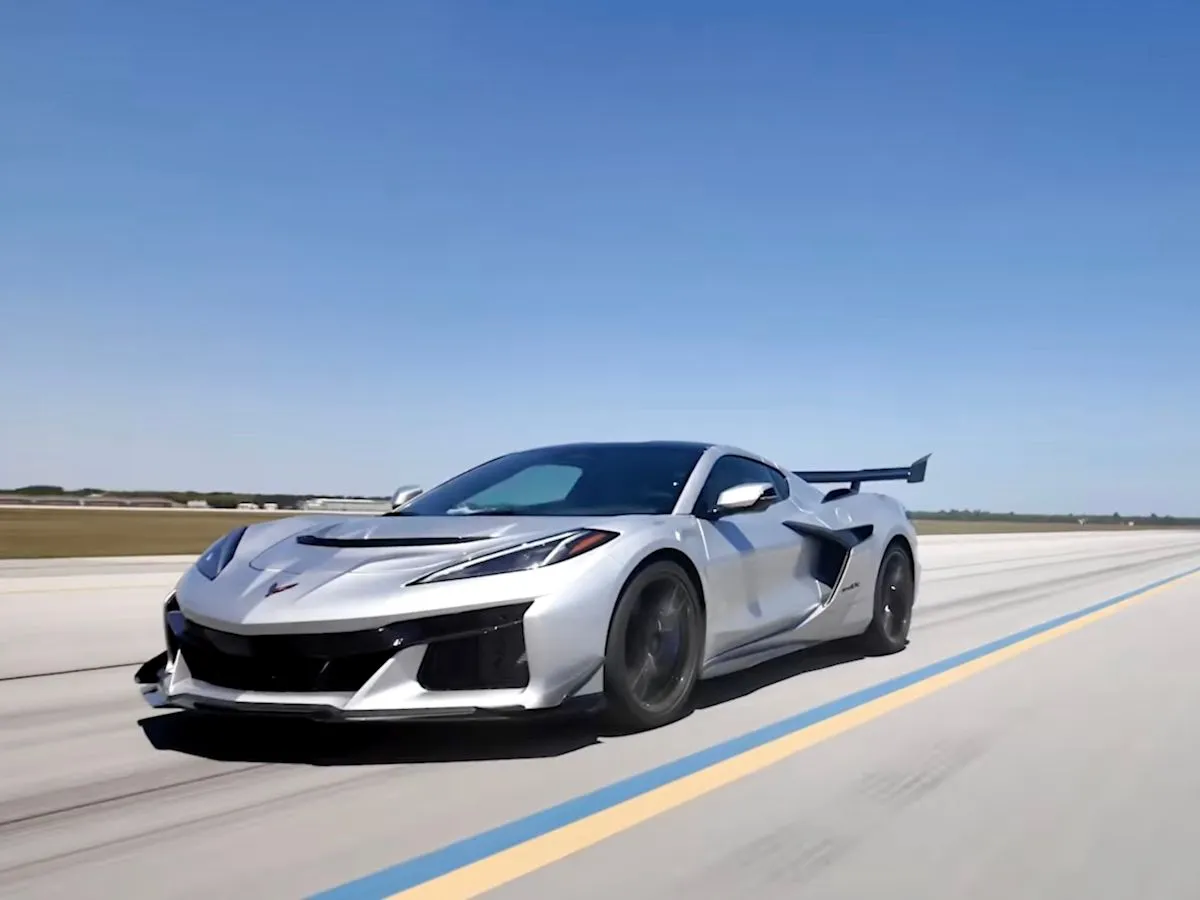
- Braking System: Massive 16.5-inch vented and cross-drilled carbon-ceramic brake discs designed for sustained heat resistance.
- Tires and Wheels: Sticky Michelin Pilot Sport Cup 2R ZP track tires wrapped around 20-inch front and 21-inch rear wheels.
- Aerodynamic Package: A prominent rear wing retained specifically to generate downforce under high-speed braking.
0-150-0 MPH Benchmark Performance
The 0-150-0 mph evaluation tests a vehicle’s overall dynamic balance rather than purely straight-line acceleration. While high-torque electric vehicles often launch rapidly, their heavier battery packs can increase braking distances. The ZR1X countered this with balanced acceleration and extreme stopping performance.
In the head-to-head test, the ZR1X accelerated to 150 mph in 9.1 seconds and executed a full emergency stop in 4.8 seconds across 515 feet. With a combined time of 14.0 seconds, the Corvette secured first place overall in the 13-car field. While the all-electric Lucid Air Sapphire posted a quicker launch to 150 mph and the lightweight McLaren 750S matched the Corvette’s braking performance, the ZR1X delivered the fastest aggregate time.
Complete 0-150-0 MPH Comparison Times
- Chevrolet Corvette ZR1X: 14.0 seconds
- Lucid Air Sapphire: 14.4 seconds
- Porsche Taycan Turbo GT Weissach: 14.8 seconds
- McLaren 750S: 16.1 seconds
- Porsche Cayenne Turbo Electric: 16.4 seconds
- Porsche 911 Turbo S: 17.4 seconds
- BMW M5: 21.8 seconds
- BMW M2 CS: 23.2 seconds
- Bentley Continental GT S: 24.1 seconds
- Audi RS6 Avant: 24.7 seconds
- Hyundai Ioniq 5 N: 27.4 seconds
- Dodge Charger Scat Pack: 37.2 seconds
- Hyundai Elantra N: 43.6 seconds
Aerodynamic Trade-offs in the 0-200-0 MPH Test
In addition to the standard benchmark, a secondary 0-200-0 mph test was conducted featuring four contenders capable of reaching 200 mph: the Corvette ZR1X, Lucid Air Sapphire, Porsche 911 Turbo S, and McLaren 750S. In this extended test, aerodynamic downforce became a limiting factor for top-end acceleration.
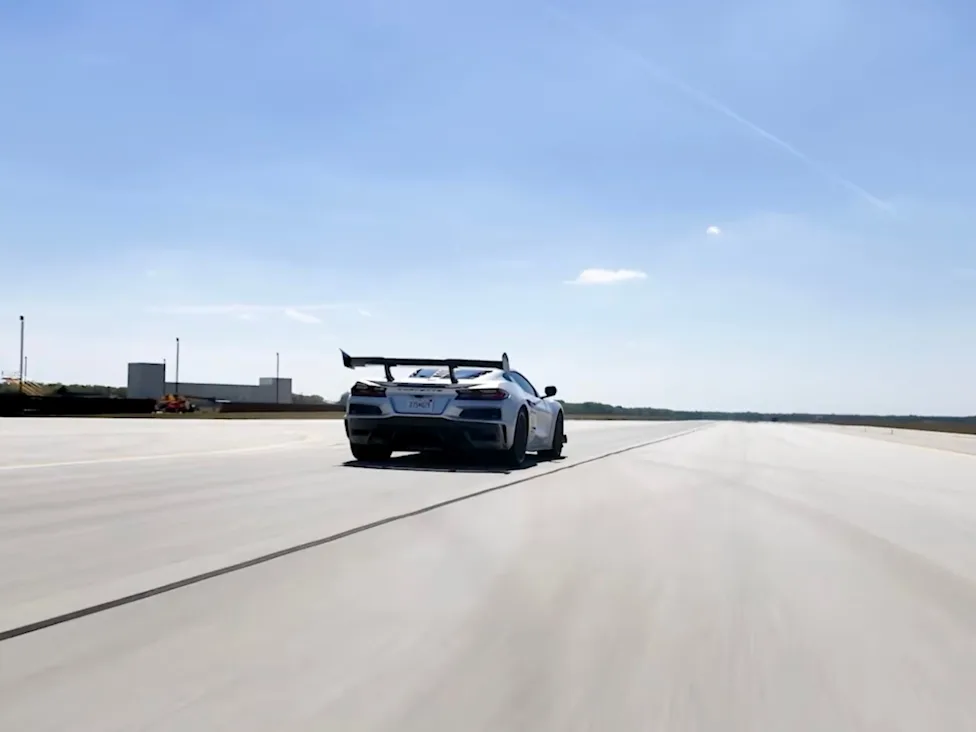
Although the ZR1X’s rear wing provided essential stability and deceleration force during braking, the aerodynamic drag it generated slowed its acceleration above 150 mph. Consequently, the Lucid Air Sapphire won the contest with a 25.7-second run, finishing roughly six seconds faster than the Corvette.
Evaluation: Pros and Cons
Pros
- Exceptional Acceleration and Deceleration Balance: Secured the overall victory in the 0-150-0 mph test with a 14.0-second total run.
- Substantial Braking Power: 16.5-inch carbon-ceramic brakes stopped the 4,125-pound vehicle from 150 mph in 515 feet.
- High Performance-to-Cost Metric: Outperformed significantly more expensive competitors such as the Ferrari 296 GTB and McLaren 750S relative to price.
- Accessible Trim Options: Buyers seeking pure combustion can choose the standard ZR1, which produces 1,064 horsepower starting under $200,000.
Cons
- High-Speed Aerodynamic Drag: The rear wing creates noticeable drag above 150 mph, contributing to a six-second deficit against the Lucid Air Sapphire in the 0-200-0 mph test.
- Curb Weight: At 4,125 pounds, the hybrid integration adds mass compared to traditional combustion-only track machinery.
Final Verdict
The 2026 Chevrolet Corvette ZR1X confirms that world-class acceleration and braking are achievable well below traditional exotic supercar pricing. While aerodynamic drag limits its efficiency in extended runs up to 200 mph, its dominant showing in the 0-150-0 mph test proves that its chassis, hybrid powertrain, and carbon-ceramic brakes are tuned for real-world performance capability.