SpeedSUVs.com — The 0–150–0 speed test serves as a definitive metric for modern automotive capability, pushing vehicles to their absolute mechanical limits. By requiring a car to accelerate to 150 mph and come to a complete halt on a confined runway, this challenge moves beyond the traditional 0–60 mph sprint to offer a holistic view of engine power, aerodynamic efficiency, and braking performance. In the 2026 edition of this rigorous assessment, held at the Oscoda-Wurtsmith Airport, a diverse array of contenders—ranging from nimble sports coupes to heavy electric SUVs—faced the daunting task of defying physics.
The Evolution of the 0–150–0 Benchmark
Testing methodology for this event has evolved significantly since the inaugural attempt in 1998. Historically, hitting 150 mph was an exclusive feat reserved for modified tuner vehicles. Today, the landscape is radically different. Modern production cars, including SUVs and electric vehicles, now possess the torque and traction to achieve these speeds with relative ease. The 2026 test highlights that the primary difficulty is no longer just reaching the target velocity, but managing the energy transfer required to stop safely and efficiently without wasting motion.
The logistical complexity of this test cannot be overstated. With a 2.2-mile taxiway as the stage, testers utilized GPS-based Racelogic VBox equipment to monitor velocity and pressure-sensitive ribbon switches on the brake pedals to record the exact moment of deceleration. Because these vehicles accelerate with such ferocity, drivers must often initiate the braking sequence while the speedometer reads 147 mph, anticipating the lag between human reaction and mechanical engagement to ensure the vehicle does not exceed 150 mph, which would result in a disqualification.
Diverse Contenders and Technological Shifts
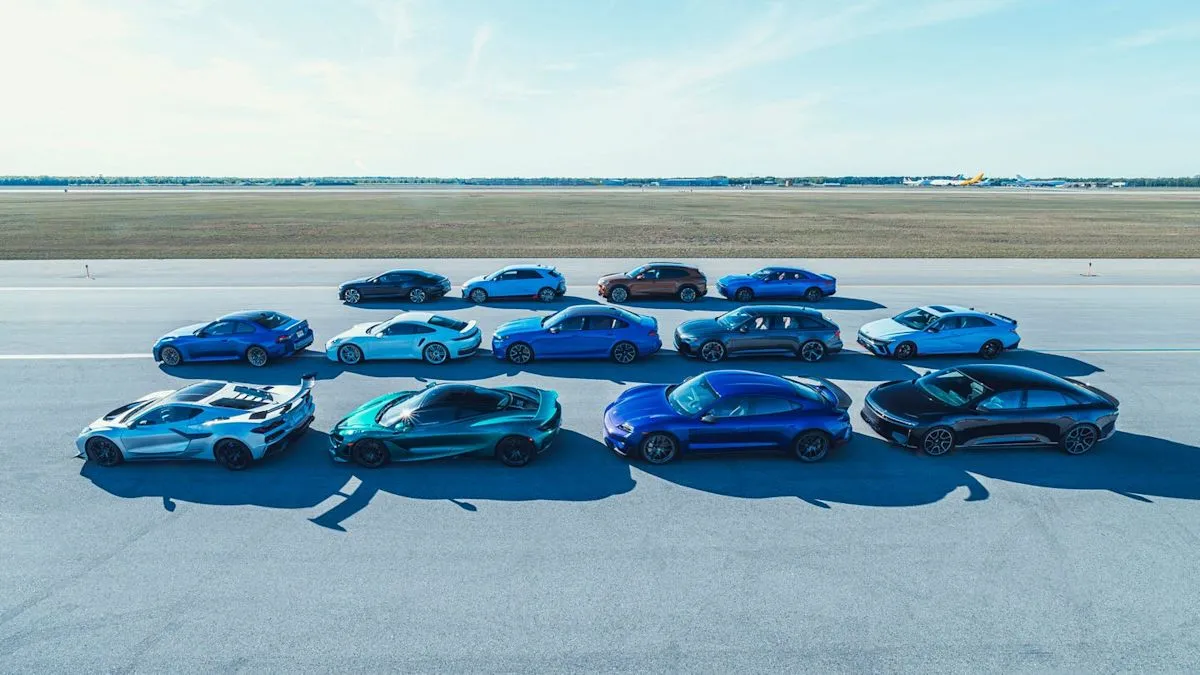
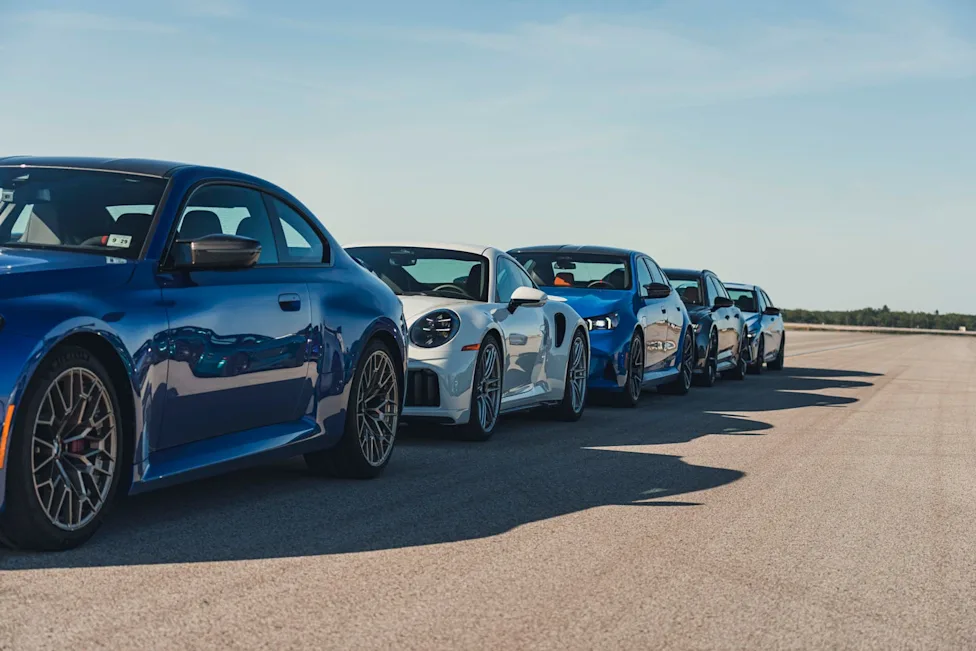
The 2026 lineup featured a wide spectrum of automotive engineering. The Chevrolet Corvette ZR1X represented traditional internal combustion might, while the Porsche 911 Turbo S returned with upgraded hybrid technology and significant horsepower gains. The rivalry between the Porsche Taycan Turbo GT Weissach and the Lucid Air Sapphire showcased the raw, instant torque of modern electric performance, proving that EVs are now the dominant force in rapid acceleration scenarios.
Other notable entries included:
- BMW M5: A plug-in hybrid powerhouse blending combustion rumble with electrical assist.
- Audi RS6 Avant: A versatile wagon utilizing twin-turbo V-8 power and all-wheel-drive traction.
- Porsche Cayenne Turbo Electric: Proving that even large family-oriented SUVs can perform at supercar levels.
- Hyundai Ioniq 5 N: Demonstrating the accessibility of high-performance electric dynamics.
- Bentley Continental GT S & Dodge Charger Scat Pack: Representing the grand tourer and muscle car segments respectively.
The mix of vehicles highlights a broader industry trend: the homogenization of speed. Whether powered by a twin-turbo inline-six or a quad-motor electric powertrain, these machines are capable of warping time, forcing engineers to prioritize braking systems that can handle the massive kinetic energy generated during such runs.
Challenges and Real-World Application
One of the primary challenges identified during the 2026 testing was track surface conditions. The pavement at Oscoda offered less traction than specialized test tracks, which impacted quarter-mile times and 60-mph launches. However, the test remained a valid indicator of relative performance, as vehicles that demonstrated superior grip and power delivery in standard conditions continued to lead the pack here.
Critics might point out that a 0–150–0 test is purely academic for the average driver. Yet, the data gathered provides invaluable insight into the thermal management of brakes and the effectiveness of modern stability control systems. It reveals which manufacturers have successfully integrated power and control, and which ones struggle when forced to reign in their own performance.
Pros of Modern High-Performance Vehicles
- Advanced Traction Systems: All-wheel-drive and launch-control software have made extreme acceleration repeatable.
- Braking Efficiency: Modern carbon-ceramic or high-performance steel brakes can handle repeated high-speed stops with minimal fade.
- Versatility: High-performance capabilities are now found in diverse segments, including SUVs and sedans, not just dedicated sports cars.
Cons and Limitations
- Weight Penalty: Many modern high-performance vehicles, particularly EVs, are significantly heavier than their predecessors, placing immense stress on tires and braking components.
- Human Reaction Limits: As cars become faster, the window for human intervention narrows, requiring expert handling to avoid exceeding test parameters.
- Surface Sensitivity: Without optimal track conditions, the full potential of these vehicles is often constrained by tire grip rather than raw power.
Conclusion: The Future of Performance
The 2026 0–150–0 test confirms that we are living in an era of unprecedented automotive performance. The gap between dedicated track machines and daily-driven sedans is closing rapidly. For the consumer, this means that even if the 0–150–0 metric remains a specialized benchmark, the trickle-down effect of this technology—better cooling, more sophisticated braking, and enhanced stability—leads to safer and more capable vehicles for the road. Choosing the right vehicle depends on whether one prioritizes the immediate, silent torque of an electric powertrain or the mechanical engagement of a traditional combustion engine, but regardless of the choice, the performance ceiling has never been higher.