The compact SUV market is a brutal arena, a cutthroat segment where manufacturers vie for dominance with razor-thin margins and an ever-evolving list of consumer demands. For years, the Mazda CX-5 has carved out a unique niche, appealing to those who prioritize driving dynamics, premium aesthetics, and a tactile experience often absent in its mainstream rivals. But as the automotive world hurtles towards electrification and an increasing emphasis on digital integration, the impending 2026 Mazda CX-5 faces its toughest challenge yet.
Will Mazda’s commitment to driving pleasure, sophisticated design, and a near-luxury feel be enough to fend off a renewed onslaught of competitors? More importantly, can the next-generation CX-5 truly stake its claim as the "best SUV for the money" when pitted against a field of formidable, value-packed adversaries? Let’s strap in and dissect the landscape.
The 2026 Mazda CX-5: What to Expect (and Hope For)
While official details remain under wraps, Mazda’s recent product strategy, particularly with the introduction of its new large platform models (CX-70, CX-90), gives us significant clues about the direction of its core compact offering. The current CX-5, despite its age, still looks fantastic and drives beautifully, a testament to Mazda’s "Kodo" design language and "Jinba Ittai" (horse and rider as one) philosophy. For 2026, expect an evolution, not a revolution, but one that addresses key areas of improvement.
Design Evolution: The Kodo design language will undoubtedly mature, perhaps adopting a sleeker, more minimalist profile akin to the CX-60/70/90, but retaining its distinctive grille and athletic stance. Expect sharper LED lighting signatures and more sophisticated wheel designs. The goal will be to further elevate its perceived premium status.
Interior Refinement & Technology: This is where the CX-5 needs to make significant strides. While current materials are excellent, the infotainment system, though functional with its rotary controller, is due for an overhaul. We anticipate a larger, more integrated touchscreen display, likely with improved responsiveness and wireless Apple CarPlay/Android Auto across more trims. Physical controls for climate and essential functions should thankfully remain, a nod to Mazda’s driver-centric approach. Crucially, rear passenger legroom and cargo space – often criticisms of the current model – are prime candidates for expansion, making the CX-5 more competitive on the practicality front. Expect even higher quality materials, potentially with unique trim options, further blurring the line between mainstream and luxury.
Powertrain Innovation: The current Skyactiv-G engines are efficient and smooth, but a more potent base option or wider availability of the turbocharged 2.5-liter would be welcomed. Given Mazda’s push towards electrification, a Plug-in Hybrid (PHEV) variant is almost a certainty. This would be a game-changer, offering significant electric-only range and strong combined power, directly challenging the hybrid dominance of Toyota and Honda. A mild-hybrid system for the standard gasoline engines is also highly probable, boosting both efficiency and low-end torque. The smooth-shifting 6-speed automatic transmission is a Mazda hallmark, and while a more modern 8-speed might appear, the existing unit’s refinement is already a strong point.
Driving Dynamics – The Mazda Core: This is the CX-5’s enduring strength and will remain paramount. Expect an even more refined chassis, enhanced steering feel, and a suspension tuned for that delicate balance of comfort and agility. Mazda’s G-Vectoring Control Plus (GVC Plus) will undoubtedly be further optimized, providing a subtle yet noticeable improvement in cornering stability and driver confidence. The CX-5 will continue to be the compact SUV for those who genuinely enjoy driving, offering a level of engagement unmatched by most rivals.
Safety & Driver Aids: Mazda has consistently delivered top-tier safety, and the 2026 CX-5 will build upon this with an expanded suite of i-Activsense driver-assistance technologies, likely including enhanced highway assist features, improved blind-spot monitoring, and more sophisticated adaptive cruise control.
The Contenders: A Deep Dive into the Competitive Landscape
To truly gauge the 2026 CX-5’s "best for the money" potential, we must size up the formidable competition it faces. Each rival brings a distinct set of strengths and weaknesses to the table.
1. The Practicality Kings: Honda CR-V & Toyota RAV4
-
Honda CR-V: The perennial benchmark for practicality. The latest CR-V is larger, more refined, and offers an excellent hybrid powertrain. It excels in cargo space, rear legroom, and a generally smooth, if uninspiring, driving experience. Honda’s reputation for reliability and strong resale value is legendary.
- CX-5 Challenge: The CR-V’s interior is more spacious and ergonomically sound for families. Its hybrid system is incredibly efficient and refined. The CX-5 will need to significantly improve interior volume to truly compete on pure utility.
- CX-5 Advantage: Mazda’s interior materials and driving dynamics are a class above. The CX-5 offers a premium feel the CR-V can’t quite match.
-
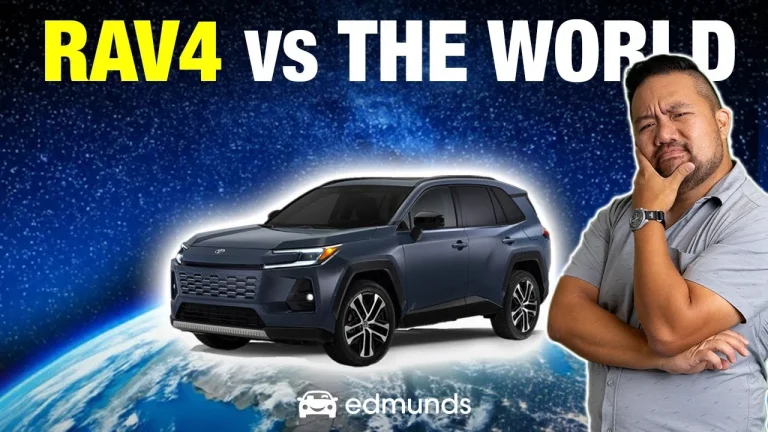
Toyota RAV4: The sales juggernaut. The RAV4 offers a diverse lineup, from efficient hybrids (including a Prime PHEV) to rugged Adventure and TRD Off-Road trims. Its bold, truck-like styling appeals to many, and Toyota’s bulletproof reliability is a major draw.
- CX-5 Challenge: The RAV4 Hybrid and Prime offer superior fuel economy and, in the Prime’s case, impressive power and electric range. Its optional rugged styling also offers a distinct personality.
- CX-5 Advantage: The CX-5 will offer a significantly more engaging driving experience, a more upscale interior ambiance, and likely better noise, vibration, and harshness (NVH) levels. The RAV4’s interior, while functional, uses more hard plastics.
2. The Style Mavericks & Tech Wonders: Hyundai Tucson & Kia Sportage
- Hyundai Tucson / Kia Sportage: These Korean twins have revolutionized the segment with their audacious styling, tech-laden interiors, and compelling value propositions. Both offer a variety of powertrains, including hybrids and PHEVs, and boast impressive warranties. Their designs are polarizing but certainly stand out.
- CX-5 Challenge: The Tucson and Sportage offer larger digital displays, more advanced driver aids (like remote smart parking assist), and bolder exterior designs that grab attention. Their warranties are also industry-leading.
- CX-5 Advantage: While the Korean twins have upped their interior game, the CX-5’s material quality and assembly still feel a step above. Mazda’s driving dynamics are more refined and driver-focused, while the Koreans can sometimes feel a bit floaty or overly firm depending on the trim.
3. The All-Weather Adventurer: Subaru Forester
- Subaru Forester: The go-to choice for those prioritizing all-weather capability, safety, and practicality. With standard Symmetrical All-Wheel Drive, excellent visibility, and a spacious, easy-to-access cargo area, the Forester appeals to a specific outdoor-oriented demographic.
- CX-5 Challenge: Subaru’s AWD system is legendary, and its higher ground clearance makes it more capable off the beaten path. Its huge windows and airy cabin also offer unparalleled visibility.
- CX-5 Advantage: The CX-5 utterly dominates the Forester in terms of interior refinement, driving engagement, and powertrain sophistication (the Forester’s CVT and relatively modest engine can be uninspiring).
4. The Comfort Cruisers: Nissan Rogue & Volkswagen Tiguan
-
Nissan Rogue: The Rogue offers a comfortable, quiet ride, Nissan’s "Zero Gravity" seats, and a surprisingly efficient turbocharged 3-cylinder engine (in some markets). Its ProPILOT Assist driver-aid system is one of the better ones in the mainstream segment.
- CX-5 Challenge: The Rogue often offers competitive pricing and a highly comfortable interior, particularly for long highway cruises.
- CX-5 Advantage: The CX-5 will offer a far more premium feel, a more engaging powertrain, and superior handling. The Rogue’s CVT, while improved, can still detract from the driving experience for enthusiasts.
-
Volkswagen Tiguan: The Tiguan offers a solid, Germanic driving feel, a spacious interior (with an optional third row in some markets), and a generally understated but sophisticated design.
- CX-5 Challenge: The Tiguan offers a slightly more European driving experience and often feels substantial on the road. Its third-row option, while small, is unique in the class.
- CX-5 Advantage: The CX-5 will likely surpass the Tiguan in interior material quality, design flair, and outright driving enjoyment. The Tiguan’s infotainment can be fiddly, and its engine, while peppy, can be thirsty.
The "Best for the Money" Equation: Where Does the CX-5 Land?
Defining "best for the money" isn’t simply about the lowest sticker price. It’s a holistic assessment that encompasses:
- Initial Purchase Price: How competitive is the MSRP across trims?
- Features & Equipment: What do you get for that price? Standard safety, tech, luxury touches.
- Driving Experience: Does it offer pleasure beyond mere transportation?
- Interior Quality & Comfort: How good does it feel to be inside?
- Fuel Economy & Ownership Costs: How much will it cost to run and maintain?
- Reliability & Resale Value: How well will it hold its value over time?
The 2026 Mazda CX-5 is unlikely to be the cheapest option on paper. Mazda’s premium aspirations mean its base price will likely be a notch above some rivals, placing it closer to the higher trims of a CR-V or RAV4, and perhaps overlapping with the base models of entry-level luxury SUVs.
However, Mazda’s "value" proposition has always been about punching above its weight. For the money, the CX-5 traditionally offers:
- Superior Driving Dynamics: This is its unique selling proposition. For drivers who value steering feel, chassis composure, and a sense of connection to the road, the CX-5 delivers a "luxury" experience at a mainstream price.
- Near-Luxury Interior: Mazda’s cabins consistently feature high-quality materials, meticulous fit and finish, and a sophisticated design that feels more expensive than it is.
- Timeless Design: The Kodo design language ages gracefully, ensuring the CX-5 looks good for years to come, aiding resale value.
- Reliability: Mazda consistently ranks high in reliability surveys, indicating lower long-term ownership costs.
- Strong Resale Value: While not quite at Toyota or Honda levels, the CX-5 holds its value very well, particularly for higher trims.
The 2026 CX-5, especially with an anticipated PHEV option, improved infotainment, and expanded interior space, will only strengthen this value proposition. It won’t beat a RAV4 Hybrid on pure MPG numbers or a CR-V on cargo volume, but it will offer a premium experience that neither of those can match for a similar price.
The Verdict: A Refined Niche, Not a Universal Champion
The 2026 Mazda CX-5 will likely continue to occupy its unique space in the compact SUV market. It won’t be the segment sales leader, nor will it cater to every single buyer.
- For those whose primary concerns are maximum cargo space, ultimate fuel efficiency, or the lowest possible purchase price, competitors like the CR-V, RAV4, or Rogue might still hold an edge.
- For buyers who crave cutting-edge, flashy tech and bold, experimental design, the Hyundai Tucson or Kia Sportage might be more appealing.
However, for the discerning buyer who values driving pleasure, sophisticated design, premium materials, and a quiet, refined cabin above all else, the 2026 Mazda CX-5 will almost certainly be the undisputed "best for the money." It will offer a taste of luxury and an engaging driving experience typically found in vehicles thousands, if not tens of thousands, of dollars more expensive.
The 2026 CX-5 will likely be Mazda’s statement that true value isn’t just about features or size, but about the experience it delivers. If Mazda can truly nail the interior space and infotainment updates while maintaining its core strengths, the next-gen CX-5 won’t just compete; it will continue to redefine what "best for the money" means for a very appreciative segment of the compact SUV market. We eagerly await its official debut to see if Mazda can once again deliver on its promise of accessible driving joy.